August 20, 2026
Strategic Market Forces Reshaping Continental Resource Development
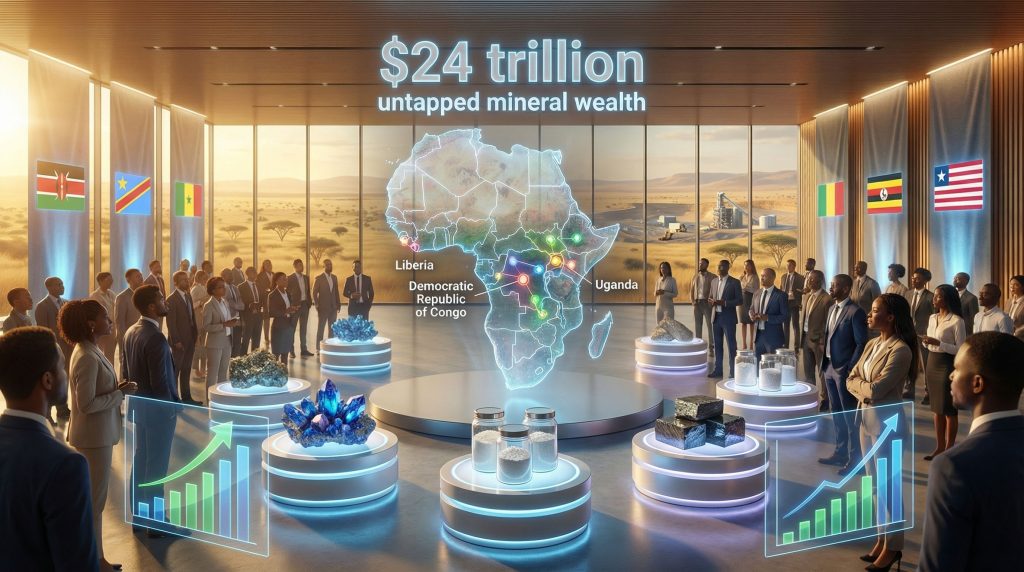
Multiple converging economic and technological currents are fundamentally altering how international investors approach African mineral assets. The $24 trillion in untapped mineral wealth across the continent represents more than raw commodity potential – it embodies a strategic inflection point where traditional resource extraction models must evolve into integrated value-creation frameworks. Furthermore, as demand for critical minerals energy security is projected to quadruple by 2040, the continental mining landscape is experiencing unprecedented transformation driven by energy transition requirements, supply chain diversification imperatives, and evolving geopolitical relationships between major economies.
The intersection of technological advancement and resource scarcity has created unique investment dynamics across African jurisdictions. Traditional commodities like gold reaching record highs in 2026 demonstrate sustained demand for wealth preservation assets, while platinum group metals, chrome, and manganese emerge as essential components for energy transition technologies. In addition, this dual demand structure – combining traditional commodity strength with critical minerals urgency – positions African mining week as a pivotal platform for understanding how global capital flows will reshape continental resource development over the next decade.
When big ASX news breaks, our subscribers know first
Continental Resource Corridors and Strategic Geographic Positioning
The economic geography of African mining is undergoing systematic restructuring as countries develop integrated approaches to resource development and value addition. Central Africa's emergence as a critical minerals hub centers on vast cobalt, lithium, and copper deposits that remain largely undeveloped despite their strategic importance to battery manufacturing.
However, supply chain challenges persist across the region. The DRC cobalt export ban extension demonstrates how regulatory changes can significantly impact global supply chains and create new investment opportunities in alternative sources.
The Central African Republic exemplifies this potential, with more than 570 recognized mineral occurrences identified across its territory, though the majority of current operations remain artisanal in nature. The country's untapped deposits of cobalt, lithium, coltan, rare earths, and copper position it as an emerging destination for international investment.
Regional Development Patterns Emerging Across Africa
Liberia's Industrial Transformation Strategy
Liberia represents a paradigm shift from traditional iron ore extraction toward comprehensive geological mapping and industrial development. The country's plans to increase iron ore output to more than 30 million metric tons by 2026 reflects broader ambitions to establish downstream processing capabilities and diversify into critical minerals production.
Uganda's Beneficiation-Centered Approach
Uganda's strategy emphasizes transitioning from raw mineral exports to higher-value processed products through local beneficiation policies. This approach directly links mineral resource development to job creation, industrial growth, and export revenue expansion, representing a comprehensive policy framework that other African countries are studying for potential adaptation.
Egypt's Regional Cooperation Model
Egypt's focus on strengthening regulatory frameworks while promoting regional partnerships for potash, gold, and phosphate development demonstrates how established mining jurisdictions can leverage their experience to facilitate cross-border collaboration and technology transfer initiatives.
| Regional Corridor | Primary Minerals | Development Stage | Key Advantages |
|---|---|---|---|
| Central Africa | Cobalt, Lithium, Copper | Early-stage exploration | Proximity to processing infrastructure |
| West Africa | Iron ore, Gold, Rare earths | Production scaling | Established export facilities |
| East Africa | Graphite, Industrial minerals | Beneficiation development | Regional cooperation frameworks |
| Southern Africa | Platinum group metals, Chrome | Mature production | Advanced mining expertise |
Investment Architecture and Capital Mobilisation Frameworks
The African mining week 2026, scheduled for October 14-16 in Cape Town, serves as the primary platform connecting global capital with continental mining opportunities through structured engagement between government officials, international investors, and project developers. Furthermore, the conference's co-location with African Energy Week creates synergies that enable comprehensive discussions about infrastructure development, power generation, and integrated resource development strategies.
Partnership Models Beyond Traditional Investment Structures
The Democratic Republic of Congo's approach exemplifies evolving partnership preferences in African mining. With an estimated $24 trillion in untapped mineral resources and approximately 90% of mineral potential unexplored, the country seeks long-term partners extending beyond production to include investment in exploration, infrastructure development, and workforce capacity building.
This strategic shift reflects broader continental trends where governments increasingly prioritise partnerships that deliver:
- Comprehensive geological mapping and exploration programs
- Infrastructure development supporting multiple mining operations
- Technology transfer and local capacity building initiatives
- Downstream processing capabilities creating domestic value chains
- Employment generation and skills development programs
Government Engagement and Policy Alignment
The direct participation of mining ministers from across Africa in pre-conference discussions demonstrates the strategic importance governments place on international partnership development. Countries like South Sudan, which has maintained partnerships with conference organisers for over a decade, illustrate how sustained engagement can facilitate mineral sector development and international market access.
Consequently, investors should consider how modern AI in mining operations can enhance operational efficiency while reducing environmental impact across these emerging markets.
"The alignment between government priorities and international investor requirements creates opportunities for structured partnerships that address both capital mobilisation needs and domestic development objectives through integrated project design."
Country-Specific Development Strategies and Investment Targets
Democratic Republic of Congo: Industrial Value Chain Integration
The DRC's mineral development strategy centers on leveraging its estimated 20 billion tons of iron ore reserves alongside vast critical minerals deposits to establish integrated industrial operations. The country's emphasis on special economic zones supporting steel production represents a fundamental shift from raw material exports toward domestic value addition and manufacturing capability development.
This industrial transformation approach requires substantial infrastructure investment, including:
- Power generation capacity for energy-intensive processing operations
- Transportation infrastructure connecting mining areas to processing facilities
- Skills development programs supporting technical workforce requirements
- Regulatory frameworks facilitating long-term investment commitments
- Financial structures supporting large-scale, multi-year development projects
Liberia's Geological Data Revolution
Liberia's comprehensive geoscientific data collection initiative represents a strategic foundation for attracting international investment and optimising resource development planning. The country recognises that despite possessing vast mineral resources, incomplete geological mapping has limited its negotiating position with international investors and constrained strategic planning capabilities.
The geological mapping revolution encompasses:
- Systematic mineral occurrence documentation across national territory
- Resource estimation and grade analysis for commercial viability assessment
- Infrastructure requirement mapping for efficient development planning
- Environmental baseline studies supporting sustainable development practices
- Investment opportunity identification aligned with global market demands
South Sudan's Economic Diversification Through Mining
South Sudan's mineral exploration and national geomapping programs form part of a comprehensive economic diversification strategy designed to reduce dependence on petroleum revenues while leveraging growing global mineral demand. The country's decade-long partnership with international conference organisers demonstrates sustained commitment to mineral sector development and market engagement.
Critical Minerals Development and Battery Supply Chain Integration
The global transition toward renewable energy systems and electric vehicle adoption has created unprecedented demand for specific mineral inputs essential to battery manufacturing, energy storage systems, and clean technology applications. African countries possessing these critical minerals are positioned to capture significant value through strategic development approaches that emphasise processing capabilities and supply chain integration.
Graphite Processing Capabilities
Uganda's focus on graphite processing for battery supply chains illustrates how countries can leverage specific mineral endowments to establish positions within global clean technology manufacturing networks. The development of domestic beneficiation capabilities enables value capture beyond raw material exports while supporting industrial development objectives and employment generation.
Lithium and Rare Earth Development Timelines
Multiple African countries are advancing lithium and rare earth exploration programs designed to support battery manufacturing and permanent magnet production requirements. The Central African Republic's identified deposits of lithium, coltan, and rare earths represent potential supply sources that could contribute to global supply chain diversification efforts.
However, investors must understand broader market dynamics when evaluating these opportunities. A comprehensive investing guide 2025 can help navigate the complexities of emerging mineral markets and identify sustainable investment strategies.
Technology Integration and Operational Efficiency Enhancement
Digital Mining Solutions and Remote Operations
The integration of autonomous equipment, artificial intelligence applications, and remote monitoring technologies enables mining operations in previously challenging locations while reducing operational costs and improving safety performance. These technological advances are particularly relevant for African mining operations in remote areas where traditional workforce deployment and supervision present logistical challenges.
Key Technology Applications Include:
- Autonomous haulage systems reducing labour requirements and operational costs
- Predictive maintenance programs optimising equipment utilisation and minimising downtime
- Remote geological analysis enabling rapid resource assessment and development planning
- Environmental monitoring systems supporting compliance and sustainability objectives
- Supply chain tracking technologies ensuring mineral traceability and certification
Sustainable Mining Practices and Environmental Integration
African countries are increasingly incorporating environmental sustainability requirements into mining development frameworks, recognising that international investors and financing institutions prioritise projects demonstrating comprehensive environmental and social governance compliance. This trend creates opportunities for technology providers specialising in environmental management, waste reduction, and community development integration.
The next major ASX story will hit our subscribers first
Regional Cooperation Mechanisms and Cross-Border Development
Infrastructure Sharing and Integrated Development
The development of cross-border infrastructure networks enables mining operations to achieve economies of scale while supporting regional economic integration objectives. Shared transportation corridors, power generation facilities, and processing capabilities can reduce individual project costs while facilitating broader regional development outcomes.
Cross-Border Cooperation Benefits:
- Reduced infrastructure costs through shared facility development
- Enhanced operational flexibility via multiple transportation options
- Risk diversification across multiple jurisdictions and regulatory frameworks
- Knowledge sharing between technical teams and regulatory authorities
- Standardised practices facilitating regional skills development and technology transfer
Regulatory Harmonisation and Investment Protection
Countries like the Central African Republic are reforming mining codes to attract international investment while establishing frameworks that support sector industrialisation and domestic value addition. These regulatory developments, combined with bilateral investment treaty negotiations and regional cooperation agreements, create more predictable investment environments that facilitate long-term project development and financing.
Investment Opportunity Assessment and Market Entry Strategies
Project Pipeline Development and Due Diligence
The conference format enables comprehensive due diligence processes through direct engagement with decision-makers and technical experts familiar with specific jurisdictions and project requirements. Furthermore, the Mining Indaba provides additional networking opportunities for investors seeking exposure to African mining opportunities throughout the year.
Investment Evaluation Framework:
- Resource assessment and geological confidence levels
- Infrastructure availability and development requirements
- Regulatory stability and investment protection mechanisms
- Local partnership opportunities and community engagement
- Market access and transportation logistics
- Environmental and social compliance requirements
- Financial structuring options and risk management approaches
Strategic Partnership Formation
The emphasis on long-term partnerships rather than traditional equity-only investments reflects evolving preferences among African governments for comprehensive development approaches that deliver sustained economic benefits. These partnership models often incorporate technology transfer commitments, workforce development programs, and infrastructure investment requirements that extend beyond immediate mining operations.
Future Market Positioning and Competitive Advantages
Supply Chain Diversification Trends
Major economies including the United States, China, and European Union nations are actively securing mineral supply chains through strategic partnerships and investment commitments. This geopolitical dynamic creates opportunities for African countries to leverage their mineral resources for broader economic development objectives while contributing to global supply chain resilience and security.
Value-Added Manufacturing Development
The progression from raw material exports toward downstream processing and manufacturing represents a fundamental strategic opportunity for African mineral-producing countries. Success in this transition requires coordinated approaches combining resource development, infrastructure investment, skills development, and market access facilitation through international partnerships.
For instance, Australia's success with lithium industry innovations provides a blueprint for how African countries might develop their own processing capabilities and capture greater value from their mineral resources.
"Investors evaluating African mining opportunities should consider not only immediate resource extraction potential but also long-term value creation possibilities through integrated development approaches that align with government strategic objectives and contribute to sustainable economic development outcomes."
Strategic Outlook for African Mining Week
The convergence of global critical minerals demand, technological advancement, and evolving partnership models positions African mining week as an essential platform for understanding how continental resource development will reshape global supply chains and create investment opportunities across multiple sectors and jurisdictions. The strategic emphasis on beneficiation, regional cooperation, and sustainable development practices reflects broader trends that will define African mining investment for the next decade and beyond.
Consequently, stakeholders must recognise that African mining week serves not merely as a networking event, but as a comprehensive strategic forum where policy decisions, investment commitments, and technological partnerships converge to shape the continent's mineral development trajectory. The platform's evolution reflects the broader maturation of African mining markets and their integration into global supply chain networks.
Disclaimer: This analysis incorporates publicly available information and government statements regarding mineral development strategies and investment priorities. Investment decisions should be based on comprehensive due diligence and professional financial advice considering specific risk factors and market conditions.
Ready to Capitalise on Africa's Critical Minerals Boom?
With African countries developing integrated value-creation frameworks for their $24 trillion in untapped mineral wealth, Discovery Alert's proprietary Discovery IQ model delivers real-time alerts on significant ASX mineral discoveries, helping investors identify actionable opportunities in companies with African exposure ahead of the broader market. Explore Discovery Alert's historic discoveries to understand why major mineral announcements can generate substantial returns, then begin your 14-day free trial today to position yourself ahead of the market.