May 20, 2026
Strategic Materials Dependencies Create Unprecedented Military Vulnerabilities
Modern military operations have reached an inflection point where technological superiority depends entirely on access to strategic materials that exist outside traditional defense supply chains. The convergence of advanced weapons systems, electronic warfare capabilities, and precision munitions has created dependencies on materials whose production and processing remain concentrated in geopolitically sensitive regions. Furthermore, recent developments including the critical minerals order highlight the urgent need for supply chain restructuring.
This vulnerability extends beyond conventional resource scarcity into the realm of strategic leverage, where supply chain disruption can compromise military readiness without direct confrontation. Defense planners now confront scenarios where technological advantages built over decades could be neutralised through materials access restrictions rather than conventional military action.
When big ASX news breaks, our subscribers know first
Critical Elements Enable Advanced Defense Technologies
Rare earths and military supply chain integration has transformed from an industrial consideration into a fundamental component of national security planning. These elements enable performance characteristics that cannot be replicated through alternative materials, creating absolute dependencies rather than preferred supply relationships. Moreover, the development of a comprehensive critical minerals strategy has become essential for maintaining military readiness.
Military Platform Dependencies and Consumption Rates
Strategic defence systems require rare earth elements for multiple critical functions across all major military platforms. Fighter aircraft utilise these materials in radar systems, targeting equipment, and propulsion components, while naval vessels incorporate them into sonar arrays, missile guidance systems, and electronic warfare suites.
Primary Military Applications:
- Permanent magnet systems enabling precision guidance mechanisms
- Electronic warfare platforms requiring specialised magnetic properties
- Radar and sensor arrays dependent on rare earth phosphors
- Communications equipment utilising rare earth-enhanced components
- Stealth technology applications incorporating specialised materials
Nuclear submarines represent the highest consumption category, requiring substantial quantities of rare earth elements for navigation systems, weapons platforms, and propulsion components. The specialised requirements for underwater operations create particularly acute dependencies on materials with specific magnetic and electronic properties.
Technology Integration Creates Systemic Vulnerabilities
Modern military effectiveness depends on seamless integration of electronic systems that share common rare earth dependencies. This integration means that disruption affecting one element type can cascade across multiple platform categories, amplifying the impact of supply restrictions. Additionally, the establishment of a European raw materials facility demonstrates global recognition of these vulnerabilities.
The shift toward network-centric warfare has intensified these dependencies by increasing the electronic complexity of individual platforms while simultaneously requiring greater numbers of interconnected systems. Each additional layer of technological sophistication increases rare earth consumption and supply chain vulnerability.
Supply Chain Analysis Reveals Critical Gaps
Current strategic reserve assessments indicate that existing stockpiles could sustain military operations for approximately two months under intensive conflict scenarios. This timeline assumes peacetime consumption patterns and does not account for surge production requirements during extended military engagements.
Reserve Duration and Consumption Modelling
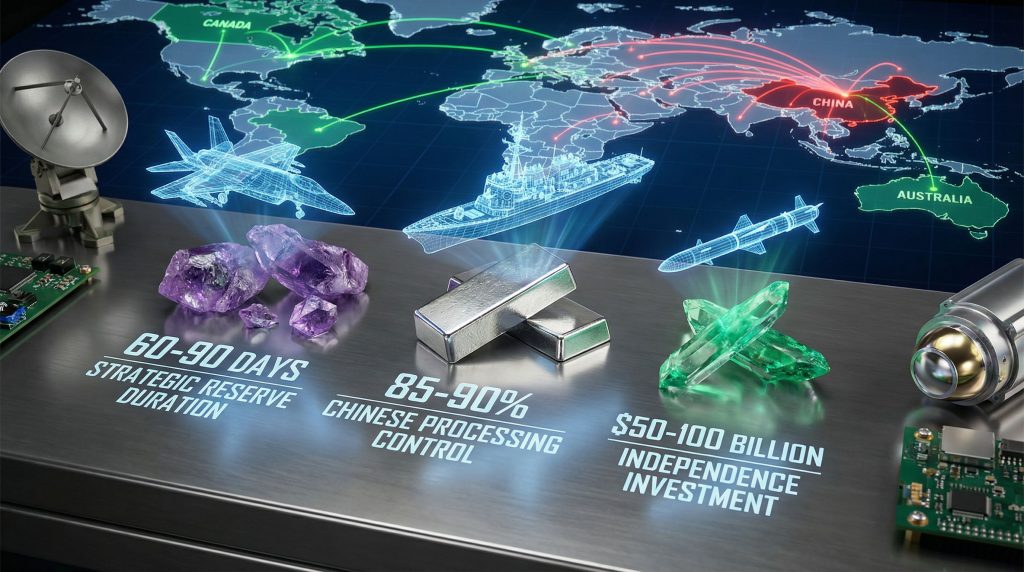
According to reports from the South China Morning Post, Washington maintains strategic reserves sufficient for roughly 60 days of military operations. This estimate reflects current stockpile levels against projected consumption rates during active conflict scenarios involving precision weapons systems and electronic warfare capabilities.
Critical Supply Metrics:
- Current reserve duration: 2-3 months maximum
- Processing capacity outside dominant producers: Less than 10% globally
- Alternative supply chain development: 5-10 year timeline minimum
- Required investment for independence: $50-100 billion estimated
The Trump administration allocated $12 billion toward building strategic mineral reserves, demonstrating federal recognition of supply chain vulnerabilities. However, the timeline for meaningful capacity development extends well beyond immediate security requirements.
Surge Demand Scenarios Create Compounding Risks
Military operations involving sustained precision weapons usage could increase rare earth consumption by 300-500% above peacetime levels. This surge demand would rapidly exhaust strategic reserves while simultaneously limiting options for emergency procurement from potentially restricted supply sources.
Extended conflict scenarios compound these risks by requiring sustained high consumption rates while potentially triggering supply restrictions from geopolitically aligned producers. Consequently, the combination creates scenarios where military effectiveness could be constrained by materials availability rather than tactical or strategic considerations.
Dominant Producer Control Creates Strategic Leverage
China's control over rare earths and military supply chain encompasses virtually every stage of production, from initial extraction through final component manufacturing. This vertical integration creates multiple vulnerability points that cannot be addressed through simple diversification of mining operations. In addition, the critical energy security role of these materials further complicates supply chain resilience.
Comprehensive Market Dominance Structure
Chinese market control extends across the entire value chain, with dominance in raw material extraction, processing capabilities, and finished component manufacturing. This comprehensive control means that supply chain independence requires rebuilding multiple industrial capabilities rather than accessing alternative mining sources.
| Supply Chain Stage | Chinese Market Share | Strategic Significance |
|---|---|---|
| Raw material mining | 60% of global production | Initial resource control |
| Processing and refining | 85-90% of global capacity | Technical expertise concentration |
| Component manufacturing | 70-80% of military-grade products | Finished product dependencies |
| Advanced processing knowledge | 90% of technical capabilities | Technology transfer requirements |
Historical Precedent for Supply Weaponisation
China has previously demonstrated willingness to use rare earth exports as diplomatic leverage, including export restrictions targeting Japan and other nations during territorial disputes. These precedents establish that supply chain dependencies can be activated as geopolitical tools without direct military engagement.
China's new export controls on critical minerals demonstrate how supply concentration risks have become reality. China's 15th Five-Year Plan for 2026-2030 explicitly targets strengthening rare earth industry dominance while improving export control systems. This strategic alignment indicates intentional coordination between industrial policy and geopolitical leverage capabilities during the period when Western nations seek supply chain independence.
Alternative Supply Development Faces Extended Timelines
The United States has launched comprehensive programmes to rebuild domestic rare earth processing capabilities, focusing on complete supply chain development from mining through finished component manufacturing. These initiatives require substantial capital investment and face technical challenges that extend development timelines beyond immediate security requirements. Furthermore, strategic antimony initiatives demonstrate the broader scope of critical mineral supply chain challenges.
Domestic Production Initiative Timeline
Federal investment commitments exceed $400 million in allocated funding, with additional private sector partnerships targeting specific technology development. However, realistic assessments indicate meaningful production capacity will not emerge until the 2027-2030 timeframe.
Development Programme Structure:
- Government investment: $400+ million allocated across multiple programmes
- Private partnerships: Joint ventures established with domestic producers
- Production targets: 20-30% of military requirements by 2030
- Technical focus: Complete "mine-to-magnet" capability development
Ucore Rare Metals has received more than $22 million in government support for development of proprietary RapidSX separation technology. The company operates a demonstration facility in Kingston, Canada, with technology transfer planned for the Strategic Metals Complex in the United States, targeting production in the second half of 2026.
Allied Partnership Frameworks Provide Limited Alternatives
Strategic partnerships with Canada, Australia, and other allied nations offer potential supply diversification but cannot address immediate vulnerability windows. These relationships focus on shared development costs and technology transfer rather than immediate capacity replacement.
Partnership benefits include geographic diversification of supply sources, shared infrastructure development costs, and enhanced security through allied cooperation. Nevertheless, the timeline for meaningful capacity development remains extended even with international cooperation.
Geopolitical Tensions Amplify Supply Vulnerabilities
Current military operations across multiple theatres simultaneously stress rare earth consumption while increasing potential for supply disruption. The combination creates scenarios where rare earths and military supply chain vulnerabilities could constrain military options during periods of heightened geopolitical tension.
Conflict Scenario Impact Assessment
Ongoing military operations in regions like the Middle East demonstrate how extended engagements increase rare earth consumption through intensive use of precision weapons and electronic warfare systems. These operations establish baseline consumption rates that would be exceeded during higher-intensity conflicts.
Risk Amplification Factors:
- Multiple theatre operations increasing total consumption
- Precision weapons usage requiring specialised components
- Electronic warfare escalation demanding advanced materials
- Extended deployment durations sustaining high consumption rates
Strategic Leverage Through Supply Control
Analysis suggests that Beijing could potentially influence the duration and cost of U.S. military operations through supply restrictions or delivery delays, creating indirect leverage without direct confrontation. This capability represents a form of strategic influence operating through industrial dependencies rather than military action.
The timing of China's industrial policy coordination with geopolitical tensions creates scenarios where supply vulnerabilities could constrain U.S. strategic options during critical periods. Military planners must now consider materials availability as a factor in operational planning and strategic decision-making.
The next major ASX story will hit our subscribers first
Investment Opportunities Emerge from Supply Chain Restructuring
The urgent requirement for supply chain independence creates significant investment opportunities across multiple sectors, from domestic processing technology to strategic materials management. Companies developing these capabilities benefit from both government support and guaranteed long-term demand.
Domestic Technology Development Sectors
Investment opportunities span advanced separation technologies, recycling systems, and alternative material research. The government commitment to supply chain independence ensures sustained demand for companies capable of delivering technical solutions within strategic timelines.
Primary Investment Categories:
- Advanced separation and processing technologies
- Materials recycling and recovery systems
- Alternative material research and development
- Domestic mining and extraction operations
- Supply chain logistics and inventory management
Strategic Materials Management Opportunities
Private sector opportunities exist in specialised areas including strategic stockpile optimisation, inventory management systems designed for critical materials, and supply chain security services specifically focused on defence applications.
The combination of government support, guaranteed demand, and extended development timelines creates investment environments where companies with relevant technical capabilities can establish sustainable competitive positions in emerging supply chains.
Future Defence Planning Requires Supply Chain Integration
Achieving rare earths and military supply chain independence will fundamentally alter defence procurement processes, strategic planning methodologies, and military capability development priorities. This transformation requires unprecedented coordination across government agencies, private industry, and allied nations.
Strategic Independence Timeline and Requirements
Realistic assessments indicate that meaningful supply chain independence requires 8-12 years of sustained investment and coordinated development. This timeline assumes continued political support, adequate funding, and successful technology development across multiple simultaneous programmes.
Transformation Requirements:
- Procurement strategy modifications incorporating supply chain security
- Technology development priorities aligned with materials availability
- International cooperation frameworks ensuring allied supply chain resilience
- Strategic planning integration of materials constraints and opportunities
The path toward supply chain independence demands recognition that rare earth dependencies represent fundamental constraints on military capability rather than merely procurement challenges. Success requires treating supply chain security as a core component of national security strategy rather than an industrial policy consideration.
Long-term Strategic Implications
Supply chain independence will enable military planners to assess capabilities and develop strategies without considering external materials restrictions. However, the transition period creates vulnerabilities that require careful management through diplomatic, economic, and strategic means.
The rare earth supply chain challenge represents one of the most significant strategic vulnerabilities facing modern military forces. Addressing these dependencies successfully will determine not only military effectiveness but broader national security capabilities in an increasingly complex global security environment.
This analysis is based on publicly available information and should not be considered as investment or policy advice. Military supply chain assessments involve classified information not reflected in this analysis. Investors should conduct independent research and consult qualified advisors before making investment decisions related to strategic materials or defence industry companies.
Looking to Capitalise on Strategic Materials Investment Opportunities?
Discovery Alert's proprietary Discovery IQ model delivers real-time alerts on significant ASX mineral discoveries, instantly empowering subscribers to identify actionable opportunities in critical minerals ahead of the broader market. Understanding the strategic importance of these materials makes timing crucial—begin your 14-day free trial today at Discovery Alert and secure your market-leading advantage in this rapidly evolving sector.