June 12, 2026
Strategic Mineral Control: How Battery Giants Are Reshaping Global Supply Chains
The convergence of energy transition demands and supply chain vulnerabilities has created a perfect storm compelling battery manufacturers to fundamentally rethink their procurement strategies. Contemporary Amperex Technology Ltd's (CATL) recent establishment of a 30 billion yuan ($4.4 billion) mining subsidiary represents more than capital allocation. Furthermore, this CATL investment in mining subsidiary for battery materials signals a strategic pivot toward vertical integration that could redefine competitive dynamics across the entire battery materials value chain.
Traditional procurement models, built on spot market purchasing and short-term contracts, are proving inadequate for managing the scale and complexity of modern battery manufacturing requirements. Consequently, the integration of upstream operations allows manufacturers to synchronise production planning with resource availability while mitigating price volatility that has characterised critical minerals energy transition markets over recent cycles.
When big ASX news breaks, our subscribers know first
CATL's Vertical Integration Architecture
CATL's investment in mining subsidiary development creates an integrated operational framework spanning mineral exploration through finished battery component production. This comprehensive approach encompasses exploration operations, processing infrastructure, chemical production facilities, and strategic integration of existing mining assets.
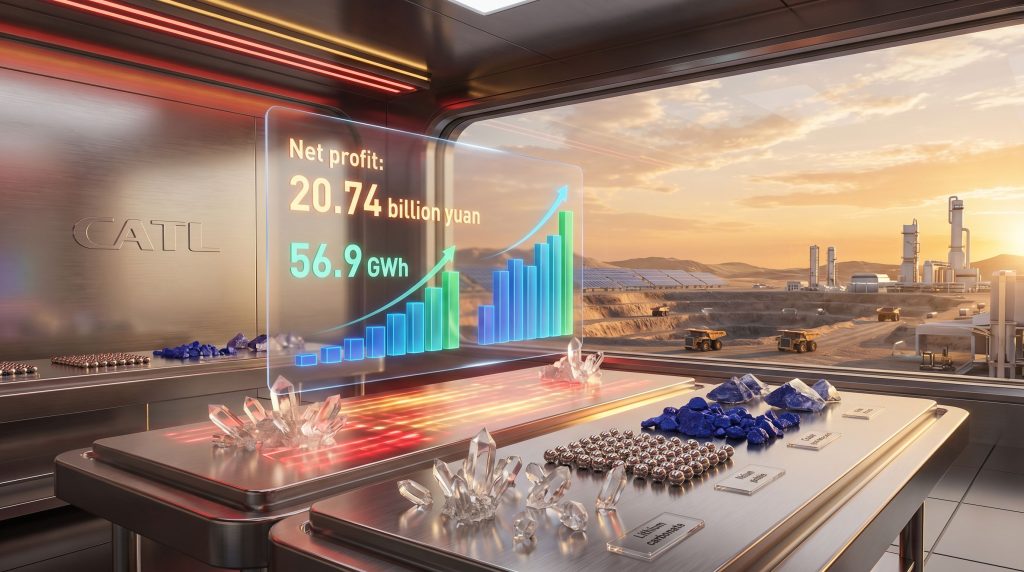
The company's financial performance provides the foundation for this strategic expansion. Net profit reached 20.74 billion yuan (approximately $3 billion) in Q1 2026, representing 48.5% quarter-over-quarter growth that exceeded market expectations. This profitability surge occurred despite challenging market conditions, including a 20% year-over-year decline in China's electric vehicle sales following subsidy rollbacks.
CATL's Market Dominance Metrics:
- Global EV battery market share: 42.1%
- Battery deliveries (first two months 2026): 56.9 GWh
- Year-over-year delivery growth: 13.7%
- Quarterly profit growth: 48.5%
The integration strategy reflects recognition that controlling upstream resources provides manufacturers with operational flexibility and cost predictability that traditional procurement relationships cannot deliver. By managing the entire value chain from extraction through refined materials, CATL can optimise production scheduling and quality control across all operational phases.
Market Pressures Driving Upstream Integration
Multiple converging market forces have created compelling incentives for battery manufacturers to pursue direct resource control. Energy transition acceleration, geopolitical supply risks, and demand diversification across automotive and energy storage sectors have fundamentally altered the strategic calculus for vertical integration.
Primary Integration Drivers:
| Market Force | Impact Scale | Strategic Response |
|---|---|---|
| Crude Oil Surge | 30% increase to ~$100/barrel | Accelerated EV adoption |
| ESS Capacity Plans | 600+ GWh annual target | Mining investment justification |
| Supply Concentration | 70% cobalt from DRC | Geographic diversification |
| Processing Bottlenecks | China lithium processing dominance | Vertical integration |
Energy storage systems have emerged as a critical infrastructure component, creating sustained demand beyond traditional automotive applications. Data centres, particularly those supporting artificial intelligence infrastructure, renewable energy integration, and grid stability requirements are generating consumption growth that justifies substantial upstream investments.
Moreover, the battery recycling breakthrough technologies being developed provide additional supply chain security considerations. Ding Haifeng, a consultant at Shanghai-based financial advisory firm Integrity, noted that CATL has identified significant growth opportunities, leading the company to make substantial investments in upstream mining resources to support potential high growth trajectories.
The global energy shock, combined with Middle East geopolitical tensions, has pushed Brent crude prices up more than 30% to approximately $100 per barrel. This energy price environment accelerates the economic case for electric vehicle adoption while simultaneously driving renewable energy infrastructure expansion that requires battery storage solutions.
Critical Mineral Supply Chain Vulnerabilities
Battery manufacturing depends on a concentrated group of critical minerals, each presenting unique supply chain vulnerabilities that vertical integration strategies aim to address. Understanding these constraints helps explain the strategic logic behind substantial mining industry innovation investments by battery manufacturers.
Lithium Supply Chain Constraints:
- Geographic concentration in Chile, Australia, Argentina creates supply risk exposure
- Processing bottlenecks, particularly in China, extend refined material availability timelines
- Long development cycles for new projects create barriers to rapid capacity expansion
- Technical extraction complexity requires specific geological and hydrological conditions
Nickel Market Structure Challenges:
- Production method diversity: Class I (processed nickel) and Class II (lower purity) grades serve different battery applications
- Indonesian export policy uncertainty affects supply predictability
- Stainless steel production competition consumes approximately 65-70% of global nickel demand
- Environmental regulations increasingly impact production capacity and operational costs
Cobalt Dependency Risks:
The Democratic Republic of Congo dominates global cobalt production at approximately 70% of total supply, creating significant single-source dependency exposure for battery manufacturers.
- Ethical sourcing requirements complicate procurement due to artisanal mining prevalence
- Price volatility subjects procurement planning to speculation and geopolitical uncertainty
- Limited substitution possibilities exist without performance trade-offs in certain battery chemistries
- Alternative material development requires substantial research and development investments with uncertain timelines
Processing capacity for lithium has not expanded proportionally with extraction capacity, creating timing delays between raw material availability and usable battery-grade lithium carbonate or hydroxide production. However, developments in battery-grade lithium refinery infrastructure are addressing these bottlenecks.
Financial Performance Supporting Strategic Expansion
CATL's financial results demonstrate the capital generation capacity necessary to support multi-billion dollar upstream investments while maintaining operational growth across core business segments.
Q1 2026 Financial Highlights:
- Net profit: 20.74 billion yuan (~$3 billion USD)
- Quarter-over-quarter growth: 48.5%
- Performance vs. expectations: Exceeded market forecasts
- Market share: 42.1% global EV battery market
The company's ability to achieve substantial profit growth despite China's EV market contraction demonstrates successful revenue diversification. Zhou Ling, a hedge fund manager at Shanghai Shiva Investment, observed that China's slumbering EV market will not prevent CATL from improving earnings as energy storage systems become a significant growth driver.
This revenue stability across market segments provides confidence for long-term capital commitments in mining infrastructure. The $4.4 billion mining investment represents meaningful but manageable capital allocation relative to quarterly earnings scale, indicating the company possesses financial capacity for sustained upstream development.
Revenue Diversification Impact
- Automotive Segment: Faced headwinds from 20%+ sales decline in China due to subsidy rollbacks
- Energy Storage Segment: Provided growth momentum offsetting automotive weakness
- International Markets: Maintained market share growth supporting global expansion
- Technology Platform Diversification: Multiple chemistry platforms serving different applications
The financial performance reflects successful strategic positioning across multiple demand channels, creating stability that supports long-term mining investment returns rather than depending solely on automotive market growth.
Global Battery Production Capacity Expansion
Chinese battery manufacturers are implementing aggressive capacity expansion plans that create substantial upstream mineral requirements. According to the GGII Energy Storage Research Institute, Chinese manufacturers are targeting production capacity exceeding 600 GWh of energy storage batteries annually.
Capacity Development Implications:
- Scale Requirements: 600+ GWh annual capacity requires proportional raw material supply scaling
- Geographic Expansion: International manufacturing facilities multiply supply chain complexity
- Technology Platform Diversity: Multiple battery chemistry platforms require different mineral specifications
- Integration Depth: End-to-end production control from raw materials through finished components
CATL's production metrics support this expansion trajectory. The company delivered 56.9 GWh of batteries in the first two months of 2026, representing 13.7% year-over-year growth. Extrapolating from this two-month performance suggests an annual run-rate approaching 341 GWh, indicating substantial mineral consumption requirements.
The production scaling represents a fundamental shift in global battery manufacturing, with implications for mineral demand that extend far beyond current market consumption patterns. In addition, battery metals investment strategies must anticipate these capacity additions to ensure adequate raw material availability across all production phases.
Production Planning Considerations
- Automotive Applications: Traditional EV battery chemistries with established performance requirements
- Energy Storage Systems: Grid-scale applications requiring different chemistry optimisation
- Data Centre Applications: Backup power systems with specific reliability and duration requirements
- Renewable Integration: Storage systems supporting wind and solar infrastructure
The next major ASX story will hit our subscribers first
How Are Battery Manufacturers Changing Competitive Dynamics?
CATL's mining strategy creates competitive advantages through supply chain control while influencing market dynamics for battery manufacturers, mining companies, and end users across the value chain.
Competitive Implications for Battery Manufacturers:
- Supply Chain Risk Reduction: Direct control eliminates procurement uncertainty from third-party suppliers
- Cost Predictability: Vertical integration provides protection from commodity price volatility
- Enhanced Negotiating Position: Resource control strengthens bargaining power with remaining independent miners
- Barriers to Entry: Integrated supply chains create competitive moats against new market entrants
Impact on Mining Companies:
- Long-term Contract Potential: Battery manufacturers seek stable supply relationships supporting multi-year agreements
- Competition from Integrated Producers: Direct competition from customers who develop internal mining capabilities
- Premium Valuations: Strategic mineral assets command higher valuations due to battery manufacturer interest
- Partnership Opportunities: Technology transfer and operational collaboration with battery producers
Considerations for End Users:
- Supplier Base Concentration: Fewer independent battery manufacturers may reduce procurement options
- Cost Structure Changes: Integrated suppliers may offer different pricing models
- Supply Security: Vertical integration potentially improves supply reliability but concentrates dependency
- Technology Development: Partnership opportunities for application-specific battery development
The competitive dynamics reflect broader structural changes across the battery materials value chain, with implications extending beyond immediate participants to include automotive manufacturers, energy infrastructure developers, and technology companies requiring battery solutions.
Regional Supply Chain Diversification Strategies
Geographic diversification in mining investments reflects both resource availability and geopolitical risk management considerations. Battery manufacturers are developing regional strategies that balance resource quality, political stability, infrastructure availability, and regulatory frameworks.
Geographic Investment Priorities:
Domestic Operations (China)
- Existing asset integration and operational expansion capabilities
- Regulatory environment familiarity reducing compliance complexity
- Infrastructure development advantages supporting rapid deployment
- Technology transfer capabilities between mining and manufacturing operations
International Expansion Targets
- Australia: Lithium and rare earth resource availability with stable regulatory environment
- South America: Lithium triangle opportunities in Chile, Argentina, Bolivia
- Africa: Cobalt and additional critical minerals with development potential
- North America: Strategic partnership opportunities with established mining infrastructure
The regional diversification approach requires balancing resource quality against operational complexity. Different geographic regions present varying combinations of resource grades, extraction costs, regulatory requirements, and infrastructure availability that influence investment allocation decisions.
Regional Risk Assessment Factors:
- Political Stability: Government continuity and policy predictability
- Regulatory Framework: Mining permits, environmental requirements, tax structures
- Infrastructure Availability: Transportation, power, water, communication systems
- Resource Quality: Mineral grades, extraction complexity, processing requirements
- Labor Availability: Skilled workforce access and development potential
Technology Integration in Mining Operations
Battery manufacturers possess technological capabilities and capital resources that can enhance mining efficiency and sustainability. The integration of advanced technologies in mining operations represents a key differentiator for vertically integrated producers.
Technology Application Areas:
- Automated Extraction Systems: Robotic and remote-controlled equipment reducing labour requirements and improving safety
- Processing Optimisation: Advanced separation and purification technologies improving yield and quality
- Environmental Monitoring: Real-time compliance tracking and impact minimisation systems
- Energy Storage Integration: On-site battery systems for mining operation power management
- Data Analytics: Resource optimisation through predictive modelling and operational intelligence
- Sustainable Processing: Reduced water consumption, waste minimisation, and energy efficiency improvements
These technological advantages enable battery manufacturers to potentially achieve superior operational performance compared to traditional mining companies. The integration of battery technology expertise with mining operations creates synergies that support economic justification for vertical integration.
Innovation Areas
- Extraction Efficiency: Higher recovery rates from existing deposits through technology application
- Processing Speed: Accelerated timelines from raw material to battery-grade specifications
- Quality Control: Enhanced purity and consistency in finished materials
- Environmental Impact: Reduced ecological footprint through technology optimisation
What Does Long-Term Industry Evolution Look Like?
The trend toward vertical integration by major battery manufacturers suggests fundamental restructuring of industry relationships and competitive dynamics. Understanding these structural changes helps predict future market evolution and investment opportunities.
Structural Evolution Scenarios
Scenario 1: Integrated Dominance
- Major battery producers control significant mining assets across critical minerals
- Traditional miners focus on secondary resources or niche applications
- Consolidated supply chains with fewer independent participants
- Enhanced supply security but potentially reduced competitive pricing
Scenario 2: Hybrid Partnership Model
- Strategic alliances between established miners and battery producers
- Shared investment in development projects reducing individual risk exposure
- Technology transfer and operational collaboration improving efficiency
- Balanced risk distribution across the value chain
Scenario 3: Regulatory Intervention
- Government policies promoting supply chain diversity and competition
- Restrictions on vertical integration concentration to maintain market competition
- Support for independent mining development through incentives or financing
- International cooperation on critical mineral security and trade relationships
The structural evolution will likely incorporate elements from multiple scenarios, with different outcomes across geographic regions and mineral categories. Furthermore, regulatory responses, technological developments, and market forces will determine the ultimate industry configuration.
Investment Implications and Market Outlook
CATL investment in mining subsidiary for battery materials creates both opportunities and challenges for mining sector investments, with implications for project valuations, partnership structures, and competitive positioning.
Investment Opportunities:
- Premium Valuations: Strategic mineral assets command higher prices due to battery manufacturer interest
- Partnership Potential: Collaboration opportunities with integrated producers seeking additional resources
- Technology Transfer: Access to advanced mining and processing technologies
- Long-term Contracts: Stable revenue through multi-year offtake agreements with battery manufacturers
Investment Risks:
- Increased Competition: Direct competition from integrated producers for quality deposits
- Margin Pressure: Competitive pressure from vertically integrated suppliers
- Reduced Negotiating Power: Fewer independent buyers may limit pricing flexibility
- Capital Requirements: Technology and infrastructure investments needed to remain competitive
Market Outlook Considerations
The evolving market structure requires mining companies to adapt strategies for an environment where major customers are becoming direct competitors through vertical integration. Successful market participants must develop competitive advantages that complement rather than compete with integrated producers.
Strategic Adaptation Requirements:
- Technology Excellence: Superior operational performance through innovation and efficiency
- Geographic Specialisation: Focus on regions or resources where integrated producers have limited presence
- Partnership Development: Strategic alliances providing mutual benefits rather than competition
- Niche Market Focus: Specialised applications or quality specifications not served by integrated operations
Future Market Dynamics and Strategic Responses
The battery industry's move toward vertical integration represents a permanent structural shift requiring strategic adaptation across the supply chain. Successful market participants must develop responses that account for this evolutionary change.
Strategic Response Framework
For Mining Companies:
- Evaluate partnership opportunities with battery manufacturers seeking additional resources
- Invest in technology and operational excellence to compete with integrated producers
- Develop specialised capabilities or geographic advantages creating competitive differentiation
- Consider strategic alliances for project development and risk sharing
For Battery Manufacturers:
- Assess vertical integration opportunities against partnership alternatives
- Develop mining expertise and operational capabilities supporting upstream investments
- Evaluate acquisition strategies versus organic development for resource access
- Plan for regulatory and competitive responses to integration initiatives
For End Users:
- Monitor supply chain concentration risks from vertical integration trends
- Develop supplier diversification strategies maintaining competitive procurement options
- Consider strategic mineral investments or partnerships reducing supply dependency
- Evaluate long-term contract structures balancing security with flexibility
The successful navigation of this industry transformation requires proactive strategic planning and adaptation to evolving competitive dynamics. However, this expansion of CATL's upstream operations represents the beginning rather than the conclusion of structural changes reshaping the global battery materials supply chain.
Investment Disclaimer: This analysis is for informational purposes only and does not constitute investment advice. Battery materials markets involve significant risks including commodity price volatility, geopolitical uncertainties, and technological changes. Potential investors should conduct independent due diligence and consult qualified financial advisors before making investment decisions.
Ready to Invest in the Next Major Mineral Discovery?
Discovery Alert instantly alerts investors to significant ASX mineral discoveries using its proprietary Discovery IQ model, turning complex mineral data into actionable insights. Understand why historic discoveries can generate substantial returns by visiting Discovery Alert's dedicated discoveries page, showcasing historic examples of exceptional outcomes, and begin your 14-day free trial today to position yourself ahead of the market.