July 8, 2026
Strategic Mineral Partnerships: Decoding Technology-Driven Diplomacy in South America
South American lithium markets are experiencing a fundamental transformation as governments implement sophisticated partnership frameworks designed to balance resource sovereignty with technological advancement. The EAU Lithium negotiation agreement with YLB represents a pivotal development in this evolving landscape, where traditional mining concessions are giving way to strategic technology alliances that reflect broader geopolitical shifts in critical mineral supply chain management.
Bolivia's approach to lithium development demonstrates how resource-rich nations are leveraging competitive tendering processes to secure advanced extraction technologies while maintaining state control over mineral assets. This strategic positioning has attracted significant international attention from technology providers seeking market access in one of the world's largest lithium reserves.
The emergence of direct lithium extraction technologies has created new opportunities for nations to accelerate production timelines while reducing environmental impacts compared to conventional evaporation methods. These technological advances are reshaping investment flows and diplomatic relationships throughout the region, particularly as seen in argentina lithium brine insights and broader mining industry innovation trends.
When big ASX news breaks, our subscribers know first
What Does EAU Lithium's YLB Agreement Signal for South American Resource Diplomacy?
The EAU Lithium negotiation agreement with YLB executed between EAU Lithium and Yacimientos de Litio Bolivianos represents a strategic inflection point in South American mineral diplomacy. Bolivia's state-owned lithium company selected EAU Lithium from 34 competing parties in a comprehensive tender process that concluded with formal negotiations beginning in February 2026.
This partnership framework demonstrates Bolivia's systematic approach to technology validation through multi-phase evaluation protocols. The December 2024 technical testing contract signing ceremony in La Paz featured senior Bolivian government officials alongside European Union and Member State Ambassadors, indicating the diplomatic significance of lithium partnerships for European industrial decarbonisation objectives.
Furthermore, this agreement reflects the growing importance of Australian lithium innovations in the global supply chain, as Australian expertise plays a crucial role in validating extraction technologies across international markets.
Decoding the Strategic Framework Behind Bolivia's Technology Partnership Approach
Bolivia's selective partnership criteria prioritise technical validation over immediate production commitments, reflecting a governance model that emphasises due diligence and risk mitigation. YLB's negotiation protocols require demonstrated performance on native brine chemistry before advancing to commercial implementation phases.
The competitive tender structure suggests YLB received substantial international interest in Bolivian lithium partnerships. The selection of a single technology partner from this competitive field indicates evaluation criteria that weighted:
- Proven technical capability across multiple geological environments
- Institutional stability backed by government support
- Integration potential for complementary resources
- Long-term technology provider credibility and global deployment experience
The formal validation process included testing at three distinct Bolivian salt flats: Pastos Grandes, Empexa, and Coipasa, plus additional laboratory validation using synthesised Uyuni brine samples at Edith Cowan University in Western Australia. This comprehensive testing framework demonstrates YLB's requirement for technology adaptability across varying brine chemistries before committing to industrial-scale implementation.
European Union's Strategic Positioning in Latin American Critical Minerals
Germany's diplomatic backing served as a catalyst for the EAU Lithium partnership, signalling alignment with European Union decarbonisation targets and critical mineral supply chain security objectives. The presence of EU and German ambassadors at the December 2024 contract signing ceremony reflects positioning of lithium technology partnerships as strategic foreign policy initiatives.
European diplomatic support provides institutional credibility and access to official financing mechanisms, creating partnership advantages including:
- Government-level commitment demonstrating long-term stability
- Access to European development financing instruments
- Alignment with European industrial policy objectives
- Integration with established intellectual property protection frameworks
The involvement of Vulcan Energy's German subsidiaries in technology licensing and engineering support further strengthens the European connection, as Vulcan recently completed major financing from European and German government agencies for its Lionheart project in Germany.
Why Direct Lithium Extraction Technology Is Transforming Traditional Mining Economics
Direct Lithium Extraction methodologies represent a fundamental shift from traditional evaporation pond systems by reducing water consumption and accelerating processing timelines. According to the International Energy Agency's 2024 Critical Minerals Report, DLE methods reduce water consumption by approximately 90% compared to evaporation ponds, with processing times reduced from 18-24 months to 2-6 weeks depending on technology specifications.
The success of projects like geothermal lithium extraction initiatives in Europe demonstrates the potential for innovative extraction methods to revolutionise traditional mining approaches globally.
VULSORB®A-DLE Technology Performance Metrics and Scalability Potential
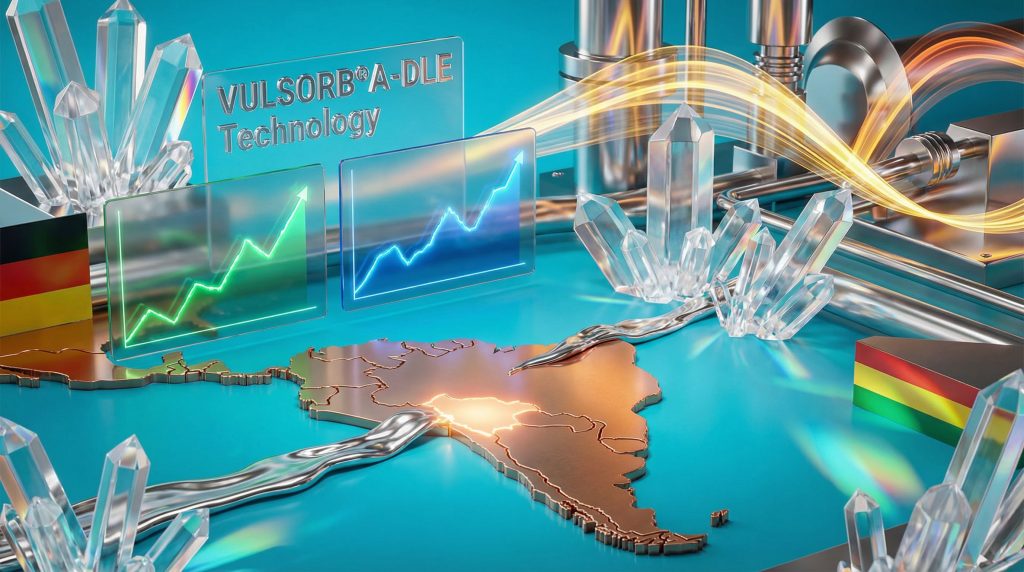
The VULSORB®A-DLE technology licensed from Vulcan Energy to EAU Lithium demonstrated successful performance across multiple Bolivian brine environments during the testing phase. This multi-site validation suggests the technology accommodates varying brine chemistry characteristics across different salt flat locations.
Testing was conducted on brine samples from three Bolivian salt flats: Pastos Grandes, Empexa, and Coipasa, each representing distinct geological and geochemical environments. The technology's adaptability across these varying conditions indicates potential for portfolio-scale deployment across multiple extraction sites simultaneously.
The methodological advantages of DLE technology include:
- Reduced environmental footprint: Lower water consumption compared to traditional evaporation methods
- Accelerated processing timelines: Weeks rather than months for lithium concentration
- Geographic flexibility: Adaptability to varying brine compositions and climatic conditions
- Operational efficiency: Reduced land area requirements compared to evaporation pond systems
Brine Sample Testing Results: From Pastos Grandes to Commercial Viability
The comprehensive testing programme included laboratory validation at Edith Cowan University using synthesised Uyuni brine samples, providing third-party academic verification without requiring production-scale resource commitment. This validation protocol represents industry best practices for DLE technology deployment in emerging markets.
Testing Site Characteristics:
- Pastos Grandes: High-altitude salt flat with distinct brine geochemistry
- Empexa: Geologically separate location with different mineral concentration profiles
- Coipasa: Third validation site providing additional brine chemistry variability
- Synthesised Uyuni Brine: Laboratory-controlled testing environment for technology optimisation
The successful completion of multi-site testing led to YLB's invitation for EAU Lithium to continue formal negotiations, indicating technical performance met YLB's validation criteria across the diverse geological environments tested.
Which Factors Drive Bolivia's Lithium Partnership Selection Process?
Bolivia's partner selection methodology reflects sophisticated evaluation criteria designed to balance technological capability with strategic alignment. The progression from 34 competing parties to a single negotiation partner demonstrates systematic evaluation protocols prioritising long-term partnership viability over short-term production commitments.
However, the EAU Lithium negotiation agreement with YLB stands out as a testament to comprehensive preparation and diplomatic support in securing strategic mineral partnerships.
The 34-Party Tender Analysis: What Separated Winners from Competitors
The competitive tender process reveals substantial international interest in Bolivian lithium partnerships. EAU Lithium's selection suggests evaluation advantages included:
Technical Validation Capability:
- Demonstrated technology performance across multiple brine environments
- Third-party academic laboratory validation protocols
- Integration of complementary resource potential (geothermal energy research)
Institutional Support Framework:
- European Union diplomatic backing
- German government support for technology provider (Vulcan Energy)
- Access to European financing mechanisms
- Established intellectual property protection frameworks
Technology Provider Credibility:
- Vulcan Energy's flagship Lionheart project in Germany providing reference implementation
- Recent major financing completion demonstrating institutional confidence
- Committed global deployment strategy through regional partners
Technology Licensing Models in Critical Mineral Extraction
The partnership structure utilises an intellectual property licensing model wherein Vulcan Energy maintains technology ownership while enabling geographic market expansion through qualified regional partners. This deployment strategy allows technology providers to access emerging lithium markets while maintaining quality control through selective partner evaluation.
Vulcan Energy's approach demonstrates risk mitigation protocols designed to:
- Maintain technical oversight of international implementations
- Ensure consistency with European regulatory and engineering standards
- Facilitate technology transfer while protecting core intellectual property
- Enable geothermal integration expertise availability across geographic regions
Consequently, the involvement of German subsidiaries in technology licensing and engineering support provides institutional stability and access to European technical expertise, strengthening partnership credibility with government stakeholders.
How Geothermal Integration Could Revolutionise Bolivian Lithium Operations
The partnership framework includes geothermal energy research potential, suggesting recognition that lithium extraction energy intensity represents both a cost variable and environmental sustainability factor. Integration of geothermal heat sources with lithium processing operations could theoretically reduce reliance on grid electricity or fossil fuels.
This approach aligns with developments seen in geothermal lithium extraction projects across different geological environments globally.
Dual-Resource Extraction Potential in Bolivia's Geological Landscape
Bolivia's Altiplano region, characterised by high-elevation volcanic geology, presents potential geothermal resource availability that could complement lithium extraction operations. The presence of salt flats in this geological environment suggests possible integration opportunities, though specific resource assessment would require comprehensive geological surveys.
Potential Integration Advantages:
- Energy cost reduction: Utilising geothermal heat for processing operations
- Environmental sustainability: Reducing fossil fuel dependence in mining operations
- Operational independence: Decreased reliance on external energy infrastructure
- Resource optimisation: Maximising value from geological assets through dual extraction
Vulcan Energy's Lionheart Project: Blueprint for Bolivian Implementation
Vulcan Energy's integrated lithium-geothermal project in Germany serves as a reference case for combined resource extraction methodology. The Lionheart project recently completed major financing from European and German government agencies, reflecting institutional confidence in integrated extraction technology maturity.
The German flagship project provides operational experience and performance data that informs technology deployment to other regions, including South America. This reference implementation demonstrates:
- Technical feasibility of integrated lithium-geothermal operations
- Government support for combined resource extraction initiatives
- Financing availability for dual-resource projects meeting strategic objectives
- Technology scalability across different geological environments
What Are the Broader Implications for Global Lithium Supply Chain Security?
The EAU Lithium negotiation agreement with YLB represents positioning within global lithium supply chain diversification efforts as developed economies seek alternatives to existing production concentration. European industrial decarbonisation objectives require reliable access to lithium supplies, making South American partnerships strategically significant.
In addition, projects like battery-grade lithium refinery initiatives in emerging markets demonstrate the global shift towards localised processing capabilities and supply chain resilience.
Strategic Mineral Diplomacy in the Post-2025 Landscape
Bolivia's systematic approach to technology partnerships reflects broader trends in strategic mineral diplomacy wherein resource-rich nations leverage competitive tendering to secure advanced technologies while maintaining sovereign control over mineral assets. This governance model is being observed across multiple jurisdictions seeking to balance resource development with national strategic objectives.
The diplomatic involvement of EU and German representatives demonstrates how lithium partnerships have evolved beyond commercial transactions to become matters of strategic foreign policy significance. This elevation reflects:
- Industrial policy alignment between resource providers and technology consumers
- Supply chain security considerations for critical mineral dependencies
- Decarbonisation objectives requiring reliable lithium access for European industries
- Technology transfer frameworks supporting emerging market development while securing supply commitments
Investment Flow Patterns in Next-Generation Extraction Technologies
The partnership announcement influences regional exploration activities and investment capital allocation toward proven extraction methodologies. DLE technology validation in Bolivian conditions may accelerate adoption across neighbouring jurisdictions with similar geological characteristics.
Government funding mechanisms supporting overseas lithium projects, as demonstrated by European and German financing for Vulcan Energy's Lionheart project, establish precedents for state-backed critical mineral partnerships. These financing structures reflect strategic importance of lithium supply chain security for industrial decarbonisation objectives.
For instance, recent developments in Australian lithium innovations demonstrate how government support mechanisms are being implemented globally to secure strategic mineral supply chains.
The next major ASX story will hit our subscribers first
How Will This Agreement Impact Regional Mining Investment Strategies?
South American lithium market dynamics are experiencing consolidation trends as successful technology partnerships demonstrate viable alternatives to traditional mining concession models. The Bolivia-EAU Lithium agreement may influence partnership structures across the region.
South American Lithium Market Consolidation Trends
Technology adoption acceleration across neighbouring jurisdictions reflects competitive pressures to implement efficient extraction methodologies. Countries with similar geological characteristics may accelerate DLE technology evaluation based on successful Bolivian validation results.
Regional Investment Implications:
- Technology provider selection criteria becoming more sophisticated across jurisdictions
- Diplomatic relationship leverage increasingly important in securing mineral extraction agreements
- Investment capital reallocation toward proven extraction methodologies with government backing
- Partnership frameworks prioritising long-term relationships over short-term production commitments
Future Scenario Modelling for Bolivian Lithium Production Capacity
Production timeline projections depend on successful completion of current negotiation frameworks between EAU Lithium and YLB. Market share implications for established lithium producers will depend on Bolivia's eventual production capacity and global market conditions at the time of commercial operations.
Supply chain resilience improvements through geographic diversification represent strategic objectives for lithium consumers, particularly European industrial users seeking alternatives to existing production concentration. Bolivia's partnership approach may establish templates for other resource-rich nations implementing similar technology validation frameworks.
According to Stockhead's analysis, the critical minerals sector is experiencing unprecedented investment flows, with lithium projects receiving particular attention from institutional investors seeking exposure to the energy transition.
Key Takeaways for Mining Sector Stakeholders
Strategic positioning opportunities in evolving lithium markets require understanding of technology validation protocols and diplomatic relationship development. The EAU Lithium negotiation agreement with YLB demonstrates importance of comprehensive testing capabilities and institutional support in competitive tender environments.
Small Caps reports indicate that the agreement represents a significant milestone in South American lithium development, particularly given the competitive nature of Bolivia's tender process.
Strategic Positioning Opportunities in Evolving Lithium Markets
Technology provider selection criteria increasingly emphasise technical validation capability across diverse geological environments, institutional credibility through government backing, and integration potential for complementary resources. Companies seeking partnerships in emerging markets must demonstrate comprehensive technical capabilities and stable institutional relationships.
Critical Success Factors:
- Multi-site technical validation demonstrating technology adaptability
- Government relationships providing institutional credibility and financing access
- Comprehensive partnership frameworks including complementary resource potential
- Long-term commitment to technology deployment and partnership development
Monitoring Framework for Partnership Development Progress
Milestone tracking systems for negotiation-to-production timelines require monitoring of technical validation completion, regulatory approval processes, financing arrangement finalisation, and commercial operation commencement. Performance indicators for technology deployment success include processing efficiency metrics, environmental impact assessments, and production capacity achievement.
Market impact assessment methodologies for strategic mineral agreements must account for geopolitical implications, supply chain diversification effects, and technology adoption acceleration across comparable jurisdictions. The Bolivia-EAU Lithium partnership provides a framework for evaluating similar strategic mineral diplomacy initiatives across emerging markets.
"This analysis contains forward-looking statements and projections based on current partnership announcements and industry trends. Actual outcomes may vary significantly based on negotiation results, regulatory approvals, market conditions, and technological developments. Investment decisions should not be based solely on partnership announcements prior to commercial production commencement."
Seeking Strategic Mineral Investment Opportunities in South America?
Discovery Alert's proprietary Discovery IQ model delivers instant notifications on significant ASX mineral discoveries, empowering investors to identify actionable opportunities in lithium, critical minerals, and emerging mining technologies ahead of the broader market. Explore how major mineral discoveries can generate substantial returns by visiting Discovery Alert's dedicated discoveries page, showcasing historic examples of exceptional outcomes, and begin your 14-day free trial today to secure your market-leading advantage.