July 31, 2026
Strategic Mineral Processing Infrastructure Development in Central Africa
Battery mineral processing represents one of the most complex industrial challenges facing resource-rich nations today. Advanced hydrometallurgical facilities require precise technical specifications, sustained energy inputs exceeding 100 megawatts, and sophisticated supply chain coordination across multiple stakeholder groups. The Democratic Republic of Congo's position as controller of approximately 70% of global cobalt reserves creates unique opportunities to capture downstream value through developing the DRC battery mineral value chain, yet technical barriers and coordination challenges have historically limited processing development beyond basic concentration stages.
The transition from raw mineral extraction to integrated battery chemical production involves multiple processing phases, each requiring distinct technical capabilities and capital investments. Understanding these industrial sequences provides crucial context for evaluating current DRC battery mineral value chain development initiatives and their potential to reshape global supply dynamics.
When big ASX news breaks, our subscribers know first
Current Resource Position and Global Market Influence
The DRC's geological endowments create extraordinary leverage in global energy transition supply chains. Cobalt reserves totaling approximately 3.6 million tonnes represent roughly 50% of identified global resources, according to United States Geological Survey classifications. This mineral concentration enables the nation to influence pricing dynamics and supply security across the battery manufacturing sector.
Current production statistics demonstrate the scale of DRC influence:
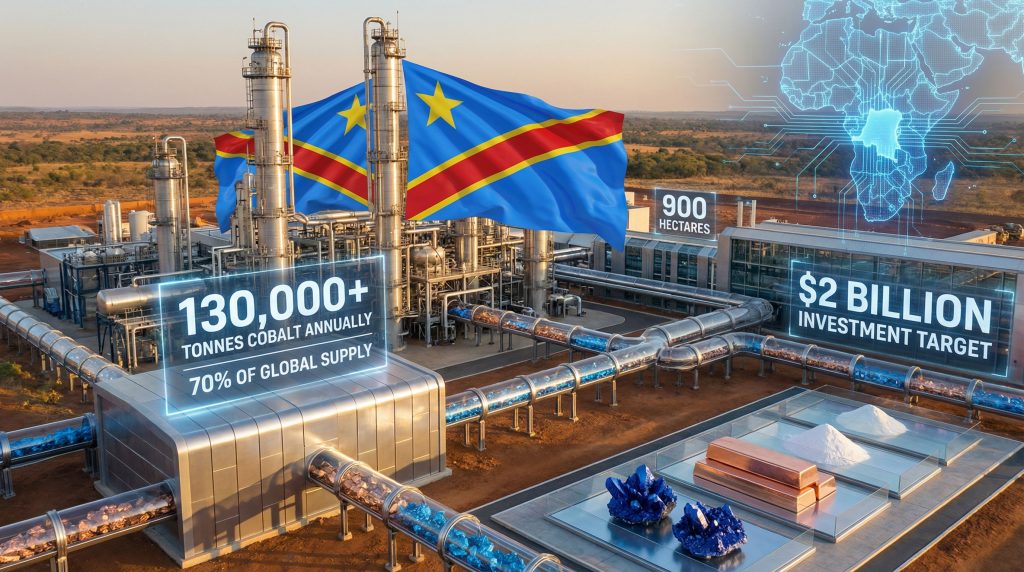
• Cobalt output: 120,000-130,000 tonnes annually, representing 50-55% of global production
• Copper production: Over 1.8 million tonnes per year, positioning DRC as the world's second-largest producer
• Emerging lithium potential: The Manono project contains indicated resources of approximately 400,000 tonnes lithium carbonate equivalent
• Coltan significance: Substantial columbite-tantalite production supporting electronics manufacturing
The integration of these minerals in battery systems creates technical interdependencies that amplify DRC's strategic importance. Cobalt provides thermal stability in lithium-ion cathodes, preventing thermal runaway in NCA and NMC battery chemistries. Copper serves dual functions as current collector material requiring 99.9% purity specifications and electrical infrastructure for charging networks.
Geographic proximity to emerging African markets adds another dimension to DRC's strategic positioning. As electric vehicle adoption accelerates across the continent, regional supply chain development could reduce transportation costs and delivery timelines compared to Asian processing centers. Furthermore, the mining industry evolution 2025 presents new opportunities for value capture through innovative processing technologies.
Value Capture Limitations and Processing Gaps
Despite controlling majority global cobalt supply, the DRC captures only 15-25% of final battery mineral value through participation primarily at extraction and concentration stages. This value distribution reflects structural challenges common across resource-dependent economies attempting industrial transformation.
Processing Stage Value Analysis:
| Stage | DRC Participation | Value Capture | Technical Requirements |
|---|---|---|---|
| Extraction | 70% global share | 15-25% value | Mining equipment, basic processing |
| Concentration | 40% domestic capacity | 5-10% value | Beneficiation facilities, quality control |
| Refining | Less than 5% domestic | 2-3% value | Hydrometallurgy, chemical expertise |
| Precursor production | Negligible | Under 1% value | Advanced chemistry, precise specifications |
Approximately 85% of cobalt exports leave as unrefined concentrate destined for Chinese processing facilities. These refineries capture 60-90% of processing margins through hydrometallurgical operations that transform concentrates into high-purity chemicals required for battery cathode production.
Technical barriers constraining domestic processing include energy supply reliability, with major refining operations requiring 30-100+ megawatts of sustained power. Current grid limitations create bottlenecks for energy-intensive hydrometallurgical processes. Water resource requirements for leaching and purification operations add environmental management complexities requiring sophisticated treatment systems.
Moreover, the critical minerals energy transition creates additional pressures for value-added processing capabilities. Regulatory coordination across mining, energy, industry, and trade ministries creates bureaucratic delays affecting project implementation timelines.
International Partnership Development Strategy
The February 24, 2026 partnership announcement between Prime Minister Judith Suminwa Tuluka, the Congolese Battery Council, and the International Trade Centre represents a market-access focused approach to value chain development. This collaboration targets systematic improvements in export competitiveness and international buyer relationships.
Technical Support Framework
The ITC partnership emphasizes three strategic mechanisms:
• Market intelligence: Export analysis and premium buyer identification through ITC's global network
• Standards compliance: Traceability system implementation aligned with OECD Due Diligence Guidelines and London Metal Exchange responsible sourcing requirements
• Partnership facilitation: Investment structuring and technology transfer coordination with international industry participants
The International Trade Centre's mandate as a joint United Nations and World Trade Organization agency provides specialized capabilities in developing country value chain integration. Their focus on trade support complements industrial development initiatives by addressing market access barriers that constrain processing project viability.
Implementation Challenges
The partnership announcement lacks specific deliverables, timelines, and target industrial segments. This ambiguity reflects broader challenges in translating policy coordination into operational outcomes across multiple government agencies and private sector stakeholders.
Market access improvements require sustained coordination between technical standards implementation and industrial capacity development. ESG compliance pressures from international battery manufacturers create opportunities for certified DRC suppliers, yet certification processes demand significant upfront investments in traceability systems and community development programs.
In addition, the recent critical minerals executive order in the United States highlights the geopolitical importance of securing reliable supply chains. This creates both opportunities and challenges for DRC's value chain development strategy.
Musompo Special Economic Zone Development Progress
The Musompo SEZ in Lualaba province represents the DRC's most comprehensive attempt to develop integrated battery mineral processing capabilities. Spanning over 900 hectares, the project targets multiple processing stages from concentration through precursor chemical production.
Investment Structure:
• Infrastructure costs: Over $200 million for basic facility development
• Private investment target: $2 billion across multiple processing operations
• Employment projections: 25,000 direct positions, 60,000 indirect jobs
• Processing scope: Cobalt, copper, and lithium streams through integrated facilities
Project momentum has fluctuated following political transitions affecting ministerial leadership. The August 2025 departure of Industry Minister Louis Watum Kabamba created implementation delays, highlighting dependence on sustained political coordination across government agencies.
According to statements from Arise IIP CEO Romain Deniel in November 2025, SEZ development requires coordination across four to six ministries simultaneously. The battery value chain's strategic importance demands buy-in from existing operators given potential impacts on current export structures and commercial relationships.
Technical Infrastructure Requirements
Planned processing facilities include:
• Hydrometallurgical plants: Leaching and solution purification for cobalt and copper processing
• Sulfuric acid production: Critical input chemical for metal extraction processes
• Cathode precursor manufacturing: Advanced chemical production for lithium cobalt oxide and nickel-manganese-cobalt compounds
• Battery assembly potential: Component manufacturing and cell assembly operations
Energy requirements present the most significant infrastructure challenge. Sustained processing operations demand reliable power supply at industrial scale, requiring coordination with energy ministry initiatives for grid expansion and generation capacity development. However, the green iron metal project demonstrates how renewable energy integration can support heavy industrial operations.
Chinese Investment Influence and Market Dynamics
Chinese entities control approximately 80% of DRC cobalt production through direct mine ownership, joint venture participation, and long-term offtake agreements. This dominance creates both opportunities and strategic constraints for domestic value chain development.
Major Chinese Operations
Huayou Cobalt operates integrated mining and processing facilities, combining direct extraction with downstream refining capabilities. Their operations demonstrate the capital requirements and technical expertise necessary for successful vertical integration.
CMOC (China Molybdenum Co.) manages the Tenke Fungurume copper-cobalt complex, representing significant joint venture investment in integrated production. These operations provide models for public-private partnership structures in large-scale mineral processing.
Zijin Mining's involvement in the Kamoa-Kakula copper project expansion illustrates Chinese appetite for major capital commitments in DRC mineral development, with operations designed for sustained long-term production.
Strategic Implications
Chinese dominance provides technical expertise and capital access while creating supply chain dependencies that may limit market relationship diversification. Approximately 60-90% of global cobalt refining capacity operates in Chinese facilities, concentrating processing margins in Asian markets.
This concentration creates vulnerabilities for DRC battery mineral value chain strategies. Successful domestic processing development requires either coordination with existing Chinese operations or development of alternative market relationships with European and North American battery manufacturers.
The next major ASX story will hit our subscribers first
Sustainability Requirements and Market Access Evolution
International battery manufacturers increasingly demand responsible sourcing certifications driven by regulatory requirements and corporate sustainability commitments. These standards create both barriers and opportunities for DRC mineral exports.
Compliance Framework Requirements
OECD Due Diligence Guidelines mandate supply chain transparency and conflict mineral screening across international mineral trade. Implementation requires comprehensive traceability systems from mine extraction through processing and export.
EU Battery Regulation establishes mandatory sustainability criteria for battery imports, including carbon footprint disclosure and responsible sourcing verification. These requirements affect market access for DRC minerals destined for European manufacturing.
Corporate ESG commitments from major automotive manufacturers create premium market opportunities for certified suppliers. Companies including Tesla, BMW, and other industry leaders prioritize suppliers demonstrating environmental and social responsibility standards.
Artisanal Mining Integration
Approximately 15-20% of DRC cobalt production originates from artisanal and small-scale mining operations. Integrating these activities into certified supply chains requires:
• Formalization programs: Cooperative structures and regulatory compliance frameworks
• Community development: Education, healthcare, and infrastructure improvements in mining areas
• Safety standards: Equipment, training, and environmental protection measures
• Child labor elimination: Monitoring systems and alternative livelihood development
Furthermore, the battery recycling breakthrough 2025 highlights emerging technologies that could complement primary mineral production while supporting circular economy principles.
Global Battery Demand Projections and Market Opportunities
Electric vehicle adoption and energy storage deployment drive battery mineral demand projections of 4-6x increases by 2030. This growth trajectory creates opportunities for DRC suppliers to negotiate improved value capture through strategic positioning and processing capability development.
Competitive Positioning Analysis
DRC Advantages:
• Unmatched cobalt reserves and current production capacity
• Significant copper resources enabling integrated operations
• Emerging lithium potential from Manono and exploration prospects
• Geographic positioning for African market development
Strategic Vulnerabilities:
• Battery chemistry evolution toward reduced cobalt content
• Alternative supply development in Australia, Canada, and other jurisdictions
• Infrastructure constraints limiting processing scale-up
• Political stability concerns affecting long-term investment confidence
Cobalt substitution research creates particular risks for DRC's strategic position. Nickel-rich battery chemistries reduce cobalt requirements, potentially affecting demand growth despite overall market expansion. However, research indicates that the DRC remains crucial for global battery industry supply chains.
Policy Coordination Requirements for Successful Integration
Effective DRC battery mineral value chain transformation demands sustained coordination across multiple government agencies with distinct mandates and operational priorities.
Critical Ministry Coordination:
• Mining Ministry: Resource allocation, licensing frameworks, and production oversight
• Energy Ministry: Power generation, grid infrastructure, and industrial energy policy
• Industry Ministry: Manufacturing incentives, investment promotion, and technology transfer
• Finance Ministry: Taxation policy, revenue optimization, and investment facilitation
• Infrastructure Ministry: Transportation networks, logistics hubs, and regional connectivity
Phased Development Strategy
Optimal value chain integration requires sequenced investment approaches addressing infrastructure constraints before advanced processing development:
Phase 1 (2026-2028) – Foundation Development:
• Power generation and transmission network expansion
• Transportation infrastructure upgrades for heavy industrial logistics
• Regulatory framework harmonization across relevant ministries
Phase 2 (2028-2031) – Processing Capacity:
• Concentrate upgrading facilities with improved recovery rates
• Sulfuric acid production for domestic hydrometallurgical operations
• Initial refining operations producing intermediate chemical products
Phase 3 (2031+) – Integrated Manufacturing:
• Battery precursor chemical production meeting international specifications
• Component manufacturing for regional and international markets
• Direct supply relationships with major battery manufacturers
Long-term Implications for Global Supply Chain Architecture
Successful DRC value chain transformation could fundamentally reshape global battery mineral markets by reducing Chinese processing dominance and creating new supply chain optionality for international manufacturers. The magnitude of DRC's resource position means domestic processing development would affect global pricing dynamics and supply security calculations.
Implementation success depends on sustained political commitment, infrastructure investment coordination, and effective stakeholder alignment across government agencies and private sector participants. The combination of ITC partnership development, Musompo SEZ construction, and growing international investment interest creates multiple pathways for value capture improvement.
The partnership with the International Trade Centre provides pragmatic market access support while industrial capacity develops. This dual-track approach addresses immediate export competitiveness while building foundations for long-term processing capabilities.
Investor Considerations:
Market participants evaluating DRC mineral exposure should assess political stability, infrastructure development timelines, and Chinese partnership dynamics affecting investment returns. The battery mineral sector's strategic importance creates both opportunities and risks requiring careful analysis of regulatory frameworks and operational capabilities.
This analysis is based on publicly available information and industry reports. Investors should conduct independent research and consider multiple factors when making investment decisions. Market conditions, political developments, and technical challenges may affect outcomes differently than projected.
Looking to Capitalise on Strategic Battery Mineral Opportunities?
Discovery Alert's proprietary Discovery IQ model delivers real-time alerts on significant ASX mineral discoveries, instantly empowering subscribers to identify actionable opportunities ahead of the broader market. Begin your 14-day free trial today and secure your market-leading advantage whilst the global battery minerals sector undergoes historic transformation.