August 12, 2026
Strategic Mineral Supply Chain Positioning in Post-Moratorium Madagascar
The global race for critical minerals has intensified as nations seek to secure supply chains essential for renewable energy infrastructure. Within this complex geopolitical landscape, Madagascar emerges as a pivotal player whose vast untapped reserves of nickel, cobalt, and graphite could reshape battery production dynamics. The island nation's recent policy decisions reflect calculated responses to mounting international pressure for resource access, positioning Madagascar at the intersection of Western and Chinese strategic interests in African mining sectors. Furthermore, the evolving critical minerals strategy demonstrates how nations are prioritising resource security.
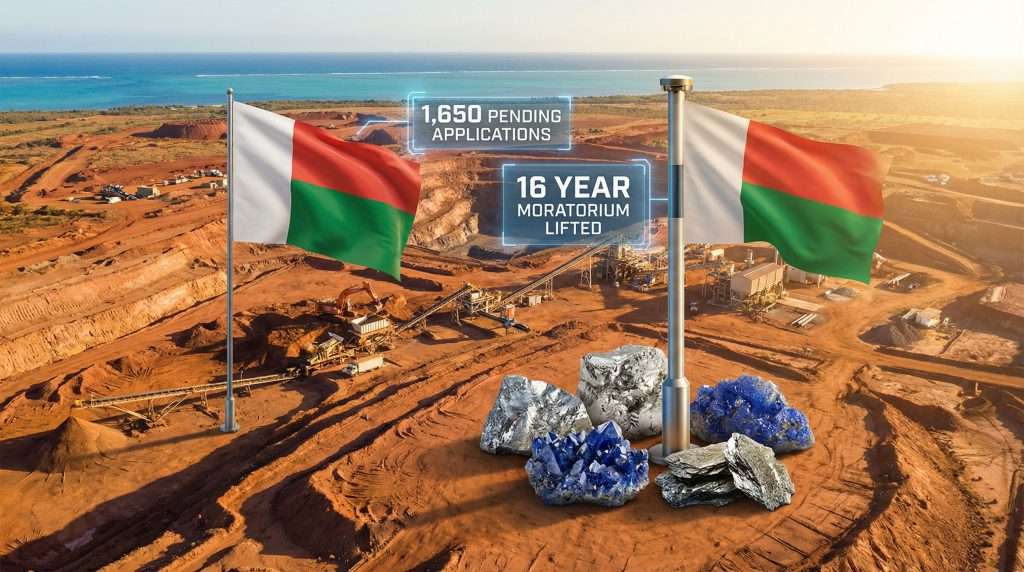
Recent regulatory developments signal Madagascar's commitment to modernising its mining governance framework after years of institutional paralysis. The 1,650+ accumulated permit applications represent approximately $10-15 billion USD in potential foreign direct investment, highlighting the scale of deferred exploration activities across multiple mineral commodities. This regulatory backlog created a unique market opportunity where established projects with proven geological data can rapidly advance toward production decisions once permits resume.
Battery Metals Drive Investment Priorities
Madagascar's mineral endowments align strategically with global energy transition requirements. The country possesses approximately 8.2 million tonnes of identified nickel ore resources according to USGS assessments, positioning it among the world's top-10 nickel reserve holders. Consequently, International Energy Agency projections indicate nickel demand for batteries will increase 3-4 times by 2040, with electric vehicle battery production consuming 70% of incremental nickel demand.
The permit resumption creates a two-tier investment environment where battery metals receive preferential regulatory treatment. Projects targeting nickel and cobalt extraction benefit from expedited processing, whilst traditional commodities face enhanced environmental and social scrutiny. This selective approach reflects Madagascar's strategic positioning within global supply chain competition between Western nations and China for critical minerals access. Moreover, the broader battery metals investment landscape continues evolving rapidly.
Regional competitive dynamics intensify as neighbouring countries advance their own mineral processing capabilities. Mozambique's entry into graphite processing through Chinese partnerships demonstrates the broader African trend toward value-added mineral exports rather than raw material shipments. Madagascar's policy timing suggests awareness of this regional competition and urgency to capture investment flows before they redirect to alternative jurisdictions.
When big ASX news breaks, our subscribers know first
Gold Sector Exclusion Reveals Regulatory Capacity Constraints
The decision to maintain restrictions on gold mining permits exposes fundamental challenges in Madagascar's resource governance infrastructure. Official gold declarations totaling 13 kilograms annually contrast sharply with estimated artisanal production levels, suggesting over 90% of gold extraction occurs through informal networks beyond government oversight.
Minister Carl Andriamparany acknowledged that the government has recognised its current inability to effectively regulate the gold sector and establish rigorous monitoring systems. This institutional transparency represents a rare acknowledgement of enforcement capacity limitations, particularly significant given gold's susceptibility to money laundering and conflict mineral concerns under international compliance frameworks.
Comparative Regulatory Performance Across Africa
Madagascar's gold sector challenges contrast with more successful formalisation efforts elsewhere in Africa:
| Country | Formalisation Rate | Key Success Factors | Persistent Challenges |
|---|---|---|---|
| Ghana | 65% | GPS tracking, field inspectors | Permit fraud, site abandonment |
| Tanzania | 45% | Digital ledgers, community zones | Corruption, informal networks |
| Madagascar | <5% | No active framework | Complete oversight absence |
Ghana's artisanal gold sector produces an estimated 500,000-1,000,000 ounces annually despite formal licensing frameworks, whilst Tanzania's operations contribute 300,000-500,000 ounces through partially regulated channels. These comparisons highlight the scale of Madagascar's regulatory deficit and potential revenue losses from untracked gold production.
The exclusion reflects broader institutional capacity constraints that could impact other mining sectors. Gold's high value-to-weight ratio and Madagascar's 4,828-kilometre coastline create enforcement challenges that extend beyond technical monitoring to require sophisticated anti-smuggling capabilities and cross-border coordination mechanisms.
Project-Level Investment Opportunities and Constraints
The permit resumption directly impacts several stalled development projects, creating immediate investment opportunities for companies with established technical studies and community relationships. However, understanding mining permitting insights remains crucial for successful project navigation.
Energy Fuels' Toliara Project represents the most advanced near-term development opportunity. The project focuses on titanium and zirconium mineral production, including ilmenite, rutile, and zircon extraction. Development was paused in 2019 due to fiscal and operational negotiations, with a Financial Investment Decision anticipated in early 2026. The project's technical specifications include substantial water requirements and tailings management systems essential for environmental compliance.
Technical Processing Requirements and Market Positioning
Titanium mineral processing involves beneficiation through physical separation using heavy liquids, with potential chemical processing for zircon separation. End markets include titanium pigments for paints and coatings as the primary demand driver, plus zirconium applications in ceramics and nuclear industries. These industrial applications provide more stable demand patterns compared to battery metals, reducing price volatility exposure for long-term project economics.
Red Island Minerals' Sakoa Coal Project faces more complex market dynamics. The project has remained on hold since at least 2012 due to political disputes and permit challenges. PTT Asia Pacific Mining, a subsidiary of Thai PTT, acquired full ownership in 2012 with intentions to advance development, but transitional government permit blocks prevented progress.
Global coal demand presents challenging return-on-investment calculations. Whilst coal demand declines in developed markets due to environmental policies, demand remains stable to growing in developing Asian economies. Sub-bituminous coal grades typical of the Sakoa deposits require careful market positioning and transportation cost analysis to achieve commercial viability.
Infrastructure Development Prerequisites
Project advancement depends critically on Madagascar's infrastructure capacity expansion:
- Port capacity enhancement for mineral export logistics
- Transportation networks connecting remote mining areas to processing facilities
- Power generation infrastructure supporting energy-intensive processing operations
- Water management systems meeting both operational and environmental requirements
These infrastructure gaps represent both investment opportunities and operational risks for mining companies. Projects with integrated infrastructure development plans may achieve competitive advantages through reduced logistics costs and improved community relationships.
Geopolitical Implications and Supply Chain Integration
Madagascar's policy timing reflects broader African geopolitical repositioning within global supply chain competition. The island nation seeks to diversify international partnerships beyond traditional Western allies, potentially attracting investment from multiple global powers competing for critical minerals access. Additionally, the US–China trade impacts continue reshaping global mineral supply strategies.
The permit resumption enables Madagascar to leverage its strategic mineral endowments for diplomatic influence. Nickel and cobalt reserves essential for electric vehicle battery production provide bargaining power in trade negotiations with major automotive manufacturing nations. This resource diplomacy approach mirrors strategies employed by other African nations to maximise benefits from commodity exports.
Regional Supply Chain Integration Patterns
Madagascar's mineral processing strategy must consider regional value chain integration. Indonesian nickel processing dominance demonstrates how downstream capabilities capture higher value-added revenues compared to raw material exports. Madagascar's policy framework includes processing incentives designed to encourage domestic beneficiation, though implementation success depends on infrastructure development and technical capacity building.
Chinese investment patterns across African mining sectors suggest potential partnership opportunities for Madagascar's mineral development. However, Western nations' critical minerals initiatives, including U.S. and European Union supply chain diversification programs, provide alternative investment sources with different technical and political requirements.
Risk Assessment Framework for International Investors
The permit resumption creates immediate investment opportunities whilst introducing various risk factors requiring careful evaluation. Madagascar's recent political transitions, including military leadership changes following September-October 2025 civil unrest, highlight governance stability concerns that impact long-term project viability.
Political Risk Mitigation Strategies
Colonel Michaël Randrianirina now serves as interim President following widespread protests over infrastructure deficiencies and economic conditions. The new government faces mounting pressure to improve living standards and stabilise the economy through rapid mining sector development. This political urgency creates both opportunities for accelerated permit processing and risks from policy inconsistency.
International investors must evaluate Madagascar's regulatory stability against the backdrop of institutional capacity constraints acknowledged in the gold sector exclusion. The government's transparent admission of enforcement limitations suggests realistic assessment capabilities, but also indicates potential oversight gaps across all mining activities.
Due Diligence Enhancement Requirements
Updated investment evaluation criteria must address:
- Environmental compliance frameworks under reformed regulatory standards
- Community engagement protocols preventing social conflicts during project development
- Supply chain integration capabilities connecting Madagascar operations to global processing networks
- Political risk mitigation mechanisms protecting long-term investment returns
The 16-year moratorium experience provides valuable lessons for risk assessment. Prolonged regulatory uncertainty can eliminate project economics through inflation of development costs and competitive positioning deterioration. Investors require clear permit processing timelines and appeals mechanisms to justify exploration expenditures.
Institutional Capacity Building and Regulatory Modernisation
Madagascar's acknowledgement of gold sector oversight inadequacies raises broader questions about regulatory enforcement capabilities across all mining activities. The 2023 Mining Code's 5% royalty structure with processing incentives creates frameworks for increased government revenues, but implementation success depends on institutional strengthening. In addition, mining industry evolution requires adaptive regulatory frameworks.
Processing the 1,650+ pending applications requires systematic administrative capacity expansion. The government faces significant challenges in efficiently evaluating permits whilst maintaining due diligence standards for environmental impact assessments, community consultation requirements, technical competency verification, and financial capacity assessments.
Environmental and Social Governance Integration
The policy shift must align with international Environmental, Social, and Governance expectations, particularly given Madagascar's unique biodiversity and endemic species conservation requirements. Mining operations in ecologically sensitive areas require sophisticated environmental management systems and community consultation frameworks to prevent social conflicts and reputational damage.
Successful implementation requires establishing transparent evaluation criteria covering environmental impact assessments, community consultation protocols, technical competency standards, and financial capacity requirements. These regulatory improvements could position Madagascar as a model for other African nations balancing resource extraction with environmental protection and community welfare.
The next major ASX story will hit our subscribers first
Long-Term Market Positioning and Sustainability Considerations
Madagascar's mining sector currently contributes less than 5% to GDP, representing significant untapped fiscal potential. The permit resumption creates opportunities for economic diversification beyond traditional agricultural exports, particularly in rural regions where alternative economic activities remain limited.
Global nickel demand projections support long-term development strategies. Battery metals demand growth driven by electric vehicle adoption and renewable energy storage creates sustained market opportunities for Madagascar's mineral resources. However, success depends on competitive positioning within global supply chains increasingly focused on sustainability and ethical sourcing standards.
Sustainable Development Integration Models
The policy framework must balance rapid mining sector development with environmental protection and community welfare objectives. Madagascar's approach could establish sustainable extraction models for other African nations facing similar resource development pressures. Furthermore, analysing Madagascar's regulatory evolution provides valuable insights for other developing nations.
Employment generation potential extends beyond direct mining operations to include processing facilities, transportation services, and support industries. Rural economic development through mining activities could address some underlying causes of political instability, provided appropriate revenue-sharing mechanisms ensure community benefits from resource extraction.
Future success will depend on Madagascar's ability to transform regulatory improvements into operational mining projects that contribute meaningfully to economic development whilst maintaining environmental stewardship and social licence to operate. The Madagascar mining ban lift represents both unprecedented opportunity and significant implementation challenges that will determine the island nation's role in global critical minerals supply chains.
This analysis is based on publicly available information and should not be considered investment advice. Readers should conduct independent due diligence before making investment decisions in Madagascar's mining sector.
Ready to Capitalise on Madagascar's Critical Minerals Opportunity?
Discovery Alert's proprietary Discovery IQ model delivers real-time alerts on significant ASX mineral discoveries, instantly empowering subscribers to identify actionable opportunities in critical minerals and battery metals ahead of the broader market. With Madagascar's regulatory changes creating new supply chain dynamics, explore Discovery Alert's discoveries page to understand how major mineral discoveries can generate substantial returns, then begin your 14-day free trial today to position yourself strategically in this evolving sector.