July 5, 2026
Strategic Partnership Framework for North African Resource Development
The global iron ore market landscape continues evolving through strategic partnerships that reshape resource extraction capabilities across traditionally underutilised deposits. When geological assets remain dormant for decades despite containing substantial reserves, their eventual activation often signals fundamental shifts in technological capabilities, infrastructure development approaches, and international cooperation frameworks that can transform entire regional economies. The decision for China to help Algeria reopen Gara Djebilet mine represents precisely this type of transformative partnership that could reshape North African mining development.
Algeria's western desert holds one of North Africa's most significant mineral resources, yet its commercial potential remained largely theoretical until recent infrastructure and partnership developments created viable extraction pathways. The convergence of Chinese engineering expertise, Turkish industrial capacity, and Algerian state resources demonstrates how multi-national collaboration can unlock previously inaccessible deposits through integrated development strategies.
When big ASX news breaks, our subscribers know first
What Makes Gara Djebilet North Africa's Most Strategic Iron Ore Asset?
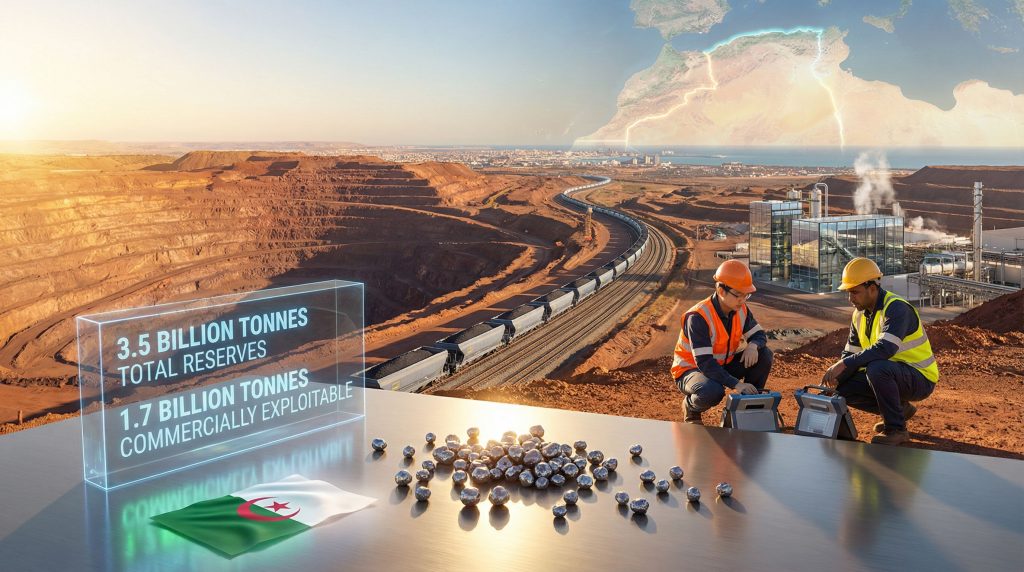
The Gara Djebilet deposit represents a geological formation of exceptional scale, containing an estimated 3.5 billion tonnes of iron ore reserves located in Algeria's remote western desert region. This massive resource base positions the deposit as North Africa's largest iron ore concentration, with approximately 1.7 billion tonnes considered commercially exploitable using current extraction and processing technologies.
Geological Scale and Commercial Viability Assessment
First discovered in 1952, the deposit experienced nearly seven decades of dormancy due to its challenging characteristics and remote location near the Algeria-Morocco border. The combination of high-phosphorus ore content and desert isolation created economic barriers that prevented commercial development until infrastructure solutions aligned with processing capabilities.
| Reserve Component | Quantity | Status |
|---|---|---|
| Total estimated reserves | 3.5 billion tonnes | Geological assessment |
| Commercially exploitable reserves | 1.7 billion tonnes | Current technology |
| Processing complexity | High-phosphorus content | Technical challenge |
| Geographic position | Western desert, Algeria-Morocco border | Remote location |
The deposit's high-phosphorus characteristics require specialised beneficiation processes that add complexity to standard iron ore processing methods. Phosphorus content in iron ore affects steel quality by increasing brittleness in finished products, necessitating either costly reduction technologies or market positioning toward specialised steel applications that can accommodate higher phosphorus levels.
Geographic Positioning and Market Access Advantages
Despite its desert location presenting extraction challenges, Gara Djebilet's positioning offers strategic advantages for market access once infrastructure enables transportation. The deposit sits within reasonable distance of Mediterranean export routes, creating potential connectivity to European steel markets through northern Algerian ports.
Furthermore, the remote location, while initially problematic for development, provides isolation from populated areas that can simplify environmental management and reduce community displacement concerns common in mining operations. This positioning enables large-scale industrial development with minimal residential impact.
How Does China's Belt and Road Strategy Drive North African Mining Partnerships?
Chinese involvement in Gara Djebilet reflects broader Belt and Road Initiative patterns where infrastructure development precedes resource extraction, creating integrated supply chains that benefit both resource-rich nations and Chinese industrial requirements. The partnership demonstrates how China's state-owned enterprises leverage technical expertise to unlock deposits that remained commercially unviable under traditional development approaches.
Sino-Algerian Infrastructure Development Framework
China Railway Construction Corporation (CRCC) constructed a comprehensive rail network connecting the mine to processing facilities and export infrastructure. This railway system spans from the remote deposit through intermediate processing hubs to Mediterranean port access, enabling the logistical foundation necessary for sustained commercial operations.
The transportation infrastructure connects Gara Djebilet to Tindouf for initial processing, continues to Béchar for concentration activities, and integrates with existing Algerian rail networks leading to the port city of Oran. Moreover, this multi-stage routing enables ore processing optimisation at different locations while maintaining cost-effective transportation, reflecting iron ore price trends that influence project economics.
Chinese engineering capabilities combined with Algerian resource control create development models that prioritise long-term industrial capacity building over short-term extraction approaches, establishing frameworks for sustained economic transformation.
China's Sinosteel provides specialised technical expertise for high-phosphorus ore processing, addressing the primary technical challenge that prevented earlier development attempts. This technology transfer enables Algeria to process complex ore grades domestically rather than exporting raw materials for overseas beneficiation.
Multi-National Stakeholder Ecosystem Analysis
The partnership extends beyond bilateral Sino-Algerian cooperation to include multiple international and domestic participants. Turkey's Tosyali Holding operates a steel complex at Oran that integrates with the mining operation, creating downstream processing capacity for iron ore concentrates.
Key Partnership Components:
- Algeria's Sonarem leads state participation through Feraal subsidiary
- China Railway Construction Corporation handles infrastructure development
- Sinosteel provides processing technology and facility construction
- Tosyali Holding contributes steel production capacity
- Local contractors including Cosider, EPTP Alger, SEROR Est, and GCB manage civil works
- ANESRIF provides railway investment oversight
Consequently, this stakeholder structure distributes capabilities across state ownership, international technical expertise, regional industrial capacity, and local construction capabilities, creating a comprehensive development ecosystem that mirrors successful mining industry evolution models.
What Infrastructure Breakthroughs Enable Large-Scale Iron Ore Operations?
The transformation of Gara Djebilet from dormant deposit to active mining operation required fundamental infrastructure development that addressed both transportation and processing challenges. The railway network constructed by CRCC creates the logistical backbone enabling commercial-scale extraction and export operations.
Railway Network as Economic Catalyst
The comprehensive transportation system enables ore movement from extraction through processing to export markets. President Abdelmadjid Tebboune officially inaugurated the railway infrastructure, marking the transition from pilot operations to full-scale commercial potential.
Transportation Infrastructure Components:
- Mine-to-Tindouf connection enabling initial processing and concentration
- Béchar hub development for secondary processing and logistics coordination
- Mediterranean port access via Oran for international shipping capabilities
- Integration with existing rail networks creating multi-modal distribution options
The railway construction demonstrates infrastructure-first development approaches where transportation capacity precedes full extraction scaling. This sequencing reduces operational risks by ensuring logistics capabilities exist before production ramping.
Processing Facility Development Timeline
Operational development progressed through pilot phases beginning in 2022, when Algeria extracted over 250,000 tonnes during initial testing and stockpiling operations. These early extractions focused on process validation and domestic trials rather than international sales.
However, the railway inauguration enabled the first major shipment of 1,450 tonnes via the new transportation system, demonstrating operational readiness for scaled operations. Algeria's first iron ore shipment from its giant Sahara mine highlights the strategic importance of this development. Authorities project annual output potential reaching 30-40 million tonnes once facilities achieve full operational capacity.
| Development Phase | Timeline | Production Capacity |
|---|---|---|
| Pilot operations | 2022-2025 | 250,000+ tonnes extracted |
| Initial shipments | Post-inauguration | 1,450 tonnes via railway |
| Near-term capacity | Operational scaling | 30-40 million tonnes annually |
| Long-term potential | Full development | 50 million tonnes projected |
How Do High-Phosphorus Ores Create Both Challenges and Opportunities?
The high-phosphorus content that initially prevented Gara Djebilet's development creates both technical processing challenges and potential market positioning opportunities. Understanding phosphorus implications in iron ore processing reveals why specialised expertise became necessary for commercial viability.
Technical Processing Requirements
Phosphorus in iron ore affects steel production by increasing hardness and brittleness in finished products. Standard steelmaking processes typically require phosphorus levels below 0.05% in finished steel, necessitating ore processing that either reduces phosphorus content or targets specialised applications tolerating higher levels.
Sinosteel's involvement provides access to proprietary beneficiation technologies capable of processing complex ore grades. These specialised methods enable phosphorus reduction through:
- Advanced roasting and reduction processes
- Magnetic separation techniques for phosphorus-rich fraction removal
- Chemical leaching methods for phosphorus extraction
- Process optimisation specific to Gara Djebilet ore characteristics
Processing costs increase significantly with aggressive phosphorus reduction, creating economic trade-offs between processing expenses and market access. Higher processing costs must be balanced against broader market acceptance and premium pricing opportunities.
Market Positioning for Specialised Steel Applications
Rather than viewing high-phosphorus content solely as limitation, strategic positioning can target specialised steel applications where specific ore characteristics provide advantages. European steel producers often require diverse ore grades for blending purposes, creating market opportunities for processed concentrates.
The integration with Tosyali Holding's Oran steel complex enables direct processing of Gara Djebilet ore into finished steel products. This vertical integration reduces processing steps while optimising process control specific to the ore's unique characteristics, demonstrating improved haulage operations in the broader mining sector.
Asian markets accessible via Mediterranean shipping routes provide additional export opportunities for processed iron concentrates. Middle Eastern industrial development creates regional demand for steel products that can utilise domestically processed ore.
What Economic Diversification Model Does This Partnership Represent?
Algeria's mineral development strategy through Gara Djebilet represents a systematic approach to reducing hydrocarbon dependency while building industrial capacity. The country currently relies on oil and gas for over 75% of export earnings and approximately 50% of state revenue, creating economic vulnerability to commodity price volatility.
Hydrocarbon Dependency Reduction Strategy
The mining sector development offers pathways for export revenue diversification beyond petroleum products. Projected annual production of 30-40 million tonnes could generate billions in export revenue while creating employment in previously underdeveloped western provinces.
| Economic Indicator | Current Status | Mining Potential |
|---|---|---|
| Oil and gas export share | 75%+ | Reduction through diversification |
| State revenue from hydrocarbons | ~50% | Alternative revenue streams |
| Non-hydrocarbon exports | <25% | Expansion opportunity |
| Regional development | Limited in west | Employment generation |
Algeria imports $1.2-2 billion worth of steel annually, creating import substitution opportunities through domestic steel production using locally extracted ore. The Tosyali steel complex integration enables reduced import dependence while adding value to extracted raw materials.
Industrial Value Chain Development
The partnership creates integrated value chains from extraction through processing to finished steel production. This approach captures more economic value domestically rather than exporting raw ore for overseas processing and re-importing finished products.
Furthermore, technology transfer through Sinosteel partnership enables skills development and technical capacity building within Algeria's industrial sector. These capabilities extend beyond mining to benefit broader manufacturing and engineering sectors through knowledge spillover effects.
Local contractor involvement in civil works and railway construction develops domestic capacity in large-scale infrastructure projects. These capabilities support future industrial development projects while creating employment in engineering and construction sectors.
The next major ASX story will hit our subscribers first
How Does This Project Influence Regional Mining Competition?
Gara Djebilet's development positions Algeria as a significant player in North African mineral production, creating competition dynamics with established regional producers. Morocco's phosphate industry dominance and Tunisia's mining modernisation efforts illustrate existing regional resource development patterns.
North African Resource Development Trends
The project reflects broader African government strategies linking mineral development with transport infrastructure to move beyond raw commodity exports toward industrial capacity building. This approach contrasts with traditional extraction-focused models by emphasising value-added processing and domestic industrial integration.
Libya's potential resource development following political stabilisation could create additional regional competition. However, the infrastructure-first development model established through Gara Djebilet provides Algeria with first-mover advantages in integrated mining-to-processing operations.
In addition, regional cooperation potential exists in infrastructure sharing, particularly railway networks that could connect multiple mining operations across North African countries. Such cooperation could reduce individual project costs while expanding market access for all participants.
Global Iron Ore Market Positioning
Algeria's projected production scaling positions the country as a potential supplier to European and Asian steel producers seeking supply chain diversification. The staged production increase from 4 million tonnes initially to 12 million by 2030 and potentially 50 million tonnes long-term creates significant market impact.
Production Timeline Projections:
- Initial phase: 4 million tonnes annually
- 2030 target: 12 million tonnes annually
- Long-term capacity: 50 million tonnes annually
- Revenue potential: Billions in annual export earnings
The Mediterranean shipping access provides logistical advantages for European market penetration while maintaining competitive positioning for Asian markets via Suez Canal routing. This geographic advantage supports competitive pricing relative to alternative suppliers, aligning with current iron ore demand insights.
What Investment and Partnership Models Emerge From This Collaboration?
The Gara Djebilet partnership establishes frameworks for state-led resource development with international technical partners. This model maintains national resource ownership while accessing specialised expertise and infrastructure capabilities necessary for complex project development.
State-Led Development with International Technical Partners
Algeria's approach through Sonarem state ownership combined with Chinese technical expertise creates risk-sharing mechanisms that distribute project uncertainties across multiple participants. State ownership ensures resource control while international partnerships provide capabilities beyond domestic capacity.
The technology transfer agreements with Sinosteel establish long-term capacity building rather than simple service contracts. This approach develops domestic technical capabilities that support future projects while reducing dependence on foreign expertise over time.
Moreover, long-term supply agreements with steel producers create revenue predictability that supports project financing and operational planning. These agreements balance price stability with market access guarantees that benefit both producers and consumers.
Infrastructure-First Development Approach
The prioritisation of railway construction preceding full-scale mining operations demonstrates systematic development sequencing that reduces operational risks. Infrastructure development creates foundation capabilities that enable sustained production scaling.
Integrated logistics planning considers entire supply chain from extraction through export, optimising transportation costs and processing efficiency. This comprehensive approach supports competitive positioning in international markets.
Consequently, regional connectivity enhancement extends benefits beyond mining applications by improving transportation access for other industries and regional development. The railway infrastructure supports broader economic development in Algeria's western provinces.
What Are the Long-Term Strategic Implications for North African Mining?
The successful development of Gara Djebilet through international partnership creates precedents for similar projects across North Africa. Resource-rich countries can leverage this model to access technical expertise and infrastructure capabilities while maintaining resource ownership and control.
Resource Diplomacy and Geopolitical Positioning
China's expanding involvement in African mining sectors through Belt and Road Initiative projects creates alternative development pathways that reduce dependence on traditional Western mining companies and financing sources. This diversification provides African governments with increased negotiating power and partnership options, exemplifying successful global expansion strategy approaches in mining development.
European Union critical materials strategy implications include supply chain diversification away from concentrated sources. How Algeria could help China plug iron ore gaps and gain pricing power demonstrates the geopolitical significance of this partnership. Algeria's iron ore production could support European steel industry resilience while reducing import dependence on distant suppliers.
Regional cooperation potential exists in coordinated resource development that leverages shared infrastructure and processing capabilities. Multiple countries could benefit from integrated transportation networks and shared technical expertise.
Sustainable Development and Environmental Considerations
Desert mining operations require careful water resource management and environmental monitoring to prevent long-term ecological damage. The remote location reduces direct community impact while requiring comprehensive environmental rehabilitation planning.
Local community development programmes create employment opportunities in previously underutilised regions. The project generates economic activity in western Algeria that supports regional development and reduces rural-urban migration pressures.
However, environmental monitoring systems established for Gara Djebilet operations can serve as models for future mining projects across similar desert environments. Sustainable practices developed through this partnership support responsible resource development standards.
How Will This Partnership Influence Future Mining Investments in Algeria?
The Gara Djebilet success demonstrates Algeria's capability to manage complex international partnerships while maintaining resource sovereignty. This precedent encourages additional investment in the country's mineral sector by establishing proven frameworks for collaboration.
Precedent Setting for International Collaborations
Investment Framework Elements:
- State ownership maintenance with international technical partnerships
- Infrastructure development prioritisation preceding resource extraction
- Multi-phase scaling approaches from pilot to full commercial operation
- Integration strategies with existing industrial capacity
- Local contractor involvement in construction and civil works
The successful railway construction and operational launch provide confidence for future infrastructure projects requiring similar scale and complexity. International partners gain experience with Algerian regulatory and operational environments that facilitates additional investment.
Furthermore, technical capability development through Sinosteel partnership creates domestic expertise that supports future mining projects with reduced dependence on foreign assistance. This capability building attracts additional investment by reducing project risks and development costs.
Broader Economic Transformation Indicators
Mining sector expansion beyond Gara Djebilet could significantly increase the sector's contribution to GDP diversification goals. Additional mineral deposits throughout Algeria could benefit from infrastructure and expertise developed through this partnership.
Export revenue stabilisation through mining development reduces vulnerability to oil and gas price fluctuations that historically created economic instability. Diversified export revenue streams support more stable government finances and economic planning.
Consequently, regional development in previously underutilised western provinces demonstrates how mining projects can catalyse broader economic transformation. Success in these regions encourages similar development approaches in other mineral-rich areas throughout Algeria.
The partnership model established through China to help Algeria reopen Gara Djebilet mine creates frameworks that extend beyond bilateral cooperation to influence regional resource development strategies. This collaboration demonstrates how international expertise, infrastructure investment, and state resource ownership can converge to unlock previously inaccessible mineral deposits while maintaining national sovereignty over natural resources.
Disclaimer: This analysis involves projections and forecasts based on announced plans and industry estimates. Actual production volumes, revenue generation, and economic impacts may vary significantly from projections due to market conditions, technical challenges, regulatory changes, and other unforeseen factors. Investment decisions should not be based solely on the information presented here.
Want to Capitalise on Major Mining Discoveries?
Discovery Alert's proprietary Discovery IQ model instantly identifies significant ASX mineral discoveries, transforming complex mining announcements into actionable investment opportunities for both short-term traders and long-term investors. Explore major historical discoveries that have delivered exceptional returns, then begin your 14-day free trial to gain the market edge that keeps you ahead of tomorrow's opportunities.