August 5, 2026
Strategic Partnerships Reshape Global Economic Architecture
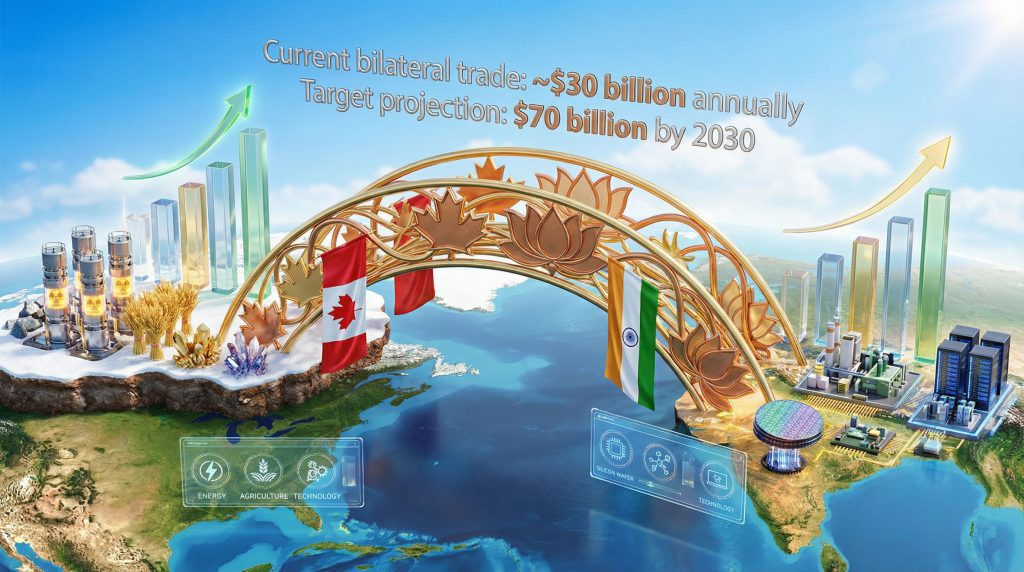
International trade relationships undergo fundamental transformation as nations navigate post-pandemic supply chain vulnerabilities and geopolitical realignments. The Canada-India Economic Partnership Agreement represents one of the most significant bilateral trade negotiations currently under development. Traditional economic partnerships face disruption while emerging bilateral frameworks promise deeper integration across multiple sectors.
The evolution from basic trade agreements toward comprehensive economic partnerships reflects sophisticated approaches to mutual economic security and technological collaboration. Furthermore, tariffs' global impact continues to shape international trade strategies as nations seek to mitigate economic uncertainties through diversified partnerships.
Modern comprehensive economic partnership agreements extend far beyond conventional tariff elimination structures. These frameworks integrate investment protection mechanisms, intellectual property harmonisation, digital trade protocols, and strategic resource cooperation. The shift represents recognition that economic interdependence requires institutional frameworks addressing multiple dimensions of commercial and strategic cooperation.
When big ASX news breaks, our subscribers know first
Understanding Modern Comprehensive Economic Partnership Frameworks
Comprehensive Economic Partnership Agreements (CEPAs) represent advanced bilateral trade architectures that encompass broader economic integration than traditional free trade agreements. According to World Trade Organization documentation, CEPAs typically include trade in goods and services, investment protections, intellectual property coordination, and government procurement access.
These agreements establish comprehensive regulatory frameworks governing multiple aspects of bilateral economic relationships. The structural complexity of CEPAs distinguishes them from conventional trade arrangements through six core components:
- Goods Trade Chapters: Comprehensive tariff elimination schedules with immediate, staged, or excluded categories
- Services Integration: Cross-border supply, consumption abroad, commercial presence, and temporary service provider movement
- Investment Protection: National treatment provisions, most-favoured-nation status, expropriation safeguards, and investor-state dispute resolution
- Intellectual Property Harmonisation: Patent, copyright, trademark, and geographical indication standardisation
- Digital Commerce Framework: Data localisation restrictions, digital product classifications, and cross-border information flows
- Labour and Environmental Standards: Increasingly mandatory provisions for sustainable development alignment
Historical precedents demonstrate varying implementation timelines and negotiation complexities. The India-UAE CEPA, concluded within 18 months from announcement to agreement in 2022, established coverage for 97.5% of traded goods with phased elimination schedules.
This agreement included services commitments across information technology, financial services, and construction sectors, alongside investment chapters featuring investor-state dispute settlement provisions. However, environmental and labour regulation exemptions were incorporated to address sovereignty concerns.
Canada maintains comprehensive trade partnerships with over 14 countries through agreements including the Canada-Korea Free Trade Agreement (effective 2015) and participation in the Comprehensive and Progressive Agreement for Trans-Pacific Partnership (CPTPP, effective 2018). These existing frameworks provide operational precedents for additional bilateral agreements requiring similar regulatory harmonisation and implementation mechanisms.
Current Trade Dynamics and Projection Analysis
Bilateral trade flows between Canada and India reached approximately $8.9 billion in 2023, according to Statistics Canada trade databases. This baseline includes Canadian exports to India of roughly $3.1 billion and Canadian imports from India totaling $5.8 billion.
The historical growth trajectory shows consistent expansion from $6.2 billion in 2019-2020 to current levels, representing a compound annual growth rate of 9.8% over the four-year period.
Canada-India Trade Evolution (2019-2023)
| Year | Bilateral Trade Volume | Growth Rate |
|---|---|---|
| 2019-2020 | $6.2 billion | Baseline |
| 2020-2021 | $6.8 billion | 9.7% |
| 2021-2022 | $7.9 billion | 16.2% |
| 2022-2023 | $8.9 billion | 12.7% |
Current trade composition reveals complementary economic structures with strategic expansion opportunities. Canadian exports to India concentrate in mineral fuels (primarily coal) representing approximately 40% of export value, machinery and mechanical appliances accounting for 15%, and organic chemicals contributing 10% of bilateral flows.
Indian exports to Canada focus on mineral fuels and petroleum products (35%), organic chemicals and pharmaceuticals (20%), and apparel and textiles (15%). In addition, the tariffs and investment impact analysis suggests potential for significant trade expansion under reduced barrier conditions.
Doubling bilateral trade to approximately $17.8 billion by 2030 requires sustaining a compound annual growth rate of 15% over the six-year implementation period. Comparative analysis of similar trade partnerships suggests this target reflects achievable growth trajectories.
The India-UAE trade relationship expanded 48% within 18 months following CEPA implementation, increasing from $13 billion to $19.2 billion between 2021 and 2023.
Economic modelling utilising gravity models and computable general equilibrium analysis indicates tariff elimination typically generates 15-35% bilateral trade increases over 5-10 year periods. This depends on baseline protection levels and sectoral composition.
India maintains average applied tariff rates of 13-15% across manufacturing sectors, while Canada's rates average 2-3% as a World Trade Organization member. Agricultural product tariffs in India currently range from 20-40% on Canadian exports, suggesting elimination could increase Canadian agricultural exports by 40-60% under comprehensive partnership implementation.
Strategic Resource Cooperation and Energy Security
Canada's position as the world's second-largest uranium producer, after Kazakhstan, provides strategic advantages for nuclear energy partnerships. Current production capacity reaches approximately 13,000 tonnes of uranium concentrate annually through Cameco Corporation and other domestic producers.
Canada maintains proven uranium reserves totalling 531,400 tonnes of identified resources, representing roughly 13% of global production capacity according to World Nuclear Association statistics. Consequently, critical minerals & energy security considerations play a crucial role in bilateral partnership negotiations.
India's nuclear energy expansion program targets increasing installed capacity from current levels of 7.48 gigawatts to 22.5 gigawatts by 2032. This ambitious expansion requires uranium imports estimated between 2,500-3,000 tonnes annually by 2032, compared to current requirements of approximately 250 tonnes.
The Department of Atomic Energy's expansion plan represents one of the world's most aggressive civilian nuclear development programs outside of China.
Nuclear Capacity Expansion Projections
| Metric | Current Status | 2032 Target | Growth Multiple |
|---|---|---|---|
| Installed Capacity | 7.48 GW | 22.5 GW | 3.0x |
| Annual Uranium Requirement | 250 tonnes | 2,500-3,000 tonnes | 10-12x |
| Capacity Addition Timeline | – | ~3 GW per decade | Accelerated |
Small Modular Reactor (SMR) technology represents emerging cooperation opportunities between Canadian innovation and Indian manufacturing capabilities. Global SMR market projections estimate $37.8 billion in deployment value by 2035, with Canada's technology leaders including ARC Nuclear, Terrestrial Energy, and Lightbridge developing proprietary designs.
India's SMR interest includes Department of Atomic Energy plans for 500 megawatts of distributed generation capacity by 2035. Furthermore, copper‑uranium investment strategies demonstrate growing international focus on strategic mineral partnerships.
Critical minerals cooperation addresses supply chain diversification priorities for both nations. Canada possesses significant reserves of rare earth elements, lithium, cobalt, and nickel required for electronics manufacturing, battery technology, and clean energy infrastructure.
Post-pandemic supply chain analysis prioritises non-China sourcing alternatives, considering historical Chinese dominance of 60-70% of global rare earth production according to U.S. Geological Survey data.
Current Canada-India uranium trade flows remain minimal at less than $20 million annually, indicating substantial expansion potential under enhanced bilateral frameworks. Canada's primary uranium export markets historically focus on the United States, Europe, and Japan, while India sources uranium primarily from Kazakhstan and Uzbekistan alongside domestic production.
Sector-Specific Growth Opportunities and Challenges
Agricultural cooperation presents immediate expansion potential given complementary production capabilities and market demands. Canadian lentil exports align with India's growing protein consumption requirements, particularly as dietary preferences shift toward plant-based protein sources.
The timber and pulp industry offers additional opportunities, with Canada's sustainable forestry practices meeting India's construction and packaging material demands. Food security considerations drive strategic agricultural partnerships in volatile global commodity markets.
Climate change impacts on agricultural production create mutual interests in diversified supply relationships and technology sharing for sustainable farming practices. Canadian agricultural technology expertise in precision farming and crop genetics complements India's agricultural research capabilities and extensive farming networks.
Technology sector integration opportunities span artificial intelligence, quantum computing, and digital infrastructure development. India's established leadership in software development and artificial intelligence applications complements Canada's quantum technology research and development programs.
Cross-border innovation ecosystems could accelerate technology commercialisation and market deployment across both domestic markets and international expansion. Digital economy collaboration addresses regulatory frameworks for data governance, cybersecurity standards, and intellectual property protection in emerging technology sectors.
Harmonised approaches to digital trade facilitate technology transfer while maintaining national security considerations for critical technologies and sensitive data flows. Manufacturing sector competitiveness faces adjustment challenges as enhanced trade access increases competitive pressures.
Canadian manufacturers in sectors competing directly with Indian production capabilities may require transition assistance and skills development programmes. Conversely, Canadian companies accessing Indian markets through reduced barriers could experience significant expansion opportunities.
Implementation Timeline and Negotiation Complexities
CEPA negotiations reflect institutional learning from previous bilateral trade discussions spanning multiple years of exploratory engagement. According to Canada's trade framework, formal negotiations have gained momentum with high-level political commitment from both governments.
The Canada-India Economic Partnership Agreement discussions have evolved through multiple phases of engagement, with both nations recognising the strategic importance of enhanced cooperation.
Historical negotiation challenges include regulatory harmonisation across different legal systems, investment protection mechanisms acceptable to both nations, and sector-specific sensitivities requiring careful calibration. The Canada-South Korea Free Trade Agreement provides instructive precedent, requiring over three years of negotiations (2006-2014).
This agreement faced significant challenges regarding automotive sector access and non-tariff barriers before reaching final agreement covering 90% of traded goods with phase-in periods extending to 20 years.
Projected CEPA Implementation Phases
- Negotiation Completion Phase (2026): Final text agreement and political commitment
- Ratification Phase (2027): Parliamentary approval processes in both countries
- Early Implementation (2027-2028): Immediate tariff eliminations and investment protections
- Staged Integration (2028-2030): Phased sector opening and regulatory harmonisation
- Full Implementation (2030+): Complete agreement scope activation and performance assessment
Regulatory harmonisation requirements vary significantly across sectors, with pharmaceuticals, automotive components, and agricultural products requiring extensive standards alignment. Investment protection mechanisms must address currency risk management, dispute resolution procedures, and regulatory change protections satisfactory to institutional investors in both countries.
Public consultation processes in both nations provide stakeholder input on sensitive sectors and implementation priorities. Parliamentary ratification procedures require political consensus building across multiple parties and regional interests, potentially influencing final agreement scope and implementation timelines.
However, India's lithium strategy indicates growing focus on strategic mineral partnerships that could accelerate certain aspects of bilateral negotiations.
The next major ASX story will hit our subscribers first
Risk Assessment and Mitigation Strategies
Economic partnership implementation faces multiple risk categories requiring comprehensive mitigation strategies. Currency volatility between Canadian dollars and Indian rupees historically demonstrates 5-8% annual fluctuation ranges, potentially impacting trade flow predictability and investment return calculations.
Geopolitical considerations include third-party relationships and multilateral trade commitments that could influence bilateral partnership development. Both nations maintain complex relationships with China, the United States, and other major economies requiring careful coordination to avoid conflicting obligations.
Regulatory uncertainty around evolving trade rules, environmental standards, and technology transfer restrictions creates implementation challenges. Climate change policy alignment, carbon border adjustment mechanisms, and sustainable development criteria increasingly influence trade agreement design and operational requirements.
Risk Mitigation Framework Elements:
- Currency Risk Management: Central bank cooperation agreements and hedging mechanism development
- Regulatory Coordination: Joint committees for standards harmonisation and dispute resolution
- Adjustment Assistance: Industry transition support and workforce development programmes
- Technology Transfer Controls: National security screening procedures and intellectual property protections
- Environmental Compliance: Sustainable development monitoring and enforcement mechanisms
Small business market entry support addresses challenges faced by companies lacking resources for complex international expansion. Technical assistance programmes, market intelligence sharing, and regulatory guidance services could facilitate broader participation in enhanced bilateral trade opportunities.
Labour market adjustment challenges require proactive policy responses in sectors facing increased competition. Skills development programmes, transition assistance for displaced workers, and regional development initiatives help communities adapt to changing trade patterns and economic opportunities.
Long-Term Strategic Implications for North American Trade Architecture
Enhanced Canada-India economic partnership integration influences broader North American trade relationships and Pacific region engagement strategies. Coordination with United States-Mexico-Canada Agreement (USMCA) provisions ensures compatibility with trilateral trade commitments while expanding market access opportunities.
Supply chain integration across North American markets could leverage enhanced Canada-India partnership for continental competitiveness improvements. Canadian access to Indian manufacturing capabilities and technology services complements Mexican manufacturing strengths and American market scale.
This creates integrated value chains spanning multiple continents, whilst climate change and sustainable development alignment requirements increasingly influence comprehensive partnership design. Clean technology transfer acceleration, carbon border adjustment compatibility, and sustainable resource extraction standards become integral elements of modern trade agreements.
Competitive positioning against Asian trade blocs requires coordinated North American approaches to Indo-Pacific engagement. Canada's enhanced partnership with India contributes to broader strategies for maintaining economic influence and market access in rapidly growing Asian economies.
The evolution of comprehensive economic partnerships reflects fundamental shifts in how nations approach economic security through diversified relationships and integrated cooperation frameworks spanning multiple sectors and strategic priorities.
Investment flow optimisation opportunities extend beyond bilateral trade toward multilateral regional development projects and third-country cooperation initiatives. Canadian pension fund infrastructure investment strategies could leverage enhanced investment protections for participation in India's massive infrastructure development requirements.
Economic Impact Projections and Regional Considerations
Provincial and territorial impacts vary significantly based on existing economic structures and export capabilities. Western Canada's resource sector advantages position provinces like Alberta and Saskatchewan for enhanced energy cooperation, while British Columbia's Pacific gateway infrastructure supports expanded trade logistics.
Ontario's manufacturing and technology sectors could benefit substantially from increased market access and technology collaboration opportunities. The province's automotive sector, financial services industry, and advanced manufacturing capabilities align with Indian market demands and technological cooperation priorities.
Quebec's aerospace and engineering services expertise offers export expansion potential in India's infrastructure development and transportation modernisation programmes. The province's hydroelectric expertise and clean energy technology development complement India's renewable energy expansion requirements.
Atlantic Canada's maritime industries, fisheries sector, and offshore energy capabilities provide specialised opportunities for technology transfer and market development in India's coastal regions and blue economy initiatives.
What Are the Potential Returns for Canadian Investors?
A Canadian institutional investor managing pension fund assets could leverage enhanced investment protections to participate in India's $1.4 trillion infrastructure development program over the next decade. Such participation might generate 8-12% annual returns while providing Canadian retirees with geographic diversification.
This exposure to one of the world's fastest-growing major economies presents significant opportunities for long-term wealth creation. Agricultural sector transformation scenarios suggest Prairie farming communities could experience substantial export growth if agricultural tariff elimination proceeds as projected.
A 47% increase in agricultural exports could translate to significant income improvements for farming operations while requiring investments in production capacity and logistics infrastructure to meet expanded market demands.
Disclaimer: The analysis presented includes projections, economic modelling, and hypothetical scenarios based on historical precedents and current policy directions. Actual outcomes depend on negotiation results, implementation effectiveness, global economic conditions, and numerous other factors that cannot be predicted with certainty. Investors and businesses should conduct independent analysis and seek professional advice before making decisions based on trade agreement projections or market access assumptions.
Looking for Your Next Investment Opportunity in Resource Development?
Discovery Alert's proprietary Discovery IQ model delivers real-time alerts on significant ASX mineral discoveries, empowering investors to identify actionable opportunities ahead of the broader market. Begin your 14-day free trial today and secure your market-leading advantage as global trade partnerships reshape strategic resource demand.