June 6, 2026
Strategic Partnership Models Reshaping South America's Critical Battery Metal Supply
The global transition toward electric mobility and renewable energy storage has fundamentally altered how nations approach critical mineral resource development. Traditional extraction models that relied on single-company concessions are giving way to sophisticated partnership frameworks that blend state oversight with private sector expertise. Chile's evolving approach to lithium development represents a calculated response to intensifying international competition for battery metal supply chains, particularly as neighboring countries in the lithium triangle accelerate their own production capabilities through innovative Argentina lithium insights.
This strategic shift reflects broader geopolitical considerations around energy security and industrial competitiveness. Countries that control significant lithium reserves are increasingly recognising that raw material extraction alone provides limited value capture compared to integrated supply chain participation. The emergence of joint venture models that combine state mining enterprises with specialised private operators suggests a new paradigm for resource development in critical minerals strategy implementation.
When big ASX news breaks, our subscribers know first
What Does Chile's New Lithium Partnership Strategy Mean for Global Supply Chains?
The Codelco-Quiborax Alliance Framework
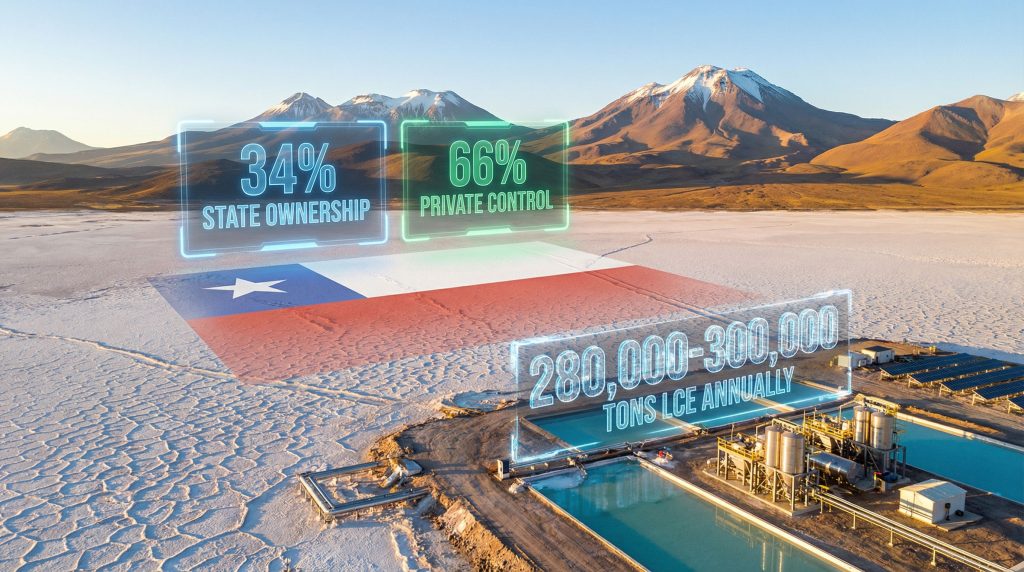
The formation of Minera Ascotan SpA illustrates how modern resource partnerships are structured to balance public interest with operational efficiency. This 34% state ownership through Codelco combined with 66% private sector control via Quiborax creates a governance model that prioritises operational expertise while maintaining strategic oversight. The partnership submitted its Special Lithium Operation Contract application in January 2025, initiating a regulatory review process that could reshape Chile's lithium sector landscape.
The governance structure reflects careful institutional design, with a five-member board consisting of two Codelco directors (Jaime San Martin and Felipe Killian) alongside three Quiborax directors (Allan Fosk, Ignacio Riva Posse, and Yatsen Lee). Daniel Ocqueteau's appointment as General Manager suggests operational leadership will emphasise technical execution rather than political considerations.
Perhaps most significantly, the partnership incorporates a post-approval majority partner acquisition strategy. Once the CEOL contract receives regulatory approval, the consortium plans to seek a third-party majority partner, effectively transforming the initial bilateral structure into a trilateral arrangement. This approach demonstrates sophisticated capital allocation planning that defers primary investment commitments until regulatory uncertainties are resolved.
The dual-director representation system creates interesting governance dynamics. While Quiborax holds numerical board control, Codelco's participation ensures state mining enterprise oversight throughout the project lifecycle. This balance addresses common concerns about resource sovereignty while leveraging private sector operational capabilities that state enterprises may lack.
Salar de Ascotan's Untapped Potential Assessment
Salar de Ascotan represents Chile's third-largest salt flat by surface area with substantial underground brine content, yet it remains unexplored for lithium extraction. This presents both significant opportunity and considerable technical risk, as brine chemistry, lithium concentrations, and extraction feasibility remain unverified through systematic exploration.
The exploration methodology requirements for salt flat lithium brine extraction development typically involve multi-year hydrogeological assessment programmes. These include:
- Brine sampling campaigns across different depths and seasonal cycles
- Hydrogeological modelling to assess sustainable extraction rates
- Chemical composition analysis to determine lithium concentrations and impurity levels
- Environmental baseline studies required under Chilean mining regulations
Comparative analysis with established operations like Atacama and Maricunga reveals the complexity of salt flat development. The Atacama operation benefits from decades of operational optimisation and infrastructure development, while Maricunga's more recent development provides insights into modern extraction technologies. Salar de Ascotan's success will depend on whether its brine chemistry and geology prove favourable compared to these established benchmarks.
The absence of previous exploration creates both uncertainty and potential competitive advantage. While established operations have proven reserves and production capabilities, they also face resource depletion concerns and increasing environmental scrutiny. A greenfield development like Ascotan could incorporate latest-generation extraction technologies and environmental management systems from project inception.
How Are Joint Ventures Transforming Chile's National Lithium Strategy?
Multi-Partner Approach Analysis
Chile's lithium sector is witnessing unprecedented collaboration between state-owned Codelco and multiple international partners. The Codelco-Rio Tinto Maricunga project represents a substantial capital commitment, with investment requirements reaching approximately $900 million for full development phases. This partnership demonstrates how established mining multinationals are prioritising lithium exposure through joint venture structures rather than direct acquisition strategies.
The SQM-Codelco NovaAndino venture targets even more ambitious production levels, with planned capacity reaching 280,000-300,000 tons of lithium carbonate equivalent annually. This scale represents a significant portion of global lithium supply additions and illustrates Chile's intent to maintain market leadership despite rising competition from Argentina's lithium triangle and other emerging production regions.
Risk distribution models across these state-private partnerships reveal sophisticated approaches to capital allocation and operational responsibility:
| Partnership Structure | Capital Commitment | Production Target | Risk Distribution |
|---|---|---|---|
| Codelco-Rio Tinto | ~$900M | Development phase | Technology transfer, operational expertise |
| SQM-Codelco NovaAndino | Undisclosed | 280,000-300,000 tons LCE | Market access, processing capabilities |
| Codelco-Quiborax Ascotan | Exploration phase | To be determined | Regional expertise, exploration risk |
These partnerships demonstrate how Chile is leveraging Codelco's strategic position to attract international investment while maintaining domestic control over critical resources. Each partnership structure addresses different aspects of lithium value chain development, from exploration and extraction to processing and market access.
Special Lithium Operation Contract (CEOL) Framework
The CEOL framework represents Chile's regulatory response to increasing global demand for battery metals while maintaining state oversight of strategic resources. The application timeline from consortium formation to regulatory approval involves multiple stages of government review, reflecting the strategic importance of lithium resources within Chile's national lithium strategy for broader economic development.
The Mining Ministry evaluation process examines technical capabilities, financial commitments, and environmental management plans before presenting qualified applications to the Comptroller General. This two-stage regulatory review ensures both technical competence and legal compliance while providing transparency in resource allocation decisions.
Current regulatory timelines suggest the Comptroller General review could conclude within the coming months, though no specific deadline has been established. Previous CEOL approvals have varied significantly in review duration, depending on project complexity and stakeholder consultation requirements.
The evaluation criteria for joint venture proposals emphasise several key factors:
- Technical and operational expertise of consortium partners
- Financial capacity to complete exploration and development phases
- Environmental management and community engagement commitments
- Strategic alignment with Chile's National Lithium Strategy objectives
What Role Does Quiborax Bring to Chile's Lithium Expansion?
Industrial Chemistry Expertise Integration
Quiborax's participation brings specialised industrial chemistry capabilities that complement Codelco's mining expertise. As an established boric acid producer operating in Chile's northern salt flat regions, Quiborax possesses operational experience with chemical extraction processes that share technological similarities with lithium production methods.
The chemical processing synergies between boric acid and lithium extraction involve overlapping competencies in evaporation, precipitation, and crystallisation processes. Both operations require sophisticated understanding of brine chemistry, water management, and chemical separation technologies. This technological overlap suggests potential operational efficiencies and cost reduction opportunities for integrated salt flat operations.
Quiborax's regional operational knowledge provides significant strategic value, particularly regarding infrastructure access and regulatory relationships in northern Chile. The Atacama region's challenging environmental conditions and remote locations create substantial operational complexities that established regional operators understand better than newcomers to the area.
The company's previous consortium participation with international mining partners demonstrates experience in joint venture management and cross-cultural operational coordination. This experience proves particularly valuable in complex partnerships involving state enterprises, private companies, and potentially international majority partners.
Strategic Asset Positioning
The 66% majority stake structure reflects Quiborax's operational leadership role while allowing Codelco to maintain strategic oversight through its 34% position. This arrangement suggests that operational control will emphasise technical execution and regional expertise rather than political considerations or bureaucratic processes.
Complementary industrial chemical production synergies extend beyond immediate extraction processes to include:
- Shared infrastructure development costs for processing facilities
- Combined supply chain logistics for chemical inputs and product transportation
- Integrated environmental management systems for salt flat operations
- Cross-trained workforce development across multiple chemical production processes
Regional logistics advantages include established relationships with transportation providers, utility companies, and regulatory agencies throughout northern Chile. These relationships can significantly reduce development timelines and operational costs compared to greenfield operations managed by companies without regional presence.
Technology transfer potential encompasses both technical knowledge sharing and operational best practices. Quiborax's experience with large-scale chemical production in challenging environmental conditions provides valuable insights for lithium extraction optimisation, particularly regarding water management and environmental impact mitigation.
How Does This Partnership Impact Global Lithium Market Dynamics?
Supply Chain Security Implications
Chile's partnership strategy addresses growing concerns about supply chain concentration in critical battery metal markets. As electric vehicle production accelerates globally, battery manufacturers are increasingly focused on securing diversified supply sources to reduce dependence on single producers or geographic regions, highlighting important energy security implications.
The multiple partnership structures emerging across Chile's lithium sector (Codelco-Rio Tinto, SQM-Codelco, Codelco-Quiborax) create several independent production streams that can serve different segments of the global battery supply chain. This diversification reduces systemic risk for downstream manufacturers while maintaining Chile's competitive position against emerging production in Argentina's lithium triangle and other regions.
Geopolitical risk mitigation becomes increasingly important as battery metal supply chains face potential disruption from trade disputes, environmental regulations, or political instability. Chile's stable regulatory environment and established mining sector provide strategic advantages for long-term supply security planning.
International battery manufacturers benefit from Chile's partnership approach through several mechanisms:
- Reduced counterparty concentration across multiple Chilean producers
- Technology advancement through joint venture innovation initiatives
- Production capacity expansion through coordinated development programmes
- Supply contract flexibility across different partnership structures
Production Timeline and Market Entry Strategy
The structured development timeline for Chilean lithium partnerships reflects careful coordination between exploration, infrastructure development, and market entry considerations. Current projections suggest a multi-year development cycle that aligns with global battery demand growth forecasts.
| Project Phase | Estimated Timeline | Key Milestones |
|---|---|---|
| Contract Approval | Q1-Q2 2026 | Comptroller General decision |
| Majority Partner Selection | Q2-Q3 2026 | Third-party investor identification |
| Exploration Phase | 2026-2028 | Resource assessment and feasibility |
| Production Development | 2028-2030 | Infrastructure and extraction setup |
The majority partner selection process scheduled for Q2-Q3 2026 represents a critical inflection point for project development. The chosen partner will likely bring additional technical expertise, market access, or financial resources that complement the existing Codelco Quiborax lithium exploration capabilities.
Market entry timing aligns with projected battery demand growth, particularly in electric vehicle and energy storage applications. Production commencement in the 2028-2030 timeframe positions Chilean output to serve anticipated supply gaps as older production facilities face resource depletion or environmental constraints.
What Are the Technical and Financial Implications for Investors?
Capital Allocation Strategy Analysis
The staged capital commitment approach employed across Chilean lithium partnerships minimises early-stage investment risk while preserving upside exposure to successful development outcomes. Initial investment requirements focus primarily on exploration and feasibility assessment, with major capital expenditures deferred until resource validation and regulatory approval completion.
Infrastructure development costs for salt flat operations involve several major categories:
- Brine extraction systems including drilling, pumping, and transportation infrastructure
- Processing facilities for lithium carbonate or lithium hydroxide production
- Evaporation pond construction and associated water management systems
- Transportation and logistics infrastructure connecting remote salt flats to processing facilities and export terminals
Revenue sharing models between joint venture partners typically reflect both capital contribution and operational responsibility allocation. The Codelco-Quiborax structure suggests that Quiborax's 66% stake corresponds to operational leadership and technical expertise contribution, while Codelco's 34% position provides strategic oversight and regulatory facilitation.
Return on investment projections depend heavily on lithium price forecasts, production cost optimisation, and operational efficiency achievement. Current lithium market dynamics suggest favourable pricing environments for new production, though long-term price stability remains subject to supply-demand balance evolution across the global battery supply chain.
Risk Assessment Framework
Investment risks in Chilean lithium partnerships encompass both project-specific and market-wide considerations. Regulatory approval uncertainties represent the most immediate risk factor, as CEOL contract rejection would terminate development prospects entirely.
Technical challenges in unexplored salt flat environments include several potential complications:
- Brine chemistry variations that affect extraction efficiency and product quality
- Hydrogeological constraints limiting sustainable extraction rates
- Environmental compliance requirements that increase operational costs or restrict production methods
- Infrastructure development challenges in remote, high-altitude desert environments
Market demand fluctuations create additional risk exposure, particularly given the 2028-2030 production timeline. Battery technology evolution, electric vehicle adoption rates, and competing supply source development could significantly impact market conditions by the time production commences.
Investment in lithium development projects involves substantial risk, including potential total loss of invested capital. Market conditions, regulatory requirements, and technical challenges may materially impact investment returns. This analysis is for informational purposes only and should not be considered investment advice.
The next major ASX story will hit our subscribers first
How Does This Fit Within Broader Latin American Resource Development?
Regional Competition and Collaboration Dynamics
Argentina's lithium triangle development in Jujuy, Salta, and Catamarca provinces represents both competitive pressure and potential collaboration opportunity for Chilean producers. Argentine projects benefit from lower elevation operations and potentially simpler geology, while Chilean operations offer more established infrastructure and regulatory frameworks.
Cross-border infrastructure coordination could provide mutual benefits through shared transportation, processing, or export facilities. The geographic proximity of major lithium deposits across the Chile-Argentina border suggests potential for integrated regional development approaches that optimise logistics costs and market access.
Bolivia's vast lithium reserves in the Salar de Uyuni remain largely undeveloped despite decades of exploration and development attempts. Bolivia's resource potential exceeds both Chilean and Argentine reserves, but political instability and technical challenges have prevented large-scale production development. Chilean partnership models could provide technological and operational insights for future Bolivian development initiatives.
Regional market dynamics increasingly favour coordinated development over competitive fragmentation. Battery manufacturers prefer supply source diversity within politically stable regions, creating incentives for South American producers to coordinate production timing and capacity development rather than competing directly on price or market share.
Energy Transition Strategic Positioning
Battery supply chain integration requirements extend beyond raw material production to include processing, manufacturing, and recycling capabilities. Furthermore, Chile's partnership strategy positions the country to participate in broader value chain development rather than limiting participation to raw material extraction alone through lithium industry innovations.
Renewable energy sector demand projections suggest sustained growth in grid-scale energy storage applications that complement electric vehicle battery demand. Chilean lithium producers benefit from serving both market segments through diversified customer relationships and product specifications.
The electric vehicle market growth impact on lithium pricing creates both opportunity and volatility for Chilean producers. Long-term supply contracts with battery manufacturers provide revenue stability, while spot market sales offer upside exposure to favourable pricing conditions.
Strategic positioning within global energy transition trends requires Chilean producers to maintain competitive cost structures while investing in technological advancement and environmental performance improvement. Partnership models facilitate this balance by combining state oversight with private sector innovation capabilities.
What Are the Long-Term Implications for Chile's Mining Sector?
State-Private Partnership Evolution
Codelco's expanding role beyond traditional copper operations represents a strategic diversification initiative that leverages the company's mining expertise across multiple metal commodities. Lithium partnerships provide Codelco with exposure to battery metal markets while maintaining the state enterprise's central role in Chile's mining sector.
Foreign investment attraction through joint venture structures demonstrates how state enterprises can facilitate international capital access without relinquishing strategic control over critical resources. This model may prove applicable to other strategic mineral sectors beyond lithium, including rare earth elements or critical technology metals.
Technology transfer and operational expertise development through international partnerships creates long-term capabilities that extend beyond individual projects. Chilean technical professionals gain exposure to advanced extraction technologies and operational practices that enhance the domestic mining sector's overall competitiveness.
The evolution toward partnership models reflects broader global trends in resource development, particularly for strategic materials essential to energy transition and technology advancement. Traditional concession models that granted exclusive development rights to single companies are giving way to collaborative frameworks that balance multiple stakeholder interests.
Sustainable Development Considerations
Environmental impact assessment requirements for salt flat operations have become increasingly stringent as global attention focuses on battery supply chain sustainability. Chilean partnerships must demonstrate compliance with both domestic environmental regulations and international sustainability standards required by downstream battery manufacturers.
Water resource management in arid northern regions presents ongoing challenges for lithium extraction operations that rely on brine pumping and evaporation processes. Sustainable water use planning requires coordination between multiple operators and consideration of competing uses including local communities and agricultural activities.
Community engagement and benefit-sharing frameworks have become essential components of modern mining project development. Chilean partnerships must demonstrate meaningful local economic participation and environmental stewardship to maintain social licence to operate in remote indigenous communities.
Long-term sustainability considerations extend beyond immediate environmental compliance to include planning for facility decommissioning, water resource restoration, and post-mining land use. Partnership structures that include both state oversight and private operational expertise may prove better equipped to address these long-term responsibilities than traditional single-company operations.
The success of Chile's lithium partnership strategy will ultimately depend on balancing multiple objectives including economic development, environmental protection, social responsibility, and strategic resource management. The Codelco Quiborax lithium exploration initiative represents an important test case for this balanced approach to critical mineral development in an increasingly competitive global market.
Ready to Capitalise on Australia's Next Major Mineral Discovery?
Discovery Alert's proprietary Discovery IQ model delivers real-time alerts on significant ASX mineral discoveries, turning complex geological data into actionable investment opportunities. Explore how historic discoveries have delivered exceptional returns and begin your 14-day free trial today to position yourself ahead of the market.