August 5, 2026
The global energy system faces its most severe test when critical supply routes become battlegrounds. Strategic petroleum reserves, built over decades as insurance against precisely such scenarios, now serve as the primary tool for maintaining market stability during extraordinary supply disruptions. Understanding how these emergency stockpiles function reveals the intricate balance between geopolitical vulnerability and economic resilience that defines modern energy security, particularly when considering IEA oil release from emergency reserves strategies.
Understanding the Architecture of Global Emergency Oil Stockpiles
Strategic petroleum reserves represent one of the most significant coordinated policy responses to energy security vulnerabilities in modern history. The International Energy Agency established mandatory stockpile requirements following the 1973 oil crisis, mandating member countries maintain emergency inventories equivalent to at least 90 days of the prior year's net imports. This foundational requirement created a global network of strategic reserves designed to buffer against supply shocks.
As of the end of 2025, IEA members maintained 1.25 billion barrels in public stocks, representing approximately 30 percent of total OECD oil inventories. This massive stockpile exists alongside industry-held reserves, creating a dual-layer protection system against supply disruptions. The scale of these reserves provides context for understanding how emergency releases can influence global markets during crisis periods.
Regional Storage Strategy Variations
The composition and storage strategies of strategic reserves vary significantly across regions, reflecting different supply chain vulnerabilities and infrastructure characteristics. North American strategic stocks consist overwhelmingly of crude oil, leveraging the continent's extensive downstream refinery infrastructure. This approach allows for maximum flexibility in product output during emergencies.
European and Asian IEA members, by contrast, maintain strategic inventories combining crude oil and refined products. This mixed approach reflects shorter supply chain distribution networks and different geographic market characteristics. The refined product component provides immediate availability for critical transportation fuels, while crude reserves offer longer-term supply security.
| Region | Primary Storage Type | Strategic Rationale | Infrastructure Advantage |
|---|---|---|---|
| North America | Crude Oil | Refinery flexibility | Extensive downstream capacity |
| Europe | Mixed crude/products | Distribution efficiency | Regional product networks |
| Asia | Mixed crude/products | Supply chain proximity | Coastal terminal access |
Historical Context of Emergency Deployments
Emergency reserve releases represent rare, high-severity interventions requiring institutional consensus among IEA members. Since the organisation's formation in 1974, only six emergency stock release orders have been issued, highlighting the exceptional nature of circumstances that trigger coordinated action. Each release reflects escalating geopolitical or natural disaster impacts on global energy supplies.
Previous emergency releases provide important context for evaluating current interventions. Market response patterns from past deployments reveal that physical supply additions often matter less than the psychological signal sent to trading markets about coordinated international response capabilities. The announcement effect frequently stabilises prices before physical barrels reach consumers.
However, emergency releases face inherent limitations. Market participants have no obligation to purchase released stocks, and historical precedent shows that offered volumes sometimes exceed actual market uptake. This dynamic reflects the complex relationship between supply availability and market clearing mechanisms during crisis periods.
When big ASX news breaks, our subscribers know first
Geopolitical Chokepoints and Supply Chain Vulnerabilities
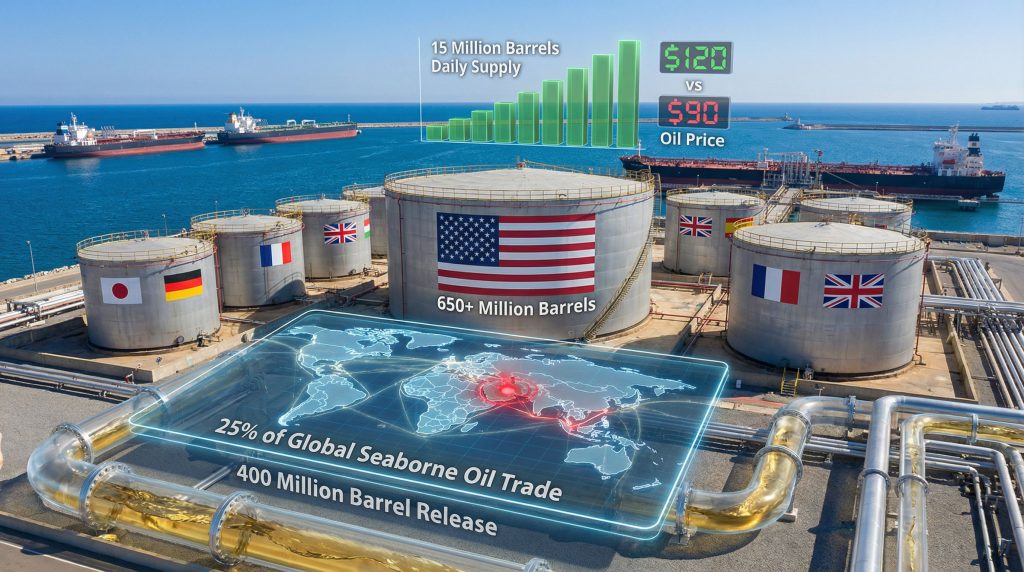
The Strait of Hormuz represents the most critical energy chokepoint in the global economy, handling 25 percent of global seaborne oil trade under normal circumstances. Before recent conflict erupted, approximately 14 million barrels daily of crude oil and 6 million barrels daily of refined products transited this narrow waterway. The closure or significant disruption of this route creates immediate global supply constraints, contributing to current oil price rally insights.
Recent missile and drone attacks have created what industry analysts describe as a de facto closure of the strait, effectively trapping substantial oil volumes inside the Middle East Gulf region. This situation demonstrates how geopolitical conflicts can instantly transform theoretical supply vulnerabilities into practical market disruptions affecting global energy flows.
Cascading Infrastructure Damage
Supply disruptions extend beyond shipping route closures to encompass production, storage, and refining infrastructure damage. Military targeting of energy facilities creates secondary constraints that multiply the impact of primary transportation disruptions. Storage terminal damage in critical hubs like Fujairah has disrupted terminal loading and bunker delivery operations, creating operational bottlenecks independent of shipping availability.
The systematic nature of infrastructure targeting creates compounding effects throughout regional energy systems. Major OPEC+ producers including Saudi Arabia, Iraq, Kuwait, and the UAE have begun shutting in crude output due to limited storage capacity and restricted alternative export outlets. This production shut-in represents supply losses beyond the transportation constraints affecting the Strait of Hormuz, similar to patterns observed in US oil production decline scenarios.
Maritime Security Degradation
Detailed incident tracking reveals the systematic nature of maritime security breakdown in critical energy transport zones. Since conflict initiation, 17 incident reports have been documented involving vessels in the Middle East Gulf, Strait of Hormuz, and Gulf of Oman regions. Among these incidents, 13 confirmed attacks and 4 reports of suspicious activity indicate a 76 percent attack rate within reported incidents.
Specific attack examples illustrate the operational reality driving insurance cost escalation and shipping route abandonment:
• Bulk carrier struck by unknown projectile 50 miles northwest of Dubai
• Cargo vessel hit 11 miles north of Oman, resulting in onboard fire
• Container vessel sustained damage 25 miles northwest of Ras al-Khaimah
These incidents demonstrate how individual attacks create systematic shipping disruption extending far beyond specific vessel damage, as insurance costs and crew safety concerns drive broad route avoidance.
Market Psychology and Price Volatility Dynamics
Oil price volatility during supply emergencies reflects complex interactions between physical supply constraints, financial market speculation, and psychological risk assessment. Recent price movements illustrate these dynamics vividly, with crude futures surging near $120 per barrel before dropping to around $90 per barrel during the early days of Middle East conflict. This $30 per barrel swing represents approximately 33 percent volatility occurring within days rather than months.
The magnitude and speed of price movements exceed historical precedents for geopolitical supply disruptions, reflecting both the critical nature of affected supply routes and the amplifying effects of algorithmic trading systems responding to news flow. Market participants struggle to distinguish between temporary transportation delays and longer-term supply capacity losses during rapidly evolving crisis situations.
Speculation Versus Physical Market Reality
Strategic reserve release announcements often generate immediate price stabilisation effects that precede actual physical oil delivery to markets. This pattern suggests that market psychology and confidence restoration play roles equal to or greater than physical supply additions in determining short-term price outcomes. Furthermore, traders respond to the signal that coordinated international intervention is available rather than waiting for actual barrel delivery.
However, the effectiveness of psychological intervention depends on market confidence in the scale and duration of emergency response capabilities. If physical supply disruptions persist beyond the timeframe that IEA oil release from emergency reserves can reasonably address, initial price stabilisation may prove temporary as markets refocus on underlying supply-demand imbalances.
Force Majeure and Operational Disruption
Major storage terminals and bunker suppliers have declared force majeure during the current crisis, representing the highest level of operational disruption that releases parties from contractual obligations due to extraordinary circumstances. These declarations cascade through global energy supply chains, creating contractual uncertainty that extends far beyond the immediate geographic area of conflict.
Force majeure declarations in critical energy hubs like Fujairah create particular challenges for global shipping and refining operations. The port historically relied on 460,000 tonnes of Iranian high-sulfur fuel oil and 260,000 tonnes from Iraqi sources monthly. The effective closure of these supply routes transforms regional market dynamics from supply abundance to structural shortage almost overnight.
Coordination Mechanisms and International Response
The decision-making framework for emergency oil reserve releases involves multiple levels of international coordination, typically culminating in G7 consensus building and IEA executive action. Recent events followed a 10-day assessment period between conflict initiation on February 28, 2026, and the IEA emergency announcement on March 11, 2026. This timeline reveals the institutional processes required to evaluate crisis severity and build multilateral consensus for coordinated response.
G7 leaders scheduled emergency discussions to address the Middle East Gulf situation, indicating that the 400 million barrel release decision emerged from or required ratification through formal G7 processes. This coordination mechanism ensures that major advanced economies align their emergency response strategies rather than pursuing unilateral actions that might create conflicting market signals.
Implementation Timelines and Logistics
Strategic reserve deployments face significant logistical constraints that affect their immediate market impact. While the United States maintains capability for immediate release initiation, other major reserve holders like Japan operate on longer deployment timelines extending to subsequent weeks. Germany has confirmed participation in the coordinated release, while other IEA members remain under assessment for their contribution levels.
These varied deployment timelines reflect different storage infrastructure characteristics and operational procedures across member countries. Underground salt cavern storage systems allow faster withdrawal rates compared to above-ground tank farms, while coastal versus inland storage locations affect transportation logistics for getting released oil to market participants.
Historical Precedent and Effectiveness Metrics
The current situation represents only the sixth emergency stock release in IEA history since 1974, emphasising the exceptional nature of circumstances warranting such intervention. Previous releases provide mixed evidence regarding market effectiveness, with some deployments achieving significant price stabilisation while others saw limited market uptake of offered volumes.
Success metrics for emergency releases involve multiple dimensions beyond simple price impact:
• Market confidence restoration through demonstrated international coordination
• Supply chain stabilisation via increased inventory availability
• Speculative position unwinding as emergency backstops reduce perceived scarcity
• Economic growth protection through inflation mitigation during energy price spikes
Long-term Strategic Implications for Energy Security
Emergency reserve deployments create important precedents for future crisis response while simultaneously depleting the stockpiles available for subsequent emergencies. The 400 million barrel release represents approximately 32 percent of total IEA public stock holdings, indicating substantial commitment of available emergency resources to address current supply disruptions.
Reserve replenishment economics become critical considerations for maintaining long-term energy security capabilities. If reserve releases occur at lower prices than eventual refill costs, the financial burden of maintaining strategic stockpiles increases significantly. Conversely, if geopolitical tensions resolve and oil prices decline, reserve rebuilding becomes more economically attractive.
Alternative Energy Security Frameworks
The current crisis highlights limitations of traditional strategic petroleum reserve approaches while accelerating consideration of alternative energy security measures. Regional cooperation frameworks for emergency response may prove more flexible than global IEA coordination mechanisms, particularly when conflicts affect specific geographic regions rather than global supply systems.
Diversification strategies extending beyond conventional oil reserves gain prominence during major supply disruptions. Investment in renewable energy infrastructure, while not providing immediate crisis response capabilities, reduces long-term vulnerability to petroleum supply interruptions. Battery storage systems and electric vehicle adoption create strategic buffers against transportation fuel shortages.
Investment Implications and Market Adaptation
Strategic reserve releases generate complex implications for energy sector investment and commodity trading strategies. Short-term price relief from emergency releases must be weighed against longer-term supply concerns and infrastructure investment requirements. Energy companies face valuation pressures during crisis periods despite potential longer-term benefits from sustained higher commodity prices.
The current situation demonstrates how quickly geopolitical events can transform energy market fundamentals, creating both opportunities and risks for investors across multiple sectors. Furthermore, oil price movements analysis reveals how infrastructure resilience becomes a key consideration for asset valuation, while geographic diversification gains importance for both production and transportation investments.
The next major ASX story will hit our subscribers first
Future Preparedness and Strategic Recommendations
The effectiveness of current emergency responses provides important lessons for enhancing future energy security preparedness. Reserve adequacy modelling must account for modern supply chain vulnerabilities, including cyber threats, climate change impacts, and evolving geopolitical risks that may create more frequent or longer-duration supply disruptions than historical precedents suggest.
Coordination mechanism improvements could accelerate emergency response timelines while maintaining the international consensus building that ensures coordinated rather than conflicting national actions. Early warning systems integrating intelligence assessments with energy market monitoring might provide additional response time for building strategic consensus before crisis situations fully develop.
Technology Integration and Operational Enhancement
Modern strategic petroleum reserve management increasingly incorporates advanced technology for inventory monitoring, withdrawal optimisation, and distribution logistics. Automated systems can accelerate deployment timelines while reducing operational complexity during emergency situations when rapid response becomes critical.
Integration with renewable energy transition planning ensures that strategic reserve investments remain aligned with longer-term energy system evolution. Rather than simply maintaining existing reserve levels, strategic planning should consider how emergency preparedness adapts to changing energy consumption patterns and supply chain characteristics.
In addition, understanding oil price forecast trends becomes essential for strategic reserve management. Moreover, broader global trade impact overview considerations help policymakers assess how IEA oil release from emergency reserves interacts with international trade dynamics and economic stability measures.
Disclaimer: This analysis contains forward-looking assessments based on current market conditions and geopolitical developments. Energy market volatility, geopolitical events, and policy changes can significantly impact the scenarios and projections discussed. Investors and policymakers should conduct independent analysis and consult multiple sources before making strategic decisions based on this information. Historical precedents may not accurately predict future outcomes in rapidly evolving energy security situations.
Ready to Capitalise on Energy Market Volatility?
Discovery Alert's proprietary Discovery IQ model delivers real-time alerts on significant ASX mineral discoveries, including critical energy transition metals that become increasingly valuable during supply disruptions. Explore Discovery Alert's dedicated discoveries page to understand how historic mineral discoveries have generated substantial returns, then begin your 14-day free trial today to position yourself ahead of volatile commodity markets.