August 25, 2026
What Drives Coordinated Strategic Petroleum Reserve Releases in Modern Energy Crises?
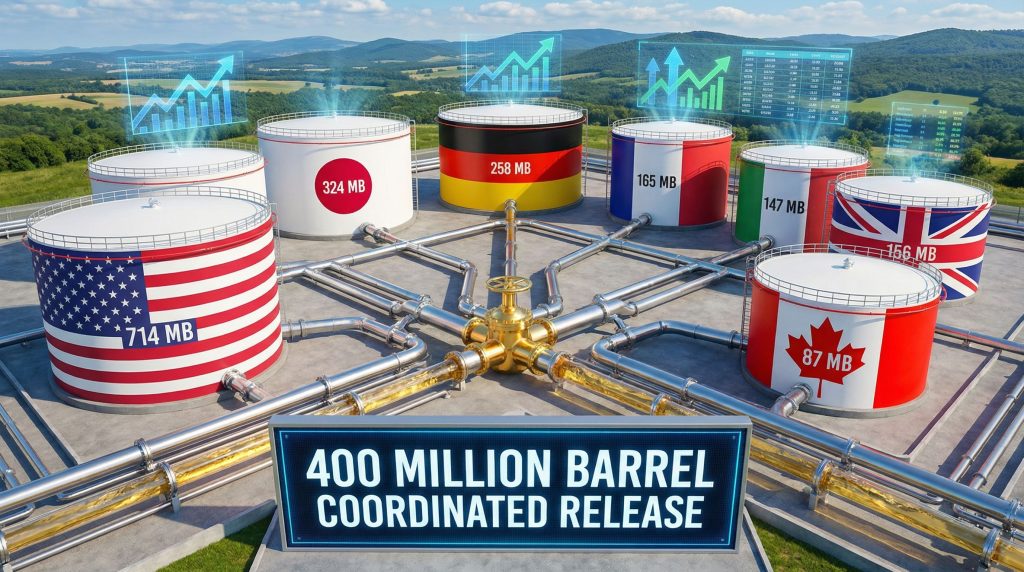
Emergency petroleum reserve coordination represents one of the most sophisticated economic intervention mechanisms developed since the 1974 oil crisis. The International Energy Agency's recommendation for 400 million barrels in reserve releases establishes the largest coordinated deployment in institutional history, surpassing the 182 million barrel release following Russia's invasion of Ukraine by 119.8%. Furthermore, the OPEC meeting impact on global supply decisions demonstrates how geopolitical coordination affects market stability during crisis periods.
The Economic Theory Behind Emergency Reserve Coordination
Strategic reserve releases function as shock absorbers designed to inject additional supply during critical shortage periods. The fundamental principle relies on rapid distribution to major markets, creating psychological stabilisation effects that often exceed the mathematical impact of additional barrels.
Market analysts from Goldman Sachs determined that even substantial releases provide limited coverage duration relative to major supply disruptions. Their assessment indicates that 182 million barrels would offset approximately 12 days of the estimated 15.4 million barrel per day Gulf export disruption, establishing the temporal limitations of reserve-based interventions.
The coordination mechanism operates through predetermined protocols that enable rapid multinational response without extensive diplomatic negotiation. This streamlined approach proved essential when the Strait of Hormuz became virtually impassable, requiring immediate collective action to prevent cascading economic disruption.
Key Market Response Indicators:
• Brent crude: $90.66 per barrel (3.26% gain) following announcement
• West Texas Intermediate: $86.05 per barrel (3.12% gain)
• Previous weekly peak: $119 per barrel
• Market scepticism persisted despite record release announcement
Historical Context of IEA Emergency Response Protocols
The 2026 deployment demonstrates significant evolution in crisis response capabilities compared to historical precedents. The 400 million barrel recommendation represents more than double the previous largest coordinated release, indicating both increased reserve capacity and recognition of escalating geopolitical supply risks.
Energy market analyst Bjarne Schieldrop observed that markets remained unconvinced that the largest ever reserve release would provide meaningful relief against current crisis conditions. This scepticism reflects growing understanding that reserve releases address symptoms rather than underlying structural supply disruptions. Additionally, recent US oil production decline trends have complicated global supply calculations.
Morgan Stanley's assessment suggested that even rapid conflict resolution would likely require weeks of continued market disruption, highlighting the temporal gap between reserve depletion and supply chain normalisation.
When big ASX news breaks, our subscribers know first
How Do Strategic Reserve Volumes Compare Across G7 Nations?
G7 countries to release oil reserves through differentiated national systems that reflect varying energy security architectures and domestic supply dependencies. Understanding these structural differences reveals how collective action accommodates individual national circumstances while maintaining coordinated effectiveness.
Reserve Capacity Analysis by Economic Power
Confirmed G7 Contributions (March 2026):
| Nation | Contribution Volume | Timeline | Reserve System Type |
|---|---|---|---|
| Germany | 19.51 million barrels | TBD | Legally mandated 90-day coverage |
| Japan | 45 days equivalent | Begins March 16 | Dual private/state system |
| United States | Largest contributor* | Coordinated timing | Federal strategic reserves |
| Austria | Partial release* | Immediate | Emergency + gas reserves |
*Specific volumes not disclosed in available sources
Germany's participation demonstrates solidarity-based reserve deployment rather than domestic necessity. Economy Minister Katherina Reiche emphasised that Germany maintains no supply shortage domestically, with legally mandated reserves covering 90 days of demand. The 2.64 million tonnes contribution reflects commitment to mutual solidarity principles established within IEA frameworks.
Infrastructure Constraints on Release Velocity
Japan's announcement revealed sophisticated dual-reserve architecture combining private sector and state-controlled inventories. The commitment to release 15 days of private-sector reserves plus 30 days of state reserves demonstrates coordination between government and commercial inventory systems, enabling rapid deployment across 45 days of equivalent coverage.
Prime Minister Sanae Takaichi's decision to act ahead of formal IEA approval illustrates the tension between multilateral coordination and immediate market intervention needs. Japan's March 16 release timing prioritised psychological market impact over procedural alignment.
Release velocity constraints vary significantly across national infrastructure systems. Pipeline capacity limitations, refinery processing bottlenecks, and transportation logistics from storage to distribution networks create practical limits on deployment speed regardless of political commitment to release volumes. Consequently, oil price movements often reflect these infrastructure constraints rather than pure supply availability.
What Are the Macroeconomic Implications of 400 Million Barrel Releases?
The 400 million barrel coordinated release provides approximately 26-27 days of coverage against the estimated 15 million barrel per day Gulf supply disruption, according to Wood Mackenzie analysis. This temporal coverage reveals the fundamental limitation of strategic reserves as temporary bridging mechanisms rather than long-term supply substitutes.
Global Supply-Demand Rebalancing Effects
Energy consultancy assessments indicate that sustained supply disruption could drive crude prices toward $150 per barrel if alternative routing through Saudi Arabia's Red Sea facilities cannot compensate for Strait of Hormuz closures. Current Red Sea routing provides flows significantly below levels necessary to offset the estimated 15 million barrel per day disruption.
Critical Supply Disruption Metrics:
• Estimated daily Gulf supply loss: 15.4 million barrels
• Strategic reserve coverage duration: 26-27 days
• Alternative routing capacity: Insufficient per shipping data
• ADNOC Ruwais refinery: Offline following infrastructure damage
The secondary effects of refinery shutdowns compound crude supply constraints by reducing processing capacity even when alternative crude sources remain available. The ADNOC Ruwais facility shutdown following infrastructure damage demonstrates how supply chain vulnerabilities extend beyond crude production into downstream processing capabilities.
Currency and Trade Balance Impacts
Sustained price volatility creates cascading effects through currency markets and trade balance calculations for energy-importing economies. The 3-4% daily price movements following the reserve release announcement indicate markets prioritise ongoing supply disruption risks over temporary reserve injections.
Import cost fluctuations affect national trade balances particularly for economies with high energy import dependencies. Germany's participation despite adequate domestic reserves reflects recognition that global price stability serves national economic interests through reduced import costs for industrial inputs and consumer energy products. Moreover, Australia's energy export challenges demonstrate how supply chain disruptions affect exporting nations differently than importers.
How Do Emergency Releases Compare to Market-Based Supply Responses?
Strategic reserve deployments operate within completely different timeframes and decision-making processes compared to market-based supply responses. While reserves can deploy within days of political decision-making, production capacity increases require months of ramp-up time and complex commercial negotiations.
OPEC+ Production Flexibility vs. Strategic Reserves
Current market conditions reveal limited spare capacity among major producers to offset large-scale supply disruptions through increased output. Political constraints on producer nation decisions further complicate rapid production responses compared to the streamlined deployment of pre-positioned strategic reserves.
Saudi Arabia's efforts to boost supplies through Red Sea routing demonstrate the infrastructure constraints affecting market-based responses. Shipping data indicates these alternative flows remain far below levels necessary to compensate for Strait of Hormuz disruptions, highlighting the physical limitations of rapid supply chain rerouting. However, the Saudi exploration licenses demonstrate long-term capacity building efforts.
Private Sector Inventory Management During Crises
Commercial inventory drawdowns often precede government strategic reserve releases as private sector entities respond to price signals and supply disruption expectations. This creates a multi-layered supply response where commercial stocks provide initial buffer capacity before coordinated government intervention.
US crude, gasoline, and distillate stocks fell during the crisis week according to American Petroleum Institute figures, indicating private sector inventory management aligned with supply disruption concerns. These commercial responses complement rather than substitute for strategic reserve deployments.
Industry coordination with strategic reserve releases requires careful timing to avoid market disruption while maximising supply injection effectiveness. The interaction between commercial inventory decisions and government reserve deployment creates complex market dynamics that extend beyond simple supply addition calculations.
What Are the Long-Term Strategic Implications for Energy Security?
Strategic reserve utilisation creates subsequent replenishment obligations that affect long-term energy security planning and budget allocation decisions. The 400 million barrel deployment represents substantial inventory depletion requiring careful timing for restocking operations to avoid adverse market impact.
Reserve Replenishment Strategies Post-Crisis
Market timing considerations for strategic restocking become critical following large-scale deployments. Governments must balance rapid reserve rebuilding against market price impacts from concentrated purchasing activities. This creates temporal planning requirements extending months beyond immediate crisis resolution.
Budget allocation requirements for reserve rebuilding compete with other fiscal priorities, particularly during post-crisis economic recovery periods. The financial commitment to maintaining strategic reserves involves opportunity costs that governments must weigh against alternative energy security investments.
Alternative Energy Transition Acceleration
Energy crises consistently accelerate renewable energy investment patterns as governments and private sectors seek to reduce vulnerability to supply disruption. The current crisis may drive policy momentum toward energy independence initiatives that reduce reliance on geographically concentrated supply sources.
Grid flexibility requirements during supply disruptions highlight the strategic value of diversified energy sources capable of rapid deployment during crisis periods. This recognition may accelerate infrastructure investments in grid-scale storage and distributed generation capabilities.
How Do Geopolitical Factors Shape Reserve Release Decisions?
G7 countries to release oil reserves through decisions that reflect complex geopolitical calculations extending beyond pure energy security considerations. Alliance coordination mechanisms integrate energy policy with broader diplomatic and security objectives, creating multi-dimensional decision-making frameworks.
Alliance Coordination Mechanisms
NATO energy security protocols increasingly align with economic coordination frameworks, demonstrating the integration of military alliance structures with energy policy coordination. The G7's unified response illustrates how economic and security alliances reinforce each other during crisis periods.
Bilateral energy security agreements provide fallback mechanisms when multilateral coordination faces political or procedural constraints. Japan's decision to act ahead of formal IEA approval demonstrates how bilateral relationships can supplement multilateral frameworks during time-sensitive crises.
Regional Supply Chain Resilience Building
Strategic reserve geographic diversification becomes increasingly important as geopolitical tensions affect traditional supply routes. The current crisis highlights vulnerabilities created by concentration of strategic reserves in regions subject to supply chain disruption.
Austria's integration of oil and gas reserve policies demonstrates comprehensive energy security planning that addresses multiple fuel sources within unified crisis response frameworks. This approach recognises the interconnected nature of modern energy systems requiring coordinated policy responses.
Critical mineral stockpiling strategies may follow similar patterns as governments recognise supply chain vulnerabilities affecting renewable energy infrastructure and advanced manufacturing capabilities essential for economic competitiveness.
The next major ASX story will hit our subscribers first
What Market Signals Indicate Reserve Release Effectiveness?
Price discovery mechanisms during coordinated interventions reveal sophisticated market responses that extend beyond simple supply-demand calculations. Futures curve patterns, volatility indices, and regional price differentials provide quantitative measures of reserve release effectiveness.
Price Discovery Mechanisms During Interventions
The persistence of price volatility despite record reserve release announcements indicates market focus on structural supply disruption duration rather than temporary supply injection volumes. Brent crude maintaining levels around $90-91 per barrel following the announcement suggests markets weighted ongoing disruption risks more heavily than reserve deployment benefits.
Volatility patterns reveal market uncertainty about crisis duration and resolution pathways. The significant daily price movements of 3-4% demonstrate that reserve releases alone cannot eliminate price volatility when underlying supply disruption causes remain unresolved. Furthermore, G7 analysis indicates sustained coordination challenges.
Consumer Behavior Adaptation Patterns
Demand destruction thresholds become critical during sustained price elevation periods. Consumer and industrial adaptation to higher energy costs affects total demand levels, potentially reducing the effectiveness of supply-side interventions like reserve releases.
Substitution effects across energy products create complex demand patterns during crisis periods. Industrial users may shift between fuel types based on relative price movements, affecting the market impact of reserves targeted at specific petroleum product categories.
Economic activity impacts from sustained high prices may reduce overall energy demand through reduced industrial production and consumer spending, creating feedback effects that influence the effectiveness of reserve deployment strategies.
How Do Emergency Protocols Balance Market Intervention with Free Market Principles?
Strategic reserve deployments represent significant government intervention in commodity markets, raising fundamental questions about the appropriate balance between emergency response and market-based price discovery mechanisms.
Regulatory Framework Evolution
Competition policy considerations during crisis response require careful balance between emergency coordination and antitrust enforcement. Germany's introduction of more stringent antitrust regulation alongside reserve releases demonstrates attempts to maintain competitive market structures during government intervention periods.
Price control mechanisms versus market-based solutions create ongoing tension between immediate relief objectives and long-term market efficiency goals. The limitation of petrol price increases to once daily represents regulatory intervention designed to moderate consumer price volatility while maintaining market price signals.
Private-Public Partnership Models
Industry cooperation requirements during reserve releases necessitate coordination between government agencies and private sector entities controlling distribution infrastructure. These partnerships must balance public policy objectives with commercial operational requirements.
Strategic reserve commercial utilisation frameworks determine how government-controlled inventories integrate with private sector supply chains during deployment periods. The effectiveness of reserve releases depends heavily on seamless integration with existing distribution systems.
What Lessons Emerge for Future Energy Crisis Management?
The 2026 coordinated response provides valuable insights for optimising future crisis management protocols, revealing both the capabilities and limitations of current strategic reserve systems.
Coordination Mechanism Optimisation
Communication protocol improvements for rapid response could reduce deployment timelines and enhance market confidence in coordinated interventions. The variability in national announcement timing suggests opportunities for more synchronised communication strategies.
Decision-making timeline acceleration strategies must balance rapid response capabilities with thorough impact assessment requirements. Japan's decision to act ahead of formal IEA approval demonstrates both the benefits and risks of accelerated unilateral action within multilateral frameworks.
Technology Integration for Enhanced Response
Real-time supply monitoring systems could provide more accurate assessment of disruption magnitudes and appropriate response scales. Current estimates of 15+ million barrel per day disruption rely on analysis that may not capture rapid supply chain adaptations.
Predictive analytics for crisis anticipation might enable proactive reserve positioning before supply disruptions reach critical levels. Early warning systems could trigger preliminary coordination discussions that reduce response deployment timelines.
Digital coordination platforms for international cooperation could streamline the complex logistics of multinational reserve deployment, ensuring more effective integration of diverse national systems and infrastructure capabilities.
Investment and Market Considerations:
The current crisis demonstrates both the value and limitations of strategic petroleum reserves as economic stabilisation tools. Investors should recognise that while reserve releases provide temporary market support, they cannot address structural supply disruptions lasting beyond the 26-27 day coverage period indicated by current deployment levels.
Energy security policies continue evolving toward diversified supply sources and enhanced domestic production capabilities. The coordination challenges revealed in current crisis response may accelerate investments in alternative energy infrastructure and grid flexibility technologies that reduce vulnerability to geopolitical supply disruptions.
Disclaimer: This analysis is for informational purposes only and does not constitute investment advice. Energy market investments involve substantial risks, including complete loss of capital. Past performance does not guarantee future results. Consult qualified financial advisors before making investment decisions.
Ready to Navigate Energy Market Volatility with Precision?
While strategic petroleum reserves offer temporary market stabilisation, savvy investors recognise that real opportunities emerge from understanding supply disruptions and geopolitical shifts affecting resource markets. Discovery Alert's proprietary Discovery IQ model delivers instant notifications on significant ASX mineral discoveries, empowering subscribers to identify actionable opportunities across the energy and commodities spectrum ahead of broader market recognition. Begin your 14-day free trial today and position yourself to capitalise on the next major discovery that could reshape energy security calculations.