
June 4, 2026
Strategic Portfolio Optimization in Global Energy Markets
International energy companies operating in resource-rich basins face increasingly complex decisions around asset allocation and geographic focus. As commodity markets evolve and regulatory frameworks shift, operators must balance risk mitigation with growth opportunities while maximizing returns on capital-intensive developments. Furthermore, this dynamic particularly affects companies with substantial positions in unconventional resources, where technical expertise and infrastructure leverage create significant competitive advantages.
The global energy landscape has witnessed a fundamental shift toward consolidated positions in proven basins, as operators divest non-core assets to concentrate resources on their highest-return developments. This strategic realignment reflects broader industry trends toward operational efficiency, regulatory compliance, and long-term value creation in mature hydrocarbon provinces.
When big ASX news breaks, our subscribers know first
How Major Energy Companies Navigate Complex Asset Restructuring
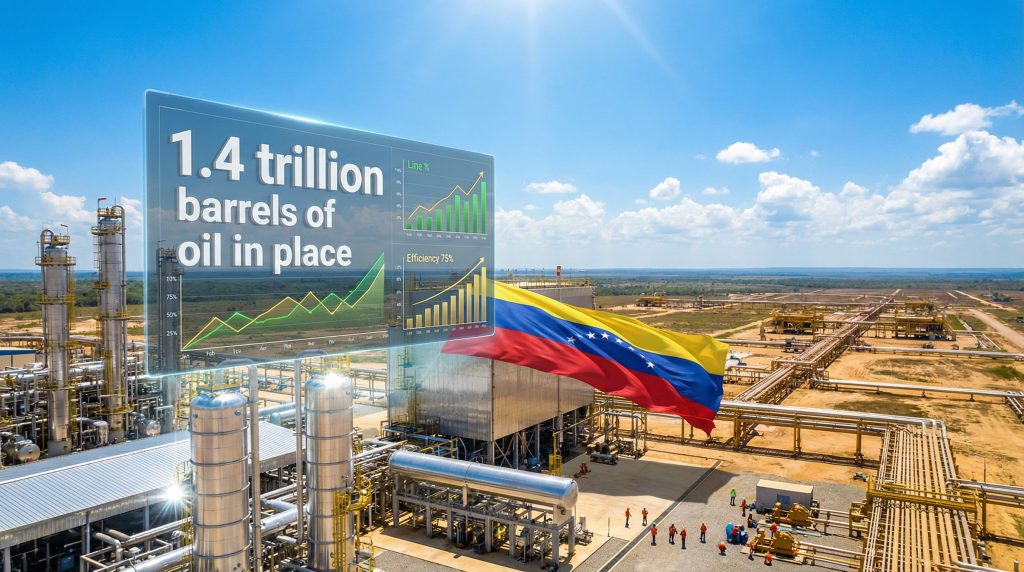
Chevron expands Venezuela heavy oil position in PDVSA asset swap through a strategic transaction that exemplifies how international operators optimise their portfolios in resource-rich environments. The company increased its stake in the Petroindependencia joint venture to 49%, gaining an additional 13.21% interest while securing rights to the Ayacucho 8 area adjacent to its existing Petropiar operations.
This restructuring demonstrates several key drivers behind major portfolio realignments:
- Resource Concentration Strategy: Focusing capital on adjacent acreage that leverages existing infrastructure
- Technical Specialisation: Divesting assets requiring different technological competencies
- Regulatory Optimisation: Aligning portfolio composition with state partnership preferences
- Risk Profile Management: Reducing exposure to volatile regional markets while strengthening positions in global commodity streams
The transaction involved transferring offshore gas assets, including operated stakes in Plataforma Deltana Blocks 21 and 32, plus a non-operated interest in the Petroindependiente joint venture. This exchange pattern reflects a deliberate pivot away from gas developments, where regional pricing constraints and market volatility limit returns compared to crude oil assets with global market access.
Operational continuity represents another critical factor driving such restructuring. Chevron's operational presence in Venezuela spans more than a century, providing deep technical knowledge of reservoir characteristics, regulatory frameworks, and infrastructure requirements that new entrants would need years to develop.
Risk-Return Optimisation Through Geographic Clustering
Strategic asset exchanges enable operators to achieve superior risk-adjusted returns through geographic clustering benefits. Adjacent acreage positions create multiple operational synergies:
| Operational Category | Clustering Benefit | Economic Impact |
|---|---|---|
| Processing Integration | Shared facility utilisation | 20-30% reduction in fixed costs per barrel |
| Drilling Optimisation | Consolidated rig scheduling | Improved capital equipment utilisation |
| Transportation | Common pipeline access | Reduced logistics complexity |
| Water Management | Centralised treatment systems | Lower environmental compliance costs |
The proximity of newly assigned acreage to existing operations supports more efficient development by eliminating duplicate infrastructure investments and reducing project execution timelines. In addition, this geographic consolidation strategy has become increasingly important as operators face capital allocation pressure and seek to maximise returns from proven resource bases.
Why Extra-Heavy Crude Development Commands Strategic Premium
The Orinoco Belt represents one of the world's most substantial hydrocarbon accumulations, containing vast heavy oil resources that require specialised development approaches. Unlike conventional crude developments, extra-heavy oil projects demand unique technical competencies and infrastructure investments that create significant barriers to entry.
Resource characteristics that drive strategic value include:
- Massive Scale: Concentrated resource base supporting decades of production
- Stable Production Profiles: Heavy oil reservoirs maintain relatively consistent output over extended periods
- Infrastructure Leverage: Existing processing facilities represent substantial sunk capital
- Market Demand: Specialised refining capacity creates dedicated demand channels
Processing Technology and Economic Viability
Extra-heavy crude with 8-10° API gravity requires sophisticated processing to meet international market specifications. Modern upgrading facilities employ multiple technologies:
Thermal Processing Methods:
- Hydrocracking to break heavy molecular structures
- Thermal treatment to reduce pour point and improve flowability
- Catalytic upgrading to increase API gravity ratings
Transportation Solutions:
- Naphtha blending to reduce viscosity for pipeline transport
- Strategic diluent sourcing from regional suppliers
- Integrated logistics networks connecting fields to upgrading facilities
The economics of heavy oil development depend heavily on achieving scale through consolidated operations. Consequently, single upgrading facilities can process crude from multiple adjacent fields, distributing massive capital investments across larger production volumes and improving per-barrel economics.
Regulatory Framework Navigation and Joint Venture Structures
International operators in Venezuela navigate complex regulatory requirements that shape investment decisions and operational structures. State partnership requirements through PDVSA participation create unique governance dynamics where international companies contribute technical expertise and capital whilst managing regulatory compliance and revenue-sharing arrangements.
Key regulatory considerations affecting strategic decisions include:
- Operational Authority: Joint decision-making requirements for production levels and technology deployment
- Financial Structures: Complex payment mechanisms and revenue repatriation processes
- Technology Transfer: Local content development and knowledge sharing obligations
- Export Management: State approval requirements for international sales agreements
Sanctions Impact and Compliance Framework
International energy companies must navigate evolving sanctions frameworks that influence operational scope and investment structures. These regulatory constraints affect:
- Service Provider Selection: Limited options for international contractors and technology suppliers
- Financial Transaction Methods: Structured approaches to revenue management and capital transfers
- Market Access: Restrictions on customer base and export destination flexibility
- Technology Deployment: Controls on advanced equipment and software systems
The ability to operate effectively within these constraints has become a key competitive advantage for companies with established regulatory compliance capabilities and long-term operational presence. Furthermore, companies with experience in energy transition challenges understand how to adapt to shifting regulatory landscapes whilst maintaining operational excellence.
Infrastructure Leverage and Synergy Realisation
Geographic clustering drives operational excellence through multiple mechanisms that reduce costs and improve efficiency. The assignment of Ayacucho 8 rights adjacent to existing Petropiar operations exemplifies how strategic positioning enables superior project economics.
Synergy Categories and Value Creation
Processing Facility Integration:
- Shared upgrading complex utilisation eliminates duplicate capital investments
- Consolidated quality control and blending operations reduce operational complexity
- Integrated maintenance scheduling improves facility reliability and utilisation rates
Drilling Programme Optimisation:
- Centralised rig management reduces equipment idle time
- Shared geological and engineering datasets accelerate development planning
- Integrated well completion strategies optimise production profiles across multiple fields
Supply Chain Efficiency:
- Consolidated procurement reduces material costs and inventory requirements
- Shared logistics infrastructure minimises transportation expenses
- Integrated personnel management eliminates duplicate administrative overhead
The economic benefits of geographic clustering become particularly pronounced in capital-intensive heavy oil developments, where infrastructure investments represent substantial portions of total project costs. Companies that successfully consolidate adjacent positions can achieve per-barrel cost reductions that significantly improve project returns.
Market Dynamics and Global Heavy Oil Demand
Heavy oil assets benefit from specialised market dynamics that support price premiums relative to conventional crude benchmarks. Global refining capacity optimised for processing extra-heavy crude creates dedicated demand channels that provide pricing stability during market volatility periods.
However, global oil price trade dynamics continue to influence heavy oil valuations, particularly when geopolitical tensions affect traditional supply chains. Companies with trade war market strategies are better positioned to navigate these complex market conditions.
Refining Integration Opportunities
Vertical integration strategies enable operators to capture additional value streams beyond upstream production:
- Processing Margin Capture: Direct control over upgrading economics and product specifications
- Market Access Flexibility: Ability to optimise product slate based on demand patterns
- Supply Chain Control: Reduced dependence on third-party processing and transportation services
- Risk Management: Integrated operations provide natural hedging against commodity price volatility
The concentration of heavy oil resources in specific geographic regions creates natural clustering opportunities for both upstream development and downstream processing investments. Companies that establish dominant positions in these resource concentrations can achieve sustainable competitive advantages through scale economics and infrastructure control.
The next major ASX story will hit our subscribers first
Strategic Scenarios for Future Development
Multiple development scenarios could shape the evolution of heavy oil assets in resource-rich basins over the coming decade:
Scenario 1: Accelerated Production Growth
Favourable regulatory environments combined with sustained crude oil demand could support rapid capacity expansion. Key enablers include:
- Streamlined permitting processes for expansion projects
- Enhanced state partnership terms encouraging international investment
- Technology advancement reducing development costs and timelines
- Global energy security concerns supporting resource diversification
Scenario 2: Technology-Driven Efficiency Revolution
Advanced extraction and processing technologies could fundamentally improve project economics:
- Enhanced Oil Recovery: New techniques increasing ultimate recovery factors by 15-25%
- Processing Innovation: Next-generation upgrading reducing capital intensity by 20-30%
- Digital Integration: Automated operations reducing personnel requirements and improving reliability
- Environmental Technology: Carbon capture integration enabling sustainable development pathways
Scenario 3: Regional Energy Integration
Heavy oil resources could anchor broader South American energy cooperation initiatives:
- Cross-border pipeline infrastructure connecting resources to diverse markets
- Regional refining capacity expansion processing multiple crude streams
- Integrated petrochemical development adding value-added product streams
- Energy security partnerships reducing dependence on global supply chains
Long-Term Value Creation Through Strategic Positioning
The Chevron expands Venezuela heavy oil position in PDVSA asset swap transaction illustrates how sophisticated operators create long-term value through strategic asset optimisation. By concentrating resources on adjacent heavy oil positions whilst divesting non-core gas assets, the company demonstrates several key principles of successful portfolio management in complex operating environments.
Critical success factors for sustained value creation include:
- Technical Expertise: Deep competency in specialised heavy oil development and processing
- Financial Flexibility: Ability to fund long-term development programmes through commodity cycles
- Regulatory Navigation: Proven capability to operate effectively within complex international frameworks
- Infrastructure Control: Strategic positioning that leverages existing assets and creates barriers to competition
Investment Implications and Market Psychology
Heavy oil asset consolidation reflects broader market psychology favouring proven resources over exploration risk. Investor preferences increasingly emphasise:
- Predictable Cash Flows: Long-plateau production profiles supporting dividend sustainability
- Infrastructure Assets: Tangible facilities with replacement value exceeding book value
- Resource Control: Ownership of strategic assets in geopolitically significant regions
- Technical Barriers: Competitive moats created through specialised operational capabilities
Understanding tariff impact on markets becomes crucial when evaluating international energy investments, particularly in resource-rich regions with complex trade relationships. Moreover, OPEC production impact on global pricing continues to influence heavy oil asset valuations.
The evolution of Venezuela's energy partnerships demonstrates how major operators adapt to changing market conditions whilst positioning for sustained growth in resource-rich environments. Companies that successfully navigate regulatory complexity, achieve operational scale, and maintain technical excellence are likely to capture disproportionate value as global energy markets continue evolving.
Future monitoring priorities for industry observers should focus on expansion of consolidation patterns across other heavy oil basins, regulatory evolution affecting international partnership structures, and technology advancement reducing development costs and environmental impact.
Furthermore, strategic asset evaluation remains critical as companies navigate the complex risk-return dynamics inherent in international heavy oil development projects.
Investment Disclaimer: This analysis contains forward-looking statements and projections based on current market conditions and regulatory frameworks. Heavy oil development involves substantial capital requirements, long development timelines, and regulatory compliance risks that could materially affect project returns. Readers should conduct independent research and consult qualified financial advisors before making investment decisions related to energy sector assets or companies discussed in this analysis.
Seeking Investment Opportunities in Resource-Rich Energy Markets?
Discovery Alert's proprietary Discovery IQ model delivers real-time alerts on significant ASX mineral discoveries, instantly empowering subscribers to identify actionable opportunities ahead of the broader market. Begin your 14-day free trial today and secure your market-leading advantage in Australia's dynamic resources sector.