
June 11, 2026
Strategic Resource Accumulation in Modern Commodity Markets
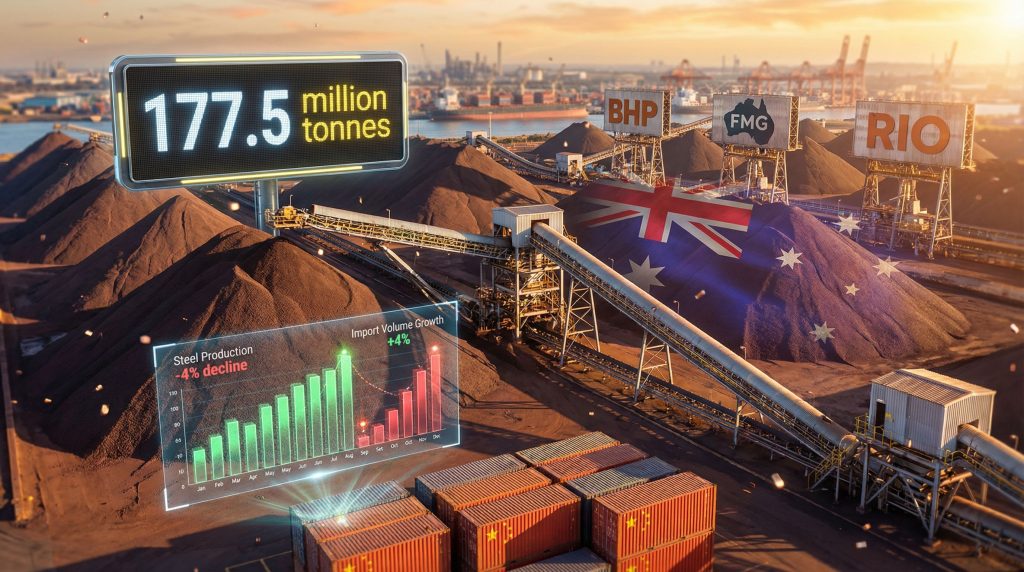
China iron ore stockpiles impact on ASX mining stocks represents a fundamental shift in global commodity market dynamics that extends far beyond traditional supply-demand analysis. Chinese port facilities currently maintain iron ore inventories exceeding 170 million tonnes, creating unprecedented pricing pressures that ripple through international mining equity markets. This strategic accumulation reflects deliberate policy coordination between state-backed purchasing entities and port infrastructure operators.
Contemporary resource stockpiling represents a sophisticated blend of economic hedging, supply chain security, and negotiating leverage that transcends traditional procurement strategies. Furthermore, this accumulation pattern serves multiple economic and political objectives simultaneously, creating complex interconnections between macroeconomic policy and corporate strategy.
Economic Hedging Through Systematic Inventory Building
Resource stockpiling operates as a multi-dimensional risk management tool that extends beyond conventional inventory management. The strategic accumulation of critical raw materials provides price volatility mitigation during periods of supply chain disruption or geopolitical tension. Additionally, it enables procurement timing optimization, allowing buyers to capitalise on favourable pricing windows.
Historical precedent demonstrates that systematic inventory building often precedes major economic stimulus programmes. Consequently, iron ore price trends reflect not only immediate consumption needs but also inventory management strategies and future demand expectations. However, this creates negotiating leverage enhancement that reduces dependency on immediate spot market transactions.
When big ASX news breaks, our subscribers know first
Inventory-Driven Price Discovery and Market Psychology
Traditional commodity pricing models rely heavily on immediate supply-demand balance calculations. Nevertheless, strategic stockpiling introduces temporal complexity that fundamentally alters price discovery mechanisms. Steel production facilities across China maintain operational intensity levels comparable to peak production periods, yet port inventories continue expanding.
This apparent contradiction reveals the complexity of modern supply chain management and strategic resource allocation. Moreover, elevated stockpile levels create cascading psychological effects throughout commodity markets, including reduced purchasing urgency among end-users and extended negotiation timelines.
Regional Price Arbitrage and Trade Flow Redirection
Strategic inventory accumulation creates arbitrage opportunities across regional markets as supply patterns shift. Southeast Asian markets, including Malaysia and Vietnam, experience increased cargo redirections as suppliers adapt to altered Chinese procurement patterns. For instance, Indian iron ore imports have surged substantially, capitalising on pricing opportunities created by Chinese inventory overhang.
This regional rebalancing demonstrates how strategic stockpiling by major consumers influences global trade flows. Consequently, it creates both opportunities and risks for suppliers dependent on specific market access. According to Morningstar analysis, ASX mining stocks have reached eye-catching valuations following recent share price declines.
ASX Mining Sector Risk Assessment and Strategic Positioning
Australian mining companies face differentiated exposure profiles to Chinese inventory strategies. In addition, they require nuanced risk assessment frameworks that consider operational geography and product quality positioning. The impact of China iron ore stockpiles impact on ASX mining stocks varies significantly across different producers, depending on their strategic relationships and market positioning.
BHP Group: Navigating Dual Market Challenges
BHP confronts the most complex risk environment among major iron ore mines, facing simultaneous challenges from pricing pressure and market access restrictions. The company's exposure to Chinese demand fluctuations creates multiple vulnerability vectors that require comprehensive risk management strategies.
Primary risk factors include geographic concentration in Pilbara production assets and product grade specificity affecting substitute options. However, BHP's diversification strategy emphasises copper portfolio expansion and geographic market development. Furthermore, recent executive engagement with Chinese counterparts suggests diplomatic resolution possibilities.
Fortescue Metals: Pure-Play Exposure and Efficiency Focus
Fortescue represents the highest sensitivity to iron ore market dynamics among major ASX miners. The company's operational performance correlates directly to commodity pricing trends. Nevertheless, its focus on cost leadership and operational efficiency provides partial insulation against pricing pressures.
Strategic positioning elements include cost curve advantages through mining efficiency optimisation and transportation infrastructure providing logistical competitive positioning. Additionally, product quality improvements target premium market segments whilst green hydrogen diversification creates alternative revenue potential.
Rio Tinto: Leveraging Strategic Advantages
Rio Tinto strategy occupies a unique market position during current dynamics, benefiting from competitor restrictions whilst managing longer-term supply expansion implications. The Simandou project represents both opportunity and risk as global iron ore supply capacity expands.
Market position analysis reveals short-term market share gains during competitor access restrictions and premium product positioning in quality-sensitive applications. However, infrastructure development complexity through Simandou project advancement requires careful capital allocation optimisation.
Economic Scenario Framework and Investment Implications
Multiple economic scenarios could fundamentally alter current iron ore market dynamics. Consequently, investors must consider both bullish catalyst potential and structural demand deterioration risks when evaluating China iron ore stockpiles impact on ASX mining stocks.
Demand Catalyst Scenarios
Chinese economic policy makers maintain substantial fiscal capacity for infrastructure spending, though deployment timing remains uncertain. Potential catalyst areas include transportation infrastructure expansion requiring specialised steel applications and urban renewal projects driving construction steel demand.
Supply chain disruption events could rapidly shift market dynamics. For instance, weather-related production disruptions affecting major supply regions or transportation route complications constraining delivery capacity could alter inventory dynamics substantially.
Structural Risk Considerations
Long-term structural changes pose fundamental challenges to iron ore demand. Property sector contraction reduces residential construction steel needs, whilst manufacturing geographic redistribution affects steel intensity patterns. Furthermore, circular economy advancement increases steel recycling rates, potentially reducing primary iron ore demand.
Supply expansion pressures threaten long-term pricing stability. African project development, particularly Simandou and other Guinea deposits, adds significant capacity. Additionally, Brazilian capacity expansion and technology cost reduction improve economics of marginal deposits, potentially reducing Australian market share.
Portfolio Construction and Risk Management Strategies
Navigating China iron ore stockpiles impact on ASX mining stocks requires sophisticated portfolio construction approaches that balance cyclical opportunity with structural risk management. Junior mining strategies may offer alternative exposure opportunities during major producer uncertainty.
Conservative Commodity Exposure
Risk-averse investors require strategies emphasising stability over cyclical opportunity. Diversified mining ETFs reduce single-stock concentration risk whilst dividend-focused selection criteria prioritise cash flow sustainability. Moreover, balance sheet strength analysis emphasises financial resilience during commodity downturns.
Geographic diversification across multiple commodity markets provides additional risk mitigation. Furthermore, critical minerals strategy considerations may offer portfolio diversification benefits beyond traditional iron ore exposure.
Opportunistic Value Strategies
Aggressive investors may pursue cyclical positioning during market weakness. Contrarian accumulation during sentiment-driven weakness and volatility harvesting through systematic rebalancing strategies offer potential value creation opportunities. Additionally, pairs trading approaches between high-beta and diversified miners provide risk-adjusted exposure.
Options strategy deployment creates asymmetric risk-return profiles suitable for uncertain market conditions. According to recent analysis, Chinese economic data continues significantly impacting ASX mining stock performance.
The next major ASX story will hit our subscribers first
Monitoring Framework and Forward Indicators
Effective investment management requires systematic monitoring of key indicators affecting iron ore markets. Chinese PMI trends indicate manufacturing demand trajectory whilst steel production statistics reveal consumption pattern changes. Furthermore, port inventory dynamics signal procurement strategy shifts that directly impact pricing.
Infrastructure spending announcements suggest potential demand catalysts that could rapidly alter market dynamics. Additionally, company-specific performance metrics including cost curve positioning determine margin sustainability under pricing pressure. Capital allocation discipline between growth investment and shareholder returns indicates management quality during challenging periods.
The strategic stockpiling represents a fundamental shift in global commodity market dynamics extending beyond traditional analysis frameworks. For ASX mining stock investors, understanding these evolving patterns requires sophisticated approaches integrating macroeconomic policy analysis with operational risk assessment and portfolio construction principles.
While near-term pressures may persist, underlying drivers of steel demand remain structurally intact. Consequently, opportunities exist for patient investors who can navigate short-term volatility whilst positioning for longer-term value creation in the evolving global resources sector.
Looking to Position Yourself Ahead of Market Shifts in the Resources Sector?
Discovery Alert's proprietary Discovery IQ model delivers real-time notifications on significant ASX mineral discoveries, empowering investors to identify actionable opportunities whilst major producers face uncertainty from changing market dynamics. Explore how historic mineral discoveries have generated exceptional returns and begin your 14-day free trial today to secure your competitive advantage in the evolving resources market.