
June 27, 2026
Understanding Strategic Scenario Modeling in Nuclear Technology Development
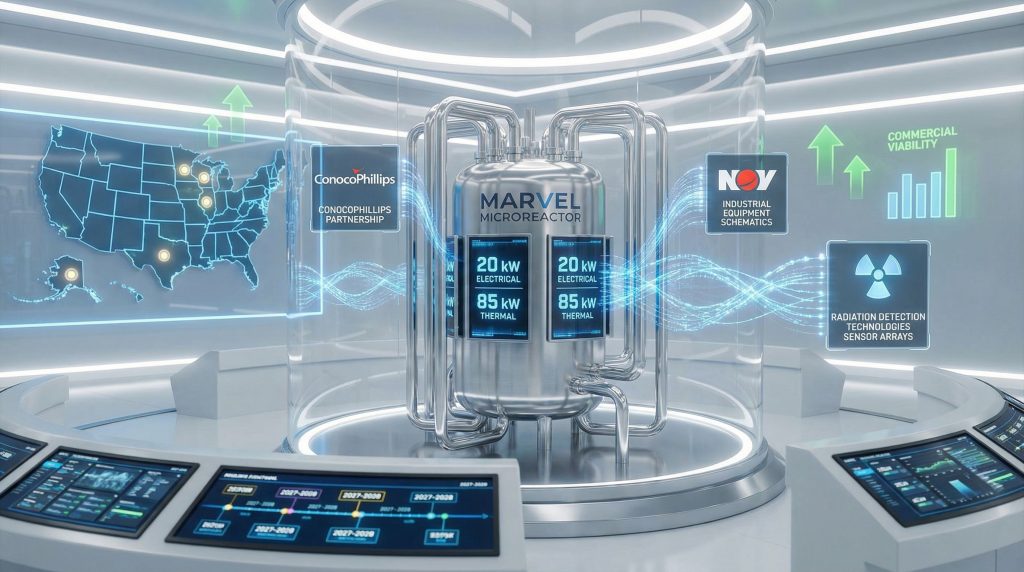
The MARVEL Project nuclear teams represent a convergence of technological innovation, strategic partnerships, and market transformation potential that extends far beyond traditional power generation paradigms. As advanced reactor technologies evolve from research concepts to commercial viability assessments, the methodologies for evaluating deployment scenarios become increasingly sophisticated. Strategic scenario modeling emerges as a critical framework for understanding how distributed nuclear technologies might reshape energy infrastructure across multiple industrial sectors.
This analytical approach examines pathway dependencies, risk distribution mechanisms, and technology validation processes that determine commercial success trajectories for next-generation nuclear systems. Rather than focusing on individual reactor designs or singular applications, effective scenario modeling evaluates how technological capabilities interact with market demands, regulatory frameworks, and operational requirements across diverse deployment environments.
When big ASX news breaks, our subscribers know first
Strategic Framework Analysis for Multi-Sector Nuclear Integration
Distributed Partnership Architecture in Advanced Nuclear Programs
Contemporary microreactor development programmes increasingly adopt distributed validation models that engage multiple industrial sectors simultaneously. This approach creates technology validation pathways that transcend traditional utility-scale nuclear deployment models, establishing proof-of-concept demonstrations across diverse operational environments.
The strategic value of multi-sector engagement lies in risk distribution and market validation acceleration. By testing nuclear technologies across oil and gas operations, industrial processing facilities, and specialised applications requiring reliable baseload power, development programmes generate comprehensive performance data whilst building regulatory precedents for varied operational contexts.
Such frameworks address fundamental challenges in nuclear technology commercialisation, including workforce requirements, maintenance protocols, and economic viability thresholds. The distributed approach enables technology developers to identify optimal application scenarios whilst building stakeholder confidence across multiple market segments.
Technology Validation Through Sectoral Diversification
Effective nuclear technology validation requires engagement with industries that present distinct operational challenges and performance requirements. Energy sector applications focus on thermal utilisation for industrial processes, particularly in produced water management and desalination operations where waste heat recovery creates additional value streams.
Technology partnerships concentrate on autonomous control systems and advanced monitoring capabilities essential for remote deployment scenarios. These collaborations address workforce limitations that constrain traditional nuclear operations whilst developing sensor technologies and control algorithms necessary for distributed reactor networks.
Industrial equipment integration partnerships examine operational optimisation, maintenance protocols, and infrastructure compatibility. These relationships establish frameworks for incorporating nuclear systems into existing industrial operations whilst addressing reliability requirements and safety protocols specific to industrial environments.
Partnership Architecture and Commercial Validation Strategy
Energy Sector Applications and Thermal Utilisation
The integration of microreactor technology with oil and gas operations presents unique opportunities for addressing produced water management challenges whilst creating new revenue streams from thermal energy utilisation. Produced water represents both an environmental liability and operational cost in hydrocarbon extraction, with traditional treatment methods requiring significant energy inputs.
Microreactor thermal energy can support desalination processes, reducing operational costs whilst addressing environmental compliance requirements. This application demonstrates how nuclear technology can transform waste streams into operational assets, creating economic incentives for adoption whilst addressing regulatory obligations.
Furthermore, the development of these applications has been significantly influenced by policy decisions, particularly the US uranium import ban that has reshaped supply chain considerations for nuclear fuel procurement.
Key performance metrics for energy sector integration include:
- Thermal efficiency ratios for water treatment processes
- Cost reduction percentages for produced water management
- Energy output optimisation for combined electrical and thermal applications
- Integration timeline requirements for existing operational infrastructure
Technology Development Through Advanced Monitoring Systems
Advanced reactor deployment in remote or autonomous operational environments requires sophisticated monitoring and control technologies that exceed traditional nuclear plant instrumentation capabilities. Technology partnerships focus on developing sensor networks, data analytics platforms, and autonomous control systems that enable reliable operation with minimal human intervention.
These technological developments address critical deployment barriers including workforce availability, maintenance access, and safety oversight requirements. Remote monitoring capabilities extend potential deployment locations whilst reducing operational costs and improving safety margins through continuous system monitoring.
Consequently, the Marvel microreactor coolant system represents a significant advancement in autonomous control system development, creating technological foundations for distributed nuclear networks that could support remote industrial operations, data centers, and specialised facilities requiring reliable baseload power independent of traditional grid infrastructure.
Industrial Equipment Integration and Operational Optimisation
Industrial partnerships examine equipment compatibility, maintenance protocols, and operational integration requirements for incorporating nuclear systems into existing industrial infrastructure. These collaborations address practical deployment challenges including equipment reliability, maintenance scheduling, and integration with existing operational workflows.
The focus on operational optimisation creates frameworks for nuclear system deployment that minimise disruption to existing operations whilst maximising energy efficiency and reliability improvements. This approach facilitates adoption by reducing implementation barriers and demonstrating clear operational benefits.
Development Timeline and Critical Milestones
Construction and Assembly Phase Implementation
Current development activities centre on final reactor assembly completion, with critical milestone targets for component integration and safety system validation. This phase establishes the physical and technological foundations for subsequent testing and validation operations.
The construction phase emphasises modular design validation, manufacturing process optimisation, and quality assurance protocols that support future commercial production scaling. These activities create templates for standardised manufacturing approaches whilst validating cost projections and timeline estimates.
Component integration testing during this phase provides essential data for operational parameter optimisation and safety system verification, establishing baseline performance characteristics that inform subsequent testing protocols.
Testing and Validation Phase Objectives
The testing phase encompasses two distinct operational periods with specific technical and commercial validation objectives. Initial operations focus on dry criticality achievement, safety system validation, and baseline performance establishment across multiple operational scenarios.
Additionally, the broader context of uranium market volatility has underscored the importance of establishing robust testing protocols that demonstrate operational flexibility under varying market conditions.
2027 Technical Targets:
- Reactor criticality achievement under controlled conditions
- Safety system response validation across emergency scenarios
- Baseline thermal and electrical output verification
- Control system functionality testing and optimisation
2028 Commercial Validation Objectives:
- Full power operation demonstration across extended periods
- Partner application testing across multiple industrial scenarios
- Economic viability assessment through real-world operational data
- Regulatory compliance demonstration and documentation
This phased approach enables systematic validation of technical capabilities whilst building commercial confidence through demonstrated performance across diverse application scenarios.
Addressing Critical Deployment Challenges Through Innovation
Remote Operation Technology Development
Microreactor deployment in remote or challenging environments requires technological solutions that address workforce limitations, maintenance access constraints, and safety oversight requirements. Advanced autonomous control systems enable reliable operation with minimal human intervention whilst maintaining safety margins equivalent to traditional nuclear facilities.
| Challenge Category | Technology Solution | Commercial Impact |
|---|---|---|
| Workforce Requirements | Autonomous control algorithms | Reduced operational expenditures |
| Maintenance Access | Remote diagnostic capabilities | Extended deployment geography |
| Safety Oversight | Advanced sensor integration | Streamlined regulatory compliance |
| Emergency Response | Automated safety systems | Enhanced operational reliability |
These technological advances create opportunities for nuclear deployment in applications previously considered technically or economically infeasible, expanding market opportunities whilst addressing critical infrastructure needs.
Moreover, successful implementation of these systems could significantly impact the broader nuclear industry, particularly given current concerns about US uranium market disruption and the need for more resilient domestic nuclear capabilities.
Regulatory Pathway Development
Microreactor programmes establish regulatory precedents and compliance pathways that reduce future deployment barriers for commercial operators. By demonstrating safety protocols, operational procedures, and emergency response capabilities across multiple application scenarios, these programmes create templates for regulatory approval processes.
The regulatory foundation development includes documentation of operational procedures, safety protocols, and emergency response capabilities that facilitate licensing processes for future commercial deployments. This regulatory infrastructure reduces development timelines and costs for subsequent projects whilst establishing industry standards for microreactor operations.
Economic Viability Validation Through Real-World Applications
Testing across diverse partner applications generates comprehensive economic data that validates business models for commercial microreactor deployment. Real-world operational data provides evidence for cost projections, revenue potential, and operational efficiency claims that support investment decisions and commercial development.
This economic validation extends beyond simple cost-benefit analysis to include examination of value creation through waste heat utilisation, operational reliability improvements, and energy independence benefits. The multi-application approach demonstrates revenue diversification potential whilst validating economic assumptions across different market segments.
Market Transformation Scenarios and Commercial Implications
Distributed Energy Infrastructure Development
Successful microreactor validation could catalyse development of distributed nuclear networks that support remote industrial operations whilst reducing dependence on traditional grid infrastructure. This transformation scenario envisions microreactor clusters providing reliable baseload power for industrial facilities, data centres, and specialised operations requiring energy security.
Potential Infrastructure Outcomes:
- Microreactor networks supporting remote industrial operations
- Reduced transmission infrastructure requirements
- Enhanced energy security for critical facilities
- New energy service business models and revenue streams
The distributed infrastructure model creates opportunities for energy independence whilst reducing transmission losses and infrastructure vulnerabilities associated with centralised power generation systems.
Industrial Process Integration Scenarios
Microreactor technology integration with industrial processes creates opportunities for enhanced energy efficiency and operational reliability across multiple manufacturing and processing sectors. Industrial applications leverage both electrical generation and thermal energy utilisation for optimised energy management.
Commercial Application Areas:
- Chemical processing thermal energy supply and process heat optimisation
- Manufacturing facility energy independence and reliability enhancement
- Data centre power generation with waste heat recovery systems
- Synthetic fuel production energy supply for emerging energy carriers
These applications demonstrate how microreactor technology can transform industrial energy consumption patterns whilst creating new revenue opportunities through thermal energy utilisation.
Resource Extraction Enhancement Applications
Oil and gas sector microreactor applications could demonstrate significant value creation through enhanced recovery operations, remote drilling site power supply, and produced water treatment capabilities. These applications address operational challenges whilst creating environmental and economic benefits.
Resource extraction enhancement includes:
- Enhanced oil recovery operations with reliable thermal energy supply
- Remote drilling site power generation independent of grid infrastructure
- Produced water treatment at source locations reducing transportation costs
- Carbon capture process energy supply supporting environmental compliance
The next major ASX story will hit our subscribers first
Technical Innovation Distinguishing Advanced Microreactor Approaches
Sodium-Potassium Coolant System Advantages
Liquid metal coolant systems provide superior heat transfer characteristics compared to traditional reactor coolant technologies, enabling efficient thermal energy utilisation for industrial processes whilst maintaining operational safety margins. The enhanced heat transfer capabilities support both electrical generation and process heat applications.
Advanced coolant systems operate at higher temperatures than traditional designs, creating opportunities for industrial process integration and improved thermodynamic efficiency. This technological approach addresses limitations of conventional reactor designs whilst enabling applications requiring high-temperature process heat.
Modular Design Philosophy and Manufacturing Standardisation
Modular reactor architecture supports rapid deployment timelines and standardised manufacturing processes that address cost and schedule challenges historically limiting nuclear technology adoption. The standardised approach enables factory production methods whilst reducing field construction requirements.
Manufacturing standardisation creates opportunities for cost reduction through production scaling whilst improving quality control and reducing construction timelines. This approach facilitates broader deployment by addressing economic and timeline barriers that have constrained nuclear technology adoption.
Multi-Application Flexibility and Output Optimisation
Advanced reactor designs accommodate diverse energy output requirements ranging from electrical generation to industrial process heat supply, maximising commercial application potential across multiple market segments. This flexibility creates revenue optimisation opportunities whilst addressing varied customer requirements.
Output optimisation capabilities enable reactor systems to adjust energy production profiles based on operational requirements and market conditions, improving economic viability whilst providing operational flexibility for industrial applications.
Strategic Implications for Energy Security and Technology Leadership
Domestic Nuclear Technology Leadership Development
Advanced microreactor programmes position domestic companies at the forefront of small-scale nuclear technology development, creating competitive advantages in emerging global markets for distributed nuclear systems. This technological leadership creates export opportunities whilst establishing domestic expertise in advanced reactor technologies.
Technology leadership development includes intellectual property creation, manufacturing capability establishment, and operational expertise development that supports both domestic deployment and international market participation. The competitive advantages extend beyond individual technologies to include comprehensive deployment capabilities and operational expertise.
However, the broader context of strategic nuclear material management, including considerations around nuclear waste disposal solutions, remains critical for long-term technology leadership sustainability.
Supply Chain Independence and Industrial Capability Building
Domestic microreactor development reduces reliance on foreign nuclear technology suppliers whilst building indigenous expertise in advanced reactor systems. Supply chain development creates industrial capabilities that support both nuclear technology development and broader advanced manufacturing sectors.
Industrial capability building includes specialised manufacturing processes, quality assurance protocols, and technical expertise that support nuclear technology development whilst creating transferable capabilities for other advanced technology sectors.
Critical Infrastructure Resilience Enhancement
Distributed microreactor deployment enhances energy security by reducing single-point-of-failure risks in critical infrastructure systems. The resilience enhancement extends beyond power generation to include thermal energy supply for industrial processes and emergency response capabilities.
Infrastructure resilience improvements create strategic advantages whilst supporting economic development through reliable energy supply for critical facilities and industrial operations. The distributed approach reduces vulnerabilities whilst improving system reliability and operational flexibility.
Performance Benchmarking and Future Programme Development
Establishing Quantitative Performance Metrics
Microreactor programmes establish comprehensive performance benchmarking frameworks that define success criteria for future technology development initiatives. These metrics encompass operational reliability, economic viability, safety performance, and maintenance requirements that inform technology optimisation priorities.
Performance Benchmarking Categories:
- Operational reliability standards and availability targets
- Economic viability thresholds and cost-effectiveness metrics
- Safety performance criteria and regulatory compliance measures
- Maintenance requirement baselines and operational efficiency standards
The quantitative framework provides objective criteria for evaluating technology performance whilst establishing industry standards that guide future development efforts and investment decisions.
Commercial Adoption Pathway Validation
Successful partner application demonstrations create validated templates for future microreactor deployments, reducing development timelines and regulatory uncertainties for subsequent commercial projects. The pathway validation includes technical specifications, operational procedures, and economic models that facilitate broader adoption.
Commercial pathway development creates frameworks for technology transfer from demonstration to commercial deployment whilst addressing regulatory, technical, and economic barriers that could constrain market adoption. The validated approaches provide templates for streamlined deployment processes.
Technology Transfer Mechanisms and Industry Development
Advanced reactor programmes develop processes for transitioning research achievements to commercial applications whilst establishing frameworks for broader industry development. Technology transfer mechanisms include intellectual property licensing, manufacturing capability sharing, and operational expertise development.
Industry development frameworks create pathways for technology dissemination whilst building industrial capabilities necessary for commercial-scale deployment. The transfer mechanisms support market development whilst accelerating technology adoption across multiple application sectors.
Investment Framework and Policy Development Implications
Public-Private Partnership Model Validation
MARVEL Project nuclear teams demonstrate effective collaboration structures between federal research institutions and private industry, creating templates for future nuclear technology development initiatives. These partnership models balance public research investment with private commercial development capabilities.
The validated partnership approaches provide frameworks for optimal resource allocation whilst addressing risk distribution between public and private sector participants. These models inform policy development for future technology development programmes whilst establishing precedents for collaboration structures.
Risk Capital Allocation and Investment Strategy Development
Distributed partnership approaches provide insights into optimal investment strategies for nuclear technology ventures whilst balancing risk exposure across multiple application scenarios and market segments. For instance, contemporary uranium investment strategies must account for technology development uncertainties alongside commodity market dynamics.
Investment strategy development includes risk assessment methodologies, portfolio diversification approaches, and return optimisation strategies that address unique characteristics of nuclear technology development whilst supporting commercial viability objectives.
Regulatory Framework Development and Policy Innovation
Microreactor project outcomes inform policy development for advanced reactor oversight, licensing procedures, and safety standards whilst shaping the regulatory environment for commercial deployment. The regulatory innovations address technological capabilities whilst maintaining safety standards appropriate for distributed nuclear deployment.
Policy framework development includes licensing streamlining, safety standard optimisation, and operational oversight procedures that facilitate commercial deployment whilst maintaining public safety and environmental protection standards. The regulatory innovations create pathways for technology adoption whilst addressing stakeholder concerns.
Furthermore, the development activities have reached significant milestones, as highlighted by recent reports that the first five teams have been selected to conduct experiments using the MARVEL Project nuclear teams microreactor application platform, demonstrating the programme's progression towards operational validation.
Additionally, the microreactor has reached critical development phases, with recent achievements including reaching its final design step for the MARVEL microreactor programme, positioning it for comprehensive testing and validation activities.
Disclaimer: This analysis presents scenario modelling based on publicly available information and industry trends. Actual technology development outcomes, commercial viability, and regulatory approvals may differ significantly from scenarios presented. Investment decisions should be based on comprehensive due diligence and professional financial advice.
Exploring Opportunities in Nuclear Technology Investments?
Discovery Alert's proprietary Discovery IQ model delivers real-time alerts on significant uranium and nuclear sector discoveries on the ASX, instantly empowering subscribers to identify actionable opportunities ahead of the broader market. Begin your 30-day free trial today at Discovery Alert and secure your market-leading advantage in the evolving nuclear technology landscape.