July 21, 2026
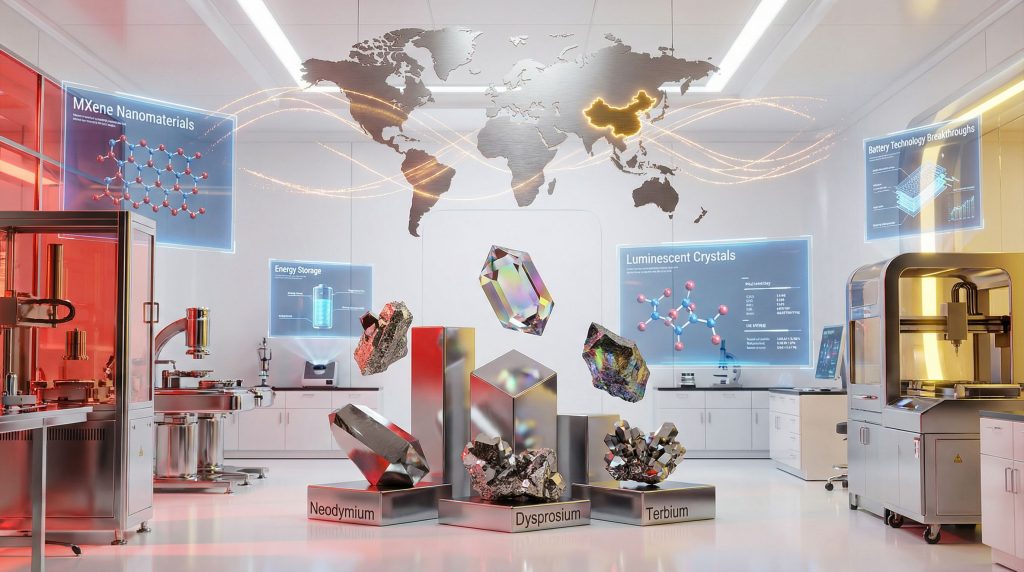
Strategic Technology Development Across Critical Material Sectors
Global competition in advanced materials has evolved beyond traditional resource extraction toward intellectual property development and technological integration. Nations that once competed solely on mineral production capacity now recognise that control over processing innovations, materials science breakthroughs, and application-specific patents determines long-term competitive positioning. This fundamental shift reflects broader economic transitions where value creation migrates from commodity production to knowledge-intensive activities.
The strategic implications extend across multiple technology domains. Energy storage systems increasingly depend on specialised materials with enhanced conductivity and thermal stability properties. Advanced manufacturing processes require precise separation techniques that optimise both cost structures and environmental compliance. High-performance electronics rely on materials with specific optical, magnetic, and conductivity characteristics. These applications create interconnected technology ecosystems where upstream material innovations enable downstream product advantages.
China's rare earth innovation strategy exemplifies this transformation. Rather than focusing exclusively on mining output optimisation, Chinese industrial policy integrates materials research, process development, and manufacturing capabilities across coordinated value chains. This comprehensive approach positions China to influence not only material availability but also the technological pathways through which these materials reach commercial applications.
When big ASX news breaks, our subscribers know first
What Drives China's Transformation from Resource Extraction to Technology Innovation?
The Strategic Shift Beyond Mining Operations
China's industrial evolution reflects systematic coordination between state planning mechanisms and private sector innovation capabilities. This transition began with recognition that commodity-based competition creates limited value capture opportunities compared to technology-driven approaches. Government policy frameworks now explicitly link upstream resource control with downstream innovation objectives, treating materials production as integrated ecosystems rather than isolated industrial sectors.
The "Two Rare Earth Bases" strategy, centred in Baotou, Inner Mongolia and Ganzhou, Jiangxi Province, demonstrates this integration approach. These facilities combine large-scale processing operations with advanced materials research infrastructure, creating physical environments where industrial operations and laboratory research inform each other directly. This co-location model accelerates technology transfer while reducing the friction typically associated with moving innovations from research to commercial implementation.
China currently accounts for approximately 60-70% of global rare earth mining production and roughly 85-90% of global processing and separation capacity as of 2024-2025, according to U.S. Geological Survey data. However, China's rare earth innovation strategy now emphasises leveraging this position to fund and accelerate downstream technology development rather than simply maximising extraction volumes. Furthermore, this approach demonstrates how effective mining innovation trends can transform traditional resource sectors.
Policy Framework Supporting Innovation Ecosystem
The Chinese State Council's "Rare Earth Industry Development Plan (2021-2025)" establishes coordinated targets that explicitly connect mining output with downstream technology milestones. This policy framework differs from market-driven approaches where private investment decisions occur independently of government industrial planning.
Key coordination mechanisms include:
- Research funding allocation aligned with five-year industrial development priorities
- State-owned enterprise operations integrated with private sector innovation incentives
- Regulatory environments designed to support domestic technology development clusters
- University-industry partnerships with explicit commercialisation mandates
Government research institutes, including Chinese Academy of Sciences divisions focused on materials science, receive dedicated funding for rare earth materials research aligned with broader industrial objectives. This creates predictable resource flows for long-term research projects while ensuring alignment between fundamental research and commercial applications.
The integration extends to environmental and regulatory considerations. Chinese facilities operate under different environmental compliance requirements compared to Western competitors, enabling cost structures that support both current operations and reinvestment in technology development. Additionally, these operations increasingly benefit from decarbonisation benefits that enhance long-term competitiveness. This regulatory environment, combined with established supply chains and vertical integration advantages, creates compound benefits for innovation funding.
How Does China's Patent Strategy Create Competitive Moats in Critical Technologies?
Intellectual Property Accumulation in Emerging Materials
China's patent filing activity in rare earth materials significantly exceeds Western competitors, with China accounting for approximately 40-50% of global rare earth materials patents and higher percentages in emerging technology areas including nanomaterials and energy storage applications, according to World Intellectual Property Organization data from 2023.
Patent applications in rare earth nanomaterials and energy storage categories have grown at approximately 15-20% year-over-year in China between 2018-2023, while Western filing rates in equivalent categories have remained relatively flat or declined. This divergence reflects different strategic approaches to materials innovation and intellectual property development.
Focus areas for Chinese patent activity include:
- Energy storage nanomaterials with enhanced conductivity and thermal stability
- Magnetic separation processes optimising cost structures and efficiency
- Luminescent compounds for specialised optical and sensor applications
- Advanced alloy compositions targeting aerospace and electronics sectors
Consequently, organisations must develop comprehensive IP protection strategies to safeguard their technological advantages in this competitive landscape.
Research Institution Networks and Knowledge Transfer
Chinese university-industry collaboration operates under different structural incentives compared to Western academic systems. Chinese institutions receive explicit mandates to commercialise research findings, supported by government incentive structures that reward technology transfer activities. This contrasts with Western university systems where commercialisation typically occurs post-publication through licensing offices, creating longer development timelines.
Key Innovation Areas and Patent Activity
| Technology Sector | Research Focus | Commercial Applications | Strategic Value |
|---|---|---|---|
| MXene Nanomaterials | 2D conductive structures | Battery technology, supercapacitors | Next-generation energy storage |
| Magnetic Separation | Process optimisation | Cost reduction, efficiency gains | Manufacturing advantage |
| Luminescent Crystals | Optical properties | Defence systems, sensors | High-security applications |
| Advanced Alloys | Material properties | Aerospace, electronics | Critical infrastructure |
Organisations like Shanghai Association for Rare Earth (SHARE) function as ecosystem coordinators, connecting research institutions, manufacturers, and policymakers. SHARE's activities include standards development, technology forums, and patent coordination rather than traditional mining advocacy. This institutional approach accelerates research-to-commercialisation cycles while coordinating intellectual property strategy across multiple organisations.
The Baotou Scientific Research Complex exemplifies this coordination model. The China Rare Earth Industry Research Institute operates adjacent to Baotou Rare Earth Group manufacturing facilities, enabling direct interaction between research teams and production operations. This physical integration accelerates patent development cycles by incorporating operational insights into research priorities.
Which Technologies Position China for Long-Term Market Control?
Energy Storage and Battery Technology Breakthroughs
China manufactures approximately 60% of global lithium-ion battery packs and controls significant portions of battery material supply chains, including rare earth element applications in energy storage systems. This positioning extends beyond current battery technologies to emerging materials platforms with potential advantages in energy density and charging performance.
Recent research developments include investigations into 2D MXene nanosheets incorporating rare earth elements for enhanced conductivity and thermal stability. While MXene technologies remain in development phases, early research indicates potential applications in:
- Ultra-fast charging systems for electric vehicle applications
- Grid-scale energy storage with improved power density characteristics
- Compact energy storage for portable electronics and aerospace systems
China produces 70-80% of global permanent magnet supply and an estimated 95% of high-performance neodymium-iron-boron magnets, according to International Energy Agency assessments. These magnets are standard components in electric vehicle motor designs, creating direct connections between China's rare earth innovation strategy and global transportation electrification trends. Moreover, advances in battery recycling breakthrough technologies further strengthen China's position in the circular economy of critical materials.
Advanced Manufacturing Process Innovation
Process innovations in magnetic separation technology directly impact production cost structures and environmental compliance capabilities. Chinese research focuses on optimising separation circuits through improved understanding of magnetic susceptibility behaviour across different rare earth compounds.
Research into hydroxides, oxalates, and organophosphate compounds enables more selective separation processes with reduced energy consumption and chemical waste generation. These improvements translate to:
- Cost advantages estimated at 30-50% below non-Chinese competitors
- Environmental compliance through cleaner processing methods
- Operational efficiency improvements in refining operations
- Quality control enhancements for downstream applications
High-Value Electronics and Defence Applications
Advanced rare earth applications extend beyond energy storage to high-value electronics and specialised optical systems. Research into photoluminescent materials incorporating europium and terbium compounds targets applications in:
- Precision optical systems for defence and aerospace applications
- Advanced sensor technologies requiring specific spectral characteristics
- Semiconductor manufacturing support systems and quality control
- Specialised lighting and display technologies
These applications represent higher value-added segments compared to bulk rare earth production, creating opportunities for margin expansion and technological differentiation. Patent accumulation in these areas creates licensing requirements or exclusivity periods that protect commercial advantages even if supply diversification occurs in upstream production.
What Role Do Industry Organisations Play in Coordinating Innovation Strategy?
Shanghai Association for Rare Earth as Strategic Coordinator
Shanghai Association for Rare Earth functions as an ecosystem orchestration platform connecting universities, laboratories, manufacturers, and policymakers. Unlike traditional trade associations focused on advocacy, SHARE's mandate centres on accelerating research-to-development translation and coordinating patent activity across institutional boundaries.
SHARE's coordination activities include:
- Standards development for emerging rare earth applications
- Technology transfer facilitation between research and industry
- Patent strategy coordination across member organisations
- Commercial pathway identification for laboratory innovations
This institutional model enables China to move systematically from resource dominance to technology leadership through coordinated ecosystem development. The organisation operates within China's broader industrial policy framework whilst facilitating private sector innovation and commercialisation activities.
Government-Industry Partnership Models
Chinese innovation strategy coordinates government research funding, state-owned enterprise operations, and private sector innovation incentives around identified strategic priorities. This differs from Western market-driven approaches where investment decisions occur independently across organisations and sectors.
Partnership mechanisms include:
- Coordinated research funding aligned with five-year development plans
- Technology acquisition strategies targeting international capabilities
- Regulatory frameworks supporting domestic innovation clusters
- International collaboration programs with strategic technology focus
State-backed funding for strategic research enables longer investment horizons compared to private capital markets, whilst regulatory alignment creates supportive environments for domestic technology development. This coordination model accelerates innovation cycles while ensuring alignment between fundamental research and commercial objectives. In addition, these initiatives are increasingly aligned with broader sustainability transformation goals across China's industrial sectors.
How Does China's Approach Compare to Western Innovation Strategies?
Integrated Value Chain Development vs. Fragmented Approaches
China's coordinated upstream-to-downstream strategy contrasts with Western approaches that typically focus on supply chain diversification and security rather than integrated technology development. Western strategies emphasise reducing dependence on Chinese supply chains through alternative sourcing and domestic processing capability development.
Comparison of Innovation Strategy Approaches
| Aspect | China's Strategy | Western Approach |
|---|---|---|
| Coordination | State-directed ecosystem integration | Market-driven sectoral competition |
| Investment Timeline | Long-term strategic planning cycles | Shorter private capital horizons |
| Value Chain Integration | Full upstream-to-downstream control | Specialised focus areas |
| Risk Management | Government financial backing | Private capital market discipline |
| Technology Development | Coordinated research priorities | Independent innovation competition |
State-Directed Innovation vs. Market-Driven Research
Chinese industrial policy enables centralised planning with extended investment horizons, whilst Western approaches rely on market mechanisms and competitive dynamics to drive innovation. Each model creates different advantages and limitations for technology development and commercialisation.
Chinese advantages include:
- Predictable funding for long-term research projects
- Coordinated ecosystem development across institutional boundaries
- Strategic focus on identified priority technologies
- Integration capabilities connecting research to commercial applications
Western advantages include:
- Market discipline in technology selection and resource allocation
- Competitive innovation driving efficiency and breakthrough discoveries
- Intellectual property protection supporting private sector investment
- International collaboration across research institutions and industries
The next major ASX story will hit our subscribers first
What Are the Implications for Global Technology Competition?
Technology Leadership in Critical Materials
China's focus on downstream technology development creates competitive positioning that extends beyond traditional supply chain control. Patent accumulation in processing innovations, materials compositions, and application-specific formulations creates licensing requirements and technological dependencies that persist even if supply diversification occurs.
This strategic positioning reflects broader competition dynamics where intellectual property control enables sustained competitive advantages. Once patents establish exclusive or preferential access to key technologies, alternative supply sources may remain disadvantaged without access to optimised processing methods or materials specifications. China's strategic move on rare earth metals demonstrates how resource dominance translates into technological leverage across global markets.
Supply Chain and Market Power Dynamics
Global installed energy storage capacity has grown from approximately 9 GW in 2018 to 37 GW by 2023, with projections reaching 100+ GW by 2030, according to International Energy Agency data. China accounts for 60-65% of global battery energy storage installations, driven by government mandates and coordinated industrial development.
Export restrictions and technology transfer policies create additional leverage mechanisms beyond traditional market power. Chinese organisations can influence technology access through licensing terms, joint venture requirements, or selective collaboration agreements that shape global development pathways.
Environmental and Regulatory Considerations
Green technology development addresses legacy pollution issues whilst creating competitive advantages in environmental compliance and sustainable processing. Chinese investment in cleaner processing methods serves dual purposes of regulatory compliance and cost structure optimisation.
International standards development and compliance requirements create opportunities for Chinese organisations to influence global technical specifications through early research leadership and patent accumulation. This standards influence extends Chinese competitive advantages beyond domestic markets to international applications. Furthermore, China's rare earth elements dominance in global supply chains continues to shape international regulatory frameworks.
How Should International Stakeholders Respond to China's Innovation Strategy?
Alternative Technology Development Pathways
International responses focus on developing alternative technologies that reduce dependence on Chinese-controlled processes and materials. Priority areas include:
- Substitute materials research targeting equivalent performance characteristics
- Recycling technology development for circular economy applications
- Alternative processing methods that avoid patent-protected techniques
- Next-generation applications that require different material properties
Investment in domestic research capabilities requires sustained funding commitments and coordination between government agencies, academic institutions, and private sector organisations. Success depends on creating competitive alternatives rather than simply replicating existing Chinese approaches.
Policy and Regulatory Responses
Strategic technology protection measures include export controls on research equipment, restricted collaboration agreements, and intellectual property safeguards for critical technologies. These measures aim to prevent technology transfer that could accelerate Chinese advantages in strategic areas.
Research funding priorities increasingly emphasise critical materials innovation, with government agencies coordinating investment across university research programmes and private sector development projects. International standards development and coordination create opportunities to influence global technical requirements and specifications.
Industry Partnership and Investment Strategies
Joint ventures and technology sharing agreements enable access to Chinese research capabilities whilst maintaining some degree of intellectual property control. However, these arrangements require careful evaluation of technology transfer implications and long-term competitive positioning.
Domestic supply chain development initiatives focus on building alternative processing capabilities and manufacturing infrastructure. These investments require significant capital commitments and extended development timelines but create strategic flexibility and reduced dependence on Chinese suppliers.
Alternative sourcing strategies emphasise developing relationships with non-Chinese suppliers and supporting international mining and processing projects. However, these approaches must account for China's continued dominance in downstream processing and technology development.
What Future Scenarios Could Reshape the Rare Earth Technology Landscape?
Breakthrough Technologies and Market Disruption
Potential substitute materials could reduce rare earth dependence across multiple applications, fundamentally altering competitive dynamics. Research into alternative magnetic materials, energy storage chemistries, and optical compounds continues across international research institutions.
Recycling and circular economy developments may change supply-demand balances by creating alternative sources for rare earth elements. Advanced separation and recovery technologies could enable economic recycling of electronic waste, permanent magnets, and industrial equipment.
New extraction and processing technologies, including ocean mining and alternative separation methods, could diversify supply sources and reduce Chinese processing advantages. However, these technologies require significant development investment and regulatory approval processes.
Geopolitical and Trade Policy Evolution
International cooperation frameworks for critical materials may emerge through multilateral agreements and coordination mechanisms. These frameworks could address technology transfer, supply security, and research collaboration whilst managing competitive tensions.
Technology transfer restrictions and national security considerations increasingly influence international collaboration and investment policies. Balance between security concerns and innovation efficiency creates ongoing policy challenges for governments and industry.
Market access and fair competition policies may evolve to address Chinese advantages derived from state support and coordinated industrial policy. International trade mechanisms could develop new approaches to managing competition where government coordination creates market distortions.
Environmental and Sustainability Drivers
Clean technology requirements reshape production methods and competitive positioning as environmental regulations become more stringent globally. Organisations with advanced environmental compliance capabilities gain advantages in international markets and partnerships.
Carbon footprint considerations in global supply chains create opportunities for producers with cleaner processing methods and renewable energy integration. These environmental factors may override traditional cost advantages in some market segments.
Regulatory pressure for sustainable mining and processing practices influences technology development priorities and investment decisions. Organisations that integrate environmental performance with operational efficiency create sustained competitive advantages in evolving regulatory environments.
Disclaimer: This analysis involves forecasts and strategic assessments that include speculative elements. Market dynamics, technological developments, and policy changes may differ significantly from projected scenarios. Readers should conduct independent research and consider multiple perspectives when evaluating investment implications or strategic decisions related to critical materials markets.
Further Analysis Note: Understanding China's rare earth innovation strategy requires ongoing monitoring of patent filings, research publications, and institutional development across Chinese materials science organisations. This strategic positioning represents a fundamental shift in global technology competition that extends far beyond traditional resource control mechanisms.
Want to Capitalise on Tomorrow's Critical Materials Discoveries Today?
Discovery Alert's proprietary Discovery IQ model delivers instant notifications when ASX-listed companies announce significant mineral discoveries in critical materials sectors, ensuring you're positioned ahead of major market movements. Don't miss the next breakthrough in strategic metals and rare earth elements – begin your 30-day free trial and discover how past mineral discoveries have generated exceptional returns by exploring the dedicated discoveries page.