July 19, 2026
Strategic Vulnerability Assessment in Global Maritime Trade Routes
Maritime security architecture faces unprecedented stress testing as traditional risk models prove inadequate for current threat environments. The interconnected nature of global energy supply chains reveals fundamental vulnerabilities when critical shipping corridors experience operational disruption. Investment strategies dependent on stable commodity flows must now account for rapid escalation scenarios that can transform market volatility hedging dynamics within hours rather than months.
Contemporary maritime security challenges extend beyond conventional piracy or weather-related risks. The integration of advanced weaponry systems into regional conflicts creates new categories of commercial vessel vulnerability. Insurance markets, long accustomed to predictable risk patterns, now confront coverage decisions that must be made within 72-hour windows as threat levels escalate.
When big ASX news breaks, our subscribers know first
Chokepoint Dependencies and Alternative Routing Economics
Critical Infrastructure Exposure Analysis
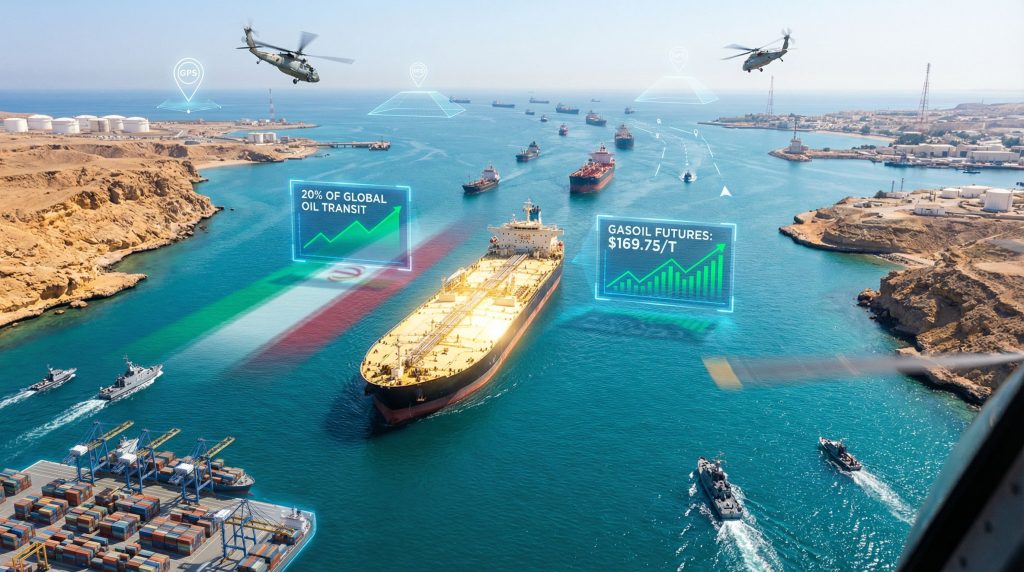
The Strait of Hormuz represents more than a geographical bottleneck; it functions as a systemic vulnerability point for global energy markets. Approximately 20% of global oil transit depends on uninterrupted passage through this narrow waterway, creating concentrated risk exposure that affects oil price movements worldwide.
European energy import structures reveal particularly acute dependencies:
• EU and UK diesel/gasoil imports: Over 50 million tonnes annually, with approximately 10 million tonnes transiting Hormuz
• Jet fuel dependencies: More than 25 million tonnes imported, with over 50% sourcing from Middle East Gulf via Hormuz
• Supply chain concentration risk: 76.4% of EU/UK jet fuel imports sourced from Middle East Gulf region
Maritime Insurance Market Structural Changes
War risk coverage models face fundamental restructuring as reinsurance capacity contracts rapidly during crisis periods. Major Protection & Indemnity clubs have implemented systematic coverage cancellations with 72-hour notice protocols.
Coverage Withdrawal Timeline:
| Insurance Provider | Coverage Type | Cancellation Notice | Effective Date |
|---|---|---|---|
| Skuld | War Risk (Primary) | 72 hours | 5 March 2026, 00:00 GMT |
| NorthStandard P&I | War Risk Extensions | 72 hours | 5 March 2026, 00:00 GMT |
| Reinsurer Capacity | Regional Exposure | Immediate | Upon threat escalation |
Oslo-based marine insurance provider Skuld explicitly cited reinsurer appetite constraints, noting that capacity withdrawal occurs at short notice during regional security deterioration. This represents a structural shift from traditional coverage models where war risk pricing reflected static geographic assessments.
Alternative Supply Route Cost Analysis
Commercial shipping operations face binary decisions between accepting elevated risk premiums or implementing route diversions that fundamentally alter voyage economics. Denmark-based shipping company Maersk has suspended Strait of Hormuz transits, opting for Cape of Good Hope routing despite extended journey times and increased operational costs.
Cape of Good Hope diversions impose significant economic penalties:
• Journey time extension: 10-14 additional days per voyage
• Cost increase: 15-20% above standard routing
• Capacity reduction: Lower fleet utilisation due to extended voyage duration
• Fuel consumption: Substantially higher bunker costs for extended routing
Commodity Market Volatility Patterns and Investment Psychology
Price Discovery During Crisis Escalation
Energy commodity markets experienced exceptional volatility as maritime security threats materialised. Front-month ICE gasoil futures demonstrated the speed at which crisis scenarios translate into price action, reaching $922.50/tonne at 08:17 GMT on 2 March 2026, representing a $169.75/tonne or 23% single-session increase.
This intraday peak matched levels not observed since October 2023, indicating that current crisis conditions have generated price discovery comparable to major historical disruption events. Furthermore, these market movements highlight the critical importance of understanding tariff market impacts during regional conflicts.
Premium Structure Evolution in Refined Products
The relationship between crude oil and refined product pricing reveals structural market stress through premium expansion patterns:
Gasoil Premium to Brent Crude:
• Peak premium: $43.67/barrel (2 March 2026, 08:17 GMT)
• Session increase: $15.25/barrel from previous close
• Historical context: Closing levels not observed since December 2022
Jet Fuel Market Dynamics:
• Over-the-counter trading peak: $112.50/tonne premium to gasoil
• Percentage increase: >50% above previous session close
• Midday moderation: Premium eased to approximately $49.40/barrel to Brent
Investment Fund Positioning and Market Psychology
Long-term commodity investment strategies faced rapid repositioning requirements as Middle East disruption risks materialised. ICE data reveals investment funds with no physical price exposure significantly increased long positions in gasoil futures during recent weeks.
Investment Fund Activity Metrics:
• Total long positions: 13-week high (week ending 24 February)
• Net long positions: 14-week high concurrent with total long peak
• Position building pattern: Sustained accumulation preceding crisis escalation
European traders acknowledged the structural challenge facing regional energy supply chains. Industry participants emphasised that Europe cannot sustain prolonged disruption through the strait, with expectations that extended closures would result in significant cost increases across all market participants.
Regional Supply Chain Resilience Under Extreme Scenarios
Middle East Gulf Export Dependency Analysis
Regional refined product trade patterns reveal concentrated dependencies that create systemic vulnerability during shipping disruptions. Additionally, developments in Saudi exploration licenses continue to shape long-term supply dynamics.
Middle East Gulf Refined Product Exports (2025 Data):
| Product Category | ME Gulf Exports | % of Global | EU/UK Imports | Import Dependency |
|---|---|---|---|---|
| Jet/Kerosene | 18.83 million tonnes | 22.7% | 14.39 million tonnes | 76.4% from ME Gulf |
| Diesel/Gasoil | 52.96 million tonnes | 12.8% | 10.67 million tonnes | 20.9% from ME Gulf |
| Gasoline | 13.02 million tonnes | 5.1% | 0.27 million tonnes | 5.3% from ME Gulf |
| Fuel Oil | 38.50 million tonnes | 16.2% | 1.05 million tonnes | 8.0% from ME Gulf |
Refinery Operations Under Conflict Conditions
Simultaneous attacks on maritime vessels and land-based infrastructure create compounded supply chain stress. Saudi Aramco's Ras Tanura refinery, with 550,000 barrels/day capacity, was forced to close after being struck by debris from intercepted Iranian drones on 2 March 2026.
This facility closure, concurrent with shipping disruptions, demonstrates how regional conflicts can simultaneously impact production capacity and distribution networks. The combined effect creates supply shortages that cannot be easily offset through alternative sourcing.
Commercial Vessel Attack Pattern Analysis
Recent incidents reveal coordinated targeting of commercial shipping infrastructure. Multiple vessels experienced projectile strikes within the same operational period:
• Stena Imperative (US-flagged product tanker): Struck by at least two projectiles while berthed in Port of Bahrain
• Skylight (11,000 dwt oil product tanker): Hit by projectiles in regional waters
• Mkd Vyom (74,000 dwt crude oil tanker): Damaged during conflict escalation
• Sea La Donna (47,000 dwt clean/chemical tanker): Struck in coordinated attack pattern
The US-flagged tanker hit in Bahrain represents a significant escalation, as it marks the first confirmed strike on a vessel participating in the US Tanker Security Program. This 10-vessel strategic fleet supplies fuel to armed forces, making such attacks particularly significant from both operational and symbolic perspectives. Maritime Executive reported extensive details of the incident and its broader implications.
Strategic Maritime Security Protocol Evolution
Threat Level Classification Systems
The Joint Maritime Information Center (JMIC) raised the threat level to "CRITICAL" effective 1 March 2026, while the Norwegian Maritime Authority increased maritime security classification to MARSEC/ISPS-level 3 across the Middle East Gulf, Strait of Hormuz, and Gulf of Oman regions.
This represents the highest possible threat classification, indicating that traditional maritime security assumptions no longer apply in these critical shipping corridors.
Vessel Protection Technology Integration
Modern maritime security challenges require technological solutions that extend beyond conventional protection systems. Projectile-based attacks on commercial vessels, such as the incident involving the US-flagged tanker hit in Bahrain, demonstrate the need for enhanced defensive capabilities.
Emerging Security Technology Requirements:
• Real-time threat detection systems for approaching projectiles
• Enhanced communication networks between naval and commercial operations
• Automated evasion systems for vessels operating in high-risk corridors
• Coordinated response protocols linking military and civilian maritime authorities
Port Facility Vulnerability Assessment
The attack on the Stena Imperative while berthed in Port of Bahrain reveals that traditional safe harbor assumptions may not hold during asymmetric conflict scenarios. Port facilities, previously considered secure environments for vessel operations, now require enhanced protection protocols.
Shore-based casualties, including one shipyard worker killed and two others injured, demonstrate that port facility vulnerability extends beyond vessel crews to encompass entire harbour operational ecosystems. According to Reuters, the incident highlighted significant security gaps in port infrastructure protection.
Long-term Market Structural Implications
Energy Trade Pattern Diversification Strategies
Regional conflicts accelerate strategic planning for energy supply chain diversification. European refineries face immediate pressure to identify alternative sourcing arrangements that reduce dependence on Middle East Gulf supplies. However, the OPEC production outlook remains a crucial factor in determining global supply dynamics.
Diversification Challenge Factors:
• Limited spare capacity in alternative supply regions
• Established refinery configurations optimised for specific crude grades
• Long-term contract structures that require renegotiation
• Infrastructure investments needed for alternative supply chains
Insurance Industry Evolutionary Pressures
War risk coverage models must evolve to accommodate rapid threat escalation scenarios. The 72-hour cancellation notice period represents a fundamental shift from traditional coverage approaches that assumed gradual risk evolution.
Future Insurance Model Requirements:
• Dynamic pricing mechanisms that adjust to real-time threat assessments
• Enhanced reinsurance capacity coordination during crisis periods
• Regional risk correlation models that account for simultaneous threats
• Technology integration for automated coverage adjustments
The next major ASX story will hit our subscribers first
Investment Strategy Implications for Maritime-Dependent Sectors
Energy Sector Risk Premium Integration
Investment strategies targeting energy sector exposure must incorporate new risk premium calculations that account for rapid supply chain disruption scenarios. Traditional energy security models assumed predictable risk patterns that no longer reflect contemporary threat environments.
Enhanced Risk Assessment Components:
• Geographic concentration analysis for supply chain dependencies
• Alternative routing cost integration in margin calculations
• Insurance availability as binding constraint on operations
• Crisis escalation timeline modelling for investment horizons
Aviation Industry Fuel Supply Vulnerability
Global aviation operations face particular vulnerability due to concentrated jet fuel supply dependencies. With over 50% of EU/UK jet fuel imports sourcing from the Middle East Gulf via Hormuz, airline industry investment strategies must account for fuel supply disruption scenarios.
Aviation Sector Investment Considerations:
• Fuel hedging strategy effectiveness during supply disruptions
• Alternative sourcing premium costs and availability
• Operational flexibility during extended disruption periods
• Regional exposure concentration in airline route networks
Shipping Industry Operational Model Evolution
Commercial shipping operations confront fundamental business model adjustments as war risk coverage becomes unavailable in critical corridors. Investment strategies targeting shipping sector exposure must evaluate companies based on operational flexibility and alternative routing capabilities.
Shipping Industry Strategic Factors:
• Fleet size and diversification across multiple trade routes
• Vessel specifications suitable for alternative routing requirements
• Financial capacity to absorb extended voyage costs
• Technology integration for enhanced security and efficiency
Disclaimer: This analysis is based on publicly available market information and should not be construed as investment advice. Energy commodity markets involve substantial risk, and past performance does not guarantee future results. Investors should conduct independent research and consult qualified financial advisors before making investment decisions.
Are You Positioned for the Next Major Energy Discovery?
Maritime security disruptions highlight the critical importance of diversified commodity exposure beyond traditional energy trade routes. Discovery Alert's proprietary Discovery IQ model delivers real-time notifications on significant ASX mineral discoveries, empowering investors to identify actionable opportunities in critical minerals and energy resources ahead of market volatility. Begin your 14-day free trial today to secure your market-leading advantage whilst traditional supply chains face unprecedented uncertainty.