May 21, 2026
Mining companies increasingly recognise strategic dialogue with workers as a fundamental business capability that drives operational excellence and sustainable growth. The global mining sector faces mounting pressure to demonstrate responsible practices while maintaining competitive performance, making employee engagement a critical determinant of long-term success. Furthermore, organisations must navigate complex stakeholder relationships that extend far beyond traditional extraction operations to encompass comprehensive partnership frameworks.
Understanding Strategic Worker Dialogue in Modern Mining
What Constitutes Strategic Worker Dialogue?
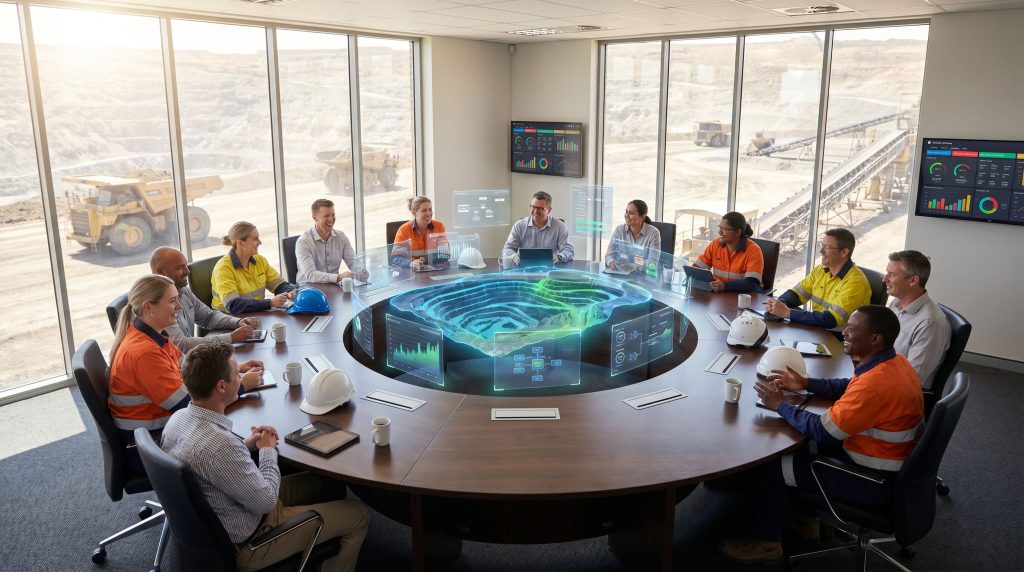
Strategic dialogue with workers represents a fundamental shift from traditional consultation models toward comprehensive partnership frameworks that integrate employee perspectives into core business strategy. Unlike conventional labour relations focused primarily on contractual negotiations, this approach encompasses collaborative planning, risk assessment, and opportunity identification through structured engagement mechanisms.
The Federation of Copper Workers (FTC) model demonstrates how strategic dialogue operates through federated representation structures. During the 76th National Congress held in La Serena, senior leadership from Codelco engaged directly with union representatives across multiple organisational divisions, illustrating the multi-tier architecture that characterises effective dialogue systems.
This engagement included board-level participation from Chairman Máximo Pacheco and Executive Chairman Rubén Alvarado, alongside multiple Vice Presidents, demonstrating vertical integration of dialogue authority throughout organisational hierarchies. Consequently, the model showcases how modern industry evolution trends require sophisticated stakeholder engagement approaches.
Key characteristics of strategic dialogue include:
• Proactive engagement on operational challenges before they escalate
• Integration with corporate governance frameworks and strategic planning
• Transparent information sharing regarding company performance and direction
• Collaborative problem-solving approaches that leverage workforce expertise
• Recognition of employee representatives as legitimate stakeholders in organisational success
The technical implementation involves establishing formal bipartite mechanisms that enable aggregated worker representation rather than fragmented site-by-site negotiations. At Codelco, this manifests through the FTC serving as the consolidating body for worker interests across the corporation's multiple divisions, creating efficiency in dialogue processes whilst ensuring comprehensive representation.
Why Mining Companies Prioritise Worker Dialogue
Mining operations face unique operational continuity challenges due to their capital-intensive nature, remote locations, and complex technical requirements. Strategic dialogue with workers has evolved from a compliance function to a critical business capability that directly impacts operational performance, risk mitigation, and social licence maintenance.
Research indicates that companies prioritising worker engagement demonstrate superior performance across multiple metrics. Codelco's approach illustrates how dialogue serves strategic functions beyond traditional labour relations. The company has positioned worker engagement as central to its four-pillar growth strategy, which encompasses structural project development, global partnership models, responsible mining practices, and strategic employee agreements.
Primary drivers for prioritising worker dialogue include:
• Operational Continuity Protection: Mining operations require specialised knowledge and expertise that cannot be easily replaced. Strategic dialogue helps retain institutional knowledge whilst identifying potential disruption risks before they impact production.
• Innovation Through Frontline Insights: Workers closest to operational processes often identify efficiency improvements, safety enhancements, and process optimisation opportunities that management might overlook.
• Regulatory Compliance: Increasingly stringent labour standards and social responsibility requirements make worker engagement a regulatory necessity rather than optional practice.
• Social Licence Maintenance: Mining companies must demonstrate genuine commitment to stakeholder welfare to maintain community support and government approval for operations.
The business case extends beyond risk mitigation to encompass competitive advantage through workforce optimisation. Companies implementing comprehensive dialogue frameworks report improved productivity, reduced turnover, enhanced safety performance, and stronger community relationships that translate directly to operational benefits.
When big ASX news breaks, our subscribers know first
Building Effective Dialogue Frameworks in Resource Industries
Essential Components of Strategic Worker Engagement
Effective dialogue frameworks require structured approaches that balance organisational efficiency with meaningful worker participation. The most successful models incorporate multiple engagement levels, clear decision-making protocols, and transparent communication channels that enable authentic two-way information exchange.
Bipartite Committee Structures form the foundation of formal engagement mechanisms. These committees typically include management representatives with actual decision-making authority, union or worker representatives with legitimate constituency mandates, and regular meeting schedules that accommodate operational requirements.
The Codelco model demonstrates how senior leadership participation transforms dialogue effectiveness. By including board-level executives in worker engagement forums, companies signal genuine commitment to partnership rather than perfunctory consultation. This approach enables real-time decision-making and reduces implementation delays that often undermine worker confidence in dialogue processes.
Multi-Level Communication Channels ensure information flows efficiently throughout organisational hierarchies whilst maintaining authentic worker voice representation. Effective frameworks typically incorporate executive-worker direct communication for strategic alignment, middle management facilitation for operational coordination, and peer-to-peer exchange for knowledge sharing.
However, establishing these frameworks requires addressing women in mining challenges to ensure inclusive representation across diverse workforce populations. Moreover, modern dialogue systems increasingly integrate data-driven operations to enhance communication effectiveness and track engagement outcomes.
Measuring Dialogue Effectiveness
Assessing dialogue quality requires both quantitative metrics and qualitative indicators that capture relationship dynamics and long-term sustainability. Traditional labour relations metrics focused on contract negotiations and grievance resolution provide insufficient insight into strategic dialogue effectiveness.
Qualitative Assessment Indicators often prove more valuable for evaluating dialogue maturity:
• Receptiveness to alternative perspectives and willingness to modify positions
• Comprehensiveness of issue coverage, including forward-looking challenges
• Mutual respect demonstrated through interaction quality and communication tone
• Transparency in information sharing and decision-making rationale
• Sustainability of engagement commitment across organisational transitions
The Codelco experience illustrates how senior executives evaluate dialogue quality. Leadership assessment emphasised conversation characteristics including respectfulness, constructiveness, and genuine willingness to consider worker perspectives rather than simply defending predetermined positions.
Innovation Pipeline Contributions represent an emerging metric for dialogue effectiveness. When workers feel genuinely heard and valued, they contribute more actively to process improvements, safety enhancements, and efficiency gains. Companies tracking suggestion implementation rates, safety incident reductions, and productivity improvements often correlate these outcomes with dialogue programme maturity.
Implementation Strategies Across Mining Operations
Establishing Trust-Based Communication
Trust development requires consistent demonstration of organisational commitment to worker welfare beyond immediate operational requirements. Mining companies face particular challenges in trust-building due to historical adversarial relationships, remote operation locations, and high-stakes operational pressures that can prioritise short-term production over long-term relationship investment.
Leadership Accessibility Programmes prove essential for establishing credibility with worker representatives. Effective programmes incorporate regular executive presence at operational sites rather than corporate offices, town halls and open forums that address worker concerns directly, and transparent reporting on company performance, including challenges and setbacks.
The four-year engagement pattern demonstrated by Codelco leadership illustrates how consistency builds credibility. By participating in annual FTC congresses over multiple years, executives demonstrated genuine commitment to relationship development rather than transactional engagement driven by specific operational needs.
Collaborative Problem-Solving Approaches transform adversarial dynamics into partnership frameworks. Rather than viewing worker concerns as obstacles to operational efficiency, mature dialogue processes treat them as valuable intelligence about system performance and improvement opportunities.
Mining operations benefit significantly when worker expertise is integrated into strategic planning processes, as frontline experience often reveals optimisation opportunities invisible to management hierarchies.
In addition, contemporary approaches to strategic employee dialogue emphasise the importance of creating structured platforms for meaningful worker participation in organisational decision-making.
Technology-Enabled Dialogue Platforms
Modern mining operations increasingly leverage digital technologies to enhance dialogue effectiveness, particularly for companies with geographically dispersed operations or remote site locations that limit face-to-face interaction opportunities.
Digital Communication Infrastructure enables real-time engagement across operational boundaries through video conferencing systems, mobile applications, digital suggestion platforms, and online forums that connect workers with management whilst facilitating peer-to-peer knowledge sharing.
Data Analytics Applications help companies assess dialogue effectiveness and identify improvement opportunities through sentiment analysis, engagement metrics, predictive analytics, and performance correlation analysis. These tools support the development of AI-enhanced efficiency in communication processes.
However, technology implementation must complement rather than replace human interaction. The most effective dialogue programmes use digital tools to enhance accessibility and efficiency whilst maintaining authentic personal relationships that form the foundation of trust-based communication.
Furthermore, aligning employees on strategy requires sophisticated approaches that combine technological capabilities with human-centred engagement methodologies.
Industry Best Practices and Case Studies
Successful Dialogue Models in Large-Scale Mining
Large-scale mining companies face unique dialogue challenges due to operational complexity, multiple site locations, diverse workforce populations, and varying regulatory environments across jurisdictions. Successful models demonstrate scalable approaches that maintain dialogue quality whilst accommodating organisational complexity.
Partnership-Based Governance Structures elevate worker representation beyond traditional labour relations to encompass genuine participation in strategic decision-making. The Codelco model illustrates how companies can integrate worker perspectives into corporate strategy through federation structures, annual congress mechanisms, strategic agreement frameworks, and transparent agenda addressing company growth strategies.
Operational Integration Examples demonstrate how dialogue translates to measurable business outcomes across safety enhancement through worker-management committees, process optimisation via frontline improvement suggestions, environmental stewardship through collaborative sustainability initiatives, and innovation development via joint research projects.
The strategic agreement approach pioneered by companies like Codelco demonstrates how dialogue frameworks can encompass long-term partnership commitments rather than limiting engagement to immediate operational issues. This approach positions worker representatives as genuine stakeholders in organisational success rather than external constituencies requiring management.
Overcoming Common Implementation Challenges
Mining companies encounter predictable obstacles when implementing comprehensive dialogue programmes. Understanding these challenges enables proactive mitigation strategies that increase implementation success rates.
Cultural Resistance often emerges from both management and worker constituencies accustomed to adversarial relationships. Overcoming this resistance requires demonstrated commitment through resource allocation, clear communication regarding objectives, incremental implementation that builds confidence, and training programmes that develop collaborative capabilities.
Operational Urgency Pressures can undermine dialogue commitment when production demands conflict with consultation requirements. Effective programmes address this challenge through integration into operational planning, clear emergency protocols, and demonstration of dialogue value through improved outcomes.
Multi-Site Coordination complexity increases exponentially with organisational scale. Successful approaches typically involve federated representation structures, technology platforms enabling coordination, and standardised processes that maintain consistency whilst accommodating local variations.
Contemporary mining leadership trends emphasise the importance of developing executive competencies in stakeholder engagement and collaborative leadership approaches.
Strategic Benefits and ROI of Worker Dialogue
Operational Performance Improvements
Strategic dialogue with workers generates measurable operational benefits that justify programme investment whilst creating sustainable competitive advantages. Research across multiple mining contexts demonstrates positive correlations between dialogue programme maturity and key performance indicators.
Productivity Enhancement Metrics show consistent improvement patterns through reduced downtime, process optimisation recommendations, quality improvements through frontline feedback, and innovation contributions from workforce expertise. Worker knowledge represents an underutilised asset in many mining operations.
Risk Management Advantages prove particularly valuable in mining contexts where operational disruptions carry significant financial and safety consequences. These include early warning systems, enhanced safety performance, reputation protection, and regulatory compliance improvement through collaborative monitoring.
Financial Impact Assessment
The financial case for strategic dialogue programmes extends beyond direct operational savings to encompass long-term value creation through improved stakeholder relationships, enhanced reputation, and reduced business risks.
Cost Savings Categories include turnover reduction delivering 15-25% of replacement costs, operational efficiency improvements of 3-8% productivity gains, safety performance enhancements with variable impact, and innovation contributions that are difficult to quantify but significant.
Revenue Protection Benefits emerge through operational continuity maintenance and reputation enhancement, including reduced production disruptions, enhanced social licence enabling expansion opportunities, improved ESG performance supporting investment attraction, and stakeholder relationship quality reducing political risks.
Long-term sustainability value creation represents the most significant but least quantifiable benefit. Companies with mature dialogue programmes demonstrate superior resilience during market downturns, regulatory changes, and community challenges that can severely impact competitors with adversarial stakeholder relationships.
Future Trends in Mining Industry Worker Engagement
Evolving Regulatory Landscape
Mining companies face increasingly sophisticated regulatory requirements that integrate labour relations with environmental performance, social responsibility, and governance standards. Understanding these trends enables proactive compliance whilst identifying competitive advantages through early adoption of emerging best practices.
International Labour Standards continue expanding scope and enforcement mechanisms through ILO conventions requiring genuine consultation, supply chain transparency requirements, ESG reporting standards evaluating dialogue quality, and human rights due diligence requirements encompassing employee welfare.
Government Partnership Expectations reflect broader societal demands for corporate accountability through mining licence conditions requiring stakeholder engagement plans, tax and incentive policies considering social responsibility performance, and environmental approval processes evaluating community and worker support.
Technology Integration Opportunities
Emerging technologies offer unprecedented opportunities to enhance dialogue effectiveness whilst addressing traditional barriers to worker engagement in mining contexts. Companies investing early in these capabilities often develop sustainable competitive advantages through superior stakeholder relationship management.
Artificial Intelligence Applications enable sophisticated analysis through sentiment analysis of worker communications, predictive analytics forecasting satisfaction trends, natural language processing facilitating multilingual communication, and machine learning algorithms optimising dialogue timing and format.
Virtual Reality and Augmented Reality platforms create new possibilities for remote engagement through virtual site visits, immersive training programmes, and collaborative planning environments where workers and managers can visualise operational changes together.
However, technology integration must enhance rather than replace human relationship development. The most effective future dialogue programmes will leverage digital capabilities to overcome logistical barriers whilst maintaining the authentic personal connections that form the foundation of trust-based communication.
The next major ASX story will hit our subscribers first
Developing Your Strategic Dialogue Programme
Assessment and Planning Phase
Organisations beginning dialogue programme development must conduct comprehensive assessments of current stakeholder relationships, organisational culture, and operational requirements to design frameworks that align with specific contexts and constraints.
Current State Analysis provides the foundation for programme design through worker satisfaction surveys, management readiness assessment, operational impact analysis, and benchmarking research comparing current practices to industry standards.
Stakeholder Mapping ensures comprehensive representation through worker constituency analysis, union relationship assessment, community stakeholder identification, and internal champion development cultivating management support across organisational levels.
Resource Allocation Planning establishes realistic implementation timelines through budget development, personnel assignment, infrastructure requirements assessment, and performance metric establishment creating accountability mechanisms.
Implementation Roadmap
Successful dialogue programme implementation typically follows phased approaches that build confidence and capability incrementally whilst demonstrating value through early wins and continuous improvement.
Phase 1: Foundation Building (Months 1-6) involves leadership commitment formalisation, initial framework establishment, pilot programme development, and training programme implementation building facilitation skills and cultural competency.
Phase 2: Scaling and Integration (Months 6-18) encompasses company-wide rollout, performance monitoring system activation, technology platform deployment, and stakeholder feedback integration ensuring programme evolution meets constituent needs.
Phase 3: Optimisation and Sustainability (Months 18+) includes continuous improvement process institutionalisation, advanced analytics implementation, external stakeholder integration, and innovation programme development leveraging dialogue insights for competitive advantage.
Measuring Success and Continuous Improvement
Dialogue programme success requires both quantitative performance metrics and qualitative relationship indicators that capture the full value creation potential of strategic worker engagement.
Leading Indicators provide early signals through participation rates, response quality, initiative implementation rates, and training completion across management levels. Lagging Indicators demonstrate long-term value through employee retention improvements, safety performance enhancements, operational efficiency gains, and stakeholder relationship quality.
Continuous Improvement Mechanisms ensure programme evolution through regular assessment cycles, feedback integration processes, benchmarking research, and innovation experimentation testing new approaches for dialogue enhancement.
The Strategic Imperative for Mining Companies
Mining companies operating in today's complex stakeholder environment must recognise strategic dialogue with workers as essential business capability rather than optional enhancement. The convergence of regulatory requirements, social expectations, and competitive pressures makes worker engagement a fundamental determinant of long-term viability and success.
Companies that invest early in comprehensive dialogue frameworks develop sustainable competitive advantages through superior operational performance, enhanced stakeholder relationships, and improved risk management capabilities. The most successful programmes integrate worker perspectives into core business strategy whilst creating genuine partnership frameworks that benefit all organisational constituencies.
Key success factors include:
• Executive commitment demonstrated through sustained participation and resource allocation
• Structural integration with governance frameworks and strategic planning processes
• Cultural transformation that values collaboration and shared accountability
• Technology utilisation that enhances rather than replaces human relationship development
• Performance measurement that captures both quantitative outcomes and relationship quality
The mining industry's future depends increasingly on companies' ability to build authentic partnerships with workers, communities, and stakeholders who determine social licence and operational sustainability. Strategic dialogue with workers represents both a regulatory necessity and competitive opportunity for organisations committed to long-term value creation through responsible business practices.
Disclaimer: This analysis is based on publicly available information and industry research. Investment decisions should be made after consulting with qualified financial advisors and conducting independent due diligence. Mining operations involve significant risks, and past performance does not guarantee future results.
Ready to invest in the next major mineral discovery?
Discovery Alert instantly alerts investors to significant ASX mineral discoveries using its proprietary Discovery IQ model, turning complex mineral data into actionable insights. Understand why historic discoveries can generate substantial returns by visiting Discovery Alert's dedicated discoveries page, and begin your 14-day free trial today to position yourself ahead of the market.