June 24, 2026
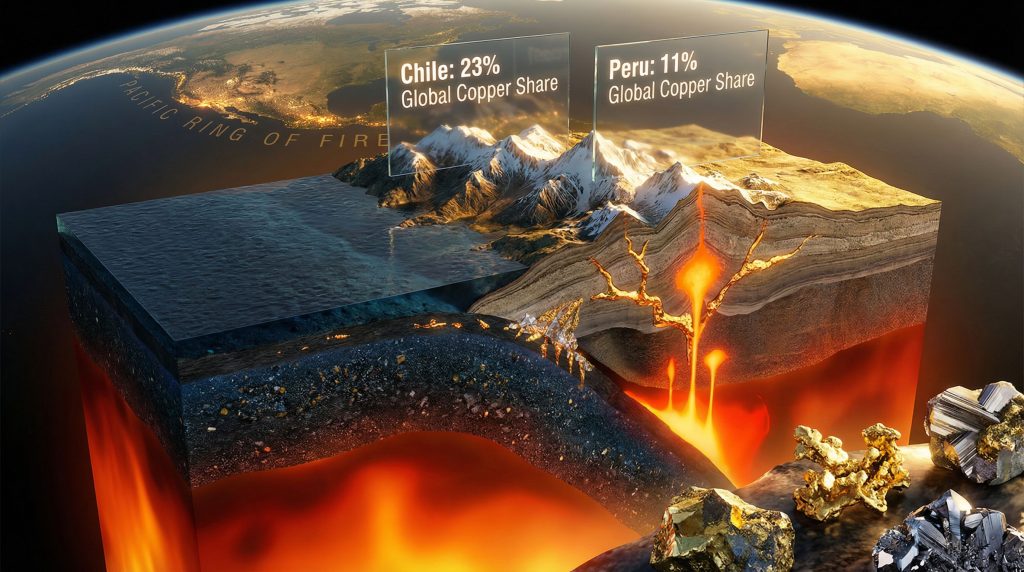
Subduction zones and mineral wealth represent one of Earth's most remarkable geological phenomena, where tectonic plate movements create concentrated deposits of copper, gold, and other critical metals. These dynamic environments, characterised by descending oceanic plates and intense geological activity, have generated the mineral resources that underpin modern civilisation. Understanding the intricate relationship between subduction processes and ore formation provides crucial insights into global mineral distribution patterns and future exploration opportunities.
What Are Subduction Zones and Why Do They Matter for Global Mining?
Defining Tectonic Convergence and Plate Descent Mechanisms
Subduction zones represent convergent plate boundaries where denser oceanic lithosphere descends beneath lighter continental or oceanic plates. This process operates at rates typically ranging from 2-15 centimeters annually, with the descending slab geometry varying significantly based on regional tectonic conditions. The angle of subduction directly influences mineralisation patterns, with steep angles exceeding 60 degrees creating different deposit characteristics compared to shallow-dipping subduction zones below 30 degrees.
The descending plate carries substantial water content, with oceanic basalt containing approximately 10-15% water by weight in hydrated minerals such as serpentinite, amphibole, and clay minerals. Subducting sediments contribute additional water-bearing phases acquired during seafloor weathering processes, resulting in total water content averaging 2-3% by weight in subducting slabs.
The Global Distribution of Active Subduction Systems
Approximately 17 major subduction zones currently operate around the Pacific Ring of Fire and Mediterranean regions, covering roughly 55,000 kilometres of active plate boundaries. These convergent margins exhibit distinct characteristics based on their tectonic setting:
- Oceanic-Continental Convergence: Exemplified by the Andean margin where the Nazca Plate subducts beneath South America
- Oceanic-Oceanic Convergence: Found in island arc systems like the Philippines and Indonesian archipelago
- Continental-Continental Convergence: Occurring in regions like the Himalayan collision zone
The Nazca Plate represents a prime example of productive subduction, descending beneath South America at an average rate of 8 centimetres annually. Furthermore, dip angles vary from 25-30 degrees in northern Peru, steepening to 40-50 degrees in central Peru, then flattening to less than 15 degrees in southern Peru. This geometric variation directly controls ore deposit depth and style distribution throughout the subduction zone science framework.
Economic Significance in Modern Mineral Supply Chains
Subduction zones and mineral wealth demonstrate an intimate relationship that shapes global commodity markets. These tectonic environments account for approximately 60-70% of global copper reserves and 40-50% of global gold reserves. Combined annual production from subduction-related systems exceeds $200 billion USD across copper, gold, silver, and molybdenum commodities.
The concentration of mineral exploration importance in subduction environments far exceeds other geological settings. Mid-ocean ridge systems produce only 5-15% of global copper compared to subduction's dominant 60-70% contribution. This disparity reflects the unique combination of processes that concentrate metals in subduction zone magmatic systems.
When big ASX news breaks, our subscribers know first
How Do Subduction Processes Generate Concentrated Mineral Deposits?
The Three-Stage Metallogenic Process
Stage 1: Oceanic Plate Hydration and Sediment Loading
The initial stage begins at the seafloor where basaltic oceanic crust undergoes hydration to form amphibolite and zeolite facies minerals. Sediments acquire clay minerals, mica, and hydrous phases during diagenesis, with altered basalt containing 10-15% water by weight and sediments ranging from 5-20% water content. This water-rich material provides the essential fluid component for subsequent metal transport processes.
Stage 2: Dehydration Reactions Under Pressure (1.5-6 GPa)
As the subducting slab descends to depths of 50-200 kilometres, increasing pressure and temperature trigger sequential dehydration reactions:
- Shallow Dehydration (20-80 km depth): Zeolite minerals transform to prehnite-pumpellyite facies at 200-300°C, releasing initial metal-bearing fluids with copper concentrations reaching 1-100 parts per million
- Intermediate Dehydration (80-150 km depth): Amphibole breakdown at 600-700°C releases high-salinity brines, with chlorite and silicates converting to garnet and clinopyroxene
- Deep Dehydration (>150 km depth): Phengite breakdown during eclogite-facies transition releases ultra-high-pressure fluids that enrich mantle source regions
Stage 3: Magmatic Differentiation and Fluid Transport
Released fluids lower mantle melting points by 100-150°C, generating ascending magmas that undergo fractional crystallisation during ascent. Early-crystallising iron oxides remove iron while allowing copper and molybdenum to remain concentrated in the remaining melt. As magmas cool below 700°C, sulfide phases crystallise and sequester copper, gold, and silver. Fluid exsolution creates aqueous phases that transport metals upward until temperature and pressure conditions trigger precipitation.
Temperature and Pressure Conditions for Ore Formation
Critical Depth Ranges for Economic Precipitation
Economic porphyry deposits typically form at depths of 3-15 kilometres, corresponding to pressures of 0.1-0.5 GPa and temperatures ranging from 400-750°C. These conditions represent the optimal balance between metal solubility and transport efficiency. Epithermal systems operate under different parameters, with fluid pressures of 0.5-1.5 GPa at depths of 20-50 kilometres and temperatures between 180-320°C.
| Deposit Type | Formation Depth (km) | Temperature Range (°C) | Pressure (GPa) |
|---|---|---|---|
| Porphyry Copper | 3-15 | 400-750 | 0.1-0.5 |
| Epithermal Gold | 20-50 | 180-320 | 0.5-1.5 |
| Mesothermal Gold | 5-25 | 300-500 | 0.2-0.8 |
Thermal Gradients in Subduction Environments
Subduction zones exhibit complex thermal structures that influence metal concentration processes. The descending slab initially remains cooler than surrounding mantle, creating thermal gradients that drive fluid circulation. Heat generated by friction along the plate interface and radioactive decay within the slab eventually raises temperatures sufficiently to trigger dehydration reactions.
Metal Concentration Mechanisms in Rising Magmas
Enhanced Metal Solubility
Subduction-derived fluids achieve copper concentrations 100-1,000 times higher than typical crustal fluids due to their unique chemical characteristics. High chloride content enhances metal solubility, while trace element signatures including elevated boron, lithium, potassium, and cesium distinguish subduction fluids from crustal alternatives.
Sequential Metal Precipitation
As ascending magmatic fluids encounter changing conditions, metals precipitate in predictable sequences:
- High Temperature (>500°C): Pyrite formation removes sulfur and iron
- Intermediate Temperature (300-500°C): Chalcopyrite precipitation concentrates copper
- Lower Temperature (<300°C): Bornite and secondary copper minerals form
Gold transport occurs in high-salinity brines at concentrations of 0.1-10 parts per million. Precipitation occurs when pH increases by 1-2 units or when hydrogen sulfide concentrations drop by 50%, typically in response to fluid mixing or cooling.
Which Deposit Types Form in Subduction Zone Environments?
Porphyry Systems: The Backbone of Global Copper Supply
Formation Depths and Temperature Ranges
Porphyry copper systems develop at depths of 100-1,500 metres below paleosurfaces under temperature conditions ranging from 400-750°C. These deposits represent the crystallisation products of large magmatic intrusions that cool slowly over hundreds of thousands of years. The gradual cooling allows extensive hydrothermal alteration and metal precipitation throughout substantial rock volumes.
Typical Grade-Tonnage Characteristics
Global porphyry copper resources total approximately 700 million tonnes of contained copper distributed across 1,200-1,500 documented deposits worldwide. Individual deposits typically contain 100-5,000 million tonnes of ore at grades ranging from 0.15-1.5% copper, with averages around 0.6% copper content.
The largest porphyry systems exceed 10 billion tonnes of mineralised rock, though much of this material falls below current economic cutoff grades. Technological advances in extraction and processing continue to expand the economically viable portions of these massive deposits.
Geographic Distribution Patterns
Porphyry copper deposits concentrate along active and ancient subduction margins, with the Andean belt hosting the world's most productive examples. The Chilean-Peruvian segment alone contains over 40% of known global porphyry copper resources, reflecting optimal subduction geometry and magmatic nickel deposits processes over the past 200 million years.
Epithermal Gold Deposits: High-Grade Precious Metal Systems
Low-Sulfidation vs. High-Sulfidation Environments
Epithermal gold deposits form in two distinct chemical environments that reflect different depths and fluid chemistries:
Low-Sulfidation Systems:
- Form from neutral-pH fluids at temperatures of 180-280°C
- Characterised by quartz-adularia alteration assemblages
- Often contain significant silver with gold-silver ratios of 1:10 to 1:50
- Examples include Comstock Lode (Nevada) and Hauraki Goldfield (New Zealand)
High-Sulfidation Systems:
- Develop from acidic fluids at temperatures of 200-320°C
- Feature alunite-kaolinite alteration patterns
- Typically show lower silver content with gold-silver ratios of 1:1 to 1:3
- Notable examples include Pueblo Viejo (Dominican Republic) and Yanacocha (Peru)
Bonanza-Grade Potential and Exploration Indicators
Epithermal systems exhibit exceptional grade variability, with bonanza zones reaching 100-1,000 grams per tonne gold over limited volumes. These high-grade shoots typically occupy less than 5% of total deposit volume but can contribute 30-50% of contained metal. Recognition of structural controls and hydrothermal alteration patterns provides critical vectors for exploration targeting.
Mesothermal and Intrusion-Related Gold Systems
Structural Controls and Host Rock Relationships
Mesothermal gold deposits form along deep-seated fault systems that provide conduits for metal-bearing fluids ascending from magmatic sources. These deposits typically occur at depths of 5-25 kilometres under temperatures of 300-500°C and pressures of 0.2-0.8 GPa. Structural preparation of host rocks through faulting and fracturing creates the permeability necessary for fluid flow and metal deposition.
Mineralogical Associations
Mesothermal gold systems exhibit distinctive mineral assemblages that reflect their intermediate temperature conditions:
- Primary sulfides: Arsenopyrite, pyrite, pyrrhotite
- Base metal sulfides: Chalcopyrite, galena, sphalerite
- Gold associations: Native gold, electrum, gold tellurides
- Gangue minerals: Quartz, carbonate minerals, sericite
Arsenopyrite serves as a particularly important host for gold, with arsenic content in the mineral correlating with gold grades throughout many deposit systems.
Where Are the World's Most Productive Subduction-Related Mining Regions?
The Andean Margin: South America's Mineral Powerhouse
The Andean subduction system represents Earth's most productive mineral province, generating extraordinary concentrations of copper, gold, and molybdenum over geological time. This 7,000-kilometre mountain chain hosts deposits that formed during multiple episodes of subduction and magmatic activity spanning the past 200 million years.
| Metric | Chile | Peru | Combined Andean |
|---|---|---|---|
| Global Copper Share | 23% | 11% | 34% |
| Annual Production | ~5.6M tonnes | ~2.7M tonnes | ~8.3M tonnes |
| Primary Deposit Type | Porphyry | Porphyry/Epithermal | Magmatic-Hydrothermal |
| Major Mines | Escondida, Collahuasi | Cerro Verde, Antamina | Multiple world-class |
Chile's Copper Dominance
Chilean copper production centres on the Atacama Desert region, where arid conditions have preserved near-surface mineralisation for millions of years. The Escondida mine alone produces over 1 million tonnes of copper annually, representing approximately 5% of global supply from a single operation.
Peru's Diversified Portfolio
Peruvian deposits exhibit greater diversity, including significant gold production alongside copper. The country's epithermal gold systems, such as Yanacocha, demonstrate how different levels of the subduction-related magmatic system can concentrate different metals. Peru produces approximately 150 tonnes of gold annually, much of it from subduction-related deposits.
Pacific Ring of Fire: A Global Treasure Map
Philippine Plate Systems
The Philippine archipelago hosts numerous epithermal gold deposits formed by the subduction of the Philippine Sea Plate. These systems often occur in volcanic island arc settings where rapid uplift brings mineralised zones close to surface levels. The Baguio district and other mining regions demonstrate how island arc subduction can generate world-class precious metal deposits.
Indian-Australian Convergence Zone
The collision between the Indian-Australian and Pacific plates has created some of the world's most significant copper-gold porphyry deposits. The Grasberg mine in Indonesia exemplifies this setting, with reserves exceeding 28 million ounces of gold and 28 billion pounds of copper. This deposit formed during Pliocene convergent tectonism approximately 3-4 million years ago.
Indonesian Arc Systems
Indonesia's position at the convergence of multiple tectonic plates creates diverse mineralisation styles across different islands. The Sunda Arc system hosts significant tin deposits, while the Banda Arc contains important copper-gold systems. This geological complexity reflects the interaction of multiple subducting slabs and varying crustal compositions through Earth's subduction zones.
Lesser-Known Subduction Zone Mineral Provinces
Mediterranean Subduction Systems
The Mediterranean region contains several subduction-related mineral districts that formed during the convergence of African and Eurasian plates. Cyprus hosts important copper deposits associated with ophiolite complexes, while Turkey contains significant porphyry copper and epithermal gold systems along the Anatolian arc.
Caribbean Subduction Zone
The Lesser Antilles arc and Caribbean plate boundary have generated notable gold deposits, including the Pueblo Viejo high-sulfidation epithermal system in the Dominican Republic. This deposit contains over 20 million ounces of gold reserves and demonstrates the potential of Caribbean subduction-related mineralisation.
Japanese Arc System
Japan's position on the Pacific Ring of Fire has created numerous small but high-grade epithermal deposits. The Hishikari mine produces gold at grades exceeding 30 grams per tonne, showcasing the bonanza potential of island arc epithermal systems.
What Role Does Seismic Activity Play in Mineral Formation?
Earthquake-Driven Fracture Networks as Ore Conduits
Seismic activity in subduction zones creates the fracture networks essential for mineral-bearing fluid migration. Earthquake-generated fractures provide the permeability pathways that allow deep-sourced fluids to ascend through otherwise impermeable rock sequences. These fracture systems often control ore shoot geometry and grade distribution within mineral deposits.
Fracture Mechanics and Fluid Flow
The relationship between earthquakes and mineralisation operates through several mechanisms:
- Instantaneous fracturing: Major earthquakes create extensive fracture networks in seconds
- Cyclic loading: Repeated seismic activity maintains fracture permeability over time
- Pressure fluctuations: Seismic waves cause rapid pressure changes that trigger mineral precipitation
- Fluid mixing: Earthquake-induced fracturing allows different fluid types to mix and react
Temporal Relationships
Mineralisation and seismic activity demonstrate complex temporal relationships. Some deposits preserve evidence of syn-mineralisation earthquakes, with ore textures indicating precipitation during active fault movement. Other systems show post-mineralisation deformation that modifies original deposit geometry.
Shallow vs. Deep Seismicity in Subduction Zones
Shallow Earthquake Characteristics
Shallow earthquakes in subduction zones typically occur at depths less than 70 kilometres along the megathrust interface between descending and overriding plates. These events often reach magnitudes exceeding 8.0 and create the most extensive surface fracture networks. The shallow fracturing provides optimal conditions for epithermal mineralisation and near-surface metal concentration.
Deep Seismic Activity
Deep earthquakes occur at depths of 300-700 kilometres within the descending slab as it undergoes phase transformations under extreme pressure. While these events don't directly create surface fracture networks, they reflect the deep processes that drive fluid generation and magma formation essential for porphyry system development.
Intermediate Depth Events
Earthquakes at intermediate depths of 70-300 kilometres often occur within the dehydrating slab and can influence the timing and intensity of magmatic processes. These events may trigger episodes of enhanced fluid release that subsequently manifest as pulses of mineralisation at higher crustal levels.
The Trade-Off Between Geological Risk and Mineral Wealth
Operational Challenges
Mining operations in seismically active subduction zones and mineral wealth areas must balance exceptional mineral endowment against significant geological hazards. Modern mines implement comprehensive seismic monitoring systems and design infrastructure to withstand major earthquakes. The Escondida mine in Chile operates sophisticated seismic networks that provide real-time assessment of ground conditions.
Infrastructure Resilience
Subduction zone mining requires specialised infrastructure designed for seismic conditions:
- Flexible processing facilities: Equipment mounted on seismic isolators
- Redundant power systems: Multiple independent power sources
- Emergency response protocols: Rapid evacuation and restart procedures
- Tailings dam engineering: Enhanced stability for seismic loading
Risk Mitigation Strategies
Successful subduction zone mining operations employ multiple risk mitigation approaches:
- Geological monitoring: Continuous seismic and slope stability surveillance
- Flexible mine planning: Adaptable extraction sequences based on seismic risk
- Insurance strategies: Comprehensive coverage for seismic damage
- Community engagement: Local earthquake preparedness and response coordination
How Do Modern Exploration Companies Target Subduction Zone Deposits?
Geochemical Signatures of Subduction-Related Mineralisation
Trace Element Fingerprinting
Subduction-related deposits exhibit distinctive geochemical signatures that distinguish them from other deposit types. Key indicator elements include:
- Copper-Molybdenum Ratios: Porphyry systems typically show Cu/Mo ratios of 30-100:1
- Gold-Silver Relationships: Epithermal deposits display variable Au/Ag ratios depending on sulfidation state
- Trace Metal Associations: Elevated bismuth, tellurium, and selenium in many subduction-related systems
Isotopic Characteristics
Stable isotope signatures provide powerful tools for identifying subduction-related mineralisation:
- Sulfur isotopes (δ34S): Values typically range from -5 to +5 per mil, reflecting magmatic sulfur sources
- Oxygen isotopes (δ18O): Altered rocks show systematic depletion in 18O due to hydrothermal fluid interaction
- Carbon isotopes (δ13C): Carbonate minerals often preserve magmatic carbon signatures
Pathfinder Element Halos
Large-scale geochemical halos extend for kilometres around major deposits, providing exploration targets:
- Proximal halos: High copper, molybdenum, and rhenium within 1-2 kilometres
- Intermediate zones: Elevated lead, zinc, and silver at 2-5 kilometre distances
- Distal signatures: Arsenic, antimony, and mercury anomalies up to 10 kilometres away
Structural Geology and Fault System Analysis
Regional Structural Controls
Successful exploration requires understanding of regional structural architecture that controls fluid flow and mineralisation emplacement. Key structural elements include:
- Arc-parallel fault systems: Major structures that channel magmatic fluids over regional distances
- Cross-arc lineaments: Transverse structures that focus mineralisation at intersections
- Caldera complexes: Large volcanic structures that host multiple deposit types
Local Structural Targets
Deposit-scale structural controls provide direct exploration targets:
- Intrusive contacts: Boundaries between different magmatic phases
- Fault intersections: Zones of enhanced permeability and fluid focusing
- Competency contrasts: Boundaries between rock types with different mechanical properties
Remote Sensing and Geophysical Techniques
Satellite-Based Alteration Mapping
Advanced satellite sensors detect hydrothermal alteration minerals associated with subduction-related deposits:
- ASTER data: Identifies clay minerals, alunite, and iron oxides
- Landsat imagery: Maps vegetation stress and surface mineral alterations
- Hyperspectral sensors: Provides detailed mineral identification capabilities
Geophysical Survey Methods
Integrated geophysical programs effectively outline concealed mineralisation through techniques such as downhole geophysics and 3D geological modelling:
- Magnetic surveys: Define intrusive complexes and structural controls
- Gravity measurements: Identify density contrasts related to mineralisation and alteration
- Induced polarisation: Detects disseminated sulfide mineralisation
- Magnetotelluric surveys: Maps deep electrical conductivity variations
Modern exploration increasingly integrates multiple datasets through artificial intelligence and machine learning algorithms that identify subtle patterns indicative of mineralisation potential.
The next major ASX story will hit our subscribers first
What Is the Future Outlook for Subduction Zone Mining?
Critical Mineral Demand and Energy Transition Requirements
Copper Demand Projections
The global energy transition toward renewable power generation and electrification drives unprecedented copper demand growth. Electric vehicles require 2-4 times more copper than conventional vehicles, while renewable energy systems demand 3-16 times more copper per megawatt than fossil fuel alternatives. Subduction zone copper deposits must expand production significantly to meet projected demand increases of 50-100% by 2040.
Diversification Beyond Traditional Metals
Subduction zone deposits increasingly target critical minerals beyond copper and gold:
- Lithium: Extracted from high-altitude salars associated with Andean volcanism
- Rhenium: Byproduct of molybdenum production from porphyry systems
- Tellurium: Associated with epithermal gold deposits and essential for solar panels
- Indium: Found in some subduction-related zinc deposits
Technological Advances in Deep Deposit Extraction
Enhanced Recovery Methods
Technological innovations enable extraction of previously uneconomic mineralisation:
- In-situ leaching: Chemical extraction without traditional mining in suitable geological conditions
- Biomining: Bacterial leaching systems for low-grade copper recovery
- Advanced flotation: Improved separation of complex mineral assemblages
- Automated mining: Robotic systems for hazardous or remote operations
Deep Mining Capabilities
Subduction zone deposits often extend to great depths, requiring advanced mining technology:
- Ultra-deep shafts: Engineering solutions for mines exceeding 2,000 metres depth
- Ground control systems: Rock support in high-stress, seismically active environments
- Ventilation technology: Air quality management in deep, hot conditions
- Materials handling: Efficient transport from extreme depths to surface
Environmental and Social Considerations in Tectonically Active Regions
Water Management Challenges
Many subduction zone deposits occur in water-stressed environments requiring innovative management approaches:
- Desalination technology: Seawater conversion for mining operations
- Water recycling systems: Closed-loop processing to minimise fresh water consumption
- Groundwater protection: Preventing contamination of scarce aquifer resources
- Tailings management: Dry stacking and filtered tailings in seismic zones
Social Licence Considerations
Successful subduction zone mining requires extensive community engagement and benefit sharing:
- Indigenous land rights: Recognition and compensation for traditional territories
- Local employment: Skills development and hiring preferences for local communities
- Infrastructure development: Transportation, power, and communication improvements
- Environmental monitoring: Transparent reporting of environmental impacts and mitigation measures
Case Study Analysis: Comparing Major Subduction Zone Mining Operations
Operational Challenges in Seismically Active Regions
Risk Mitigation Strategies by Region
| Region | Primary Hazard | Mitigation Approach | Cost Impact |
|---|---|---|---|
| Chilean Andes | Mega-earthquakes (M8+) | Seismic isolation, flexible infrastructure | 15-25% premium |
| Indonesian Arc | Volcanic activity | Gas monitoring, evacuation protocols | 10-20% premium |
| Japanese Islands | Tsunami risk | Elevated facilities, early warning | 20-30% premium |
| Philippine Arc | Typhoons + earthquakes | Storm-resistant design, redundancy | 12-22% premium |
Escondida Mine Seismic Management
BHP's Escondida operation in Chile demonstrates world-class seismic risk management in subduction zone mining. The mine operates a network of 24 seismographic stations providing real-time monitoring of local and regional seismic activity. Processing facilities utilise base isolation technology that allows structures to move independently during earthquakes while maintaining operational integrity.
Grasberg Mine Volcanic Risk
The Grasberg mine in Indonesia faces unique challenges from nearby volcanic activity in addition to seismic hazards. Freeport-McMoRan has developed specialised protocols for monitoring volcanic gas emissions and ash fall that could affect operations. The mine maintains emergency evacuation procedures and alternative processing pathways to maintain production during volcanic episodes.
Infrastructure Development in Remote Mountainous Terrain
Transportation Solutions
Subduction zone deposits often occur in remote, mountainous locations requiring innovative transportation infrastructure:
- Conveyor systems: Long-distance overland conveyors crossing difficult terrain
- Pipeline transport: Slurry pipelines for concentrate delivery to ports
- Multi-modal logistics: Combined truck, rail, and ship transportation networks
- Helicopter support: Personnel and critical supplies transport in extreme terrain
Power Generation and Transmission
Remote subduction zone operations require substantial power infrastructure:
- Hydroelectric facilities: Utilising mountain water resources for renewable power
- Natural gas plants: Efficient thermal generation with pipeline or LNG supply
- Transmission lines: High-voltage lines crossing challenging topography
- Renewable integration: Solar and wind power supplementing base load generation
Water Management in Arid Subduction Zone Environments
Chilean Atacama Desert Solutions
Chile's northern mining regions face extreme water scarcity in one of Earth's most arid environments. Major operations have pioneered innovative water management approaches:
- Seawater utilisation: Direct use of seawater in processing circuits
- Desalination plants: Large-scale freshwater production from seawater
- Groundwater conservation: Minimal use of precious aquifer resources
- Water recycling: Achieving 80-90% water recycling rates in processing
High-Altitude Water Challenges
Andean deposits at elevations above 4,000 metres face unique water management issues:
- Freezing conditions: Infrastructure protection against extreme cold
- Seasonal availability: Managing water supply during dry and wet seasons
- Environmental sensitivity: Protecting high-altitude ecosystem water sources
- Treatment complexity: Water treatment at low atmospheric pressure
Investment Implications: Why Subduction Zone Geology Matters for Mining Portfolios
Geographic Risk Concentration in Pacific Rim Mining
Portfolio Concentration Analysis
Major mining companies demonstrate significant exposure to subduction zone regions, creating both opportunity and risk concentration:
- BHP: Approximately 60% of copper production from Escondida and Spence (Chilean Andes)
- Freeport-McMoRan: Major exposure through Grasberg (Indonesia) and Cerro Verde (Peru)
- Southern Copper: Nearly 100% production from Peruvian and Mexican subduction zones
- Antofagasta: Complete operational focus on Chilean subduction zone deposits
This geographic concentration amplifies both geological and political risk exposure while providing access to the world's highest-quality copper deposits.
Seismic Risk Quantification
Investment analysis must consider potential seismic disruption to operations:
- Direct damage costs: Infrastructure replacement and repair expenses
- Production interruption: Lost revenue during extended shutdowns
- Market impact: Supply disruption effects on commodity prices
- Insurance costs: Premium increases following major seismic events
Historical analysis indicates major earthquakes can disrupt individual operations for 2-8 weeks, with market-wide impacts lasting several months. Consequently, interpreting drill results becomes crucial for assessing deposit continuity after seismic events.
Long-Term Supply Security from Tectonic Stability
Geological Longevity
Subduction zone deposits offer exceptional long-term resource security due to their geological characteristics:
- Large deposit sizes: Individual porphyry systems contain decades of reserves
- Exploration potential: Extensive mineralised districts with multiple deposit centres
- Grade consistency: Relatively uniform grade distribution over large volumes
- Metallurgical predictability: Well-understood processing characteristics
Resource Expansion Potential
Existing subduction zone operations demonstrate consistent ability to expand reserves through exploration:
- Depth extensions: Most deposits continue at depth beyond current mining limits
- Satellite deposits: Additional mineralisation centres within district-scale systems
- Technological improvements: Advancing extraction methods making lower-grade material economic
- Brownfield advantages: Infrastructure and knowledge base enabling cost-effective expansion
Exploration Success Rates in Subduction vs. Other Settings
Discovery Rate Comparisons
Statistical analysis of global exploration success demonstrates higher discovery rates in subduction zone settings:
- Subduction environments: 15-25% success rate for advanced exploration projects
- Stable craton settings: 8-15% success rate for similar project stages
- Sedimentary basins: 5-12% success rate for base metal exploration
- Greenstone belts: 12-20% success rate but typically smaller deposit sizes
Investment Return Analysis
Subduction zone exploration provides superior risk-adjusted returns despite higher geological hazards:
- Discovery value: Average discovery value 2-3 times higher than other settings
- Development timeline: Faster permitting and development in established mining regions
- Infrastructure leverage: Existing infrastructure reduces capital requirements
- Market access: Established logistics and supply chains reduce operational risk
Future Investment Strategies
Successful mining investment increasingly focuses on subduction zones and mineral wealth opportunities while managing associated risks:
- Geographic diversification: Spreading exposure across multiple subduction systems
- Technology integration: Investing in companies utilising advanced exploration and extraction technologies
- ESG compliance: Prioritising operations with strong environmental and social performance
- Political risk assessment: Evaluating regulatory and political stability in key jurisdictions
The geological processes that create subduction zones and mineral wealth will continue operating for millions of years, ensuring these regions remain central to global mineral supply. However, successful investment requires understanding both the exceptional opportunities and unique risks inherent in these tectonically active environments.
Disclaimer: This analysis is for educational purposes only and should not be considered investment advice. Mining investments carry substantial risks including commodity price volatility, geological hazards, and regulatory changes. Investors should conduct thorough due diligence before making any investment decisions.
Ready to Identify the Next Major Discovery in Subduction Zone Geology?
Discovery Alert's proprietary Discovery IQ model delivers instant notifications on significant ASX mineral discoveries, transforming complex geological data into actionable investment insights for subduction zone opportunities. Explore the proven track record of major mineral discoveries and their exceptional market returns through Discovery Alert's dedicated discoveries page to understand why positioning ahead of the market matters. Begin your 30-day free trial today and secure your competitive advantage in identifying the next breakthrough discovery along the Pacific Ring of Fire.