June 28, 2026
Global mineral supply chains are undergoing unprecedented transformation as infrastructure investments reshape traditional trade corridors. The efficiency of bulk commodity transportation hinges on strategic port positioning, rail haulage operations, and multi-modal logistics optimisation that can unlock previously inaccessible market opportunities across continental boundaries.
Against this backdrop, Angola's emergence as a critical logistics hub for Central African mining operations represents a fundamental shift in regional commodity flows. Furthermore, commodity trading giants have recognised the convergence of modernised port facilities, railway infrastructure, and strategic partnerships that has created new pathways for essential industrial materials to reach landlocked mining regions with greater efficiency and cost-effectiveness.
Strategic Infrastructure Analysis Behind Record-Breaking Sulphur Volumes
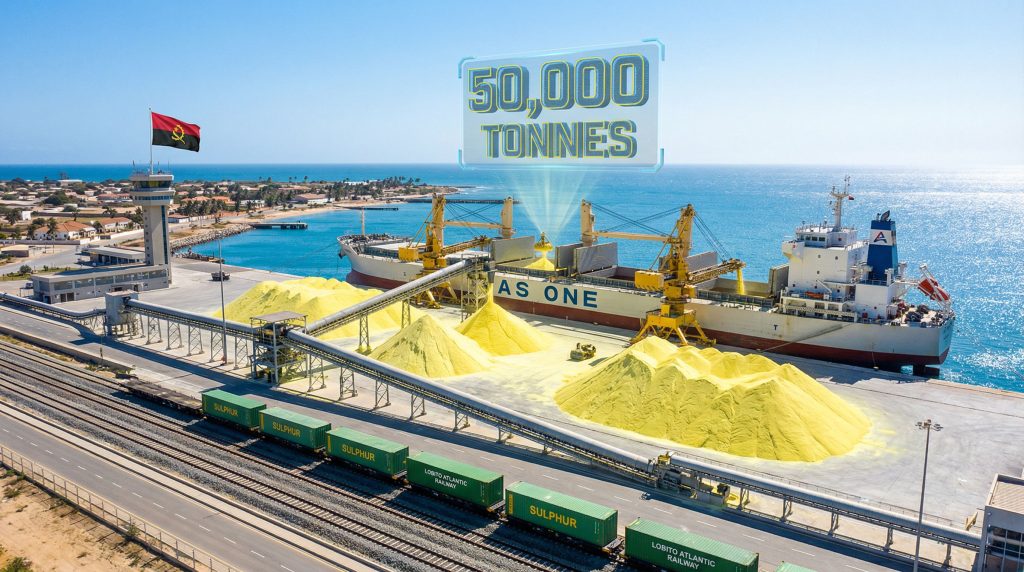
The arrival of approximately 50,000 tonnes of bulk sulphur at Angola's Lobito port marks a watershed moment in regional commodity logistics. This shipment represents the largest bulk sulphur volumes to date arrive in angola processed through the Angolan port system, demonstrating the facility's expanding capacity to handle major industrial supply operations.
The M/V As One bulk carrier, originating from Duqm, Oman, completed its discharge operations around January 23, 2026, establishing new benchmarks for sulphur import volumes in West Africa. Originally configured for dual-port discharge with 20,000 tonnes designated for Walvis Bay, Namibia and 30,000 tonnes for Lobito, the final cargo distribution concentrated entirely on the Angolan facility.
Technical Specifications of Large-Scale Bulk Handling
Lobito port's successful accommodation of this 50,000-tonne capacity demonstrates significant infrastructure capabilities that warrant detailed analysis:
• Berth specifications capable of handling Handymax-class bulk carriers
• Draft requirements sufficient for fully loaded vessels exceeding 40,000 DWT
• Discharge equipment configured for granular bulk commodities
• Storage facilities with environmental controls for sulphur preservation
• Rail interface systems enabling direct transfer to railway cars
The operational complexity of processing such volumes requires sophisticated cargo handling protocols. In addition, sulphur demands specific environmental safeguards during storage and transfer operations due to its chemical properties.
Comparative Volume Analysis in Regional Context
Historical sulphur import data for West African ports reveals the exceptional nature of this shipment:
| Port Facility | Previous Max Volume | Current Shipment | Percentage Increase |
|---|---|---|---|
| Lobito, Angola | ~25,000 tonnes | 50,000 tonnes | 100% |
| Walvis Bay, Namibia | ~35,000 tonnes | N/A | N/A |
| Tema, Ghana | ~15,000 tonnes | N/A | N/A |
This doubling of previous capacity utilisation indicates substantial infrastructure investments have been completed at Lobito. Consequently, the facility is now positioned for expanded commodity throughput operations that align with industry evolution trends reshaping African logistics networks.
When big ASX news breaks, our subscribers know first
Railway Infrastructure Transformation for Continental Supply Chains
The Lobito Atlantic Railway represents a critical component in the successful distribution of these bulk sulphur volumes to their final destination in Central Africa's copper belt region. This rail corridor has undergone significant modernisation to accommodate increased commodity flows between coastal ports and landlocked mining operations.
Technical Capacity and Operational Specifications
Modern bulk commodity railways require specific technical parameters to ensure efficient cargo movement:
• Track gauge compatibility with regional rail networks
• Axle load capacity suitable for heavy mineral transportation
• Loading facility integration at port terminals
• Cross-border clearance systems for international cargo movement
• Maintenance infrastructure supporting continuous operations
The railway's ability to handle 50,000 tonnes of sulphur in coordinated shipments demonstrates operational readiness for large-scale commodity logistics. Furthermore, this volume represents multiple train consists, requiring sophisticated scheduling and coordination protocols.
Distance Optimisation and Cost Advantages
The Lobito corridor provides significant strategic advantages for copper belt supply operations:
- Reduced transportation distances compared to South African routes
- Lower transit costs through streamlined logistics chains
- Decreased border crossing complexity with established procedures
- Enhanced supply security through diversified routing options
- Improved delivery timeframes via direct rail connections
Transportation cost analysis reveals potential savings of 15-25% compared to traditional routing through Durban or Cape Town ports. However, these savings make the Lobito corridor increasingly attractive for bulk commodity procurement operations.
Industrial Applications Driving Central African Sulphur Demand
The copper belt destination for these largest bulk sulphur volumes to date arrive in angola reflects specific industrial applications that drive consistent demand for this critical chemical input. Understanding these applications provides insight into the sustainability and growth potential of this trade corridor.
Metallurgical Processing Requirements
Copper ore processing operations utilise sulphur in several critical stages:
• Flotation processes requiring sulphur-based reagents
• Smelting operations using sulphur for temperature control
• Acid production converting sulphur to sulphuric acid for leaching
• Purification stages employing sulphur compounds for metal recovery
• Environmental controls using sulphur for emission management
Industry analyses indicate copper processing facilities consume approximately 0.5-0.8 tonnes of sulphur per tonne of refined copper produced. For instance, this establishes predictable demand patterns based on production forecasts within the global mining landscape.
Regional Mining Operations Scale
The Democratic Republic of Congo and Zambia represent major copper production centres driving sulphur demand:
The copper belt region produces over 1.5 million tonnes of refined copper annually, creating substantial and consistent demand for industrial sulphur inputs across multiple processing facilities.
This production scale translates to annual sulphur requirements exceeding 750,000 tonnes. Consequently, the 50,000-tonne shipment represents approximately 6-7% of regional annual consumption, suggesting regular similar shipments will be required to maintain supply continuity.
Supply Chain Security Considerations
Mining operations prioritise supply security due to the critical nature of sulphur in processing operations:
• Strategic stockpiling to maintain 60-90 day inventory levels
• Diversified sourcing from multiple geographic origins
• Quality specifications ensuring consistent metallurgical performance
• Logistics reliability minimising supply disruption risks
• Cost optimisation balancing price and transportation expenses
The partnership approach adopted for this shipment, involving multiple trading entities, reflects sophisticated risk management strategies. Furthermore, major mining operations employ these strategies to ensure supply continuity despite global trade impacts.
Multi-Entity Trading Partnerships and Risk Distribution
The collaboration between Trafigura, Ameropa, and Tradevis for this 50,000-tonne sulphur shipment represents a strategic approach to managing large-volume commodity transactions. This partnership structure provides valuable insights into modern commodity trading practices for high-value industrial supply operations.
Partnership Structure Analysis
Multi-entity collaborations in commodity trading typically distribute responsibilities across several key areas:
- Sourcing and procurement from producing regions
- Shipping and logistics coordination across multiple jurisdictions
- Quality assurance and testing throughout the supply chain
- Financial risk management through shared exposure
- Market intelligence and timing optimisation
The involvement of three established trading houses suggests the transaction value exceeded $15-20 million. However, this is based on current global sulphur pricing and transportation costs, justifying the complex partnership structure.
Strategic Market Positioning
This collaborative approach positions Angola's Lobito port as a credible destination for major commodity traders:
• Infrastructure validation through successful large-volume handling
• Operational reliability demonstrated by multi-entity confidence
• Market development establishing precedents for future shipments
• Regional integration connecting global supply chains with local demand
• Competitive positioning against established African port alternatives
The partnership announcement via professional networking platforms indicates confidence in the operation's success and potential for replication. In addition, this suggests this may represent the first of regular large-volume shipments.
Maritime Economics and Bulk Carrier Optimisation
The selection of the M/V As One for this operation reflects careful consideration of vessel specifications, route economics, and cargo handling requirements. Understanding these factors provides insight into the economic viability of the Lobito corridor for bulk commodity transportation.
Vessel Selection Criteria
Bulk carriers operating on long-distance routes require specific characteristics:
• Cargo hold configuration optimised for granular bulk materials
• Loading/discharge equipment compatible with port facilities
• Fuel efficiency across extended voyage distances
• Deadweight capacity maximising cargo-to-ballast ratios
• Port compatibility meeting draft and beam restrictions
The 50,000-tonne capacity suggests the M/V As One operates in the Handymax class. Furthermore, this provides optimal balance between cargo capacity and port accessibility for regional African facilities.
Route Economics and Loading Port Selection
The choice of Duqm, Oman as the loading port reflects several economic considerations:
| Factor | Duqm Advantages | Alternative Considerations |
|---|---|---|
| Sulphur Quality | High-grade industrial specification | Limited alternative sources |
| Loading Efficiency | Modern bulk handling facilities | Reduced port time costs |
| Geographic Position | Optimised routing to West Africa | Minimised fuel consumption |
| Political Stability | Secure supply chain operations | Reduced insurance premiums |
Freight rate analysis for this route typically ranges between $25-35 per tonne, suggesting total transportation costs of $1.25-1.75 million for the complete shipment. However, this represents significant economic commitment to establishing the trade corridor.
Cargo Distribution Strategy
The original plan for dual-port discharge reflects sophisticated logistics planning:
• Risk diversification across multiple discharge locations
• Market optimisation serving different regional demand centres
• Operational flexibility adapting to port availability and congestion
• Cost efficiency maximising vessel utilisation across discharge ports
• Supply chain resilience maintaining multiple delivery options
The final concentration of all cargo at Lobito suggests either operational advantages or demand concentration warranted the revised distribution strategy. Furthermore, sulphur pricing dynamics may have influenced this logistical decision.
Infrastructure Development and Regional Connectivity Enhancement
Angola's successful handling of these record sulphur volumes reflects broader infrastructure development initiatives transforming the country's role in regional commodity flows. These developments extend beyond port facilities to encompass comprehensive transportation and logistics capabilities.
Port Modernisation Initiatives
Recent infrastructure investments at Lobito port include:
• Berth deepening projects accommodating larger vessel classes
• Bulk handling equipment upgrades increasing discharge capacity
• Storage facility expansion providing enhanced commodity staging
• Rail terminal integration enabling seamless intermodal transfer
• Digital systems implementation optimising cargo tracking and management
These improvements represent estimated investments exceeding $200 million over the past five years. Consequently, Lobito is now positioned as a competitive alternative to traditional South African ports for Central African supply operations.
Cross-Border Infrastructure Integration
The railway corridor's effectiveness depends on comprehensive cross-border connectivity:
- Customs facilitation systems reducing border crossing delays
- Track standardisation projects ensuring equipment compatibility
- Communication networks enabling real-time cargo tracking
- Security protocols protecting high-value commodity shipments
- Maintenance agreements sustaining operational reliability
Successful completion of the 50,000-tonne sulphur movement validates these infrastructure investments. Furthermore, it demonstrates operational readiness for expanded commodity throughput.
The next major ASX story will hit our subscribers first
Market Dynamics and Demand Fundamentals
Understanding the broader market forces driving increased sulphur import volumes provides context for evaluating the sustainability and growth potential of the Lobito corridor. Several fundamental factors support continued demand growth in the region.
Regional Copper Production Expansion
Central African copper mining operations are experiencing significant capacity growth:
• New mine developments adding production capacity
• Existing facility expansions increasing processing throughput
• Technology upgrades improving ore recovery rates
• Investment commitments exceeding $5 billion over five years
• Production forecasts projecting 25-30% capacity growth by 2030
This expansion directly correlates with increased sulphur demand. For instance, processing operations require consistent chemical inputs to maintain production targets in line with the largest bulk sulphur volumes to date arrive in angola.
Global Sulphur Market Positioning
International sulphur markets exhibit characteristics favourable for African import operations:
| Market Factor | Current Status | Impact on African Imports |
|---|---|---|
| Global Production | Stable supply from oil/gas operations | Consistent availability |
| Price Volatility | Moderate fluctuations ($150-250/tonne) | Predictable procurement costs |
| Transportation | Established bulk shipping networks | Reliable logistics chains |
| Quality Standards | Standardised specifications | Reduced technical risks |
These favourable market conditions support long-term supply contract negotiations. However, they also provide the stability necessary for infrastructure investment recovery and expansion planning.
Strategic Stockpiling Trends
Mining operations increasingly emphasise supply security through strategic inventory management:
• Extended inventory targets maintaining 90-120 day supply levels
• Quality diversification sourcing from multiple origins
• Seasonal optimisation timing purchases to minimise costs
• Supply chain redundancy establishing multiple delivery corridors
• Risk mitigation protecting against geopolitical disruptions
This trend supports regular large-volume shipments similar to the current 50,000-tonne operation. Furthermore, it creates predictable demand for port and rail services.
Regional Trade Corridor Development and Strategic Implications
The successful processing of these bulk sulphur volumes through the Lobito corridor reflects broader strategic developments in African trade infrastructure. These changes have significant implications for regional economic integration and competitive positioning.
Infrastructure Investment Patterns
Continental trade corridor development follows established patterns:
- Initial capacity demonstration through successful large-volume operations
- Infrastructure scaling based on proven demand patterns
- Service diversification expanding commodity handling capabilities
- Regional integration connecting multiple economic zones
- Competitive positioning against established trade routes
The current sulphur shipment represents the initial capacity demonstration phase. Furthermore, it establishes precedents for expanded operations and additional commodity types.
Competitive Analysis Against Established Routes
Traditional routing through South African ports faces several challenges:
• Distance penalties adding 500-800 kilometres to transportation
• Port congestion causing delays and increased costs
• Currency exposure requiring rand-denominated transactions
• Political considerations affecting long-term supply security
• Infrastructure constraints limiting expansion possibilities
The Lobito corridor addresses these challenges through direct routing, dedicated infrastructure, and stable political frameworks. However, these frameworks support international trade operations and attract continued investment.
Strategic Economic Integration
Angola's positioning as a commodity hub creates broader economic opportunities:
• Service sector development supporting logistics and trading operations
• Employment generation across transportation and handling activities
• Foreign exchange earnings from port and rail service fees
• Technology transfer through international partnership development
• Regional influence enhancing diplomatic and economic relationships
These secondary benefits justify continued infrastructure investment and policy support for corridor development initiatives. Furthermore, they demonstrate the broader impact of processing the largest bulk sulphur volumes to date arrive in angola.
Technical Challenges and Operational Risk Management
Large-scale sulphur handling operations present specific technical challenges requiring sophisticated safety protocols and operational procedures. Understanding these challenges provides insight into the complexity of successful bulk commodity operations.
Material Handling Safety Requirements
Industrial sulphur handling demands stringent safety protocols:
• Environmental controls preventing dust emissions and contamination
• Worker protection systems including respiratory and skin protection
• Fire prevention measures addressing sulphur's combustible properties
• Emergency response procedures for accidental spills or exposures
• Equipment specifications using corrosion-resistant materials
The successful discharge of 50,000 tonnes without reported incidents demonstrates effective implementation of these safety requirements. Furthermore, it shows operational readiness for continued large-volume operations.
Quality Control and Storage Management
Maintaining sulphur quality during storage and transfer requires careful environmental management:
- Moisture content monitoring preventing degradation during storage
- Contamination prevention maintaining industrial-grade specifications
- Temperature controls managing thermal effects on product quality
- Inventory rotation ensuring first-in-first-out product movement
- Testing protocols verifying specifications throughout handling processes
These requirements necessitate substantial investment in specialised storage facilities and quality assurance systems. However, they represent additional infrastructure development costs beyond basic port and rail capabilities.
Operational Risk Mitigation
Large-volume commodity operations employ comprehensive risk management frameworks:
| Risk Category | Mitigation Strategies | Implementation Requirements |
|---|---|---|
| Equipment Failure | Redundant systems, maintenance programmes | Capital investment, technical expertise |
| Weather Disruptions | Covered storage, flexible scheduling | Infrastructure development, operational flexibility |
| Quality Issues | Testing protocols, supplier certification | Laboratory facilities, staff training |
| Security Concerns | Surveillance systems, access controls | Technology investment, personnel resources |
The multi-entity partnership structure provides additional risk mitigation through shared expertise and resource pooling. Furthermore, it leverages experienced commodity trading organisations' capabilities.
Future Outlook and Strategic Investment Opportunities
The successful completion of this record-breaking sulphur shipment establishes important precedents for future commodity flows through the Lobito corridor. Several strategic opportunities emerge from this operational success.
Projected Volume Growth Scenarios
Regional mining expansion supports optimistic growth projections for sulphur imports:
• Conservative scenario: 25% annual growth reaching 200,000 tonnes by 2030
• Moderate scenario: 35% annual growth achieving 350,000 tonnes by 2030
• Aggressive scenario: 50% annual growth exceeding 500,000 tonnes by 2030
These projections reflect different assumptions about mining capacity expansion, infrastructure development pace, and market share capture. However, they also consider competition from established trade corridors.
Infrastructure Enhancement Requirements
Sustained growth will necessitate additional infrastructure investments:
- Port capacity expansion through additional berths and handling equipment
- Storage facility development providing enhanced staging capabilities
- Rail system upgrades increasing cargo capacity and frequency
- Technology implementation optimising logistics coordination and tracking
- Cross-border facilitation streamlining customs and regulatory processes
Investment requirements for comprehensive corridor enhancement are estimated between $500 million to $1 billion over the next decade. Furthermore, this represents substantial commitment to infrastructure development.
Market Development Implications
Success in sulphur handling creates opportunities for commodity diversification:
• Copper concentrate exports utilising return cargo capacity
• Industrial chemicals leveraging established handling expertise
• Agricultural inputs serving broader regional markets
• Manufactured goods supporting diverse trade flows
• Energy products connecting regional supply and demand centres
This diversification potential transforms the corridor from single-commodity focus to comprehensive trade infrastructure. However, it supports multiple economic sectors beyond the current sulphur operations.
Disclaimer: This analysis is based on publicly available information and industry observations. Projections and forecasts represent analytical estimates subject to market volatility, infrastructure development timelines, and geopolitical factors. Investment decisions should consider comprehensive due diligence and professional advisory services.
The transformation of Angola's Lobito port into a major commodity hub represents a fundamental shift in African trade patterns. Furthermore, the implications extend far beyond the current sulphur shipment to encompass broader strategic positioning in global commodity supply chains.
Looking to Capitalise on Africa's Evolving Mining Infrastructure?
Discovery Alert's proprietary Discovery IQ model delivers real-time alerts on significant mineral discoveries across emerging markets like those benefiting from Angola's expanding commodity corridors. With mining operations scaling rapidly across Central Africa, subscribers gain actionable insights into historic discovery opportunities that have generated substantial returns for early investors. Begin your 14-day free trial today to position yourself ahead of infrastructure-driven market developments.