
May 19, 2026
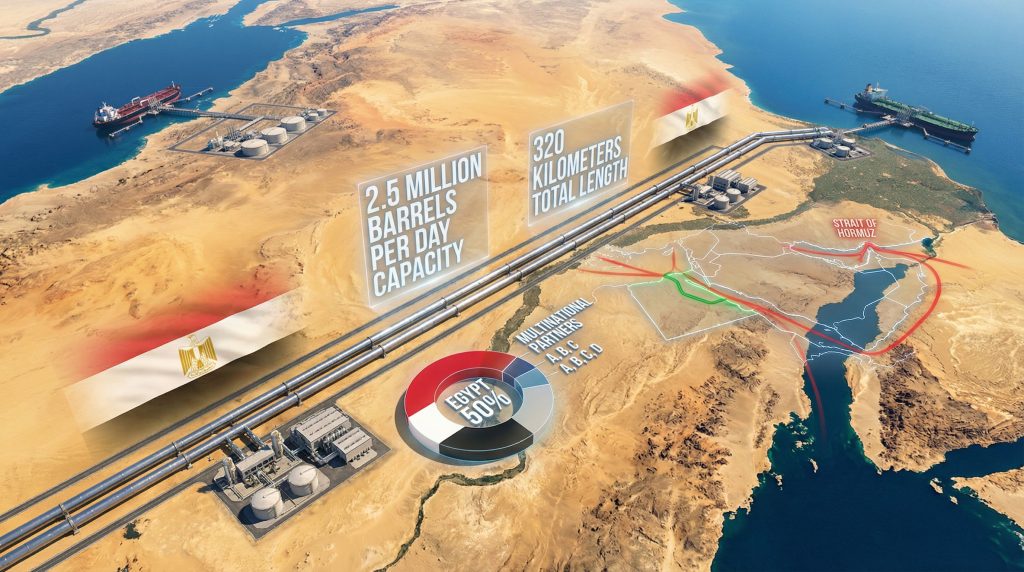
The significance of the Sumed pipeline and Saudi oil exports relationship has gained renewed attention as regional energy partnerships adapt to evolving maritime security challenges. Furthermore, strategic infrastructure corridors like Egypt's petroleum transit system demonstrate how collaborative frameworks can enhance supply chain resilience during periods of geopolitical uncertainty. Understanding these oil price movements requires examining the intricate relationship between transportation infrastructure and market dynamics that shape global energy flows.
Understanding Egypt's Strategic Energy Corridor Infrastructure
Egypt's geographical positioning creates unique advantages for regional energy transit operations, connecting Red Sea access points with Mediterranean export terminals through established pipeline infrastructure. The Sumed pipeline system demonstrates how strategic corridors can function as critical components within broader petroleum transportation networks.
Core Infrastructure Specifications:
| Component | Technical Details | Operational Status |
|---|---|---|
| Total Pipeline Length | 320 kilometers | Active since 1977 |
| Pipeline Configuration | Two parallel 42-inch diameter lines | Continuous operation |
| Daily Processing Capacity | 2.5 million barrels | Weather-independent |
| Origin Terminal | Ain Sokhna (Red Sea coast) | Integrated storage facilities |
| Destination Terminal | Sidi Kerir (Mediterranean) | Export infrastructure |
The dual-pipeline engineering design provides operational redundancy through parallel transportation lines. This configuration enables continued petroleum flows during scheduled maintenance procedures while maintaining system integrity through backup capacity mechanisms. The pressurised crude oil transport system operates independently of maritime weather conditions, distinguishing it from vessel-based transportation alternatives.
Strategic Geographic Advantages:
Egypt's corridor positioning offers direct connectivity between Middle Eastern production centres and European market destinations. The infrastructure bypasses traditional canal navigation constraints while providing fixed routing capabilities for high-volume petroleum flows. Terminal facilities at both endpoints support storage operations and loading coordination for international export requirements.
Historical development of this infrastructure reflects long-term regional cooperation initiatives established during the 1970s energy crisis period. Moreover, the system's operational longevity demonstrates proven reliability for international petroleum transit operations across multiple market cycles and geopolitical environments.
When big ASX news breaks, our subscribers know first
Multinational Partnership Framework and Ownership Structure
The Arab Petroleum Pipelines Company operates under a sophisticated multinational shareholding arrangement that exemplifies regional energy cooperation models. This ownership structure distributes both investment responsibilities and strategic benefits across multiple stakeholder nations.
Verified Shareholding Distribution:
• Egyptian General Petroleum Corporation: 50% controlling stake with operational management responsibilities
• Saudi Aramco: 15% strategic partnership representing producer nation interests
• Kuwait Petroleum Corporation: 15% participation through state energy entities
• UAE's Mubadala Investment Company: 15% investment representing sovereign wealth involvement
• QatarEnergy: 5% minority holding completing the regional consortium
This multilateral framework aligns diverse national interests within a shared infrastructure asset. Producer nations secure diversified export pathway access while consumer markets benefit from enhanced supply route reliability. The Egyptian majority stake ensures operational control while regional partnerships provide capital backing and strategic coordination.
Collaborative Decision-Making Mechanisms:
Joint venture operations require coordination across multiple regulatory environments and national energy policies. Capacity allocation discussions involve balancing domestic Egyptian requirements with international transit demands. Revenue-sharing arrangements reflect proportional ownership stakes while operational costs distribute according to utilisation patterns.
In addition, the partnership model demonstrates how regional energy infrastructure can transcend individual national limitations through collaborative investment and shared strategic objectives. This structure has proven resilient across changing political landscapes and varying market conditions since the system's establishment.
Maritime Chokepoint Vulnerabilities and Alternative Routing Strategies
The Strait of Hormuz represents a critical vulnerability point in global petroleum transportation networks, handling approximately 20 million barrels per day of international crude oil flows. This concentration creates systematic risks when operational disruptions affect traditional maritime transit routes.
Global Supply Chain Dependencies:
The Persian Gulf corridor typically manages 20-25% of all internationally traded petroleum, making alternative routing capabilities strategically valuable during periods of maritime constraints. When primary shipping lanes experience operational challenges, backup infrastructure systems become essential for maintaining market continuity.
Recent developments have highlighted the importance of diversified export mechanisms for major producing nations. Saudi oil exports reached peak levels of 7.3 million barrels per day in early 2026, demonstrating the scale of petroleum flows requiring reliable transportation infrastructure. These developments reflect broader patterns in oil futures trends that emphasise supply security.
Integrated Export Route Coordination:
Alternative petroleum routing involves multiple infrastructure components working in coordination:
- Primary Production Centers: Eastern Arabian Peninsula crude oil production facilities
- Cross-Country Transportation: Saudi East-West pipeline system with 5 million bpd capacity
- Red Sea Terminal Access: Yanbu port facilities for maritime loading operations
- Mediterranean Transit: Sumed pipeline system connecting Red Sea to European markets
This integrated approach enables crude oil produced in eastern regions to reach Mediterranean destinations through alternative pathways when traditional Persian Gulf routes face operational constraints. The system requires careful coordination between multiple infrastructure operators and government entities.
Strategic Planning Considerations:
Alternative routing strategies must account for capacity limitations and operational constraints across different infrastructure components. The Sumed pipeline and Saudi oil exports coordination provides meaningful supplementary capacity representing approximately 12.5% of typical Hormuz transit volumes. However, it cannot independently compensate for complete chokepoint closures.
Economic Analysis of Pipeline Transit Versus Maritime Alternatives
Cost structures for petroleum transportation vary significantly between pipeline and maritime routing options. Fixed infrastructure investments create different economic parameters compared to variable shipping rate structures prevalent in maritime markets.
Comparative Transportation Economics:
Pipeline operations involve amortised construction costs, ongoing maintenance requirements, and energy consumption for pumping operations. Maritime alternatives feature variable freight rates, vessel availability constraints, and weather-dependent scheduling factors.
Route Efficiency Comparisons:
| Transportation Method | Capacity Characteristics | Operational Factors | Market Access |
|---|---|---|---|
| Sumed Pipeline System | 2.5 million bpd fixed capacity | Weather-independent continuous flow | Direct Mediterranean access |
| Strait of Hormuz Maritime | ~20 million bpd variable capacity | Vessel-dependent scheduling | Global routing flexibility |
| Suez Canal Navigation | Variable vessel-dependent | Ship size and transit limitations | Mixed cargo capability |
Pipeline transportation offers predictable transit timing and reduced maritime insurance requirements. Continuous flow capabilities eliminate scheduling uncertainties associated with vessel availability and port congestion factors.
Market Timing and Storage Optimisation:
Reduced transit times through pipeline systems can provide competitive advantages in price-sensitive market segments. Direct Mediterranean access enables faster delivery to European consumers while minimising intermediate storage requirements.
Storage facility integration at terminal points supports inventory optimisation and market timing strategies. Fixed routing eliminates maritime weather delays, providing greater certainty for delivery scheduling and contract fulfilment obligations.
Regional Energy Security and Governmental Coordination Mechanisms
Egyptian Petroleum Minister Karim Badawi confirmed in March 2026 the country's readiness to facilitate Saudi crude transit through the Sumed infrastructure system. According to Egypt's official announcement, this governmental coordination demonstrates how bilateral energy cooperation addresses regional supply chain challenges during periods of maritime uncertainty.
Policy Coordination Framework:
Government-level coordination involves multiple regulatory and operational considerations:
• Capacity allocation protocols balancing domestic requirements with international transit demands
• Terminal access arrangements coordinating loading schedules and facility utilisation
• Revenue distribution mechanisms ensuring equitable benefits across partnership participants
• Regulatory compliance standards maintaining environmental and safety operational protocols
Egypt's strategic positioning as an energy bridge creates economic opportunities through transit revenue generation while supporting regional stability objectives. The country's petroleum infrastructure serves dual functions supporting both domestic consumption needs and international transit operations.
Infrastructure Resilience Benefits:
Multiple export pathway availability reduces single-point-of-failure risks in regional energy supply chains. Diversified routing capabilities enable continued market access during various operational scenarios, supporting overall energy system reliability. This resilience becomes particularly important considering the trade war oil impact on global energy markets.
Crisis response coordination between regional partners enhances collective energy security capabilities. Established operational protocols enable rapid activation of alternative routing mechanisms when primary transportation corridors face constraints.
Technical Infrastructure Integration and System Capabilities
The Sumed pipeline operates as a pressurised crude oil transport system specifically designed for petroleum products rather than mixed cargo capabilities. Technical specifications enable continuous flow operations through dual-line configuration providing operational redundancy and maintenance flexibility.
Pumping Station Network:
Multiple intermediate pumping stations maintain system pressure across the 320-kilometre corridor. Strategic positioning of these facilities ensures consistent flow rates while enabling section-by-section maintenance procedures without complete system shutdowns.
Terminal Facility Integration:
Both origin and destination terminals feature specialised infrastructure supporting large-scale petroleum handling operations:
• Ain Sokhna Red Sea Terminal: Storage tank farms, marine loading facilities, and pipeline interface systems
• Sidi Kerir Mediterranean Terminal: Export infrastructure, quality control laboratories, and vessel loading capabilities
• Intermediate Infrastructure: Pipeline monitoring systems, emergency response capabilities, and maintenance access points
Quality control mechanisms ensure petroleum specifications meet international standards throughout the transportation process. Automated monitoring systems track flow rates, pressure levels, and product quality parameters across the entire pipeline network.
System Maintenance and Reliability:
Scheduled maintenance protocols utilise the dual-line configuration to maintain operational continuity. Historical reliability data demonstrates consistent availability across multiple decades of operations, supporting long-term strategic planning initiatives.
Environmental compliance systems monitor pipeline integrity and implement safety protocols throughout the transportation corridor. Regular inspection procedures ensure continued operational safety while meeting international environmental standards.
The next major ASX story will hit our subscribers first
Market Psychology and Investment Strategy Implications
Alternative transportation infrastructure provides portfolio diversification benefits for petroleum market participants. Investment strategies increasingly incorporate transportation route reliability as a risk management factor in energy sector analysis.
Supply Chain Risk Assessment:
Market participants evaluate transportation pathway redundancy when assessing regional petroleum investment opportunities. Infrastructure diversity reduces concentration risks associated with single-route dependencies, particularly during periods of geopolitical uncertainty. These considerations intersect with OPEC market influence on global pricing mechanisms.
Strategic Asset Valuation:
Pipeline infrastructure assets demonstrate value stability through long-term operational contracts and strategic positioning advantages. Multinational ownership structures provide additional stability through shared stakeholder interests and collaborative management approaches.
Investor confidence benefits from demonstrated operational reliability and established governmental support mechanisms. The track record of successful operations across multiple market cycles supports long-term investment thesis development for regional energy infrastructure assets.
Market Access Premium Considerations:
Direct Mediterranean access capabilities command premium valuations in European petroleum markets. Reduced transportation complexity and eliminated maritime chokepoint exposure create competitive advantages for crude oil delivered through pipeline systems.
Future Infrastructure Development and Expansion Possibilities
Long-term strategic planning considers potential capacity expansion opportunities and technological enhancement possibilities for existing pipeline infrastructure. Regional energy demand growth and changing geopolitical dynamics may require infrastructure adaptations and capability improvements.
Potential Enhancement Scenarios:
Infrastructure expansion possibilities include additional parallel pipeline installation, enhanced pumping station capabilities, and expanded terminal storage facilities. These improvements would increase daily throughput capacity while maintaining system reliability standards.
Integration with renewable energy systems for pipeline operations could reduce operational carbon footprints while maintaining cost-effectiveness. Advanced monitoring technologies enable improved system efficiency and predictive maintenance capabilities.
Regional Integration Opportunities:
Coordination with other regional pipeline systems could create expanded transportation networks connecting multiple production centres with diverse market destinations. Strategic partnerships might enable integrated logistics solutions spanning multiple countries and petroleum market segments.
Furthermore, Australia faces similar energy exports challenges that require comparable infrastructure planning and regional cooperation strategies.
Investment Framework Evolution:
Changing regional dynamics may require ownership structure adaptations or expansion of the existing partnership framework. New stakeholder participation could provide additional capital for infrastructure improvements while maintaining collaborative management approaches.
Strategic Implications for Global Energy Infrastructure
The Sumed pipeline and Saudi oil exports relationship exemplifies how regional cooperation can create strategic assets supporting both local economic interests and global energy security objectives. Successful operation across multiple decades demonstrates the viability of multinational infrastructure partnerships in the petroleum sector.
Lessons for Infrastructure Development:
Collaborative investment models distribute both risks and benefits across multiple stakeholder nations while ensuring operational continuity through shared strategic interests. This approach provides a template for future regional energy infrastructure development initiatives.
Long-term operational success requires alignment of diverse national interests within flexible partnership frameworks. Governmental coordination mechanisms must balance domestic requirements with international cooperation objectives to maintain system effectiveness.
What Are the Global Energy System Resilience Benefits?
Alternative transportation pathways enhance overall global energy system resilience by reducing dependencies on single chokepoint vulnerabilities. Diversified infrastructure networks provide stability during crisis periods while supporting normal market operations.
Regional energy cooperation initiatives demonstrate how shared infrastructure investments can create mutual benefits extending beyond immediate economic returns. Strategic partnerships enable collective responses to supply chain challenges while maintaining competitive market dynamics.
How Do Risk Management and Contingency Planning Support Market Stability?
Comprehensive energy security strategies increasingly emphasise infrastructure redundancy and alternative routing capabilities. The successful integration of pipeline systems with maritime transportation networks provides flexible responses to various operational scenarios.
As noted in recent industry analysis, continuous coordination between infrastructure operators, government entities, and market participants ensures rapid activation of alternative transportation mechanisms when circumstances require operational adjustments. This collaborative approach supports market stability while minimising disruption impacts on global petroleum flows.
This analysis is provided for educational purposes and should not be considered as investment advice. Readers should conduct independent research and consult qualified professionals before making investment decisions related to energy infrastructure or petroleum market investments.
Ready to Stay Ahead of Major Energy and Resource Discoveries?
Discovery Alert's proprietary Discovery IQ model delivers real-time notifications on significant ASX mineral and energy discoveries, transforming complex market data into actionable investment insights. Begin your 14-day free trial today to position yourself ahead of the market and capitalise on discovery-driven opportunities as they unfold.