May 14, 2026
Supply Chain Architecture Transformation in Emerging Market Mining Operations
The mineral extraction industry operates within complex economic frameworks where operational margins depend heavily on volatile input commodity relationships. When critical processing materials experience sustained price escalation, mining corporations must evaluate the fundamental viability of existing production systems. This dynamic creates strategic pivot points where companies reassess geographical asset allocation, technological dependencies, and long-term commodity positioning strategies, as seen when Mosaic paralyzes phosphate operations in Minas Gerais.
Infrastructure development in emerging market mining operations requires substantial capital commitments spanning multiple commodity cycles. Companies investing in processing facilities, logistics networks, and extraction equipment must maintain operational flexibility to respond to changing market conditions. When input costs rise beyond sustainable thresholds, these same infrastructure investments become valuable assets for specialized operators pursuing different commodity cost pressures strategies.
The intersection of volatile input pricing, established infrastructure availability, and emerging commodity demand patterns creates unique market opportunities for strategic asset repositioning. Understanding these dynamics provides insight into how major mining corporations optimize portfolio performance while creating acquisition opportunities for specialized developers within the broader context of industry transformation trends.
When big ASX news breaks, our subscribers know first
Economic Triggers Behind Major Mining Operation Restructuring
Modern mining operations face unprecedented input cost volatility that challenges traditional production economics. The suspension of mining facilities producing significant tonnages reflects calculated responses to sustained commodity price pressures rather than short-term market fluctuations.
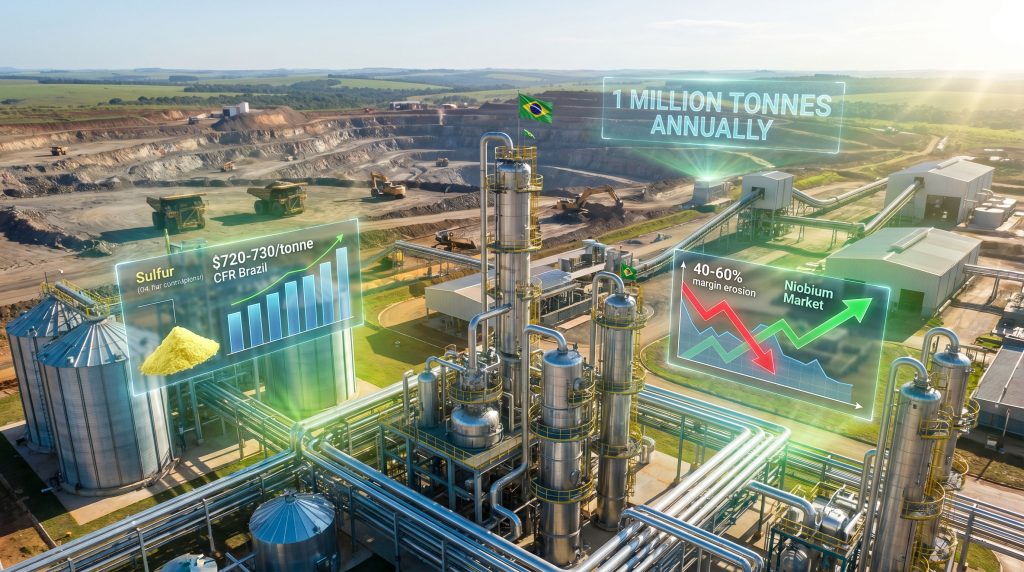
Recent developments in Brazil's phosphate sector illustrate these dynamics clearly. Mosaic's decision to suspend operations at its Araxá Minerochemical Complex and Patrocínio mining facilities represents a strategic response to elevated sulfur pricing that undermines superphosphate production profitability. The company's operations, which collectively produced approximately 1 million tonnes of phosphate annually, faced unsustainable economics when sulfur prices reached levels that eliminated operational margins.
Financial Impact Assessment
The scale of financial restructuring demonstrates the magnitude of economic pressures facing phosphate producers:
- Annual operational savings potential: Up to $80 million
- Capital expenditure reduction: Up to $30 million yearly
- One-time restructuring costs: $350-400 million in impairments and mobilisation expenses
- Production capacity reduction: 27% of Brazilian operations suspended
These figures reflect a comprehensive operational restructuring rather than marginal capacity adjustments. The willingness to absorb substantial one-time costs indicates management confidence that current input cost pressures represent structural rather than cyclical challenges.
Strategic Capital Allocation Framework
Mining companies increasingly prioritise long-term asset optimisation over short-term production volume maintenance, particularly when input cost relationships threaten sustainable profitability across commodity cycles.
The characterisation of Mosaic's decision as part of a "global capital reallocation strategy" indicates that suspension decisions reflect international portfolio optimisation rather than isolated market responses. This approach suggests that companies evaluate individual operations within broader strategic contexts, considering alternative deployment opportunities for capital resources.
Table: Production Economics Analysis
| Cost Factor | Impact Level | Strategic Response |
|---|---|---|
| Sulphur Price Escalation | High | Production suspension |
| Processing Margin Compression | Severe | Asset divestiture |
| Capital Efficiency Requirements | Critical | Portfolio optimisation |
| Alternative Commodity Returns | Attractive | Resource reallocation |
This comprehensive project suspension analysis reveals how companies evaluate multiple factors when making operational decisions, particularly in challenging economic environments.
Infrastructure Monetisation in Modern Mining Asset Markets
The emergence of specialised acquirers targeting established mining infrastructure represents a fundamental shift in asset valuation methodologies. Rather than viewing suspended operations as stranded assets, sophisticated buyers recognise the inherent value of processing capabilities, logistics networks, and regulatory approvals.
St. George Mining's confirmed interest in acquiring Mosaic's Araxá industrial assets exemplifies this trend. The company specifically targets existing infrastructure to accelerate rare earth and niobium project development, demonstrating how established facilities can support entirely different commodity strategies.
High-Value Asset Components
Certain infrastructure elements command premium valuations due to specialised applications across multiple commodity sectors:
- Sulphuric acid production facilities: Critical for rare earth processing operations
- Established processing infrastructure: Reduces development timelines by 2-3 years
- Integrated logistics networks: Essential for remote mining operations
- Environmental permits and approvals: Valuable regulatory positioning
The sulphuric acid plant at Araxá receives particular market attention due to growing demand in rare earth processing. This specialised infrastructure addresses specific technical requirements that would require substantial capital investment and extended development timelines for greenfield projects.
Asset Acquisition Economics
Table: Infrastructure Development Comparison
| Development Approach | Capital Requirements | Timeline | Risk Profile |
|---|---|---|---|
| Greenfield Construction | 100% baseline | 4-5 years | High technical risk |
| Asset Acquisition | 40-60% of greenfield | 1-2 years | Proven infrastructure |
| Hybrid Development | 60-80% of greenfield | 2-3 years | Moderate risk |
Strategic buyers benefit from acquiring proven infrastructure with established operational parameters, regulatory compliance, and community relationships. These advantages translate directly into reduced capital requirements and accelerated project development schedules.
Commodity Portfolio Transformation Strategies
The transition from phosphate to niobium production at Mosaic's Patrocínio facility demonstrates sophisticated commodity diversification strategies that maximise existing asset utilisation whilst pursuing higher-return market opportunities.
Market Dynamics Comparison
Phosphate Market Characteristics:
- Input-dependent production (sulphur requirements)
- Volatile pricing cycles
- Mature demand patterns
- High operational complexity
Niobium Market Advantages:
- Self-contained production processes
- Stable pricing relationships
- Growing industrial demand (8-12% annually)
- Brazil's dominant supply position (85% global production)
Strategic Transition Benefits
The decision to advance niobium development whilst suspending phosphate operations reflects careful commodity selection based on multiple strategic criteria:
- Reduced input dependencies: Niobium processing eliminates sulphur price exposure
- Market growth alignment: Steel industry demand drives consistent niobium consumption growth
- Competitive positioning: Leverages Brazil's natural resource advantages
- Infrastructure optimisation: Utilises existing mining and processing capabilities
Companies pursuing commodity diversification strategies increasingly focus on operations that maximise existing infrastructure whilst minimising external input dependencies and market volatility exposure.
Technical Development Status
Mosaic paralyzes phosphate operations in Minas Gerais whilst simultaneously advancing niobium project development at Patrocínio, with technical and sampling studies nearing completion. This timeline suggests that commodity transition planning preceded the phosphate suspension decision, indicating strategic foresight rather than reactive repositioning.
Regional Supply Chain Disruption Analysis
Large-scale production suspensions create cascading effects throughout regional and international fertiliser supply networks. The removal of 1 million tonnes of annual phosphate capacity represents a significant supply reduction that influences pricing dynamics and sourcing strategies across multiple markets.
Supply Impact Assessment
Regional Market Effects:
- Potential 15-20% reduction in local phosphate availability
- Increased import dependency for Brazilian agricultural producers
- Price pressure transmission to downstream fertiliser markets
- Supply source diversification requirements
Furthermore, the decision to suspend phosphate operations creates opportunities for competitors to capture market share whilst driving broader pricing adjustments throughout regional supply chains.
Historical Precedent Analysis:
Supply disruptions of comparable magnitude typically generate:
- Regional price increases of 5-8% within 6-12 months
- Enhanced capacity utilisation at remaining production facilities
- Accelerated investment in alternative supply sources
- Strategic stockpiling by major agricultural users
Market Response Mechanisms
Table: Supply Chain Adaptation Patterns
| Response Type | Timeline | Market Participants | Strategic Impact |
|---|---|---|---|
| Price Adjustment | 3-6 months | All market levels | Immediate cost transfer |
| Source Diversification | 6-12 months | Large purchasers | Supply security enhancement |
| Capacity Optimisation | 12-18 months | Remaining producers | Market share consolidation |
| Investment Acceleration | 18-24 months | New entrants | Long-term supply restoration |
Agricultural input costs in Brazil may experience upward pressure as farmers seek alternative phosphate sources to maintain fertiliser application programmes. This dynamic creates opportunities for international suppliers whilst potentially affecting agricultural productivity and profitability.
Strategic Acquisition Opportunities in Mining Asset Markets
The availability of established mining and processing infrastructure at attractive valuations creates unique investment opportunities for companies with complementary strategic objectives. Asset restructuring by major mining corporations often generates acquisition possibilities that would be impossible to replicate through greenfield development.
Buyer Profile Analysis
Rare Earth Developers:
- Primary interest: Processing facility infrastructure
- Strategic advantage: Accelerated project timelines
- Investment capacity: $100-500 million
- Risk profile: Moderate technical risk with proven infrastructure
Regional Fertiliser Companies:
- Primary interest: Market share expansion
- Strategic advantage: Production consolidation opportunities
- Investment capacity: $200-800 million
- Risk profile: Low technical risk with established markets
Private Equity Investors:
- Primary interest: Asset optimisation potential
- Strategic advantage: Value creation through operational improvements
- Investment capacity: $300 million to $1+ billion
- Risk profile: Variable depending on commodity and market positioning
Due Diligence Evolution
Modern mining asset transactions incorporate comprehensive assessment frameworks that extend beyond traditional financial and technical evaluation:
- Environmental compliance status: Ongoing regulatory requirements and associated costs
- Community relations assessment: Social licence to operate considerations
- Infrastructure condition analysis: Remaining useful life and maintenance requirements
- Regulatory transfer requirements: Permitting and approval processes
- Market positioning evaluation: Competitive advantages and strategic value
The next major ASX story will hit our subscribers first
Environmental and Social Governance in Asset Transactions
Contemporary mining asset transactions increasingly prioritise environmental and social considerations as primary valuation criteria. Buyers must assess not only acquisition costs but also long-term compliance obligations and community relationship management requirements.
Regulatory Compliance Framework
Critical Assessment Areas:
- Historical environmental liabilities and remediation obligations
- Ongoing monitoring and reporting requirements
- Closure and reclamation financial commitments
- Community impact mitigation programmes
- Water management and treatment systems
Modern buyers approach mining asset acquisitions with comprehensive ESG evaluation frameworks that consider total cost of ownership including environmental stewardship and community engagement responsibilities. These factors significantly influence asset valuations and acquisition structuring.
Long-Term Liability Considerations
Mining operations generate environmental obligations that extend well beyond active production periods. Asset purchasers must evaluate:
- Pre-existing environmental conditions: Soil, water, and air quality impacts
- Ongoing monitoring requirements: Long-term environmental surveillance obligations
- Closure and reclamation costs: Financial commitments for site restoration
- Community relationship maintenance: Social licence preservation requirements
These considerations increasingly influence asset pricing and transaction structuring as buyers seek to minimise unexpected future liabilities whilst ensuring regulatory compliance within the broader framework of energy transition insights.
Sector Transformation and Future Market Structure
The consolidation of mining assets among specialised operators represents broader industry trends toward operational optimisation and technological advancement. As traditional commodity producers reassess geographical portfolios, opportunities emerge for companies with focused strategic approaches to capture enhanced value from existing infrastructure.
Operational Efficiency Improvements
Specialised operators often achieve superior performance through focused management approaches:
- Technology integration: Advanced automation and processing optimisation
- Operational specialisation: Concentrated expertise in specific commodities
- Cost structure optimisation: Streamlined overhead and administrative functions
- Market responsiveness: Agile decision-making and strategic positioning
Innovation Acceleration Potential
Asset consolidation among specialised operators may accelerate innovation adoption through:
Enhanced Capital Allocation:
- Focused investment in core competencies
- Reduced portfolio complexity
- Strategic technology partnerships
- Operational optimisation programmes
Knowledge Transfer:
- Best practice implementation across similar operations
- Technical expertise concentration
- Collaborative research and development initiatives
- Industry-specific innovation networks
Market Structure Evolution
Table: Anticipated Sector Changes
| Transformation Area | Current State | Projected Development | Timeline |
|---|---|---|---|
| Operational Efficiency | Variable performance | 15-25% productivity gains | 2-3 years |
| Technology Adoption | Gradual implementation | Accelerated automation | 3-5 years |
| Market Stability | Cyclical volatility | Enhanced predictability | 5-7 years |
| Innovation Investment | Limited focus | Concentrated R&D spending | 3-5 years |
Investment Strategy Implications for Brazilian Mining Assets
The restructuring of Brazil's phosphate sector provides insight into broader investment themes affecting emerging market mining operations. Sophisticated investors recognise that major corporate asset sales create opportunities to acquire established infrastructure at attractive valuations whilst participating in commodity diversification trends.
Strategic Investment Considerations
Asset Quality Assessment:
- Infrastructure condition and remaining useful life
- Regulatory compliance status and transferability
- Market positioning and competitive advantages
- Expansion potential and commodity optionality
Market Timing Factors:
- Input cost cycle positioning
- Commodity demand trend alignment
- Regulatory environment stability
- Capital market accessibility
Risk Management Framework
Successful mining asset investments require comprehensive risk assessment covering technical, market, regulatory, and operational factors:
- Technical Risk: Infrastructure condition, geological uncertainty, processing capability
- Market Risk: Commodity price volatility, supply-demand dynamics, competitive positioning
- Regulatory Risk: Environmental compliance, permit transferability, policy changes
- Operational Risk: Management capability, workforce availability, community relations
The broader context of iron ore price trends demonstrates how commodity cycles influence investment timing and asset valuations across multiple mining sectors.
Frequently Asked Questions
What factors determine the timeline for completing large mining asset transactions?
Complex mining asset sales typically require 12-18 months due to extensive due diligence requirements, regulatory approvals, environmental assessments, and financing arrangements. The timeline can extend further if assets involve multiple jurisdictions or specialised infrastructure.
How do buyers evaluate suspended mining operations differently from active facilities?
Suspended operations require analysis of restart costs, infrastructure condition during downtime, regulatory compliance during suspension, and market conditions supporting renewed production. Buyers often focus more heavily on infrastructure replacement value and strategic positioning potential.
What role do government policies play in mining asset transactions in Brazil?
Brazilian federal and state governments maintain various incentive programmes for strategic mineral development, particularly in rare earth and critical mineral sectors. However, policy frameworks should not be interpreted as project-specific support unless explicitly confirmed through official announcements.
How do environmental liabilities affect mining asset valuations?
Environmental obligations can significantly impact transaction values through remediation costs, ongoing monitoring requirements, and closure obligations. Modern transactions incorporate comprehensive environmental due diligence to quantify these liabilities and structure appropriate risk allocation between parties.
What advantages do specialised mining companies have when acquiring assets from major corporations?
Specialised operators often achieve superior returns through focused expertise, streamlined operations, and strategic positioning in specific commodity markets. They can optimise existing infrastructure more effectively whilst maintaining closer relationships with local stakeholders and regulatory bodies.
Strategic Outlook for Emerging Market Mining Investment
The transformation of Brazil's phosphate landscape reflects global trends toward portfolio optimisation and commodity specialisation among mining corporations. As traditional producers reassess asset allocation strategies, opportunities emerge for specialised operators to acquire established infrastructure at attractive valuations whilst pursuing higher-return commodity strategies.
Success in this evolving market requires sophisticated understanding of commodity cycles, infrastructure valuation, regulatory environments, and operational optimisation potential. Companies that effectively combine financial resources with technical expertise and strategic market positioning are best positioned to capture value from ongoing sector transformation.
The convergence of asset availability, favourable acquisition economics, and emerging commodity demand patterns creates a compelling investment environment for properly prepared market participants. However, success requires careful attention to environmental obligations, community relationships, and long-term operational sustainability considerations that increasingly define modern mining investment strategies.
When Mosaic paralyzes phosphate operations in Minas Gerais, it creates ripple effects throughout regional supply chains whilst simultaneously generating opportunities for strategic acquirers to reposition these assets within evolving commodity markets.
Disclaimer: This analysis is provided for informational purposes only and should not be construed as investment advice. Mining investments involve substantial risks including commodity price volatility, regulatory changes, environmental liabilities, and operational challenges. Prospective investors should conduct comprehensive due diligence and consult qualified professionals before making investment decisions. Past performance does not guarantee future results, and all forward-looking statements involve inherent uncertainties.
Looking to Capitalise on Mining Asset Restructuring Opportunities?
Discovery Alert's proprietary Discovery IQ model delivers real-time notifications on significant ASX mineral discoveries, helping investors identify actionable opportunities as major mining transformations unfold across emerging markets. Start your 14-day free trial today to position yourself ahead of market-moving announcements and understand why historic mineral discoveries can generate substantial returns through Discovery Alert's dedicated discoveries showcase.