
July 22, 2026
Supply Chain Resilience Through Strategic Energy Partnerships
Global energy security calculations have shifted dramatically as major consuming nations reassess their import dependencies amid regional conflicts and evolving geopolitical frameworks. Traditional supply corridors face unprecedented pressures, forcing strategic planners to evaluate alternative partnerships that balance commercial advantages with long-term security objectives. This transformation extends beyond simple procurement adjustments, representing fundamental changes in how nations structure their energy relationships.
The emergence of new supplier-consumer alliances reflects broader trends toward supply chain diversification, particularly as established trade routes encounter political and physical vulnerabilities. These developments create opportunities for previously marginalised producers to re-enter international markets under modified regulatory frameworks, while major importers gain leverage through expanded sourcing options.
When big ASX news breaks, our subscribers know first
India's Strategic Pivot in Venezuelan Crude Markets
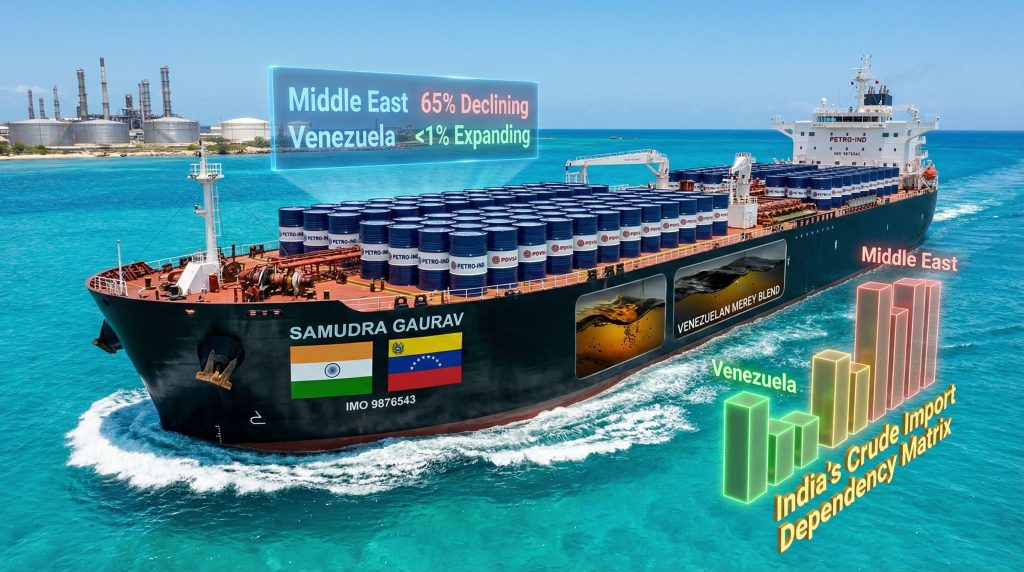
India's renewed engagement with Venezuelan oil markets represents a calculated response to supply vulnerabilities exposed during Middle Eastern conflicts. The india buying venezuelan crude strategy has secured more than 12 million barrels of Venezuelan crude heading to its west coast, marking the highest volume since February 2020. This strategic realignment demonstrates how major consuming nations adapt to geopolitical disruptions while pursuing long-term supply security.
The scale of this renewed partnership becomes evident through specific operational developments. The Ottoman Sincerity, a Suezmax tanker carrying nearly 1 million barrels of asphaltic Boscan crude, completed ship-to-ship transfers off Aruba before reaching Reliance's Sikka port. This represented the first Venezuelan cargo to reach India in over a year, signalling the operational framework enabling expanded trade.
Strategic Timing and Market Intelligence
According to lead research analyst Sumit Ritolia from data intelligence firm Kpler, the April-arriving cargoes were likely secured before recent Middle Eastern disruptions, indicating this represents a longer-term strategic shift rather than purely reactive procurement. This distinction proves crucial as it demonstrates deliberate energy diversification planning rather than emergency sourcing.
Furthermore, India's crude import dependency creates particular vulnerabilities, with approximately 90 percent of its crude requirements sourced internationally. The Strait of Hormuz typically transits almost 40 percent of India's oil supplies, concentrating significant risk in a single geographic chokepoint. Recent conflicts involving Iran have disrupted flows through this critical corridor, accelerating India's pursuit of alternative supply sources.
Commercial Framework Evolution
The operational structure facilitating these transactions has evolved significantly from previous arrangements. Reliance Industries now conducts direct purchases from PDVSA under U.S. Treasury licensing, moving away from earlier transactions facilitated through licensed traders Vitol Group and Trafigura. This direct relationship model provides greater supply chain control while maintaining regulatory compliance.
The Helios, a Bahama-flagged very large crude carrier, recently completed the first direct loading from PDVSA, establishing operational precedent for expanded bilateral trade. This shift from intermediary-facilitated transactions to direct commercial relationships indicates the maturation of regulatory frameworks enabling Venezuelan crude exports.
Technical Advantages of Venezuelan Heavy Crude Processing
Venezuela's heavy crude offerings provide specific technical advantages for Indian refining infrastructure, extending beyond simple supply availability. The sulfur-rich blends produced by Venezuelan fields create unique processing opportunities for refineries designed to handle heavy crude specifications.
Refinery Optimisation Parameters
Venezuelan heavy crude, particularly the flagship Merey blend, yields higher proportions of middle distillates such as diesel and jet fuel compared to lighter crude grades. This characteristic proves significant given current market conditions where these products remain structurally tight, creating enhanced margin opportunities for processors.
Research analyst Sumit Ritolia emphasised that heavy Venezuelan barrels tend to produce superior middle distillate yields, which holds particular importance in the current environment of tight diesel and jet fuel markets. This technical advantage translates directly into commercial benefits for Indian refiners equipped to process heavy crude specifications.
Key Technical Specifications:
• High sulfur content enabling specialised processing pathways
• Heavy API gravity suitable for complex refining operations
• Enhanced diesel yields compared to lighter crude alternatives
• Jet fuel production optimisation during tight product markets
• Compatibility with existing Indian refinery infrastructure
Processing Infrastructure Alignment
India's sophisticated refining complexes, particularly Reliance's facilities, demonstrate technical compatibility with Venezuelan crude specifications. The infrastructure investments in heavy crude processing capabilities position Indian refiners to extract maximum value from sulfur-rich Venezuelan grades.
However, the processing advantages extend beyond immediate product yields to include strategic inventory management opportunities. Heavy crude's characteristics enable refiners to optimise product slate adjustments based on seasonal demand patterns and regional market conditions.
Regulatory Framework Enabling International Trade
The evolution of U.S. sanctions policy toward Venezuela creates new pathways for international energy cooperation, with India positioned as a key beneficiary of these diplomatic developments. Regulatory changes following significant political developments in Venezuela have modified the commercial framework governing international crude transactions.
Licensing Architecture and Compliance Mechanisms
The current regulatory structure operates through specific licensing arrangements administered by the U.S. Treasury's Office of Foreign Assets Control (OFAC). These frameworks enable direct commercial relationships between international buyers and Venezuelan state entities while maintaining compliance monitoring requirements.
Licensed Trading Mechanisms:
• Direct PDVSA purchases through U.S. Treasury licenses
• Third-party trader facilitation via authorised intermediaries
• Ship-to-ship transfer operations in international waters
• Compliance monitoring through OFAC reporting requirements
The licensing framework distinguishes between different transaction types and commercial arrangements. Direct licensing enables companies like Reliance to conduct business directly with PDVSA, while general licences facilitate broader commercial activities within specified parameters.
Transaction Facilitation and Documentation
International traders continue playing crucial roles in transaction facilitation, providing specialised expertise in sanctions compliance and logistics coordination. Companies like Vitol and Trafigura maintain licences enabling them to structure complex international transfers whilst satisfying regulatory requirements.
Ship-to-ship transfer operations in Caribbean waters demonstrate the sophisticated logistics arrangements supporting Venezuelan crude exports. These operations enable cargo consolidation and destination flexibility while maintaining compliance with international maritime regulations.
Market Structure Implications for Global Energy Trade
India's Venezuelan crude strategy signals broader transformations in international energy relationships, with implications extending far beyond bilateral trade volumes. In addition to affecting oil price movements, these developments influence global market structures and establish precedents for similar arrangements across emerging economies.
Supply Chain Resilience Enhancement
The diversification strategy reduces concentration risk in traditional supply corridors whilst providing enhanced bargaining power through expanded supplier relationships. This approach enables strategic reserve building through favourable pricing arrangements and creates opportunities for technology transfer in heavy crude processing.
Market Position Strengthening Factors:
• Reduced geographical concentration in supply sources
• Enhanced price negotiation leverage through supplier diversity
• Strategic inventory building during favourable market conditions
• Technology development opportunities in specialised processing
| Producer | Production Capacity | Key Market Position | Strategic Importance |
|---|---|---|---|
| Venezuela | 800,000+ bpd | Recovering market share | Heavy crude specialisation |
| Canada | 3.2 million bpd | Stable export volumes | North American integration |
| Mexico | 600,000 bpd | Declining capacity | Regional supplier |
| Iran | 1.5 million bpd | Sanctions-limited | Geopolitical influence |
Regional Energy Security Frameworks
The India-Venezuela energy corridor establishes new precedents for South-South cooperation in energy markets, potentially influencing similar arrangements across developing economies. These partnerships demonstrate how emerging nations can leverage regulatory changes to establish strategic commercial relationships.
Regional implications extend to shared infrastructure development opportunities and collective bargaining power in international markets. Technology sharing for heavy crude processing and strategic petroleum reserve coordination create additional cooperation frameworks beyond simple commercial transactions.
Risk Assessment and Sustainability Factors
Despite strategic advantages, the India-Venezuela crude relationship faces multiple risk factors that could impact long-term sustainability. Political, commercial, and operational challenges require careful management to ensure partnership durability.
Political and Regulatory Risk Factors
U.S. policy continuity across different administrations represents a primary uncertainty factor. Furthermore, while current licensing frameworks enable expanded trade, future political changes could modify regulatory approaches toward Venezuelan commercial relationships, particularly given the tariff impact on markets that could affect broader trade relationships.
Venezuelan domestic political developments continue influencing international commercial confidence. Stability in government institutions and policy frameworks affects long-term supply reliability and commercial relationship sustainability.
Critical Risk Categories:
• U.S. policy reversals under different administrations
• Venezuelan political instability affecting supply continuity
• Regional conflict spillovers disrupting logistics chains
• International sanctions evolution modifying commercial frameworks
Commercial and Operational Challenges
Price volatility in heavy crude markets creates ongoing commercial risks for long-term supply agreements. Transportation and logistics complexities, particularly ship-to-ship operations, introduce operational uncertainties requiring sophisticated management capabilities.
Payment mechanism uncertainties reflect broader challenges in international sanctions compliance. Financial institutions' willingness to facilitate transactions depends on regulatory clarity and risk assessment frameworks.
Critical Success Factors: The sustainability of India's Venezuelan crude strategy depends on maintaining U.S. policy alignment, ensuring reliable logistics chains, and developing robust payment mechanisms that satisfy international compliance requirements.
The next major ASX story will hit our subscribers first
Strategic Portfolio Transformation Through 2027
India's Venezuelan crude initiative represents one component of broader energy security transformation, with implications for domestic refining capacity and international partnership development. For instance, the US oil production decline and declining US drilling activity create additional opportunities for suppliers like Venezuela to expand market share.
Diversification Targets and Investment Priorities
Projected Import Portfolio Rebalancing:
• Middle East dependence reduced to 45% from current levels
• Americas sourcing (including Venezuela) increased to 25%
• Africa and other regions maintaining 30% share
• Strategic petroleum reserves expanded to 90-day coverage
Investment priorities focus on heavy crude processing capacity expansion and strategic storage infrastructure development. Transportation and logistics optimisation, combined with technology partnerships for enhanced recovery, support long-term strategic objectives.
Technology Development and Infrastructure Enhancement
The expanded Venezuelan crude processing creates opportunities for technology advancement in heavy crude refining. Indian companies gain experience in specialised processing techniques whilst building capabilities for similar crude grades from other producers.
Infrastructure investments support broader strategic objectives beyond Venezuelan crude processing. Enhanced storage capabilities and logistics networks provide flexibility for managing multiple supply sources and optimising inventory management during market volatility.
Market Psychology and Investment Implications
The renewed India-Venezuela crude partnership influences investor sentiment across energy markets, signalling broader shifts in geopolitical risk assessment and supply chain management strategies. Consequently, market participants increasingly value supply diversification as a critical risk management tool.
Investor Sentiment and Risk Assessment
Energy sector investors view supply diversification strategies as essential components of long-term value creation. The Venezuelan crude partnership demonstrates how companies can leverage regulatory changes to access new supply sources whilst maintaining compliance frameworks.
Market psychology reflects growing appreciation for operational flexibility and geographical diversification in energy supply chains. Companies demonstrating successful navigation of complex regulatory environments gain investor confidence in their strategic planning capabilities.
Strategic Investment Considerations
Long-term investors evaluate energy partnerships based on sustainability factors, regulatory compliance, and operational effectiveness. The India-Venezuela relationship provides a case study in strategic partnership development under evolving regulatory frameworks.
Investment Evaluation Criteria:
• Regulatory compliance and sustainability
• Operational efficiency and cost management
• Strategic flexibility and diversification benefits
• Technology advancement and processing optimisation
How Does India's Venezuelan Crude Strategy Compare to Regional Trends?
Regional trends across Asia demonstrate similar supply diversification strategies, with countries seeking alternatives to traditional Middle Eastern sources. For example, Reliance Industries' Venezuelan oil purchases reflect broader regional patterns of energy security planning.
China has simultaneously expanded its Venezuelan crude imports whilst developing strategic partnerships with other Latin American producers. This parallel approach suggests coordinated regional strategies among major Asian consumers seeking enhanced energy security.
What Impact Will Saudi Exploration Changes Have on Indian Strategy?
The Saudi exploration licenses developments could significantly influence India's long-term energy partnerships. Saudi Arabia's exploration expansion might provide additional supply alternatives whilst creating competitive pricing dynamics that benefit Indian buyers.
However, geographical diversification remains crucial for risk management, making Venezuelan crude an important component of India's overall strategy regardless of Saudi developments. The technical advantages of heavy crude processing provide sustainable competitive advantages for Indian refiners.
Conclusion: Energy Security Through Strategic Partnership Evolution
India buying venezuelan crude demonstrates how geopolitical shifts create new opportunities for strategic energy partnerships. This development reflects broader trends toward supply chain diversification, South-South cooperation, and the evolution of international regulatory frameworks.
The success of this initiative depends on maintaining political alignment, ensuring operational efficiency, and developing robust compliance mechanisms that satisfy international requirements whilst delivering commercial benefits to both nations. As global energy markets continue evolving, such strategic partnerships provide models for other emerging economies seeking supply security through diversified international relationships.
The technical advantages of Venezuelan heavy crude processing, combined with evolving regulatory frameworks, create sustainable foundations for long-term commercial relationships. These developments influence broader market structures and establish precedents for similar arrangements across emerging economies seeking enhanced energy security through strategic partnerships.
Want to Diversify Your Energy Investment Portfolio?
Discovery Alert's proprietary Discovery IQ model identifies significant mineral discoveries across ASX energy and resources companies, providing investors with immediate alerts on actionable opportunities in the evolving global energy landscape. Start your 14-day free trial today and gain the market intelligence needed to capitalise on strategic shifts in energy security and commodity supply chains.