
May 12, 2026
How Supply Chain Vulnerabilities Drive Strategic Mineral Development
Modern industrial economies operate through interconnected networks of material flows that span continents, creating both efficiency gains and systemic vulnerabilities. When specific regions dominate the production and processing of essential materials, entire manufacturing sectors become exposed to supply disruptions that can cascade through global markets. This dynamic has intensified focus on alternative sourcing strategies, particularly for materials classified as critical to national economic security. Consequently, the Venezuela minerals strategic supply chain has emerged as a focal point for supply chain diversification efforts.
The concentration of rare earth processing in China, nickel laterite operations in Indonesia, and bauxite mining in West Africa represents a strategic challenge for Western economies seeking reliable access to manufacturing inputs. Geographic diversification of these supply chains requires identifying regions with both geological endowments and the potential for stable, transparent development frameworks.
When big ASX news breaks, our subscribers know first
Understanding Venezuela's Comprehensive Mineral Endowment
Venezuela's geological formations contain substantially more than the petroleum reserves that have historically defined its economic identity. The Guayana Shield and Orinoco Mining Arc host mineral assemblages that span multiple categories of industrial significance, from traditional base metals to advanced technology materials essential for modern manufacturing applications.
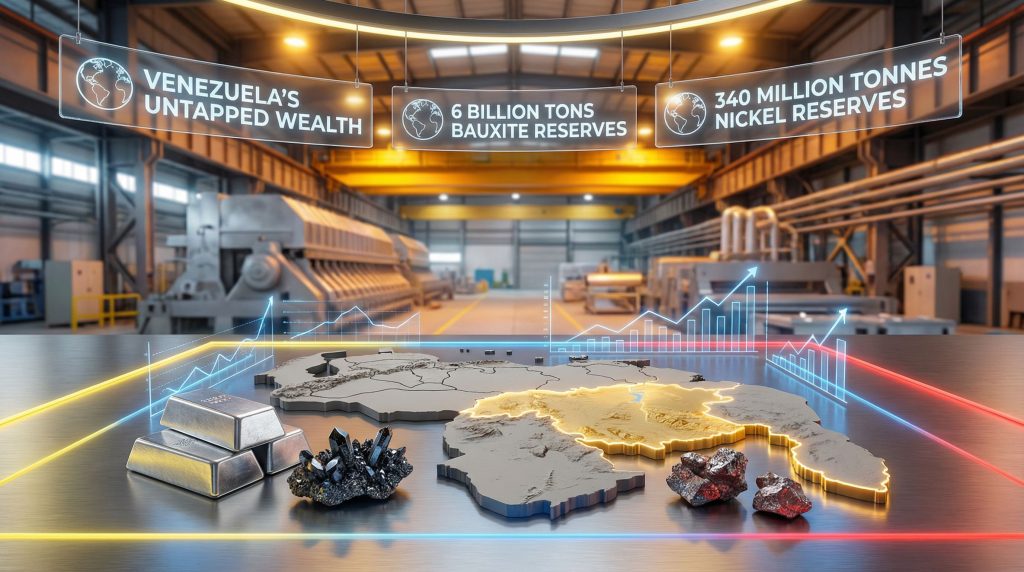
The country's bauxite reserves of approximately 6 billion tonnes represent one of the world's largest undeveloped aluminum feedstock concentrations. These deposits align with existing hydroelectric infrastructure in the Guayana region, creating potential for integrated aluminum value chains from raw material extraction through primary metal production. Furthermore, detailed bauxite project insights demonstrate how such developments can transform regional economies.
Nickel resources totaling an estimated 340 million tonnes remain largely unverified through modern geological assessment methods, but historical exploration suggests substantial laterite deposits associated with the country's shield geology. These formations typically contain cobalt and other battery metals as byproducts, potentially supporting multiple supply chain objectives simultaneously. The nickel importance uses in modern manufacturing make these deposits particularly valuable.
The rare earth and specialty metal inventory includes:
- Coltan deposits with approximately 300,000 metric tons of estimated resources
- Monazite concentrations in coastal sand formations containing thorium and rare earth elements
- Titanium-bearing mineral assemblages distributed throughout shield geology formations
- Iron ore reserves that historically supported domestic steel production
Historical Industrial Foundation vs. Current Capacity
Unlike frontier mining jurisdictions requiring complete infrastructure development, Venezuela maintains dormant industrial assets that previously operated at commercial scale. The Alcasa (Aluminum Company of the Orinoco) and Venalum (Venezuelan Aluminum Corporation) facilities represent existing capital stock worth billions in replacement value.
These state-owned smelting operations historically benefited from participation by major international partners including:
- Japanese industrial consortiums providing technology and market access
- Alcoa through equity stakes and technical cooperation agreements
- Glencore via offtake and marketing arrangements
- Pechiney (now part of ArcelorMittal) through joint venture structures
- Reynolds Metals (subsequently acquired by Alcoa) in processing partnerships
- Alusuisse (later integrated into Rio Tinto Alcan) through technology licensing
The hydroelectric generating capacity in Guayana region continues to provide theoretical power supply for energy-intensive aluminum smelting, though current operational status requires independent verification following years of maintenance deferrals and equipment deterioration.
Strategic Positioning Within Global Supply Chain Architecture
Geographic Proximity Creating Competitive Advantages
Venezuela's Caribbean coastline provides direct access to Atlantic shipping lanes serving major North American industrial centres. This positioning offers substantial logistics advantages compared to current mineral sourcing patterns. Moreover, the critical minerals strategy emphasises the importance of geographic diversification in supply chain resilience.
| Route Comparison | Distance (Nautical Miles) | Shipping Time | Cost Impact |
|---|---|---|---|
| Venezuela to Houston | 500-700 | 2-3 days | Baseline |
| Australia to US West Coast | 7,000-8,500 | 20-25 days | +300-700% |
| Indonesia to US Ports | 8,000-9,500 | 22-28 days | +400-800% |
| Guinea to US Atlantic | 3,500-4,500 | 12-15 days | +200-300% |
The transportation cost differentials translate to approximately $300,000-$700,000 savings per bulk carrier shipment when compared to Australian or Asian sources, based on current vessel operating costs of $20,000-$35,000 per day for mineral concentrate carriers.
Carbon footprint reduction becomes increasingly relevant as manufacturers pursue ESG commitments. Shipping emissions average 0.006-0.008 tons CO₂ per tonne of cargo per nautical mile, making Venezuelan sourcing approximately 45-50 tonnes CO₂ more efficient per 100-tonne shipment versus Australian alternatives.
Integration With North American Manufacturing Clusters
Venezuela's proximity aligns with concentrated industrial regions requiring steady mineral inputs. Additionally, energy transition minerals are becoming increasingly critical for these manufacturing centres:
Automotive Manufacturing Belt
- Michigan aluminum component production for vehicle lightweighting
- Ohio steel and aluminum parts manufacturing
- Texas electric vehicle manufacturing expansion requiring battery-grade nickel
- Distance advantage: 1,000-2,000 nautical miles shorter than Asian suppliers
Aerospace Manufacturing Centres
- Washington State Boeing operations requiring aluminum and rare earth components
- Arizona/California aerospace supplier networks demanding titanium and specialty alloys
- Distance advantage: 2,000-3,500 nautical miles reduction versus incumbent sources
Renewable Energy Component Production
- Texas wind turbine manufacturing requiring rare earth permanent magnets
- California solar panel production needing aluminum structural components
- Midwest wind energy installations demanding rare earth generator materials
Policy Framework Driving Strategic Mineral Development
U.S. Industrial Policy Integration
The Inflation Reduction Act signed August 16, 2022, established tax credits and supply chain incentives specifically targeting domestic and allied nation mineral sourcing. These provisions create economic advantages for Western Hemisphere suppliers that can meet eligibility requirements for:
- Electric vehicle battery component tax credits
- Clean energy manufacturing incentives
- Strategic mineral stockpile development funding
- Infrastructure investment prioritisation
Friend-shoring initiatives represent deliberate policy choices to prioritise political alignment over pure economic optimisation. The U.S. Department of State has articulated this approach as strategic economic policy designed to reduce dependency on potentially unreliable suppliers whilst strengthening partnerships with aligned nations. However, trade war market impact continues to influence these policy decisions.
Critical Mineral Supply Chain Vulnerabilities
Current supply chain concentration creates strategic exposure across multiple sectors. According to analysts at the Center for Strategic and International Studies, Venezuela's mineral wealth could play a pivotal role in addressing these vulnerabilities:
Rare Earth Processing: Approximately 60-70% of global rare earth element processing occurs in China, creating bottlenecks for permanent magnet production essential to wind turbines, electric vehicles, and defence applications.
Nickel Production: Indonesia controls approximately 35% of global nickel output, with laterite ore processing increasingly concentrated in Southeast Asian facilities serving primarily Chinese stainless steel and battery markets.
Aluminum Smelting: China accounts for approximately 57% of global primary aluminum production, creating vulnerability for industries requiring aluminum components from automotive to aerospace applications.
Development Requirements and Implementation Challenges
Infrastructure and Governance Prerequisites
Successful mineral sector development requires comprehensive institutional frameworks that provide investment security and operational predictability. The White House and private sector are closely examining Venezuelan critical minerals, highlighting the strategic importance of proper frameworks:
Legal and Regulatory Framework Development
- Transparent mining law establishing clear permitting processes
- Environmental protection standards meeting international requirements
- Property rights protection encouraging long-term capital commitments
- Taxation and royalty structures providing reasonable government revenues whilst maintaining project economics
Technical Infrastructure Requirements
- Modern geological survey completion and resource verification through international standards
- Transportation infrastructure connecting mining areas to export facilities
- Reliable electrical power generation and distribution systems
- Telecommunications and digital infrastructure supporting modern mining operations
What Are the Implementation Timeline and Investment Requirements?
Phase 1: Assessment and Planning (2-3 Years)
- Comprehensive geological surveys updating resource estimates using modern techniques
- Environmental baseline studies establishing current conditions
- Regulatory framework development and alignment with international standards
- Investment climate assessment and policy stability mechanisms
Phase 2: Infrastructure and Pilot Development (3-5 Years)
- Transportation and power infrastructure construction
- Pilot-scale extraction and processing operations proving commercial viability
- Workforce development and technology transfer programmes
- Environmental monitoring system establishment
Phase 3: Commercial Scale Operations (5-10 Years)
- Full-scale mining and processing facility construction
- Integration with global supply chains and customer development
- Community development programmes and long-term sustainability planning
- Export facility development and logistics optimisation
Market Impact Scenarios and Strategic Implications
Supply Chain Diversification Effects
Venezuelan mineral production operating at commercial scale could significantly alter global commodity market dynamics. Aluminum supply chain diversification would reduce Western reliance on Chinese smelting capacity whilst providing Atlantic basin aluminum sources for North American and European manufacturers.
Rare earth supply alternatives from Venezuelan deposits could support Western permanent magnet production, reducing dependency on Chinese processing facilities for wind turbine and electric vehicle applications. Furthermore, the Venezuela minerals strategic supply chain development could serve as a model for similar initiatives across Latin America.
Nickel laterite processing in Venezuela could serve battery manufacturing supply chains seeking Western Hemisphere sources, particularly as electric vehicle production expands across North America.
Regional Economic Integration Potential
Successful Venezuelan mineral development could catalyse broader Latin American commodity integration. Brazil's existing aluminum sector, Chile's lithium production, and Peru's copper mining could potentially integrate with Venezuelan raw materials through regional processing arrangements.
This integration model mirrors successful regional supply chains in Southeast Asia and could provide Western Hemisphere alternatives to Asian-dominated processing networks.
The next major ASX story will hit our subscribers first
Risk Assessment and Development Constraints
Political and Economic Stability Requirements
Mining investments typically require 15-30 year operational horizons with stable regulatory and economic conditions. Political transitions, currency instability, or policy reversals can render projects uneconomical regardless of geological potential or market demand.
Sanctions exposure remains a critical constraint, as international mining companies require clear legal frameworks allowing unrestricted operation, technology transfer, and financial transactions.
Technical and Geological Uncertainties
Many Venezuelan mineral resources remain unproven at commercial scale through modern feasibility studies. Historical exploration data requires updating using current geological techniques and economic parameters to establish realistic development scenarios.
Processing technology requirements for rare earth and specialty metals demand significant capital investment and technical expertise that may require international partnerships or technology licensing agreements.
Environmental and Social Governance Compliance
Modern mining operations must demonstrate compliance with increasingly stringent ESG standards to access international financing and marketing channels. Venezuelan projects would need to meet standards equivalent to established mining jurisdictions to attract responsible investment capital.
Community consultation and benefit-sharing requirements necessitate transparent engagement with local populations and indigenous communities, requiring institutional capacity that may need substantial development.
Long-Term Strategic Positioning Analysis
Venezuela's mineral endowment represents more than geological potential; it constitutes a strategic asset that could reshape Western Hemisphere commodity flows and reduce supply chain vulnerabilities that currently constrain industrial development.
The country's transformation from a petroleum-focused economy to a diversified mineral supplier would require unprecedented institutional development and international cooperation. However, the strategic value of Western Hemisphere critical mineral sources continues to increase as geopolitical tensions highlight supply chain concentration risks.
Investment timelines extending beyond current political cycles demand policy frameworks that transcend electoral transitions and provide long-term stability for capital-intensive development projects. Success would require sustained commitment from both Venezuelan institutions and international partners across multiple government administrations.
The intersection of geological endowment, geographic advantages, and strategic policy objectives creates conditions where Venezuelan mineral development could serve broader Western economic security interests whilst providing economic diversification opportunities for Venezuela itself. In this context, the Venezuela minerals strategic supply chain represents both opportunity and challenge for global supply security.
Note: This analysis includes estimates and projections that require verification through independent geological surveys and feasibility studies. Investment decisions should be based on comprehensive due diligence and professional geological assessment. Political and economic conditions continue to evolve and may significantly impact development timelines and project viability.
Looking to Capitalise on Critical Mineral Supply Chain Opportunities?
Discovery Alert's proprietary Discovery IQ model delivers instant notifications on significant ASX mineral discoveries, helping investors identify opportunities in critical minerals before broader market awareness develops. With supply chain diversification driving unprecedented demand for alternative mineral sources, explore historic returns from major discoveries and begin your 30-day free trial today to position yourself ahead of emerging market trends.