
July 30, 2026
The Structural Paradox at the Heart of African Resource Economies
Across the African continent, a recurring pattern has defined the relationship between mineral wealth and domestic prosperity for generations. Nations sitting atop some of the world's most significant geological endowments have watched the financial rewards of extraction flow predominantly outward, leaving behind infrastructure, employment, and environmental obligations while the compounding returns accumulate elsewhere. Namibia presents one of the most instructive versions of this paradox, and the debate around support for Namibian-owned mining firms offers a window into both the scale of the challenge and the growing sophistication of local responses to it.
When big ASX news breaks, our subscribers know first
The Ownership Gap: A Quantitative Portrait of Namibia's Mining Sector
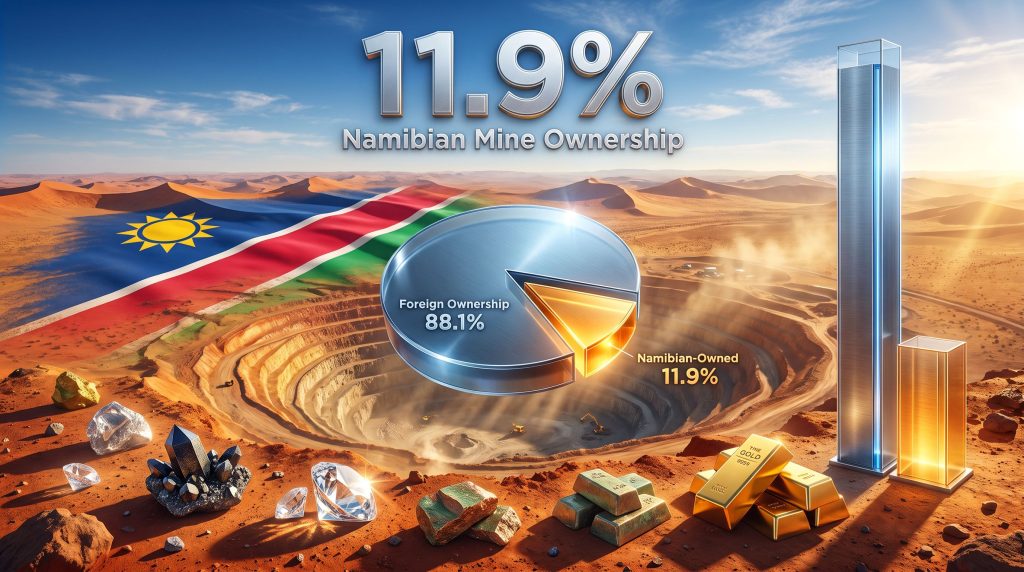
Understanding the push for greater support for Namibian-owned mining firms requires first confronting the numbers that frame the problem. Estimates indicate that approximately 88.1% of combined mine ownership in Namibia remains in foreign hands, with locally owned entities accounting for just 11.9% of the sector. For a country consistently ranked among Africa's premier mining geopolitics destinations, producing uranium, diamonds, zinc, copper, gold, and increasingly critical minerals including lithium, this concentration represents a structural economic tension rather than a temporary imbalance.
The implications extend well beyond ownership statistics. When operational decision-making, profit repatriation, and capital allocation are controlled predominantly by offshore entities, the domestic multiplier effect of mineral extraction is significantly compressed. Revenue cycles that could finance local procurement chains, fund geological training institutions, or capitalise Namibian-owned exploration ventures instead exit the economy through dividend flows, management fees, and intra-company financing arrangements.
What makes this particularly significant is that Namibia's geological endowment is not a legacy asset nearing exhaustion. The country's prospective lithium, rare earth, and uranium geology positions it as a long-term supplier within global critical minerals trade supply chains, meaning the stakes attached to the current ownership structure will only increase as demand for these materials accelerates.
What the Ownership Imbalance Actually Costs
The economic cost of persistent foreign dominance operates across several dimensions simultaneously:
- Profit leakage: Dividends and management fees remitted offshore reduce the net fiscal contribution of mining activity to Namibia's national accounts
- Skills transfer constraints: When senior technical and operational roles are filled by expatriate professionals rather than developed domestically, the long-term human capital pipeline for Namibian-led ventures is stunted
- Supplier ecosystem underdevelopment: Large international operators frequently default to established international supply chains, bypassing the opportunity to develop domestic service providers
- Exploration knowledge asymmetry: Proprietary geological datasets accumulated by foreign operators over decades represent a form of informational capital that rarely transfers meaningfully to Namibian entities
Current Policy Architecture: What Exists and What Remains Aspirational
The 15% Ownership Condition and Its Limitations
Since 1 April 2021, a mandatory 15% Namibian ownership threshold has applied to certain mining licence transfers and new licence applications under Ministry-level regulatory measures. This represented a meaningful policy signal, but its selective application across licence categories has limited its systemic reach. Against an 88.1% foreign ownership baseline, a 15% floor functions more as an entry-level compliance requirement than a transformative equity instrument.
The threshold also reveals a deeper structural issue: ownership requirements without accompanying financing mechanisms produce nominal rather than substantive local participation. A Namibian entity holding a 15% stake it cannot afford to finance proportionally will find that stake diluted, bought out, or rendered economically marginal over time.
The 51% Proposal: Reform in Waiting
Policy consultations have explored the potential introduction of a 51% local ownership requirement for new mining ventures. As of mid-2026, this remains under review rather than enacted legislation, with no confirmed implementation timeline or defined scope. The distinction between a policy under consultation and an enforceable regulatory requirement is critical for any party planning capital commitments in the Namibian mining sector.
The experience of comparable jurisdictions offers important context here. Zimbabwe's aggressive indigenisation legislation, which mandated majority local ownership without transition frameworks or financing support, generated significant investor uncertainty and demonstrated that abrupt ownership mandates can produce capital flight and operational disruption rather than genuine empowerment.
Reserved Licence Categories: A Protected Entry Point
Mining claims, a specific licence category within Namibia's regulatory framework, are legally reserved for Namibian citizens or wholly citizen-owned entities. This reservation creates a protected channel for small-scale and artisanal operators, offering an important entry point into the formal mining economy. However, this protection does not extend to large-scale commercial mining licences, where the ownership imbalance is most pronounced.
The bifurcation between protected small-scale categories and open large-scale categories reflects a recurring tension in Namibian mining policy between attracting foreign investment and building domestic capacity simultaneously.
Financial and Technical Support Mechanisms: The Minerals Development Fund
The Minerals Development Fund provides government-backed financial support, including concessional loans and technical assistance, for viable small-scale mining projects operated by Namibian citizens. In principle, this represents exactly the kind of blended support mechanism that local operators need. In practice, the Fund's capitalisation relative to actual project costs, combined with bureaucratic access barriers, has limited its impact for operators seeking to scale beyond artisanal or small-scale activity.
For exploration-stage companies specifically, the challenge is acute. Exploration drilling, geophysical surveys, resource estimation, and environmental baseline studies collectively represent capital outlays that frequently exceed what the Fund is structured to support. Furthermore, international lenders and development finance institutions typically apply risk frameworks calibrated for established operators, creating a structural financing disadvantage for emerging Namibian-owned firms that cannot demonstrate the track record or collateral base these frameworks require.
"The capital gap facing Namibian-owned exploration companies is not simply a function of firm size. It reflects a systematic mismatch between the risk appetite of available financing instruments and the risk profile inherent to early-stage exploration. Blended finance models, combining development bank concessional capital with commercial co-investment, represent an underutilised solution that has demonstrated success in comparable jurisdictions."
Benchmarking Against Regional Ownership Models
Namibia's policy debate does not exist in isolation. Across Africa, several jurisdictions have grappled with the same fundamental tension between attracting foreign mining investment and building domestic ownership capacity. Indeed, trends in African mining finance highlight how this challenge is reshaping investment strategies continent-wide.
| Country | Ownership Model | Key Mechanism | Outcome |
|---|---|---|---|
| Botswana | Government equity co-ownership | 50/50 joint venture (Debswana with De Beers) | Value capture without excluding foreign capital |
| Zimbabwe | Mandatory majority indigenisation | 51% local ownership law (enacted) | Investor uncertainty, capital withdrawal in some sectors |
| Tanzania | Phased local content progression | Employment, procurement, and equity requirements | Balanced approach with maintained investor confidence |
| Namibia | Conditional threshold | 15% ownership condition (post-April 2021) | Limited systemic impact against 88.1% foreign baseline |
The Botswana model is particularly instructive because it demonstrates how state co-ownership can generate direct revenue capture and strategic influence without creating the adversarial dynamic that pure indigenisation mandates often produce. Botswana's diamond revenues, channelled through the Debswana structure, have funded sovereign wealth accumulation and public investment in ways that comparable Namibian mineral revenues have not replicated domestically.
Tanzania's approach offers a different lesson: incremental, verifiable local content requirements across procurement, employment, and equity, implemented with clear timelines and compliance mechanisms, can progressively shift ownership composition without triggering the investor uncertainty associated with sudden legislative change.
"The most effective local ownership models across Africa share three structural features: phased implementation with defined milestones, robust compliance verification rather than aspirational policy language, and complementary capacity-building programmes that prepare local firms to absorb ownership stakes in operationally meaningful ways rather than as passive equity holders."
The Core Barriers Facing Namibian-Owned Mining Firms
A Multi-Dimensional Constraint Framework
The challenges confronting locally owned mining and exploration companies in Namibia do not operate independently. They form a compounding constraint system where weakness in one area amplifies difficulties in others.
| Barrier | Current Status | Potential Policy Response |
|---|---|---|
| Access to project finance | High constraint; limited domestic capital markets | Blended finance, expanded DFI partnerships |
| Technical expertise gap | Moderate; reliance on imported specialist skills | Technical incubation, university-industry partnerships |
| Policy inconsistency | High; mixed signals on ownership thresholds | Published ownership roadmap with defined milestones |
| Procurement enforcement | Weak; variable compliance across operators | Contract auditing frameworks, penalty structures |
| Reserved licence scope | Narrow; limited to small-scale mining claims | Expand reservation to mid-tier licence categories |
The technical capacity constraint deserves particular attention because it is less visible than the financing gap but equally consequential. Exploration-stage companies require specialised geologists, metallurgists, environmental scientists, and mining engineers. Building these teams independently is prohibitively expensive for early-stage Namibian firms. The absence of a robust domestic technical services ecosystem means that even when capital is available, the human capital required to deploy it effectively often must be sourced internationally, eroding cost competitiveness from the outset.
The next major ASX story will hit our subscribers first
NALOBA's Role and the Namibia Mining Expo 2026
The Namibia Local Businesses Association (NALOBA) has positioned itself as the primary institutional voice for locally owned mining and exploration companies within the national policy conversation. NALOBA's advocacy framework rests on three interconnected arguments: that deliberate government policy reform is necessary, that structured local-international partnership frameworks must be developed, and that financial and technical support for Namibian operators must be materially expanded.
Ahead of the Namibia Mining Expo 2026, scheduled for Windhoek from 4 to 6 August 2026, NALOBA has elevated the ownership gap as a central industry issue. NALOBA Vice President Peter Amadhila has argued publicly that Namibia's mineral wealth should be generating locally led success stories, not merely attracting international capital. Amadhila's position is that Namibian entrepreneurs already possess the skills and determination to discover and develop world-class mineral deposits, but face structural obstacles in financing, technical support, and policy clarity that prevent this potential from being realised.
Critically, NALOBA's platform explicitly challenges the perceived trade-off between local empowerment and investment attraction, arguing that a stronger domestic ecosystem enhances rather than undermines Namibia's competitiveness as a mining destination. Evidence from comparable jurisdictions supports this position: well-designed local content frameworks reduce political risk perceptions among international investors, potentially increasing rather than constraining foreign capital inflows. Consequently, junior exploration investment stands to benefit significantly from a more structured and transparent local ownership environment.
A Five-Pillar Architecture for Meaningful Reform
Building genuine support for Namibian-owned mining firms requires moving beyond aspirational policy statements toward a structured, funded, and time-bound intervention framework:
- Ownership Progression Roadmap – A published schedule for incrementally increasing Namibian ownership thresholds across licence categories, with clearly defined investor transition provisions to maintain capital certainty
- Dedicated Project Finance Facility – A capitalised fund specifically structured for Namibian-owned exploration and development companies, offering concessional terms alongside mandatory technical assistance components
- Mandatory Joint Venture Facilitation Programme – A structured mechanism connecting Namibian entrepreneurs with international operators seeking local partners, reducing the transaction costs and information asymmetries that currently prevent partnership formation
- Procurement Compliance Architecture – Strengthened verification, reporting, and enforcement mechanisms for local procurement obligations across all operating mines, moving from self-reported compliance toward independently audited outcomes
- Technical Capacity Development Initiative – A nationally coordinated programme combining university partnerships, government-funded geological and metallurgical training, and structured mentorship from established operators
Implementation Horizon and Expected Impact
| Initiative | Timeline | Expected Impact |
|---|---|---|
| Procurement compliance enforcement | 0-12 months | Immediate increase in local supplier revenue |
| Dedicated project finance facility | 12-24 months | Expanded Namibian-led exploration activity |
| Joint venture facilitation programme | 12-36 months | New locally partnered project pipelines |
| Ownership progression roadmap | 24-60 months | Structural shift in sector ownership composition |
| Technical capacity development | 36-120 months | Long-term domestic human capital base |
The Opportunity Cost of Continued Inaction
Namibia's mineral endowment, spanning uranium, diamonds, copper, zinc, lithium, and gold, positions the country as a long-term cornerstone of global resource supply chains. The global acceleration in critical minerals demand, driven by energy transition requirements, creates a rare window during which the terms of Namibia's participation in these supply chains can be actively shaped rather than passively inherited.
Every year that the 88.1% foreign ownership concentration persists represents foregone domestic wealth accumulation, deferred skills development, and missed opportunities to build the institutional infrastructure needed for Namibian-led mining ventures at scale. The convergence of advocacy momentum through NALOBA, the visibility platform provided by the Namibia Mining Expo 2026, and the favourable global environment for critical minerals investment creates conditions for transformative action that may not recur with the same alignment.
The question confronting Namibian policymakers, industry associations, and international investors is no longer whether support for Namibian-owned mining firms should be strengthened, but whether the political and institutional will exists to build the policy architecture required to make that support effective, enforceable, and durable. For those seeking further context on the regulatory environment, the Chamber of Mines Namibia provides ongoing industry guidance and policy updates relevant to both local and international operators.
Disclaimer: This article contains forward-looking statements and policy analysis based on information available as of mid-2026. Ownership statistics, policy timelines, and regulatory frameworks are subject to change. This content is intended for informational purposes only and does not constitute investment, legal, or financial advice. Readers should conduct independent due diligence before making decisions based on the information presented.
Want to Track the Next Major Mineral Discovery Before the Broader Market Does?
Discovery Alert's proprietary Discovery IQ model scans ASX announcements in real time, transforming complex mineral data into actionable insights across more than 30 commodities — explore historic discoveries and the returns they generated, then begin your 14-day free trial at Discovery Alert to position yourself ahead of the market.