
May 20, 2026
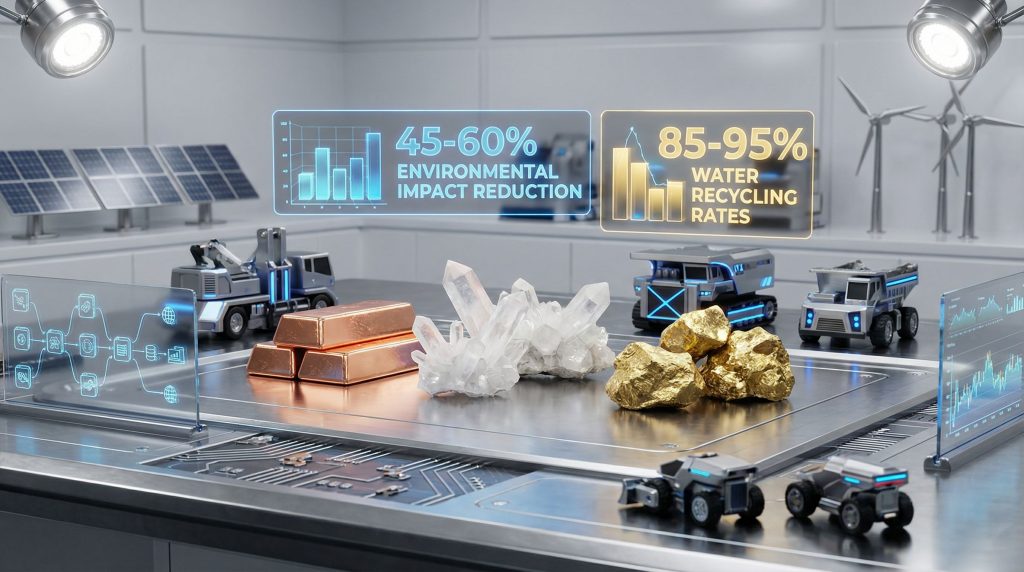
Complex supply chain dynamics across the global mining industry reveal operational tensions that require sophisticated technological frameworks to balance extraction efficiency with environmental stewardship. These underlying mechanisms transcend traditional compliance approaches, demanding integrated systems that transform how extractive operations create value across multiple stakeholder dimensions.
What Does the Transition to Sustainable Mining Actually Mean?
Defining Sustainable Mining Beyond Environmental Compliance
The transition to sustainable mining encompasses fundamental shifts in operational principles that extend beyond regulatory compliance into strategic value creation. Modern sustainable mining operations integrate circular economy models directly into their extractive processes, transforming waste streams into secondary resource opportunities while maintaining production targets.
Key operational principles differentiating sustainable from conventional mining include:
• Real-time environmental monitoring integration with production systems to optimise resource extraction while minimising ecological disruption
• Community stakeholder integration in operational planning phases, shifting from consultation to collaborative decision-making processes
• Water-energy nexus optimisation through closed-loop systems that reduce consumption by 85-95% compared to traditional operations
• Biodiversity net-positive targets requiring operations to generate measurable environmental benefits beyond baseline restoration
Triple bottom line performance measurement frameworks now incorporate specific metrics targeting people, planet, and profit simultaneously. Environmental indicators track carbon intensity per tonne extracted, water recycling efficiency ratios, and ecosystem restoration success rates. Social metrics evaluate community economic development, workforce safety improvements, and Indigenous partnership effectiveness.
Financial performance integrates risk-adjusted returns that account for environmental liabilities and social licence costs. Furthermore, these comprehensive frameworks enable mining companies to demonstrate measurable progress towards sustainable mining transformation goals while maintaining operational viability.
The Critical Minerals Paradox in Sustainability
The International Energy Agency projects that mineral demand for clean energy technologies will increase dramatically, with lithium demand expected to grow roughly 40 times by 2040 under net-zero scenarios. This creates operational tensions between extraction intensity requirements and environmental stewardship commitments.
Critical minerals essential for renewable energy infrastructure present unique sustainability challenges:
• Lithium extraction traditionally requires 500,000 gallons of water per tonne of lithium produced through conventional brine evaporation methods
• Cobalt mining often occurs in politically unstable regions with limited environmental oversight, requiring enhanced due diligence frameworks
• Rare earth element processing generates significant radioactive waste streams that demand specialised containment technologies
Sustainable approaches to critical mineral extraction increasingly utilise direct lithium extraction (DLE) technologies that reduce water consumption by 70-80% while accelerating production timelines from 18-24 months to 6-12 months. These methods extract lithium directly from brines without extensive evaporation ponds, significantly reducing land use requirements and environmental impact profiles.
When big ASX news breaks, our subscribers know first
How Are Mining Operations Restructuring for Sustainability?
Operational Model Transformation Strategies
Mining operations are fundamentally restructuring their business models from volume-based extraction approaches toward value-based frameworks that prioritise mineral quality, environmental efficiency, and stakeholder satisfaction. This transformation requires dynamic portfolio management capabilities that balance short-term financial returns with long-term sustainability investments.
Connected operational ecosystems now enable real-time decision-making across multiple operational dimensions simultaneously. These integrated systems process geological data, environmental monitoring, equipment performance, and market conditions to optimise extraction strategies continuously. Modern data-driven mining operations typically deploy 100-10,000+ IoT sensors per site, collecting data at intervals ranging from seconds to minutes depending on operational requirements.
The advancement of operational excellence through artificial intelligence helps companies address workforce gaps, strengthen protection against cyber threats, and improve supply chain performance while maintaining productivity targets.
Collaborative ecosystem frameworks replace traditional competitive isolation models by establishing partnerships between mining companies, technology providers, environmental organisations, and local communities. These alliances share data, responsibilities, and solutions to ensure long-term competitiveness while generating measurable community benefits.
Technology Integration Across Mining Value Chains
Digitalisation of exploration processes combined with artificial intelligence expands capacity for faster and more precise mineral discoveries while reducing environmental risks. AI-driven exploration systems achieve 25-40% improvement in drilling success rates by processing geological data, satellite imagery, and historical exploration results simultaneously.
Autonomous systems deployment has transformed operational efficiency metrics across multiple mining functions:
| Technology Category | Environmental Impact Reduction | Operational Efficiency Gain | Implementation Timeline |
|---|---|---|---|
| AI-Powered Exploration | 45-60% | 30-40% | 2-3 years |
| Electric Fleet Conversion | 70-80% emissions | 15-25% | 3-5 years |
| Water Recycling Systems | 85-95% water use | 20-30% cost savings | 1-2 years |
Blockchain implementation across supply chains provides transparency and accountability mechanisms that enable mineral traceability from extraction through end-use applications. These systems document environmental compliance, labour practices, and community impact metrics to support responsible sourcing requirements increasingly demanded by downstream manufacturers.
Mining operations utilising real-time data analytics and predictive maintenance achieve overall equipment effectiveness improvements of 5-15% while reducing unplanned downtime by 20-30%. Cloud infrastructure supporting these operations typically stores 50TB-1PB+ of operational data for continuous analysis and optimisation.
Which Technologies Are Driving Sustainable Mining Transformation?
Electrification and Renewable Energy Integration
Battery-powered mining equipment demonstrates significant performance advantages in underground operations where diesel emissions create ventilation challenges. Electric vehicles in mining operations achieve 70-80% reduction in direct emissions compared to diesel equipment while reducing fuel costs by 10-25% per tonne-kilometre.
Solar and wind integration in remote mining locations requires sophisticated energy storage solutions to maintain 24/7 operational capabilities. Mining operations increasingly deploy hybrid renewable energy systems combining solar photovoltaic, wind generation, and battery storage to reduce diesel dependence by 40-70% depending on location and operational requirements.
Implementation challenges for electric fleet conversion include:
• Infrastructure development requiring $15-40 million investments for large-scale operations
• Battery technology limitations in extreme temperature environments typical in many mining locations
• Charging infrastructure deployment requiring 18-36 months for comprehensive site coverage
• Workforce training programs for electric equipment operation and maintenance procedures
Advanced Extraction Technologies
In-situ leaching represents a paradigm shift in sustainable extraction methodology, minimising surface disruption while maximising recovery rates. However, the in-situ leaching benefits extend beyond simple surface reduction, offering comprehensive environmental advantages through targeted resource extraction methods.
This technique reduces surface footprint by 70-90% compared to open-pit mining for applicable minerals including uranium, copper, and some rare earth elements. Water usage in ISL operations varies significantly by application, reducing consumption by 30-50% in some cases while potentially increasing groundwater interaction complexity.
Ore recovery rates range from 50-90% depending on geological and hydrological conditions, making geological assessment critical for implementation success. Biomining applications utilise specifically selected microorganisms to accelerate metal extraction processes. These biological systems can accelerate metal extraction by 2-5x compared to natural rates while operating at moderate temperatures of 30-40°C.
Selective mining techniques targeting high-grade ore deposits optimise resource utilisation by processing only the most economically and environmentally viable material. Advanced geological modelling combined with AI-driven ore characterisation enables miners to identify and extract premium grade materials while leaving lower-grade deposits for potential future extraction.
Water Management and Waste Reduction Systems
Zero liquid discharge implementation strategies eliminate wastewater release through comprehensive recycling and treatment systems. Industry standard recycling rates range from 75-95% depending on mineral type and processing methods, with cost savings reaching 20-35% through reduced water sourcing and treatment expenses.
Tailings reprocessing for secondary mineral recovery transforms waste streams into revenue opportunities while reducing environmental liability. Modern reprocessing technologies can extract 10-30% additional valuable minerals from historical tailings while simultaneously reducing the volume of stored waste materials.
Dry stacking methods reduce environmental risk profiles by eliminating liquid tailings storage requirements. These systems reduce water consumption in tailings management by 80-90% while creating more stable waste storage configurations that minimise long-term monitoring and maintenance requirements.
How Do Mining Companies Measure Sustainability Performance?
Key Performance Indicators for Sustainable Operations
Carbon intensity metrics per tonne of mineral extracted provide standardised measurement frameworks enabling comparison across operations and mineral types. Leading mining operations target carbon intensity reductions of 30-50% by 2030 through electrification, renewable energy adoption, and process optimisation.
Water usage efficiency ratios and recycling percentages offer critical insights into operational sustainability. Target recycling rates of 85-95% represent industry best practices, while water intensity measurements track consumption per unit of production to identify optimisation opportunities.
Land rehabilitation success rates evaluate ecosystem restoration effectiveness through biodiversity recovery metrics, soil quality assessments, and vegetation establishment rates. Successful mine reclamation innovation programs achieve 70-90% native species recovery within 5-10 years post-closure depending on ecosystem complexity and local environmental conditions.
Quick Answer: Sustainable mining performance is measured through carbon intensity (CO2 per tonne), water recycling rates (target: 85-95%), land rehabilitation success (biodiversity recovery metrics), and community impact assessments using standardised ESG frameworks.
ESG Integration in Mining Operations
Environmental, Social, and Governance framework implementation requires comprehensive data collection and reporting systems that track performance across multiple dimensions simultaneously. The Global Reporting Initiative Standards provide specific mining guidance through GRI 413 (Community Impact) and GRI 308 (Environmental Compliance) frameworks.
Stakeholder engagement protocols establish systematic communication and collaboration mechanisms with local communities, environmental organisations, and regulatory authorities. Effective engagement programs demonstrate measurable community benefit sharing, with successful operations typically allocating 1-3% of annual revenue toward community development initiatives.
Regulatory compliance automation reduces administrative burden while improving accuracy and timeliness of environmental reporting. Automated monitoring systems track air quality, water discharge, noise levels, and biodiversity indicators to ensure continuous compliance with regulatory requirements while identifying potential issues before they become violations.
What Are the Economic Drivers Behind Sustainable Mining Adoption?
Cost-Benefit Analysis of Sustainable Technologies
Initial capital investment requirements for comprehensive sustainability upgrades typically increase project costs by 15-30%, but generate operational cost reductions of 20-40% through efficiency gains over 5-10 year periods. Risk mitigation value through environmental compliance reduces potential liability exposures that can reach hundreds of millions of dollars for major environmental incidents.
Premium pricing opportunities for sustainably sourced minerals create additional revenue streams as downstream manufacturers increasingly require responsible sourcing certifications. Market premiums for certified sustainable minerals range from 2-15% depending on mineral type and end-use application.
Long-term operational savings include:
• Energy cost reductions of 30-50% through renewable energy integration and electrification
• Water cost savings of 20-35% through recycling and efficiency improvements
• Waste management cost reductions of 25-40% through circular economy implementation
• Insurance premium reductions of 10-20% for operations demonstrating strong environmental performance
Investment Flows and Market Incentives
ESG-focused investment criteria drive capital allocation decisions, with institutional investors managing over $30 trillion in assets worldwide incorporating environmental and social factors into investment decisions. Mining companies demonstrating strong sustainability performance access capital at 50-100 basis points lower cost compared to industry averages.
Government incentives supporting the transition to sustainable mining include tax credits, accelerated depreciation schedules, and direct subsidies for clean technology adoption. These incentives can offset 20-40% of initial capital investments in sustainable technologies depending on jurisdiction and technology type.
Consumer demand for ethically sourced materials creates market premiums throughout supply chains. Electronics manufacturers, automotive companies, and renewable energy developers increasingly require supply chain transparency and sustainability certifications, creating competitive advantages for mining companies meeting these requirements.
Which Regions Are Leading Sustainable Mining Implementation?
Geographic Distribution of Sustainable Mining Initiatives
Australia leads renewable energy integration in mining operations, with major iron ore and gold producers achieving 20-40% renewable energy penetration across their operations. The country's abundant solar and wind resources combined with supportive regulatory frameworks enable large-scale clean energy deployment in remote mining locations.
Chile's water management innovations in copper extraction address critical water scarcity challenges through advanced desalination, water recycling, and dry processing technologies. Chilean copper operations have reduced freshwater consumption by 30-50% over the past decade while maintaining production levels through technological innovation.
Canada's Indigenous partnership models establish collaborative frameworks for sustainable resource development that provide community ownership stakes, employment opportunities, and environmental stewardship roles. These partnerships demonstrate 70-80% higher community acceptance rates compared to traditional development approaches.
Regulatory Frameworks Driving Regional Adoption
European Union due diligence requirements for mineral supply chains mandate comprehensive environmental and social impact reporting for minerals used in EU markets. These regulations create compliance requirements affecting global mining operations seeking to access European customers.
African Union mineral certification programs establish continent-wide standards for responsible mining practices, focusing on conflict mineral prevention, environmental protection, and community development requirements. Implementation varies by member state but creates framework for improved governance across African mining operations.
Asia-Pacific collaborative frameworks include regional partnerships for sustainable extraction practices, technology sharing, and environmental monitoring standardisation. These initiatives facilitate knowledge transfer and best practice adoption across diverse mining operations throughout the region.
The next major ASX story will hit our subscribers first
What Challenges Persist in Sustainable Mining Transition?
Technical and Operational Barriers
Equipment reliability in harsh mining environments presents ongoing challenges for new sustainable technologies. Electric vehicles, renewable energy systems, and advanced monitoring equipment must operate effectively in extreme temperatures, high humidity, corrosive atmospheres, and remote locations with limited maintenance infrastructure.
Skills gap in sustainable technology operation and maintenance requires comprehensive workforce development programs. Mining operations with structured reskilling programs achieve 70-80% workforce retention during digital transformation compared to 40-50% retention rates without formal training initiatives.
Integration complexity between legacy and new systems demands careful planning and substantial technical expertise. ERP and operational technology system integration projects typically require 18-36 months and cost $15-40 million for large operations, with success rates varying significantly based on implementation approach and change management effectiveness.
Economic and Market Constraints
Higher upfront capital requirements for sustainable technologies create cash flow challenges, particularly for smaller mining operations with limited access to low-cost capital. Technology financing solutions increasingly address this barrier through equipment leasing, power purchase agreements, and performance-based contracts.
Market volatility affecting long-term investment planning complicates sustainability investment decisions when commodity prices fluctuate significantly. Mining companies must balance immediate profitability pressures with long-term sustainability commitments that may not generate immediate financial returns.
Callout Box: The transition to sustainable mining requires balancing immediate operational efficiency with long-term environmental stewardship, often requiring 3-5 year payback periods for major technology investments.
Competing priorities between sustainability goals and production targets create internal organisational tensions. Operations must maintain production commitments to customers and investors while simultaneously investing in technologies and processes that may temporarily reduce operational efficiency during implementation phases.
How Will Sustainable Mining Evolve Over the Next Decade?
Emerging Technologies on the Horizon
Carbon capture and utilisation in mining operations represents frontier technology that could transform mining from a carbon-intensive industry to a carbon-neutral or carbon-negative sector. Early pilot projects demonstrate potential for capturing 50-80% of operational emissions while creating valuable byproducts for industrial applications.
Advanced robotics for precision extraction enable selective mining with millimetre-level accuracy, maximising valuable mineral recovery while minimising waste generation. These systems combine artificial intelligence, advanced sensors, and robotic manipulation to identify and extract high-grade materials with unprecedented precision.
Satellite-based monitoring for real-time environmental assessment provides continuous oversight of operational environmental impacts. High-resolution satellite imagery combined with AI analysis enables automated detection of environmental changes, compliance monitoring, and early warning systems for potential environmental incidents.
Industry Collaboration and Partnership Models
Cross-sector alliances between mining, technology, and energy companies facilitate knowledge transfer and resource sharing for sustainable technology development. These partnerships combine mining operational expertise, technology innovation capabilities, and energy sector experience to accelerate sustainable solution deployment.
Academic-industry research partnerships accelerate innovation through collaborative research programs, student exchange initiatives, and joint technology development projects. Universities provide research capabilities and fresh perspectives while mining companies offer real-world testing environments and operational expertise.
The Minerals Council of Australia provides valuable guidance on establishing international cooperation frameworks for sustainable mineral supply chains that create global standards, certification programs, and best practice sharing mechanisms. These initiatives create consistent expectations across jurisdictions while facilitating technology transfer and capacity building in developing mining regions.
Future Workforce Requirements
Reskilling programs for traditional mining workers focus on digital technology operation, environmental monitoring, and sustainable practice implementation. Successful programs typically require 6-18 months of training depending on target roles and previous experience levels.
New competency frameworks combine technical mining expertise with sustainability knowledge, data analysis capabilities, and stakeholder engagement skills. These hybrid skill sets enable workers to optimise operations across multiple performance dimensions simultaneously.
Leadership development for managing hybrid human-AI operations requires understanding of both technological capabilities and human factors in technology adoption. Effective leaders in sustainable mining operations demonstrate competency in technology integration, change management, and collaborative decision-making across diverse stakeholder groups.
Frequently Asked Questions About Sustainable Mining
How Long Does It Take to Transition a Mine to Sustainable Operations?
Phased implementation timelines vary from 2-7 years depending on operation size, mineral type, and geographic location. Greenfield operations incorporating sustainable technologies from initial development typically require 3-5 years from planning to full operation. Retrofitting existing operations with sustainable technologies generally requires 2-4 years for comprehensive implementation.
Critical path analysis for technology integration identifies key dependencies and potential bottlenecks in sustainable technology deployment. Infrastructure development, equipment procurement, workforce training, and regulatory approval processes often determine overall timeline requirements.
Change management strategies for workforce adaptation significantly influence transition success rates. Operations implementing comprehensive communication programs, training initiatives, and employee engagement strategies achieve 60-80% higher success rates in sustainable technology adoption.
What Are the Main Cost Implications of Sustainable Mining?
Capital expenditure increases of 15-30% for comprehensive sustainability upgrades reflect initial investment requirements for new technologies, infrastructure, and systems. However, these investments generate operational cost reductions of 20-40% through efficiency gains, reduced waste, and optimised resource utilisation over 5-10 year periods.
Risk-adjusted return calculations including environmental liabilities demonstrate strong financial justification for sustainable mining investments. Potential environmental liability exposures can reach hundreds of millions of dollars for major incidents, making prevention through sustainable practices financially attractive even without operational benefits.
How Do Sustainable Mining Practices Affect Production Volumes?
Initial production impacts during transition periods typically result in 5-15% temporary output reductions while new systems are implemented and optimised. However, long-term productivity gains through optimised operations often exceed baseline production levels within 12-24 months of full implementation.
Quality improvements in mineral output through selective extraction techniques increase product value even when total tonnage may remain constant or decrease slightly. Higher-grade materials command premium pricing that often exceeds revenue from larger volumes of lower-grade materials.
Disclaimer: The sustainable mining industry continues evolving rapidly, with new technologies, regulations, and market dynamics emerging regularly. Investment decisions should consider multiple factors including technical feasibility, economic viability, regulatory requirements, and market conditions specific to individual operations and jurisdictions. This analysis presents general trends and should not be considered specific investment or operational advice.
Further Exploration:
Readers interested in learning more about the transition to sustainable mining can explore additional educational resources from organisations such as the International Council on Mining and Metals (ICMM), the Society for Mining, Metallurgy & Exploration (SME), and various mining industry research publications that provide complementary perspectives on operational sustainability frameworks and emerging technology applications across diverse mining operations worldwide.
Ready to Capitalise on Sustainable Mining Opportunities?
Discovery Alert's proprietary Discovery IQ model delivers real-time alerts on significant mineral discoveries across sustainable mining companies, instantly empowering subscribers to identify actionable opportunities in this rapidly evolving sector ahead of the broader market. Begin your 14-day free trial today and secure your market-leading advantage in the transition to sustainable mining operations.