June 9, 2026
Mining operations worldwide face mounting pressure to reduce their environmental footprint while maintaining operational efficiency. Sustainable water management in mining represents one of the most critical challenges facing the sector, as declining ore grades demand increased processing volumes while climate change intensifies regional water scarcity. Traditional mining practices consume vast quantities of freshwater, creating operational risks and community tensions in water-stressed regions.
Understanding Water Cycles in Mining Operations
Water management in mining operations requires sophisticated understanding of complex hydrological systems that extend far beyond simple consumption calculations. Modern mining facilities process between 500 to 4,000 cubic metres of water per ton of ore, depending on commodity type and processing requirements. This intensive water usage creates intricate networks of water flows that mining engineers must carefully balance to optimise both operational efficiency and environmental compliance.
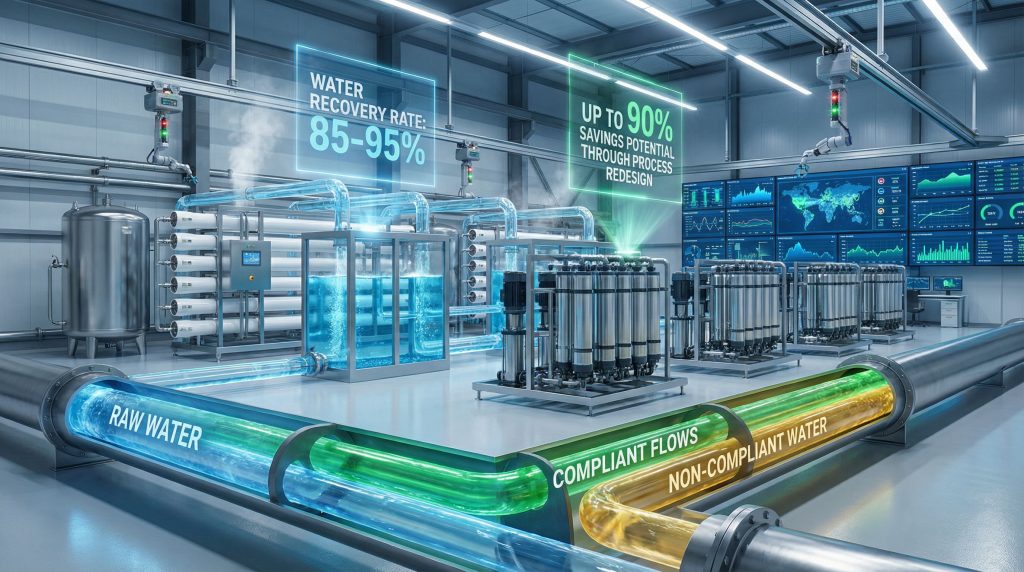
The three-tier water classification system forms the foundation of effective mining water management. Raw water represents untreated source inputs including seawater, groundwater, and surface runoff collected from operational areas. Compliant water meets established discharge standards or internal reuse specifications, enabling direct recycling into processing circuits.
Non-compliant flows require treatment intervention before safe discharge or operational reuse becomes possible. Water consumption patterns vary dramatically across different mining phases, with beneficiation operations typically consuming 40-60% of total site water demand through crushing, grinding, and flotation processes.
Dust suppression activities account for an additional 5-15% of consumption, while cooling systems and ancillary operations utilise the remaining volumes. These patterns create opportunities for targeted efficiency improvements that can significantly reduce overall freshwater requirements whilst supporting industry innovation trends.
Environmental and economic drivers for sustainable water management continue intensifying as mining companies face stricter regulatory requirements and growing social pressure from local communities. Climate change impacts, including prolonged droughts and extreme weather events, add operational uncertainty that makes water security essential for long-term mining viability.
When big ASX news breaks, our subscribers know first
Core Components of Water Stewardship Programs
Successful water stewardship programs integrate multiple technological and operational strategies to minimise freshwater consumption while maintaining production targets. These comprehensive approaches typically achieve water recycling rates between 70-95% through coordinated implementation of treatment technologies, process optimisation, and closed-loop system design.
Freshwater reduction targets established by major mining operators range from 30% to complete elimination by 2030-2050, depending on operational context and regional water availability. These ambitious goals require substantial capital investment in treatment infrastructure and process redesign, but typically provide 3-5 year payback periods through reduced water purchasing costs and discharge fees.
Key components of effective stewardship programs include:
• Baseline water auditing to identify high-consumption processes and optimisation opportunities
• Technology integration strategies that maximise treatment efficiency while minimising energy requirements
• Stakeholder engagement protocols ensuring community water security and social licence maintenance
• Regulatory compliance frameworks that exceed minimum standards and anticipate future requirements
Recent technological advances demonstrate the potential for transformative improvements in mining water management. Cetos Water, winner of Wheaton Precious Metals' $1 million Future of Mining Challenge in 2026, developed innovative approaches that transform complex wastewater from operational liability into resilient resource.
Their low-energy, solvent-based technology enables more efficient water reuse while supporting discharge compliance and reducing tailings liabilities across diverse operational environments. These developments support broader data-driven operations that optimise resource efficiency.
Water-Intensive Process Optimisation
Beneficiation operations present the greatest opportunities for water consumption reduction through targeted process improvements and alternative technology implementation. Traditional crushing and grinding circuits consume massive water volumes for slurry transport and temperature control, while flotation systems require precise water chemistry management that often prevents direct recycling without treatment intervention.
Advanced process optimisation strategies focus on two primary pathways: reducing water volumes required per unit of ore processed and substituting alternative fluids or dry processing methods where technically feasible. Modern thickening technologies can reduce tailings slurry water content from traditional 30% solids to 40-60% solids concentration.
This dramatically decreases water volumes reporting to storage facilities. Dust suppression alternatives offer significant water conservation potential through:
• Misting systems that reduce water volumes by 40-60% compared to traditional spray methods
• Foam-based suppression providing extended effectiveness with minimal water input
• Chemical tackifiers that bind dust particles while eliminating continuous water application
• Enclosed conveyor systems preventing dust generation and eliminating suppression water requirements
Tailings management innovations represent another critical optimisation opportunity. Paste tailings technology achieves 65-75% solids content, while dry stacking methods eliminate slurry water entirely through mechanical dewatering. These approaches require additional equipment investment but provide substantial water recovery and reduced environmental liability.
| Beneficiation Stage | Traditional Water Use | Optimised Consumption | Reduction Potential |
|---|---|---|---|
| Crushing & Grinding | 1,200-2,000 m³/day | 600-1,000 m³/day | 40-50% |
| Flotation Circuits | 800-1,500 m³/day | 400-750 m³/day | 45-55% |
| Dust Suppression | 200-400 m³/day | 80-150 m³/day | 60-65% |
| Tailings Processing | 1,000-1,800 m³/day | 300-600 m³/day | 65-75% |
Alternative Water Sourcing Strategies
Mining operations in water-scarce regions increasingly implement alternative sourcing strategies to reduce dependence on declining freshwater resources. Seawater desalination provides unlimited water supply for coastal operations but introduces energy intensity and brine disposal challenges that require careful economic and environmental evaluation.
Chilean copper and lithium operations demonstrate successful large-scale desalination implementation, with facilities typically producing 1,000-2,500 cubic metres per day through reverse osmosis systems. These installations require 3-8 kWh per cubic metre of energy input but eliminate freshwater competition with agricultural and municipal users in arid regions.
Groundwater protection through dry processing methods offers another strategic approach, particularly for operations overlying sensitive aquifer systems. Non-explosive extraction techniques preserve groundwater quality while reducing overall water consumption through:
• Dense medium separation using non-aqueous fluids for ore beneficiation
• Magnetic beneficiation eliminating water requirements for iron ore processing
• Gravity separation utilising air classification instead of water-based methods
• Dry grinding technologies reducing slurry water requirements in comminution circuits
Regional sourcing diversification approaches enable operational resilience against supply disruptions while reducing pressure on individual water sources. Mining companies increasingly negotiate water supply agreements across multiple sources including recycled municipal wastewater, agricultural return flows, and industrial process water.
These initiatives often align with direct lithium extraction technologies that minimise water consumption whilst maintaining production efficiency. Brackish groundwater utilisation presents opportunities in regions with limited freshwater but abundant saline aquifers.
Treatment costs for brackish water remain substantially lower than seawater desalination while providing reliable supply independent of surface water variability and allocation restrictions.
Advanced Water Treatment and Recycling Technologies
What Treatment Options Provide Maximum Water Recovery?
Modern mining operations deploy sophisticated treatment technologies that enable high-efficiency water recycling while meeting stringent discharge standards. Technology selection depends on feedwater quality characteristics, desired effluent specifications, energy availability constraints, and capital investment parameters that vary significantly across operational contexts.
Reverse osmosis systems provide industry-leading performance with 85-95% water recovery rates and excellent dissolved solids removal. These systems operate at 200-600 psi pressure depending on feedwater salinity and achieve 95-99% rejection rates for dissolved contaminants.
However, reverse osmosis generates concentrated brine streams requiring careful disposal management and consumes 4-6 kWh per cubic metre of treated water. Mechanical treatment approaches offer lower energy alternatives with reduced operational complexity:
• Filtration systems achieve 70-85% recovery through microfiltration and ultrafiltration processes
• Thickening technologies provide 60-75% water separation at minimal energy input
• Centrifugation delivers 80-90% recovery with moderate energy requirements but higher maintenance demands
| Technology | Recovery Rate | Energy (kWh/m³) | Capital Cost | Maintenance |
|---|---|---|---|---|
| Reverse Osmosis | 85-95% | 4-6 | High | Moderate |
| Ultrafiltration | 75-85% | 1-2 | Moderate | Low |
| Thickening | 60-75% | 0.2-0.5 | Low | Low |
| Centrifugation | 80-90% | 2-4 | High | High |
Digital water management platforms integrate sensor networks and predictive analytics to optimise treatment performance and minimise operational costs. Real-time monitoring enables proactive maintenance scheduling while water balance modelling supports operational planning and regulatory compliance documentation.
Emerging biotechnology applications show promise for specialised treatment challenges including acid mine drainage remediation and heavy metals removal. These biological treatment systems operate at lower energy intensity than conventional chemical methods whilst producing valuable byproducts.
Furthermore, these technologies align with broader sustainable mining strategies that emphasise environmental stewardship. According to research published in Science Direct, "Advanced treatment technologies can achieve up to 98% water recovery whilst reducing operational costs by 30-40% over traditional methods."
Closed-Loop System Implementation
How Can Mining Operations Achieve Complete Water Self-Sufficiency?
Closed-loop systems represent the ultimate goal of sustainable water management in mining operations, eliminating freshwater input requirements while maintaining full operational capacity. Successful implementation requires comprehensive water balance modelling that accounts for all water sources, consumption points, and treatment capacity requirements.
System design principles focus on three critical elements:
• Flow rate matching between water generation and consumption to minimise storage requirements
• Quality specification management ensuring treated water meets process tolerance limits
• Treatment capacity dimensioning for peak demand periods and emergency situations
Water balance optimisation involves detailed quantification of all water flows including tailings water recovery, pit dewatering capture, treatment system discharge, and rainfall collection. Advanced operations achieve self-sufficiency targets through strategic integration of multiple water sources and staged treatment approaches.
Operational benefits of closed-loop implementation include:
• Cost elimination for freshwater purchasing and discharge licensing fees
• Regulatory compliance advantages through reduced environmental impact
• Supply security independence from external water allocation restrictions
• Community relations improvement through reduced freshwater competition
Technical challenges in closed-loop maintenance include water quality degradation through repeated cycling, chemical concentration buildup requiring periodic purging, and seasonal water balance variations. These variations may require temporary freshwater supplementation during extreme conditions.
Seepage collection and treatment integration provides crucial water recovery opportunities. Pit walls, waste rock facilities, and tailings storage areas generate seepage flows captured through sump pump systems, French drains, and wellpoint dewatering networks. These flows often require treatment for metals removal or pH adjustment before operational reuse.
Consequently, sustainable water management in mining becomes achievable through comprehensive closed-loop design that maximises recovery whilst maintaining operational flexibility for varying conditions.
The next major ASX story will hit our subscribers first
Tailings Innovations and Water Conservation
Tailings management represents both the greatest water consumption challenge and the largest conservation opportunity in mining operations. Traditional slurry disposal methods require massive water volumes while creating long-term environmental liabilities through seepage and potential facility failure risks.
Dry stacking and paste disposal methods eliminate conventional tailings water requirements through mechanical dewatering technologies. High-rate thickeners increase slurry density to 45-65% solids, while filter presses can achieve 80-85% solids content suitable for mechanical stacking.
These approaches reduce water consumption by 60-80% compared to traditional tailings ponds. Advanced dewatering technologies include:
• Vacuum filtration achieving rapid water removal with minimal energy input
• Pressure filtration providing maximum dewatering efficiency for challenging slurries
• Centrifuge dewatering enabling continuous operation with high throughput capacity
• Thermal drying for complete water elimination in specialised applications
Seepage minimisation techniques reduce water losses from tailings facilities through engineered liner systems, underdrainage collection networks, and geochemical stabilisation methods. These interventions typically reduce seepage rates by 70-90% compared to unlined facilities.
Tailings water recovery systems capture process water for direct recycling into beneficiation circuits. Modern operations achieve 85-95% water recovery from tailings streams through staged settlement, clarification, and treatment processes that remove suspended solids and adjust water chemistry.
Land footprint optimisation through dry tailings disposal provides additional environmental benefits including reduced dam failure risks, accelerated site rehabilitation, and improved stakeholder acceptance. Capital investment requirements increase by 15-25% for dry disposal systems.
However, operational water cost savings and reduced environmental liability often provide attractive economic returns. These innovations complement waste management innovations that transform operational byproducts into valuable resources.
Digital Technology and Water Management Optimisation
Digital technology integration transforms traditional reactive water management approaches into predictive, automated systems that optimise efficiency while minimising operational risks. Advanced sensor networks provide real-time monitoring of water quality parameters, flow rates, and treatment system performance across entire mining operations.
Predictive modelling and scenario planning capabilities enable mining companies to evaluate climate variability impacts, assess flood risk reduction strategies, and optimise long-term water availability forecasting. These analytical tools support strategic planning while improving stakeholder engagement through transparent data sharing.
Key digital technology applications include:
• IoT sensor networks monitoring water quality, pressure, and flow in real-time
• Machine learning algorithms optimising treatment system performance and maintenance scheduling
• Digital twin modelling enabling scenario testing and operational optimisation
• Blockchain technology ensuring transparent water usage reporting and compliance documentation
Water balance modelling software integrates meteorological data, operational schedules, and treatment capacity constraints to optimise water allocation decisions. These systems can predict water surplus or deficit conditions weeks in advance, enabling proactive management responses.
Leak detection and prevention protocols utilise acoustic monitoring, pressure analysis, and thermal imaging to identify infrastructure failures before significant water losses occur. Early detection systems typically reduce water losses by 40-60% compared to manual inspection approaches.
Evaporation measurement and control technologies provide precise monitoring of water losses from exposed surfaces including tailings ponds, process water storage, and pit dewatering sumps. Automated covering systems and evaporation suppression treatments can reduce losses by 30-70% depending on climatic conditions.
In addition, these digital solutions support comprehensive water stewardship that enhances both operational efficiency and environmental compliance through continuous monitoring and optimisation.
Implementation Challenges and Regional Constraints
Water management implementation faces significant regional and environmental constraints that require site-specific solutions and adaptive management approaches. Arid mining regions including Chile's Atacama Desert and southwestern United States present extreme water scarcity challenges that demand innovative sourcing and conservation strategies.
Declining ore grades intensify water management challenges by requiring increased processing volumes per unit of metal production. Lower grade ores typically require 25-40% more water per ton of finished product, creating additional pressure on already constrained water resources.
Regional constraint factors include:
• Water allocation restrictions limiting mining access to freshwater resources
• Climate change impacts increasing operational uncertainty and extreme weather frequency
• Competing water demands from agriculture, municipalities, and other industrial users
• Infrastructure limitations constraining water transport and treatment facility development
Regulatory and social considerations create additional implementation complexity through stricter environmental compliance requirements and community engagement obligations. Mining companies must demonstrate water stewardship commitments that exceed minimum regulatory standards.
Tailings storage facility risks represent ongoing liabilities that influence water management strategies and stakeholder acceptance. Recent facility failures globally have intensified regulatory scrutiny and public concern, driving adoption of dry disposal methods and advanced monitoring technologies.
Cross-sector water competition intensifies in regions experiencing population growth and agricultural expansion. Mining operations must compete for limited water allocations while demonstrating superior economic efficiency and environmental stewardship compared to alternative water users.
According to industry experts at Hatch, "Water stewardship requires comprehensive basin-level planning that recognises the interconnected nature of water resources and stakeholder needs."
How Do Mining Companies Navigate Regulatory Complexity?
Regulatory frameworks vary significantly between jurisdictions, creating compliance challenges for multinational mining operations. Companies must adapt water management strategies to meet diverse environmental standards, reporting requirements, and stakeholder engagement protocols across different operational locations.
Successful Water Stewardship Implementation
Leading mining operations implement comprehensive water stewardship strategies through basin-wide collaboration approaches that recognise water as a shared regional resource requiring coordinated management. These multi-stakeholder governance models engage agricultural producers, municipal authorities, environmental organisations, and community representatives in collaborative planning processes.
Implementation success factors include:
| Factor | Impact Level | Timeline | Resource Requirements |
|---|---|---|---|
| Technology Integration | High | 2-3 years | High |
| Stakeholder Engagement | High | 1-2 years | Moderate |
| Regulatory Compliance | Critical | 6-12 months | High |
| Community Partnerships | Moderate | 2-4 years | Moderate |
Successful operations achieve water recycling rates exceeding 90% through integrated treatment approaches that combine mechanical, chemical, and biological processes. These comprehensive systems require initial capital investments ranging from $10-50 million but generate operational savings of 30-60% on water costs.
Agricultural sector partnership development creates mutual benefits through shared infrastructure investment and coordinated water resource management. Mining companies provide treated water for agricultural irrigation while farmers contribute seasonal water storage capacity and expertise in drought management strategies.
Community resilience building initiatives extend beyond immediate operational requirements to support long-term regional water security. Mining companies invest in water infrastructure improvements, groundwater monitoring systems, and emergency supply capabilities that benefit broader community needs.
Performance measurement and reporting protocols demonstrate accountability through transparent documentation of water consumption reductions, treatment system efficiency, and stakeholder engagement outcomes. Leading companies publish detailed water stewardship reports that exceed regulatory requirements whilst setting industry benchmarks.
However, sustainable water management in mining requires ongoing commitment to innovation, stakeholder engagement, and adaptive management approaches that respond to changing environmental and social conditions.
Future Technology and Industry Transformation
Emerging technologies promise revolutionary improvements in mining water management efficiency and environmental performance. Advanced sensor integration enables molecular-level water quality monitoring while artificial intelligence optimises treatment system performance in real-time based on operational conditions and environmental parameters.
Biotechnology applications show exceptional promise for specialised treatment challenges including acid mine drainage remediation, heavy metals recovery, and organic compound destruction. Engineered biological systems operate at lower energy intensity than conventional chemical treatments whilst producing valuable byproducts.
Future innovation directions include:
• Nanotechnology filtration providing ultra-high efficiency contaminant removal
• Solar-powered treatment systems reducing energy costs and carbon emissions
• Atmospheric water generation creating freshwater from ambient humidity
• Molecular recycling enabling 99%+ water recovery through advanced separation technologies
Water-positive mining operations represent the ultimate sustainability goal, where mining activities generate more clean water than they consume through innovative treatment and atmospheric capture technologies. Early implementations suggest this ambitious target may become technically feasible within 10-15 years.
Circular economy integration strategies connect mining water management with broader industrial ecosystems, creating symbiotic relationships where mining wastewater becomes input for agricultural irrigation, municipal supply, or industrial cooling applications. These integrated approaches maximise resource efficiency whilst distributing infrastructure costs.
Climate resilience building approaches recognise that future mining operations must withstand increasing weather variability and extreme event frequency. Adaptive water management systems incorporate redundant treatment capacity, diversified sourcing options, and emergency response protocols that maintain operational continuity.
Technology cost reduction trajectories suggest that advanced treatment systems will become economically accessible for smaller mining operations within the next decade. Modular treatment technologies and shared infrastructure models enable resource pooling that reduces individual operational investment requirements.
For instance, sustainable water management in mining will increasingly rely on integrated technology platforms that combine multiple treatment approaches whilst optimising performance through artificial intelligence and predictive analytics. These developments will transform water from operational liability into competitive advantage for forward-thinking mining companies.
Note: This analysis is based on current industry trends and technological developments. Mining companies should conduct detailed feasibility studies and consult with water management specialists before implementing specific technologies or strategies. Water management performance varies significantly based on local conditions, ore characteristics, and regulatory requirements. Financial projections and performance estimates should be verified through site-specific analysis and pilot testing before full-scale implementation.
Ready to Invest in the Next Major Mineral Discovery?
Discovery Alert instantly alerts investors to significant ASX mineral discoveries using its proprietary Discovery IQ model, turning complex mineral data into actionable insights. Understand why historic discoveries can generate substantial returns by visiting Discovery Alert's dedicated discoveries page, showcasing historic examples of exceptional outcomes, and begin your 14-day free trial today to position yourself ahead of the market.