
August 4, 2026
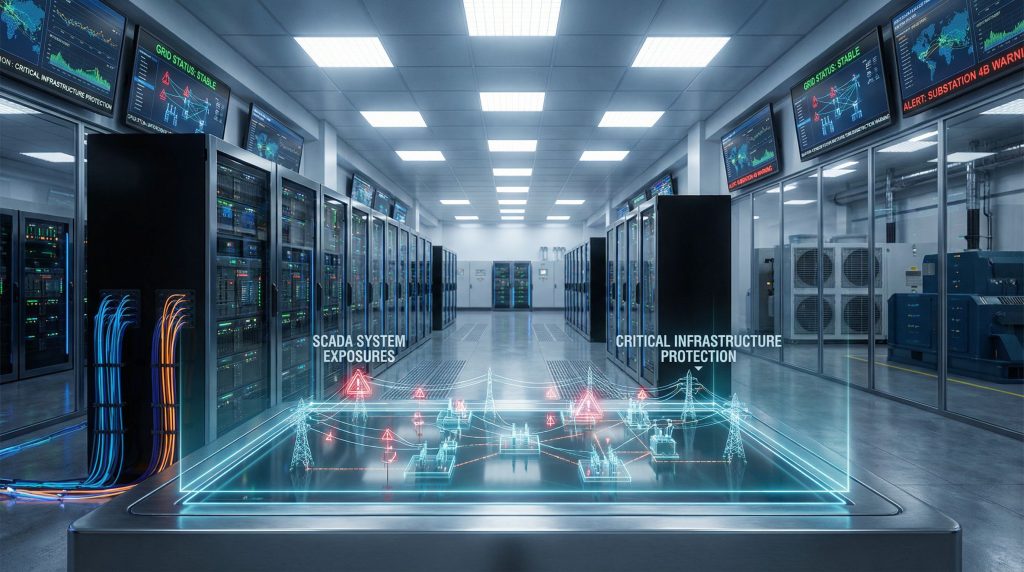
Understanding Systemic Weaknesses in Modern Power Infrastructure
Electrical power systems worldwide face unprecedented pressures from technological evolution, climate adaptation, and security challenges that strain infrastructure designed decades ago. These interconnected networks, originally engineered for predictable demand patterns and centralised generation, now must accommodate rapidly changing consumption profiles whilst maintaining reliability standards that modern society demands. Furthermore, electricity grid vulnerabilities have become increasingly complex as these systems integrate emerging technologies and face evolving threats.
Network Complexity and Attack Surface Expansion
Contemporary electrical grids operate through vast interconnected systems that create exponential vulnerability growth. According to the North American Electric Reliability Corporation (NERC) 2024 Annual Report, the bulk power system comprises over 180,000 miles of transmission lines serving more than 370 million people across the continent. The U.S. electrical grid includes approximately 6.5 million miles of distribution lines connecting to over 145 million consumer endpoints, as documented by the U.S. Energy Information Administration.
Digital Integration Challenges:
- Legacy Protocol Vulnerabilities: SCADA systems managing 40-60% of utility infrastructure were designed in the 1970s-1990s without internet connectivity assumptions
- Control System Gaps: Industrial control components typically run proprietary operating systems with patch cycles exceeding 180 days for critical vulnerabilities
- Smart Device Proliferation: Each additional connected IoT device increases attack surface exponentially rather than linearly
Research from the IEEE conducted by Bahrami et al. demonstrates that SCADA systems prioritise operational continuity over security by architectural design, creating fundamental vulnerabilities when retrofitted with remote monitoring capabilities. These systems utilise protocols developed before internet standardisation, including Modbus (created 1979), DNP3 (created 1990), and Profibus (created 1989), which employ minimal encryption and optional authentication.
Physical Infrastructure Exposure Points
Modern grid operations depend on geographically distributed assets that present multiple attack vectors for malicious actors targeting critical infrastructure. Moreover, these vulnerabilities intersect with broader concerns about critical minerals & energy security, particularly as supply chains become increasingly complex.
Critical Infrastructure Metrics:
- Substation Vulnerability: NERC documentation indicates 35-40% of bulk power system substations operate without perimeter fencing or electronic surveillance
- Transmission Exposure: High-voltage corridors span vast distances with limited surveillance coverage across remote terrain
- Transformer Replacement: Critical equipment replacement timelines often exceed 12 months when damaged or destroyed
The 2015-2016 Ukraine blackouts demonstrate coordinated ICS compromise methodologies where attackers used spear-phishing to obtain employee credentials, leveraged VPN access to reach SCADA networks, and deployed BlackEnergy malware variants designed to interact with industrial control protocols, causing controlled blackouts affecting approximately 1.4 million and 700,000 customers respectively.
When big ASX news breaks, our subscribers know first
Advanced Persistent Threat Methodologies Against Power Systems
Nation-state actors and sophisticated criminal organisations employ increasingly complex attack strategies targeting electricity grid vulnerabilities through multiple vectors that exploit both technical weaknesses and human factors. Additionally, geopolitical trade tensions further complicate the security landscape by affecting supply chains and international cooperation.
Attribution and Operational Patterns
Intelligence analysis reveals distinct operational methodologies among major threat actor categories, with Russian-affiliated groups focusing on persistent access establishment whilst Chinese actors pursue supply chain infiltration strategies.
| Threat Actor Category | Primary Tactics | Documented Incidents | Average Dwell Time |
|---|---|---|---|
| Russian State Groups | Malware deployment, credential harvesting | Ukraine 2015/2016 blackouts | 18-45 days |
| Chinese APT Organisations | Supply chain infiltration, long-term persistence | Multiple utility reconnaissance campaigns | 205+ days |
| Iranian Affiliated Groups | Destructive payloads, rapid deployment | Water treatment facility attacks | Compressed timelines |
According to Mandiant's 2024 Threat Intelligence Report, Russian-affiliated APT groups have conducted reconnaissance against critical U.S. electricity infrastructure in every year from 2015-2024, with activity levels increasing 34% year-over-year in 2023. The FBI's Cyber Division documents that spear-phishing represents the initial compromise vector in 68% of confirmed advanced persistent threat incidents against utilities.
Social Engineering and Credential Exploitation
Modern attack campaigns targeting utilities employ sophisticated social engineering that references sector-specific terminology and regulatory requirements. CISA's 2024 analysis reveals that 37% of current attacks incorporate legitimate utility industry documents, references to specific colleagues harvested from professional networks, and timing coordinated with regulatory deadlines.
Spear-Phishing Campaign Evolution:
- Legitimate regulatory document incorporation (NERC compliance forms, FERC filings)
- Organisation-specific personnel targeting through social media reconnaissance
- Industry event timing coordination for credibility enhancement
- Vendor communication spoofing using established business relationships
The 2023 Scattered Spider campaign successfully compromised at least 3 major North American utilities by targeting help desk personnel with convincing phishing emails, using obtained credentials to access internal systems, and establishing persistence through legitimate administrative accounts before detection disrupted operations.
Distributed Energy Resource Integration Security Gaps
The rapid expansion of distributed generation creates unprecedented challenges for electricity grid vulnerabilities management as traditional centralised security models prove inadequate for managing millions of interconnected endpoints. These challenges are particularly evident as Europe's CRM supply becomes increasingly important for manufacturing the components essential to modern grid infrastructure.
Market Growth and Deployment Scale
Distributed energy resources experienced explosive growth with capacity increasing 28% in 2023 alone, reaching 312 GW of installed capacity by year-end according to the U.S. Energy Information Administration. The Solar Energy Industries Association documents 5.8 million residential and commercial solar installations as of Q4 2023, with battery storage adoption rising from 3% to 19% of new solar installations year-over-year.
Smart Inverter Vulnerability Landscape:
- Deployment Scale: An estimated 25+ million smart inverters deployed or planned across North American distribution systems by 2025
- Default Credential Issues: SANS Institute research documents 60-70% of deployed smart inverters ship with manufacturer default passwords
- Firmware Update Delays: Security patches for critical vulnerabilities average 120-180 days from discovery to deployment
Research from NREL scientists demonstrates that simultaneous disconnection of 30-40% of distributed solar installations in a geographic region via malicious control commands could create frequency deviations triggering protective relay operations and cascade into broader system instability.
Communication Protocol Vulnerabilities
Smart inverters communicate using IEEE 1815 (DNP3), IEC 61850, and increasingly through HTTPS connections to aggregation servers. However, many deployments use unencrypted HTTP connections or employ weak SSL/TLS implementations, creating interception opportunities for network-positioned attackers. According to research on power grid vulnerabilities, these communication gaps represent critical security weaknesses.
Inverter-Based Resource Control Risks:
- Unlike synchronous generation, inverter-based resources provide no natural grid inertia
- High penetrations require rapid, coordinated control response for system stability
- Compromised inverter controls can manipulate voltage and frequency triggering cascading failures
- Cloud-based aggregation platforms represent centralised attack targets affecting thousands of endpoints
The Hawaiian Electric Company's experience integrating rooftop solar (now 35% of peak capacity) revealed that coordinated disconnection events during high-penetration periods created measurable frequency deviations, demonstrating technical feasibility of malicious coordination attacks against distributed resources.
Physical Infrastructure Threats and Systemic Vulnerabilities
Beyond cyber threats, physical attacks against electricity grid vulnerabilities present severe risks to system stability through coordinated strikes against critical infrastructure chokepoints and natural disaster exploitation. Consequently, Australia's electricity grid security has become a focus area for comprehensive protection strategies.
Electromagnetic Pulse and High-Impact Scenarios
The Congressional Research Service 2023 report documents that a high-altitude nuclear detonation over the continental U.S. could potentially damage transformers and control systems across a region spanning 1,000+ miles, affecting 100+ million people through electromagnetic pulse effects on electronic infrastructure.
Critical Infrastructure Chokepoints:
- Major transmission substations serving metropolitan areas with millions of consumers
- Natural gas pipeline compressor stations supporting peaker plant operations
- Cooling water intake structures for nuclear and thermal generation facilities
- Fuel supply terminals enabling backup generation system operations
Weather-Related Infrastructure Stress Amplification
Climate change intensifies extreme weather patterns that challenge grid resilience through multiple simultaneous stressors affecting geographically distributed infrastructure assets.
Climate-Enhanced Threat Vectors:
- Ice Storm Loading: Transmission line failures from accumulated ice exceeding design parameters
- Hurricane Destruction: Widespread distribution system damage requiring extended restoration periods
- Wildfire Corridors: Transmission infrastructure exposure in high-risk vegetation areas
- Heat Wave Stress: Transformer overloading during peak cooling demand periods
Recent analysis shows that coordinated physical attacks during extreme weather events could amplify damage potential exponentially, as restoration resources become stretched across multiple simultaneous emergency responses whilst equipment replacement supply chains face disruption.
Detection and Response Capabilities for Grid Security
Utility operators deploy multilayered monitoring systems to identify suspicious activities and coordinate responses across interconnected networks, but detection capabilities vary significantly based on organisational resources and regulatory requirements.
Monitoring and Analysis Infrastructure
Modern utilities implement comprehensive anomaly detection systems analysing network traffic patterns, power flow monitoring for unauthorised system changes, equipment health tracking for potential sabotage indicators, and personnel access logging for insider threat detection.
| Response Phase | Duration Window | Primary Actions | Success Metrics |
|---|---|---|---|
| Initial Detection | 0-15 minutes | Automated alert generation, assessment | Time to first human review |
| Threat Containment | 15-60 minutes | System isolation, neutralisation | Propagation limitation |
| Service Recovery | 1-24 hours | Restoration procedures, damage assessment | Customer impact minimisation |
| Forensic Investigation | Days-Weeks | Analysis, lessons learned integration | Prevention capability enhancement |
Threat Intelligence Integration Benefits:
- Real-time threat indicators from government agencies providing actionable intelligence
- Industry-specific vulnerability disclosures enabling proactive defence measures
- Attack pattern analysis from security researchers identifying emerging techniques
- Coordinated response protocols for widespread incidents affecting multiple operators
Regulatory Framework Evolution
The North American Electric Reliability Corporation's Critical Infrastructure Protection standards establish mandatory cybersecurity requirements addressing supply chain security, incident reporting procedures, personnel clearance requirements, and system recovery protocols. Furthermore, the importance of a comprehensive defence critical materials strategy has become increasingly evident in protecting grid infrastructure.
Federal Oversight Mechanisms:
- Department of Energy: Grid modernisation research funding, public-private partnership facilitation
- Department of Homeland Security: Critical infrastructure protection, threat intelligence sharing coordination
- FERC Oversight: Regulatory compliance enforcement, reliability standard development
- CISA Coordination: Vulnerability assessment support, incident response assistance during major events
Investment Strategies for Grid Hardening and Resilience Enhancement
Utilities allocate increasing resources toward cybersecurity and physical security improvements, but investment priorities vary based on threat assessment results and regulatory compliance requirements.
Technology Modernisation and Defence Implementation
Network segmentation strategies implement defence-in-depth approaches limiting attack propagation through air-gapped control networks, encrypted communication channels between substations, multi-factor authentication systems, and regular security assessments with penetration testing validation.
| Investment Category | Budget Allocation Range | Primary Focus Areas | ROI Measurement |
|---|---|---|---|
| Technology Solutions | 40-50% | Monitoring tools, security software | Threat detection improvement |
| Personnel Training | 20-30% | Staff education, certification programmes | Incident response capability |
| Infrastructure Hardening | 15-25% | Physical security, system upgrades | Asset protection enhancement |
| Compliance and Auditing | 10-15% | Regulatory requirements, assessments | Standard adherence verification |
Physical Security Enhancement Priorities:
- Perimeter intrusion detection systems at critical facilities with automated threat recognition
- Video surveillance networks using artificial intelligence for anomaly identification
- Access control systems incorporating biometric verification and behavioural analysis
- Backup power systems ensuring security equipment operation during grid disturbances
Gartner's 2024 Infrastructure Security Report estimates that systems with 10,000 networked endpoints face approximately 50x greater compromise risk than systems with 1,000 endpoints due to cascading failure propagation potential across interconnected networks.
The next major ASX story will hit our subscribers first
Microgrid Technology and Resilience Architecture
Microgrid deployments provide backup power capabilities reducing dependence on centralised generation during emergency scenarios, supporting critical facilities including hospitals, emergency services, and military installations through localised energy networks.
Security Architecture and Integration Challenges
Microgrids offer simplified attack surfaces compared to bulk power systems whilst enabling local control capabilities that reduce remote access vulnerabilities and provide faster restoration following security incidents.
Microgrid Security Advantages:
- Reduced complexity compared to interconnected bulk power systems
- Local control authority minimising remote access attack vectors
- Accelerated recovery procedures following cybersecurity incidents
- Isolation capabilities preventing cascading failures during grid disturbances
Integration challenges include compatibility with existing utility protection schemes, coordination protocols for seamless transitions between grid-connected and islanded operations, and cybersecurity standards alignment across diverse technology platforms and vendor systems.
Geopolitical Conflict Impacts on Vulnerability Assessment
International tensions increasingly influence grid security priorities as nation-state actors target civilian infrastructure demonstrating how power systems become strategic assets affecting economic stability and public safety during conflicts.
Supply Chain Security and Strategic Dependencies
Geopolitical considerations affect component sourcing decisions, software development dependencies, maintenance support arrangements, and technology transfer policies impacting modernisation efforts across the electricity sector. In addition, battery recycling innovations become crucial as nations seek to reduce dependencies on potentially unreliable supply chains.
Supply Chain Risk Factors:
- Component Sourcing: Equipment procurement from potentially adversarial nations creating backdoor vulnerabilities
- Software Dependencies: Control system reliance on foreign-developed platforms with unknown security implications
- Maintenance Vulnerabilities: Remote support access requirements for critical equipment creating exploitation opportunities
- Technology Transfer: Export restrictions affecting cybersecurity improvement implementation and international cooperation
Recent conflicts demonstrate power system targeting strategies that civilian infrastructure attacks can achieve strategic objectives through economic disruption without direct military confrontation, making electricity grid vulnerabilities increasingly important in national security planning and international relations.
Emerging Technologies and Future Security Transformation
Artificial intelligence and blockchain technologies present opportunities for revolutionary improvements in grid security whilst introducing new vulnerability categories requiring specialised expertise and regulatory frameworks.
Artificial Intelligence Security Applications
Machine learning algorithms enhance threat detection capabilities through network traffic pattern analysis for anomaly identification, predictive equipment failure modelling, automated incident response procedures, and security resource allocation optimisation based on dynamic risk assessment.
AI-Enhanced Security Capabilities:
- Pattern Recognition: Advanced algorithms detecting subtle attack indicators missed by traditional monitoring
- Predictive Analysis: Equipment failure prediction before vulnerabilities create security risks
- Response Automation: Rapid threat neutralisation without human intervention delays
- Resource Optimisation: Dynamic security investment allocation based on real-time risk calculations
Blockchain Integration Potential for Infrastructure Security
Distributed ledger technologies could improve grid security through tamper-evident transaction logging for critical operations, decentralised identity management reducing single points of failure, smart contract automation for security protocol enforcement, and supply chain verification ensuring component authenticity.
However, blockchain implementation faces challenges including energy consumption concerns, scalability limitations for real-time grid operations, regulatory uncertainty regarding distributed authentication systems, and integration complexity with existing utility infrastructure platforms.
Preparedness Strategies for Consumers and Organisations
Individuals and businesses should evaluate power requirements and implement appropriate backup systems recognising that electricity grid vulnerabilities may result in extended outages affecting critical services and economic activities.
Backup Power Planning and Business Continuity
Organisations require comprehensive power planning including uninterruptible power supplies for critical electronic systems, backup generators sized for essential loads, battery storage systems for extended outage scenarios, and fuel storage with maintenance protocols ensuring generator reliability.
Business Continuity Considerations:
- Remote Work Infrastructure: Communication systems independent of grid power enabling continued operations
- Data Protection: Backup and recovery procedures maintaining business information during extended outages
- Supply Chain Diversification: Multiple vendor relationships reducing single points of failure
- Emergency Communication: Alternative channels for coordinating response activities during grid disturbances
The increasing sophistication of threats against electricity grid vulnerabilities requires proactive planning recognising that traditional utility service reliability assumptions may no longer apply in evolving threat environments affecting critical infrastructure nationwide.
Investment Disclaimer: Analysis of electricity grid vulnerabilities and infrastructure security involves complex technical and geopolitical factors that may change rapidly. Investment decisions should consider multiple risk factors and seek professional guidance regarding utility sector exposures and energy security implications for portfolio planning.
Looking to Invest in Critical Infrastructure Security?
Discovery Alert's proprietary Discovery IQ model delivers real-time alerts on significant ASX mineral discoveries, including critical materials essential for power grid modernisation and infrastructure hardening. Explore historic examples of exceptional discovery returns that demonstrate why positioning ahead of major announcements can generate substantial market advantages for both short-term traders and long-term investors.