May 16, 2026
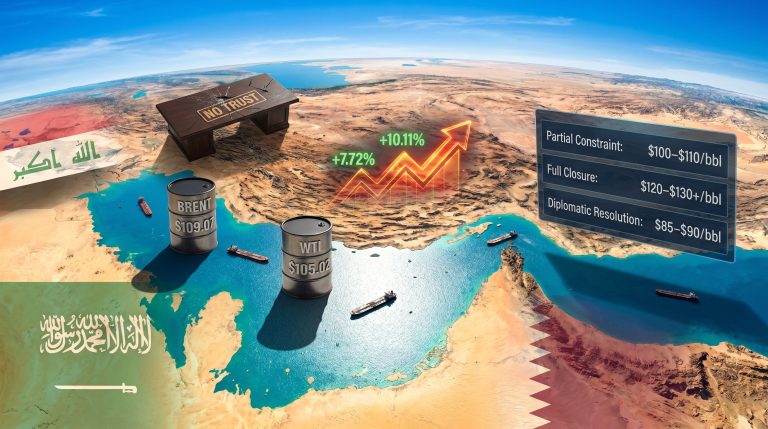
The global energy market faces unprecedented challenges as geopolitical tensions threaten critical maritime trade routes. Recent events have highlighted the vulnerability of international oil supplies, particularly when a tanker loaded with Iraqi crude passes through Hormuz amid escalating regional conflicts. This situation demonstrates how quickly normal energy commerce can be disrupted, creating ripple effects throughout global markets and forcing industry stakeholders to reassess supply chain security protocols.
Furthermore, the concentration of energy exports through confined maritime channels creates inherent systemic risks that extend far beyond regional conflicts. When tensions escalate in these critical zones, the resulting market responses reveal the underlying fragilities of global energy infrastructure and the limited flexibility available to major oil-producing nations seeking alternative export routes.
Strategic Waterway Dependencies in Global Energy Trade
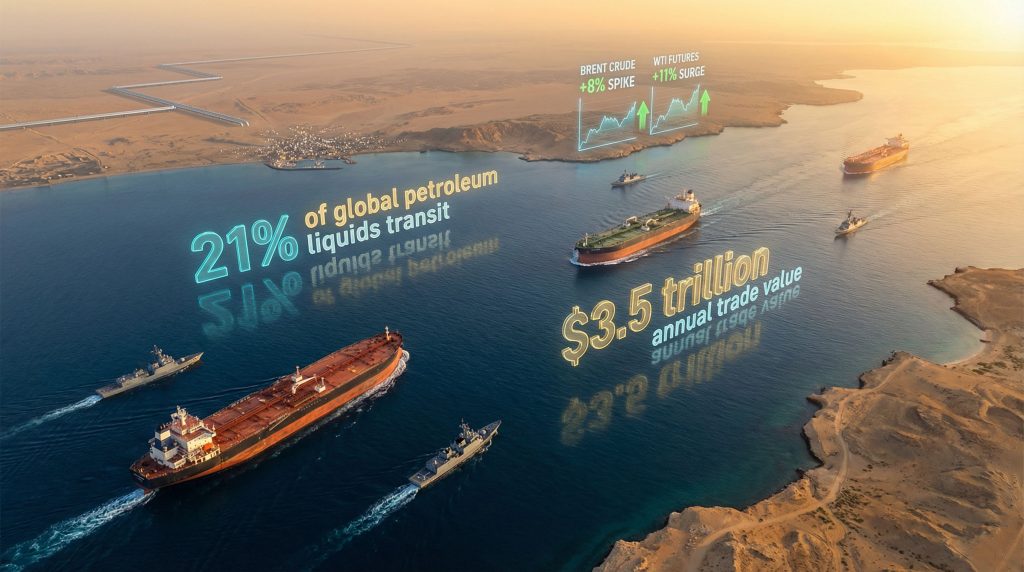
Modern petroleum markets rely heavily on predictable transit routes connecting major production centers with consuming regions. The Strait of Hormuz represents one of the most significant chokepoints in this global network, handling approximately one-fifth of worldwide oil and liquefied natural gas flows according to maritime trade data. This concentration creates both economic leverage for regional powers and vulnerability for international energy security.
The geographic characteristics of this waterway present unique challenges for maritime operations. Vessel tracking systems from LSEG and Kpler provide real-time monitoring capabilities that have become essential for managing transit operations during periods of heightened tension. These sophisticated monitoring platforms enable shipping companies and energy traders to track cargo movements and assess supply chain disruptions as they develop.
Recent events have demonstrated how quickly normal commerce can be affected by geopolitical developments. In April 2026, the tanker Ocean Thunder successfully loaded approximately 1 million barrels of Basrah Heavy crude and transited toward Malaysia despite ongoing regional tensions, illustrating that disruptions often involve selective enforcement rather than complete closure.
Maritime Traffic Management Systems
The complexity of managing vessel transits through restricted waters requires sophisticated coordination between multiple stakeholders. Navigation protocols now incorporate ownership verification systems that can identify vessel beneficial ownership and flag state registrations to determine transit eligibility under various restriction scenarios.
Modern shipping operations employ several technological tools:
- Real-time satellite tracking systems
- Automated identification systems (AIS) for vessel monitoring
- Cargo manifest verification databases
- Insurance coverage validation platforms
- Weather and security risk assessment tools
Economic Concentration Risks
The economic significance of concentrated transit routes extends beyond simple volume measurements. When multiple Omani-operated tankers, French-owned container vessels, and Japanese-owned gas carriers maintain transit capabilities while others face restrictions, the selective nature of enforcement creates market segmentation that affects pricing structures and commercial relationships.
When big ASX news breaks, our subscribers know first
Conflict Escalation Patterns and Maritime Security
Historical analysis reveals recurring patterns in how regional conflicts affect maritime commerce. The escalation sequence typically follows predictable stages, beginning with diplomatic tensions and progressing through economic pressure tactics before potentially reaching military confrontation phases.
In early 2026, US and Israeli airstrikes on Iran in late February triggered initial Strait restrictions, demonstrating how military actions in one domain quickly translate into economic pressure tactics in another. This pattern reflects the strategic value that regional powers place on maintaining leverage through energy transit control. Moreover, these developments highlight how oil price movements respond rapidly to geopolitical tensions.
Historical Precedents and Modern Applications
The Iran-Iraq War of the 1980s provides important historical context for understanding tanker warfare dynamics. During that conflict, both nations targeted commercial vessels in what became known as the Tanker War, resulting in significant disruption to regional oil exports. However, modern conflict scenarios involve different technological capabilities and international response mechanisms.
Contemporary maritime security challenges include:
- Drone technology deployment in maritime environments
- Electronic warfare capabilities affecting navigation systems
- Cyber threats to shipping communication networks
- Enhanced naval coalition coordination requirements
International Law and Freedom of Navigation
The legal framework governing maritime transit rights centres on the UN Convention on the Law of the Sea (UNCLOS), which establishes principles of innocent passage through international straits. However, practical enforcement of these rights depends on the willingness and capability of naval powers to maintain freedom of navigation operations during crisis periods.
Recent developments have shown that Iran's selective enforcement policies allowing passage for vessels without US or Israeli connections represents a calculated approach to economic pressure. This selective approach aims to avoid triggering maximum international response whilst maintaining leverage over energy supplies. Additionally, reports from maritime sources confirm that Iranian authorities have explicitly stated their policy regarding Iraqi vessel passages.
Alternative Transportation Infrastructure Development
Oil-producing nations facing maritime export constraints must rapidly develop alternative transportation capabilities. These alternatives typically involve higher costs per barrel but provide crucial supply chain diversification during crisis periods.
Pipeline Network Expansion
Iraq's strategic response to transit uncertainties includes multiple infrastructure development initiatives designed to reduce dependence on maritime routes. The country's heavy reliance on oil revenues for approximately 90% of budget funding creates compelling incentives for export route diversification. Furthermore, the US oil production decline in certain regions has increased global dependence on Middle Eastern supplies, making these alternative routes even more critical.
Key pipeline development projects include:
- Iraq-Syria corridor connections to Mediterranean ports
- Enhanced capacity through existing Kirkuk-Ceyhan routes
- Cross-border pipeline coordination with Jordan and Turkey
The Al-Tanf border crossing capacity expansion represents one component of overland export strategy, though the practical limitations of truck-based transport become apparent when comparing volumes. Border crossings can potentially handle up to 200,000 barrels per day through truck transport, but this capacity represents only a fraction of normal maritime export volumes.
Overland Transport Economics
The economics of alternative transport routes reveal significant cost differentials that affect long-term strategic planning:
| Transport Method | Cost per Barrel | Daily Capacity | Infrastructure Requirements |
|---|---|---|---|
| Maritime Transit | $1-2 | 2+ million | Port facilities, tanker fleet |
| Pipeline Transport | $2-4 | 500,000-1,000,000 | Pipeline infrastructure, pumping stations |
| Truck Transport | $5-8 | 200,000 | Border facilities, truck fleet |
Regional Cooperation Frameworks
Alternative routing strategies require enhanced cooperation between neighbouring countries. Syria's role in providing transit corridors has become increasingly important, with new pipeline projects designed to connect Iraqi production to Syrian refinery infrastructure and Mediterranean export terminals.
Turkey's position as an alternative energy corridor provides additional routing options, though these arrangements depend on maintaining stable diplomatic and commercial relationships across multiple jurisdictions.
Market Response Mechanisms During Supply Disruptions
Energy markets employ several automatic mechanisms to respond to supply disruption signals. These responses occur across multiple timeframes, from immediate price adjustments to longer-term infrastructure investments. Additionally, the US-China trade war impacts create additional complexity in global energy market dynamics.
Price Discovery and Volatility Patterns
Market data from April 2026 demonstrates typical price response patterns to geopolitical escalation. US crude prices jumped more than 11% whilst Brent crude increased nearly 8% following announcements of potential military escalation, reflecting forward-looking market expectations about supply availability.
These price movements serve multiple market functions:
- Signal scarcity expectations to consumers and producers
- Incentivise alternative supply source development
- Attract investment capital to infrastructure projects
- Encourage inventory accumulation by commercial users
Strategic Reserve Utilisation
Government strategic petroleum reserves serve as crucial shock absorbers during supply disruptions. The International Energy Agency's emergency response protocols can coordinate the release of up to 60 days worth of strategic reserves from member countries, providing temporary supply buffer whilst markets adjust to new conditions.
The effectiveness of strategic reserve releases depends on several factors:
- Coordination timing between multiple countries
- Transportation capabilities from reserve storage locations
- Refinery capacity to process released crude types
- Market communication strategies to manage expectations
Shipping Industry Adaptation Strategies
Maritime shipping companies face complex operational decisions when transit routes become restricted or dangerous. These decisions involve balancing cargo value, insurance costs, vessel safety, and schedule reliability.
Risk Assessment and Insurance Considerations
War risk insurance premiums provide market-based measurements of perceived security threats. During periods of heightened tension, insurance costs can increase dramatically, sometimes exceeding the value of cargo being transported. This creates economic pressure for alternative routing even when direct transit remains technically possible.
Very Large Crude Carriers (VLCCs) with capacities exceeding 2 million barrels face particular challenges due to their size, value, and the extended time required for loading and discharge operations. These vessels represent concentrated risk that requires careful evaluation of threat levels and available protection measures.
Navigation Technology and Security Protocols
Modern vessel operations employ sophisticated technology systems to manage security risks:
- Enhanced radar and sonar detection capabilities
- Satellite communication systems for constant connectivity
- Automated distress signalling equipment
- Coordinated convoy formation protocols
- Real-time threat intelligence updates
The integration of these systems allows shipping companies to make informed decisions about route selection, timing, and security arrangements for high-value cargo transits. Recent reports from regional media have documented successful passages of major crude carriers through contested waters using these enhanced protocols.
Long-Term Infrastructure Investment Implications
Supply chain disruptions create lasting changes in infrastructure investment priorities. Energy companies and governments recognise that overdependence on single transit routes creates unacceptable strategic vulnerabilities.
Pipeline Development Acceleration
Major pipeline projects that might previously have been considered economically marginal become strategically essential when maritime alternatives face disruption risks. The Iraq-Syria pipeline corridor development exemplifies this shift in investment priorities, with projects advancing despite challenging security environments.
Turkey's expanded role in energy transit reflects broader regional recognition that multiple route options provide essential supply chain resilience. The development of these alternatives requires sustained investment over multiple years, creating long-term shifts in regional energy infrastructure. However, the OPEC production impact on global markets continues to influence these infrastructure decisions.
Technology Integration and Monitoring Systems
Advanced monitoring and control systems become increasingly important as energy infrastructure expands across multiple countries and transportation modes. These systems must integrate:
- Cross-border pipeline monitoring capabilities
- Multi-modal transportation coordination platforms
- Regional inventory management systems
- Emergency response coordination networks
The next major ASX story will hit our subscribers first
International Coordination and Emergency Response
Effective response to energy supply disruptions requires coordination between multiple international organisations, governments, and commercial entities. This coordination becomes more complex when disruptions involve multiple countries and transportation systems. Moreover, the broader context of how tariffs impact markets adds another layer of complexity to international energy coordination efforts.
Multilateral Response Frameworks
OPEC spare production capacity, primarily Saudi Arabia's 2 million barrel per day buffer, provides one element of supply response capability. However, spare production capacity only addresses supply volume rather than transportation route vulnerabilities.
The Combined Maritime Forces coordination structure enables naval coalition responses to threats against commercial shipping. This military coordination capability provides the foundation for freedom of navigation operations when commercial transit faces interference.
Diplomatic Intervention Mechanisms
UN Security Council intervention protocols provide formal diplomatic channels for addressing maritime security threats. However, the effectiveness of these mechanisms depends on achieving consensus among major powers, which may have conflicting interests regarding specific regional conflicts.
Strategic energy infrastructure protection requires seamless coordination between commercial operators, military forces, and diplomatic institutions to maintain global supply chain stability during geopolitical crises.
Regional Power Dynamics and Energy Leverage
Control over critical energy transit routes provides significant geopolitical leverage that extends far beyond immediate commercial interests. Regional powers understand that energy supply disruption capabilities serve as strategic bargaining tools in broader diplomatic negotiations.
Iran's Strategic Calculations
Iran's selective enforcement approach to Strait transit reflects sophisticated understanding of international energy market dynamics. By allowing some vessel categories to pass whilst restricting others, Iran maintains economic pressure whilst avoiding actions that might trigger comprehensive international military intervention.
This graduated approach serves multiple strategic objectives:
- Demonstrating capability to disrupt global energy supplies
- Maintaining some level of international commercial activity
- Preserving options for diplomatic de-escalation
- Avoiding economic damage to regional trading partners
Saudi Arabia and Gulf State Responses
Gulf energy producers face particular vulnerabilities when maritime export routes become uncertain. Saudi Arabia's development of alternative routing capabilities through the Red Sea and overland pipelines represents long-term strategic planning to reduce dependence on any single chokepoint.
The coordination between Gulf Cooperation Council members on strategic petroleum reserve management and emergency response capabilities demonstrates recognition that energy security requires regional rather than purely national approaches.
Future Scenario Analysis and Market Projections
Energy market participants must plan for multiple potential outcomes when geopolitical tensions affect critical infrastructure. Scenario planning helps identify optimal responses under different assumption sets about conflict duration and intensity.
Optimistic Resolution Scenarios
Rapid diplomatic resolution scenarios typically assume 60-90 day negotiated settlements that restore normal commercial transit operations. Under these conditions, oil prices generally return to pre-crisis levels within 3-6 months as markets regain confidence in supply reliability.
Key indicators for optimistic outcomes include:
- Resumed international tanker traffic through restricted zones
- Decreased war risk insurance premiums
- Reduced alternative transportation route utilisation
- Strategic petroleum reserve inventory restoration
Extended Disruption Projections
Prolonged conflict scenarios involving 6-12 month disruption periods create more fundamental changes in global energy infrastructure and pricing. Under these conditions, permanent shifts toward alternative transportation routes become economically justified despite higher costs.
Extended disruption scenarios typically involve:
- Sustained oil prices in the $120-150 per barrel range
- Accelerated pipeline and overland transportation development
- Increased investment in renewable energy alternatives
- Regional economic recession risks in energy-importing countries
Most Probable Outcome Assessment
Analysis of historical precedents suggests that selective enforcement with graduated escalation represents the most likely scenario pattern. This approach allows regional powers to maintain pressure whilst preserving diplomatic flexibility and avoiding maximum economic disruption.
Under this scenario, energy markets adapt through:
- Partial route diversification without complete alternative development
- Moderate price premiums reflecting ongoing uncertainty
- Enhanced international coordination mechanisms
- Technology-driven monitoring and security improvements
The ongoing situation where a tanker loaded with Iraqi crude passes through Hormuz serves as a critical indicator of how selective enforcement policies will evolve. Consequently, market participants continue monitoring these transits as barometers for broader geopolitical developments and their potential impact on global energy supplies.
This analysis is provided for educational purposes only. Energy market investments involve significant risks, and past performance does not guarantee future results. Readers should conduct independent research and consult qualified advisors before making investment decisions related to energy infrastructure or commodities.
Looking to Capitalise on Energy Market Volatility?
Discovery Alert's proprietary Discovery IQ model delivers instant notifications when ASX-listed energy and commodity companies announce significant discoveries, empowering investors to identify actionable opportunities ahead of market movements during periods of geopolitical uncertainty. Start your 14-day free trial today and position yourself to benefit from the next major mineral discovery that could reshape energy supply chains.