
June 5, 2026
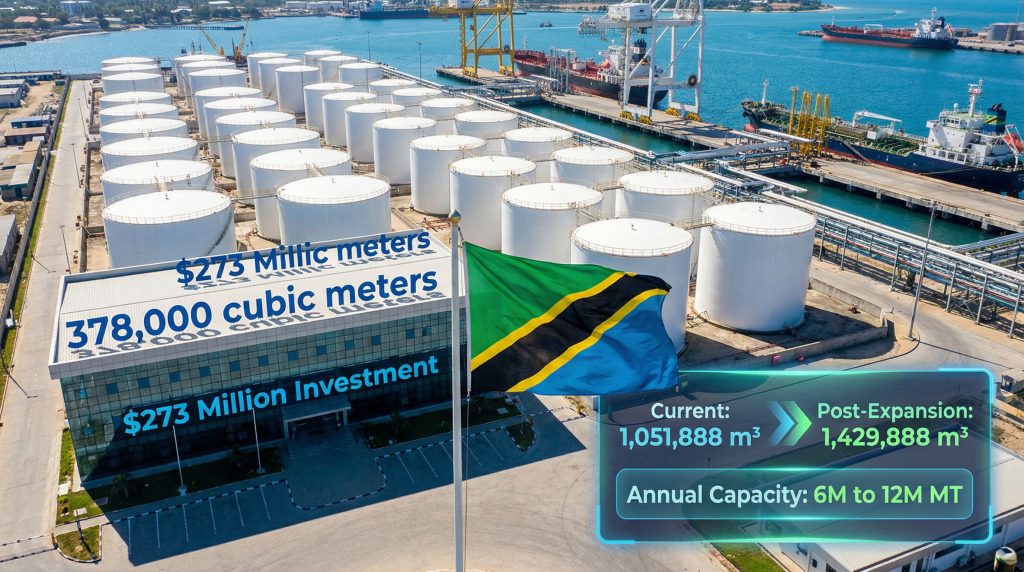
Tanzania's strategic positioning in East Africa's energy landscape undergoes a transformative shift as infrastructure investments address critical supply chain vulnerabilities. The Tanzania fuel storage project represents a calculated $273 million investment designed to fundamentally alter regional energy logistics while enhancing security for landlocked nations dependent on reliable fuel supplies.
Strategic Energy Infrastructure Development Reshapes East African Trade Corridors
East Africa's energy security landscape stands at a critical juncture where infrastructure bottlenecks have historically constrained regional economic growth. The complex interplay between global shipping vulnerabilities, regional energy demand, and strategic port positioning creates both opportunities and risks for nations seeking energy independence. Furthermore, the energy security transition requires examining how major infrastructure investments can fundamentally alter regional trade patterns and energy security frameworks.
The transformation of regional energy hubs through substantial infrastructure development represents more than traditional port expansion. It signals a strategic recalibration of how landlocked nations access critical fuel supplies while reducing dependency on volatile global shipping schedules. This shift toward enhanced storage capacity addresses longstanding structural weaknesses that have plagued East African energy supply chains, particularly amid ongoing US‑China trade war impact on global logistics networks.
When big ASX news breaks, our subscribers know first
What Makes Tanzania's Dar es Salaam Port Expansion a Regional Game-Changer?
The $273 million Tanzania fuel storage project represents a calculated strategic investment designed to fundamentally alter East African energy logistics. Tanzania's position along the Indian Ocean coastline has historically provided access to landlocked Central and Eastern African markets, but operational inefficiencies have limited its potential as a regional energy hub.
This massive infrastructure development addresses multiple strategic objectives simultaneously: eliminating supply bottlenecks that have plagued regional fuel distribution, reducing dependency on unpredictable global shipping schedules, and positioning Tanzania as the dominant energy gateway for interior African markets including Democratic Republic of Congo, Rwanda, Burundi, Uganda, and northern Zambia.
The timing of this expansion coincides with escalating geopolitical tensions affecting critical global energy chokepoints. With approximately 20% of global oil consumption transiting through the Strait of Hormuz daily, and increasing threats to Red Sea shipping corridors from regional conflicts, East Africa requires enhanced energy security buffers to maintain economic stability. Consequently, oil price movements linked to these disruptions further emphasise the importance of regional storage capacity.
Strategic Infrastructure Positioning:
• Geographic Advantage: Direct Indian Ocean access serving landlocked interior markets
• Competitive Response: Challenging Kenya's Mombasa port dominance in regional energy distribution
• Supply Chain Resilience: Creating strategic fuel reserves during global shipping disruptions
• Economic Multiplier Effects: Reducing transportation costs cascading through regional economies
Strategic Infrastructure Analysis: Breaking Down the $273 Million Investment
Core Project Specifications and Capacity Enhancement
The Tanzania fuel storage project involves construction of 15 specialised petroleum storage tanks with a total capacity addition of 378,000 cubic metres. This represents a 35.9% increase over current storage capacity, transforming Dar es Salaam from a basic fuel transit point to a comprehensive regional energy hub. The project addresses infrastructure bottlenecks that have historically constrained regional growth, particularly relevant as the government invests significantly in fuel storage expansion at the Port of Dar es Salaam.
Table: Tanzania Port Fuel Storage Expansion Overview
| Metric | Current Capacity | Post-Expansion | Percentage Increase |
|---|---|---|---|
| Total Storage Volume | 1,051,888 m³ | 1,429,888 m³ | 35.9% |
| Diesel Storage | N/A | 162,000 m³ | New capacity |
| Petrol Storage | N/A | 135,000 m³ | New capacity |
| Aviation Fuel (Jet A-1) | N/A | 81,000 m³ | New capacity |
| Annual Handling Capacity | 6 million MT | 12 million MT | 100% |
The multi-product storage approach demonstrates sophisticated supply chain planning. Rather than focusing on single-commodity storage, the facility accommodates diverse fuel types with diesel commanding 42.9% of new capacity, petrol 35.7%, and aviation fuel 21.4%. This diversification enables Tanzania to serve varied regional market demands while reducing single-product dependency risks.
Engineering and Construction Framework
The project employs a hybrid construction model combining international expertise with local knowledge transfer. Chinese engineering firms China Railway Major Bridge Engineering Group and WUHUAN Engineering Co Ltd provide primary construction capabilities, while Tanzanian consultancy Hatib & Lami Engineers ensures local oversight and knowledge retention.
Key Construction Milestones:
• Project Initiation: August 2024
• Current Progress: 41% completion (as of March 2026)
• Target Completion: February 2027
• Foundation Infrastructure: 1,087 specialised foundation piles
• Local Employment: 279 of 325 positions (85.8%) filled by Tanzanian workers
The requirement for 1,087 specialised foundation piles reflects complex coastal engineering challenges. Petroleum storage tanks require stable, load-bearing foundations capable of supporting multi-thousand-ton structures while preventing groundwater contamination in marine-adjacent installations. This scale indicates sophisticated geotechnical planning for long-term operational reliability.
Project Financial Framework:
| Component | Value (USD) | Percentage of Total |
|---|---|---|
| Total Project Cost | $273 million | 100% |
| Government Investment | $273 million | 100% (TPA funded) |
| Disbursed to Date | $45.7 million | 16.7% |
| Chinese Contractor Value | ~$264 million | 96.7% |
| Local Engineering Supervision | $9 million | 3.3% |
Why Does Tanzania's Fuel Storage Strategy Matter for Regional Energy Markets?
Addressing Critical Supply Chain Vulnerabilities
East Africa's energy supply chains have historically suffered from structural inefficiencies that cascade through regional economies, creating price volatility and supply uncertainty for landlocked nations. The Tanzania fuel storage project directly targets these vulnerabilities through operational efficiency improvements and enhanced storage capacity.
Operational Efficiency Improvements:
• Vessel Turnaround Time Reduction: From 22 days to 7 days average (68% reduction)
• Demurrage Cost Elimination: Saves approximately $25,000 per vessel delay
• Supply Reliability Enhancement: Extended fuel supply buffer for regional markets
• Annual Handling Capacity: Doubling from 6 to 12 million metric tons
The elimination of $25,000 per vessel demurrage charges represents significant cost savings that cascade through fuel supply chains. With approximately 150-200 vessels annually transiting Dar es Salaam (extrapolated from increased handling capacity), potential annual savings range from $3.75 million to $5 million. These savings directly impact end-consumer fuel prices across regional markets.
Geopolitical Context and Energy Security
The timing of Tanzania's infrastructure investment coincides with escalating tensions in critical global energy chokepoints. Military tensions involving Iran, Israel, and the United States have raised risks of disruptions to the Strait of Hormuz, through which nearly 20% of global oil consumption passes daily according to the U.S. Energy Information Administration.
Critical Analysis: Tanzania's enhanced storage capacity provides regional energy independence precisely when global supply chains face maximum disruption risk from geopolitical conflicts affecting both the Strait of Hormuz and Red Sea shipping corridors.
Simultaneously, Iranian-allied groups including Yemen's Houthis have intensified threats against Red Sea shipping, creating dual chokepoint risks for global energy trade. East Africa's enhanced storage infrastructure provides crucial supply buffers during potential simultaneous disruptions to both critical maritime energy corridors, particularly important given tariff‑induced market shifts affecting global trade patterns.
How Will the Expansion Transform Regional Trade Dynamics?
Hub-and-Spoke Model Development
Tanzania's enhanced storage capacity positions Dar es Salaam as the primary energy distribution hub for multiple landlocked nations, fundamentally altering regional trade patterns. The doubling of annual handling capacity to 12 million metric tons creates competitive pressure on existing regional energy gateways.
Primary Regional Markets:
• Democratic Republic of Congo (eastern regions): Alternative to longer South African supply routes
• Rwanda: Direct access reducing Kenya dependency
• Burundi: Enhanced supply security through diversified import routes
• Uganda: Supplementary capacity to existing Mombasa routes
• Zambia (northern regions): Reduced transportation costs versus southern African suppliers
This hub-and-spoke model creates network effects where improved efficiency at Dar es Salaam reduces transportation costs and supply risks across multiple regional economies simultaneously. In addition, recent developments suggest that Tanzania aims to boost fuel reserves amid rising Middle East tensions, highlighting the strategic importance of this infrastructure investment.
Economic Multiplier Effects
Direct Economic Benefits:
• Reduced Fuel Costs: Elimination of demurrage charges passed through to consumers
• Enhanced Tax Revenue: Increased throughput generating additional government revenues
• Job Creation: 279 positions filled by Tanzanian workers with technology transfer
• Infrastructure Development: Foundation for additional logistics and support industries
Indirect Regional Benefits:
• Energy Price Stability: Reduced volatility for landlocked economies dependent on fuel imports
• Industrial Competitiveness: Reliable fuel supply supporting manufacturing and transport sectors
• Trade Cost Reduction: Lower transportation expenses benefiting broader regional commerce
What Are the Long-Term Strategic Implications?
Regional Energy Hub Positioning
Tanzania's $273 million investment represents a calculated move to capture greater market share in East Africa's energy distribution network. By doubling annual handling capacity, Tanzania directly competes with Kenya's Mombasa port for regional energy gateway dominance while positioning itself as a more reliable alternative during global supply chain disruptions.
The strategic timing leverages current geopolitical tensions to demonstrate value proposition for enhanced energy security. Landlocked nations seeking supply chain diversification now have a viable alternative to single-port dependency, creating competitive dynamics that should improve service quality and reduce costs across regional energy logistics. However, monitoring OPEC meeting insights remains crucial for understanding global production decisions that could affect regional demand patterns.
Infrastructure Investment ROI Analysis
The project's return on investment depends on capturing increased throughput from regional markets and achieving operational efficiency gains. With annual handling capacity increasing from 6 to 12 million metric tons, Tanzania must attract approximately 6 million metric tons of additional fuel trade to fully utilise expanded infrastructure.
Key Success Metrics:
• Market Share Growth: Percentage of regional fuel imports transiting through Dar es Salaam
• Vessel Utilisation: Maintaining 7-day average turnaround time under increased volume
• Regional Integration: Trade agreements and infrastructure connections with landlocked nations
• Price Competitiveness: Total logistics costs versus alternative ports (Mombasa, Beira, Maputo)
The next major ASX story will hit our subscribers first
How Does This Project Address Global Energy Market Volatility?
Supply Chain Resilience Building
The expansion provides Tanzania with strategic flexibility during global energy market disruptions through enhanced inventory management capabilities. The 378,000 cubic metre storage addition allows for extended supply reserves during shipping disruptions while enabling bulk purchasing during favourable market conditions.
Risk Management Through Infrastructure:
• Inventory Buffer Management: Extended supply reserves during shipping disruptions
• Price Volatility Mitigation: Bulk purchasing during favourable global market conditions
• Regional Supply Guarantee: Consistent fuel availability regardless of global supply chain stress
• Strategic Positioning: Alternative energy gateway reducing regional dependency on single-port systems
The 15-tank modular design provides operational flexibility allowing sequential commissioning, maintenance scheduling without complete capacity shutdown, and product segregation reducing contamination risks. This technical approach demonstrates sophisticated understanding of petroleum storage best practices.
Strategic Insight: Tanzania's timing demonstrates sophisticated understanding of global energy market vulnerabilities, positioning the nation as a regional stability anchor during international supply disruptions while capturing long-term market share from competing ports.
What Challenges Could Impact Project Success?
Technical and Operational Considerations
Integration Complexity: Coordinating new 378,000 cubic metre storage capacity with existing jetty infrastructure requires precise scheduling and technical compatibility. The February 2027 completion target depends on successful integration of expanded storage with existing port operations without disrupting current fuel handling capabilities.
Environmental Compliance: Managing petroleum storage environmental impact in marine-adjacent coastal location requires ongoing monitoring systems and emergency response protocols. The scale of storage expansion increases environmental risk profiles requiring enhanced safety management systems.
Regional Competition: Competing with established Kenyan and South African energy hubs requires competitive pricing, reliable service delivery, and strategic partnerships with landlocked nation governments. Market share capture depends on demonstrating superior value proposition versus existing supply chains.
Market Dynamics and Demand Forecasting
The project's success depends on accurate regional energy demand projections and Tanzania's ability to capture market share from competing regional ports. Economic growth rates in target markets (DRC, Rwanda, Burundi, Uganda, Zambia) directly impact fuel demand and throughput utilisation.
Critical Success Factors:
• Regional Economic Growth: GDP expansion rates in target landlocked markets
• Transportation Infrastructure: Road and rail connections enabling efficient inland distribution
• Government Relations: Trade agreements and preferential policies with target nations
• Operational Excellence: Maintaining 7-day vessel turnaround time under increased capacity utilisation
Strategic Recommendations for Stakeholders
For Regional Governments
Supply Chain Diversification: Reduce dependency on single-port energy imports by establishing trade relationships with Tanzania's enhanced facility. This diversification provides supply security during disruptions while creating competitive pressure improving overall regional logistics quality.
Infrastructure Investment Coordination: Align regional transport infrastructure development with Tanzania's enhanced capacity. Road and rail improvements connecting landlocked nations to Dar es Salaam maximise the value of Tanzania's storage expansion while reducing overall transportation costs.
For Energy Sector Investors
Regional Hub Opportunities: Consider investments in Tanzania's expanding energy logistics sector including fuel distribution, storage, and related infrastructure services. The doubling of annual handling capacity creates downstream investment opportunities in supporting industries.
Supply Chain Integration: Evaluate partnerships with Tanzania Ports Authority for regional distribution rights and logistics services. Early positioning in Tanzania's expanded energy hub could provide competitive advantages as regional trade patterns shift toward Dar es Salaam.
Investment Considerations and Disclaimers
Risk Assessment: Infrastructure investment success depends on regional economic growth, competitive positioning versus alternative ports, and successful operational integration of expanded facilities. Investors should conduct independent analysis of regional energy demand forecasts and competitive dynamics.
Market Volatility: Global energy market conditions, geopolitical developments, and regional economic performance may impact project utilisation rates and investment returns. Past performance of infrastructure projects does not guarantee future results.
Conclusion: Tanzania's Energy Infrastructure Leadership
Tanzania's $273 million fuel storage project represents more than infrastructure development. It constitutes a strategic positioning initiative that could fundamentally reshape East African energy security architecture by addressing critical supply chain vulnerabilities while building comprehensive regional hub capacity.
The project's completion in February 2027 will mark a significant transformation in regional energy dynamics, potentially reducing costs, improving supply reliability, and establishing Tanzania as East Africa's premier energy security anchor. Success depends on capturing increased regional market share while maintaining operational excellence under doubled handling capacity.
By leveraging current global energy market volatility and geopolitical tensions affecting traditional supply routes, Tanzania positions itself as a stability provider for landlocked African markets seeking supply chain diversification. The strategic timing and technical specifications demonstrate sophisticated understanding of both regional energy needs and global market dynamics.
Key Takeaways:
• Strategic Timing: Investment leverages global supply chain vulnerabilities to demonstrate regional value proposition
• Technical Excellence: 15-tank modular design with 378,000 cubic metre capacity provides operational flexibility
• Regional Impact: Potential to reshape energy trade patterns across East and Central Africa
• Economic Benefits: Elimination of demurrage costs and improved supply reliability benefit multiple regional economies
The Tanzania fuel storage project establishes a new paradigm for regional energy infrastructure development, demonstrating how strategic timing, technical sophistication, and regional market understanding can create transformative economic opportunities while enhancing energy security for multiple nations simultaneously.
Ready to Capitalise on the Next Major Infrastructure Discovery?
Discovery Alert's proprietary Discovery IQ model delivers real-time alerts on significant ASX mineral and infrastructure-related discoveries, instantly empowering subscribers to identify actionable opportunities ahead of the broader market. Understand why historic discoveries can generate substantial returns by exploring major mineral finds that have transformed regional markets, then begin your 14-day free trial today to position yourself ahead of the market.