
May 13, 2026
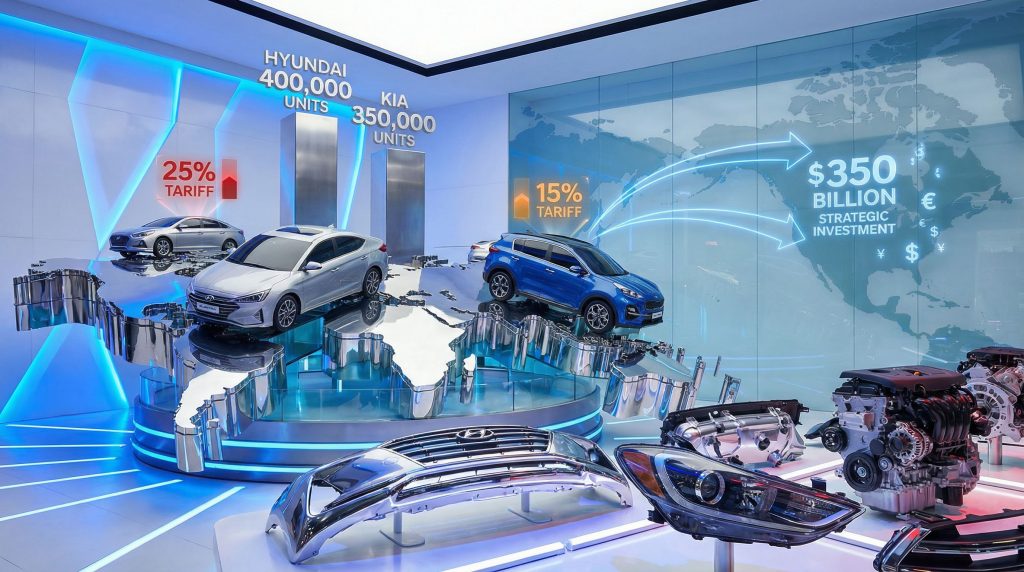
Tariffs on South Korean autos represent a critical pressure point in modern international trade relations, where policy decisions create cascading effects across interconnected automotive supply chains. The modern automotive manufacturing ecosystem demonstrates how bilateral trade tensions can reshape entire industries through complex economic interdependencies that extend far beyond immediate vehicle production.
When examining trade relationship vulnerabilities, automotive manufacturing serves as a critical stress test for bilateral economic frameworks. The interconnected nature of global vehicle production means that protective measures in one region inevitably trigger strategic recalculations across multiple markets and geographies.
Understanding the Strategic Context Behind Tariff Policy Escalation
The Bilateral Framework That Failed to Materialise
Trade agreements in the automotive sector require intricate coordination between manufacturing timelines, regulatory compliance schedules, and political implementation windows. The complexity of these arrangements becomes evident when examining the gap between initial commitments and actual policy execution, particularly as tariff impact on investment considerations shape bilateral negotiations.
Legislative processes in different countries operate on varying timelines, creating misalignment risks when bilateral agreements depend on simultaneous implementation. South Korea's National Assembly procedures, for instance, require extensive committee review periods that may not align with U.S. administrative priorities or deadlines.
The automotive industry's capital-intensive nature means that investment commitments worth hundreds of billions of dollars cannot be executed rapidly. Manufacturing facility construction, supply chain integration, and workforce development programs typically require multi-year implementation phases that may extend beyond political administration cycles.
Comparative Tariff Architecture Across Asian Auto Exporters
Current U.S. automotive tariff structures reveal strategic differentiation across Asian trading partners. Standard passenger vehicle tariffs from most countries face a 2.5% baseline rate, though this foundation can shift rapidly based on bilateral trade dynamics.
Historical precedent shows that U.S. tariff policy toward Asian automakers has evolved through multiple phases since the 1980s. The voluntary export restraint agreements with Japan in the 1980s established frameworks for managing import volumes without formal tariff increases, while more recent approaches have emphasised tariff mechanisms as primary policy tools.
Strategic parity considerations drive much of the comparative tariff design. When one Asian manufacturing hub receives preferential treatment, competitive pressures emerge to either extend similar benefits to other regions or implement countervailing measures to maintain domestic industry protection. Furthermore, US-China trade war strategies provide crucial context for understanding broader Asian tariff policy coordination.
When big ASX news breaks, our subscribers know first
What Economic Pressures Drive Modern Automotive Tariff Strategy?
U.S. Domestic Manufacturing Protection Mechanisms
The American automotive manufacturing sector employs approximately 1.02 million workers across concentrated geographic regions, with significant clustering in Michigan, Ohio, Indiana, and Kentucky. This regional concentration creates substantial political leverage in tariff policy decisions, as employment impacts directly affect congressional districts with historically strong automotive industry presence.
Competition dynamics between domestic and imported vehicles have intensified as quality gaps have narrowed over recent decades. South Korean manufacturers have captured approximately 9.2% of the U.S. new vehicle market share as of 2024, representing substantial competitive pressure on domestic brands across multiple vehicle segments.
Market share analysis reveals that South Korean brands have established particularly strong positions in compact and mid-size SUV categories, directly competing with high-volume domestic models. This competition pattern makes tariff protection especially attractive to U.S. manufacturers seeking to preserve market positioning in these profitable segments.
Key market dynamics include:
- Regional employment concentration in politically sensitive congressional districts
- Quality parity between domestic and imported vehicles reducing traditional differentiation
- Price competition intensity in high-volume consumer segments
- Brand loyalty erosion as consumers prioritise value propositions over historical preferences
Revenue Generation vs. Trade Compliance Enforcement
Government fiscal considerations play a secondary but meaningful role in tariff policy decisions. Revenue generation from tariffs on South Korean autos varies dramatically based on the applied rate structure and import volume responses, particularly when considering Trump tariffs economic implications for broader fiscal policy.
At the standard 2.5% tariff rate, revenue collection remains modest compared to overall government receipts. However, substantial tariff increases to 15% or 25% ranges would generate significantly more revenue while simultaneously reducing import volumes through demand elasticity effects.
The enforcement dimension focuses on compliance with bilateral trade commitments rather than pure revenue maximisation. Tariff escalation serves as a readily available policy tool for addressing perceived violations of trade agreement terms without requiring lengthy diplomatic negotiations.
Implementation mechanics for tariff changes include:
- Presidential proclamation authority under various trade statutes
- Congressional notification requirements for certain tariff modifications
- Industry petition processes for specific product classifications
- WTO compatibility assessments for international trade compliance
How Do South Korean Automakers Navigate Escalating Trade Barriers?
Production Footprint Vulnerability Assessment
| Company | Annual U.S. Exports | Primary Export Models | Current Exposure Risk |
|---|---|---|---|
| Hyundai Motor | Significant volume | Elantra, Tucson, Santa Fe | Direct tariff impact |
| Kia Corporation | Substantial exports | Forte, Sportage, Sorento | High vulnerability |
| GM Korea Operations | Major export hub | Chevrolet Trax, Spark | Moderate exposure |
South Korean automotive companies maintain substantial export-dependent operations that face immediate cost pressures from tariff escalation. The concentration of production in South Korea rather than distributed manufacturing creates systemic vulnerability to U.S. trade policy changes.
Current U.S. production capacity from South Korean-affiliated plants totals approximately 800,000 units annually, primarily through Hyundai Motor Group facilities in Alabama and Georgia. This domestic production base provides partial insulation from tariffs but represents only a fraction of total U.S. market supply from South Korean brands.
Manufacturing capacity constraints limit the speed at which South Korean companies can shift production to avoid tariff exposure. New facility construction typically requires 3-5 year timelines from planning to full production, while existing facility expansion may take 18-24 months for meaningful capacity increases.
Supply Chain Reconfiguration Strategies
Production relocation considerations extend beyond simple facility moves to encompass entire supplier ecosystems. South Korean automakers would need to evaluate not just final assembly relocation but also the geographic distribution of key component suppliers to achieve meaningful tariff avoidance.
Investment requirements for substantial U.S. production expansion range into the billions of dollars per company. New vehicle assembly facilities typically cost $1-2 billion for moderate-scale operations, while comprehensive manufacturing complexes including stamping, engine production, and transmission assembly can exceed $3-4 billion in total investment.
Regional trade agreement alternatives provide limited relief for automotive manufacturers. In addition, global supply chain reconfiguration efforts must consider how US tariffs and global iron ore markets affect raw material costs for vehicle production.
Strategic considerations include:
- Supplier ecosystem migration requiring coordinated multi-company relocations
- Technology transfer implications for proprietary manufacturing processes
- Workforce development timelines for skilled automotive manufacturing positions
- Regulatory compliance variations across different production jurisdictions
What Market Dynamics Will Emerge From Sustained Tariff Pressure?
Consumer Price Impact Modelling
Vehicle pricing responds to tariff increases through complex pass-through mechanisms that vary by market segment and competitive positioning. Premium vehicle segments typically demonstrate higher tariff pass-through rates compared to economy segments where price sensitivity constrains manufacturer pricing flexibility.
Average price increase projections depend heavily on the magnitude of tariff escalation and the duration of implementation. Temporary tariff increases may see limited price adjustments as manufacturers absorb costs short-term, while permanent policy changes typically result in full cost pass-through to consumers within 6-12 months.
Substitution effects toward domestic and Japanese alternatives create secondary market dynamics. Consumers facing higher South Korean vehicle prices may shift demand to competitively positioned domestic models or maintain import preferences by selecting Japanese brands with different tariff treatment.
Regional market share redistribution occurs unevenly across geographic markets. Areas with strong domestic dealer networks may see faster substitution toward domestic brands, while regions with limited domestic model availability may maintain import preferences despite price increases. According to Reuters, market volatility has already begun affecting South Korean automaker valuations as investors assess potential impacts.
Investment Flow Redirection Patterns
Foreign direct investment patterns in the U.S. automotive sector reflect strategic responses to trade policy uncertainty. South Korean companies have historically maintained substantial FDI commitments in U.S. manufacturing, though specific investment flows require ongoing monitoring of official economic data.
Technology transfer implications extend beyond vehicle assembly to encompass electric vehicle battery development, autonomous driving systems, and connected vehicle technologies. Consequently, tariffs on South Korean autos may accelerate technology localisation requirements as companies seek to avoid trade barriers on high-value components.
Semiconductor and battery supply chain considerations represent critical vulnerabilities for South Korean automakers. Companies like LG Energy Solution, SK Innovation, and Samsung SDI supply significant portions of EV batteries to U.S. manufacturers, creating complex interdependencies that tariff policies may disrupt.
Investment flow characteristics include:
- Manufacturing facility expansion in tariff-protected markets
- Research and development centre establishment for technology localisation
- Supplier relationship restructuring to optimise supply chain costs
- Joint venture formation with domestic partners for market access
Which Industries Face Secondary Effects From Auto Tariff Escalation?
Integrated Supply Network Vulnerabilities
The automotive supply chain encompasses approximately 7,000+ supplier companies in the United States, creating extensive exposure networks beyond direct vehicle manufacturers. Roughly 15-20% of parts content in U.S.-assembled vehicles originates from import sources, meaning tariff policies create cost pressures throughout the supply network.
Auto parts supplier exposure varies significantly by component category and specialisation. High-tech components like advanced driver assistance systems, infotainment modules, and electric vehicle batteries face different competitive dynamics compared to traditional mechanical components.
Steel and aluminium demand fluctuations represent major secondary effects from automotive tariff policies. The U.S. auto sector accounts for approximately 12% of total domestic steel consumption, meaning rising automotive tariffs typically increase demand for domestic steel while potentially affecting pricing across multiple industries.
Logistics and shipping industry adjustments occur as trade flows shift in response to tariff changes. Ports specialising in South Korean automotive imports may experience volume declines, while domestic transportation networks may see increased demand for moving domestically produced vehicles.
Financial Market Transmission Mechanisms
Currency volatility between the U.S. Dollar and South Korean Won typically increases during tariff escalation periods. The Korean Won historically experiences depreciation pressure when U.S. tariff policies create uncertainty about export volumes and economic growth prospects.
Equity market performance for affected manufacturers depends on investor assessment of companies' ability to adapt to changed cost structures. Market reactions often reflect not just immediate cost impacts but also longer-term strategic positioning relative to competitors. However, as CNN reports, the immediate market response has been mixed as investors weigh potential mitigation strategies.
Credit rating implications focus on companies' leverage levels and cash flow sustainability under different tariff scenarios. Rating agencies evaluate how tariff costs affect debt service capabilities and investment capacity for necessary strategic adjustments.
Financial transmission pathways include:
- Foreign exchange rate adjustments affecting international competitiveness
- Equity valuation changes based on profit margin expectations
- Bond yield spreads reflecting credit risk assessments
- Derivative market activity for hedging currency and commodity exposures
How Might South Korea Respond to Sustained Trade Pressure?
Diplomatic Engagement Escalation Options
World Trade Organisation dispute resolution mechanisms provide structured frameworks for addressing tariff policies that may violate international trade agreements. South Korea could potentially pursue WTO dispute settlement procedures, following the established Dispute Settlement Understanding processes that typically require 12-18 months for resolution.
Regional alliance coordination with Japan and the European Union offers opportunities for multilateral responses to U.S. tariff policies. Historical precedent exists for coordinated trade policy responses among U.S. trading partners, though effectiveness varies based on specific policy circumstances and alliance dynamics.
Defence cooperation leverage through existing security partnerships may influence trade policy negotiations. South Korea's strategic importance in regional security arrangements provides diplomatic channels that extend beyond pure trade relationship management. Furthermore, understanding Australia's counter-tariff strategy may provide insights for broader allied coordination approaches.
Diplomatic strategy elements include:
- Bilateral negotiation intensification through established trade dialogue mechanisms
- Multilateral coalition building with other affected trading partners
- International arbitration utilisation through trade agreement dispute resolution
- Economic diplomacy coordination linking trade and security relationship aspects
Economic Retaliation Scenario Analysis
Potential South Korean retaliatory measures could target U.S. agricultural exports, particularly products where South Korea maintains significant import dependence. Agricultural sectors like beef, pork, and grain products represent vulnerable targets for reciprocal tariff actions.
Technology transfer restrictions in the semiconductor sector offer another potential retaliation avenue. South Korean companies play critical roles in global semiconductor supply chains, providing leverage for technology-focused countermeasures.
Energy import diversification away from U.S. liquefied natural gas represents a longer-term strategic response option. South Korea's energy import requirements create opportunities for supplier diversification that could reduce U.S. export revenues over time.
However, retaliation risks escalating trade tensions and potentially harming South Korean economic interests. The interconnected nature of U.S.-South Korea economic relationships means that retaliatory actions often create costs for South Korean consumers and businesses as well as American targets.
The next major ASX story will hit our subscribers first
What Long-Term Structural Changes Could Reshape Auto Trade?
Manufacturing Regionalisation Acceleration
Friend-shoring trends in automotive supply chains reflect broader geopolitical considerations beyond pure economic optimisation. Companies increasingly evaluate supplier relationships through security and resilience frameworks that prioritise geographic proximity and political stability.
Mexico's role as an alternative production hub continues expanding due to USMCA advantages and geographic proximity to U.S. markets. Mexican automotive production reached approximately 3.6 million vehicles exported to the United States in 2024, representing the largest single source of vehicle imports.
USMCA compliance requirements mandate 75% regional content for automotive products, creating incentives for Asian manufacturers to establish North American production networks rather than relying on trans-Pacific supply chains.
Regionalisation drivers include:
- Supply chain resilience prioritisation following recent disruption experiences
- Regulatory compliance advantages from regional production networks
- Transportation cost optimisation through proximity to end markets
- Political risk mitigation via diversified geographic exposure
Technology Innovation Incentive Shifts
Electric vehicle development priorities shift under trade pressure as companies balance global technology sharing with regional market access requirements. Tariffs on South Korean autos may accelerate EV technology localisation to avoid trade barriers on high-value battery and electronic components.
Autonomous vehicle partnership restructuring occurs as companies reevaluate international collaboration frameworks. Technology sharing agreements face increased scrutiny when regulatory environments discourage cross-border component flows.
Battery technology localisation requirements reflect both trade policy pressures and national security considerations. The Inflation Reduction Act electric vehicle tax credits include domestic content requirements that incentivise battery supply chain regionalisation regardless of tariff policies.
Critical technology areas experiencing pressure include:
- Advanced battery chemistry development for regional supply chains
- Semiconductor design and manufacturing for automotive applications
- Software platform development for connected vehicle systems
- Charging infrastructure technology for electric vehicle adoption
Key Takeaways for Investors and Industry Stakeholders
Portfolio Risk Assessment Framework
Direct exposure evaluation requires analysing automotive investments across multiple dimensions including geographic revenue concentration, supply chain dependencies, and competitive positioning relative to tariff-affected competitors.
Currency and commodity volatility hedging becomes increasingly important as tariff policies create additional uncertainty in international cost structures. Companies with significant international operations may benefit from enhanced hedging strategies to manage foreign exchange and raw material cost fluctuations.
Sector rotation opportunities emerge in domestic manufacturing as tariff protection potentially improves competitive positioning for U.S.-based automotive companies. However, investors must balance protection benefits against potential cost increases from supply chain disruptions.
Risk assessment considerations include:
- Revenue geographic concentration analysis for direct tariff exposure
- Supply chain mapping for indirect cost impact evaluation
- Competitive position assessment relative to protected/unprotected competitors
- Hedge ratio optimisation for currency and commodity exposure management
Strategic Planning Considerations
Timeline expectations for policy resolution remain highly uncertain given the complex interplay between trade negotiations, industry adaptation requirements, and political dynamics. Companies require scenario planning frameworks that accommodate multiple potential outcomes rather than single-point forecasts.
Alternative market development priorities may shift as companies diversify away from tariff-affected trade relationships. This diversification could accelerate market entry strategies in regions with more stable trade policy environments.
Supply chain resilience building requires substantial investment in redundant capacity and supplier relationship diversification. These investments may reduce short-term profitability while enhancing longer-term operational flexibility and risk management.
Planning framework elements include:
- Multi-scenario financial modelling for different tariff duration and magnitude combinations
- Supply chain stress testing for various disruption scenarios
- Market entry strategy acceleration for alternative geographic regions
- Technology roadmap adaptation for regional compliance requirements
"The automotive industry has always been subject to trade policy fluctuations, but the current environment represents an unprecedented level of complexity in balancing global supply chains with regional policy requirements," noted industry analysts tracking the evolving trade landscape.
Important Disclaimer: This analysis contains forward-looking assessments based on current policy announcements and historical precedent. Actual outcomes may vary significantly based on policy implementation details, industry responses, and broader economic conditions. Investors should conduct independent research and consider professional advice before making investment decisions based on trade policy developments.
Ready to Capitalise on Market-Moving Trade Policy Developments?
Discovery Alert's proprietary Discovery IQ model delivers instant notifications on significant ASX mineral discoveries, empowering subscribers to identify actionable opportunities as global trade dynamics reshape commodity markets and supply chains. Explore how historic discoveries have generated substantial returns by visiting Discovery Alert's dedicated discoveries page and begin your 30-day free trial today to position yourself ahead of market-shifting developments.