June 20, 2026
The Technical Architecture Driving Mining Fleet Transformation
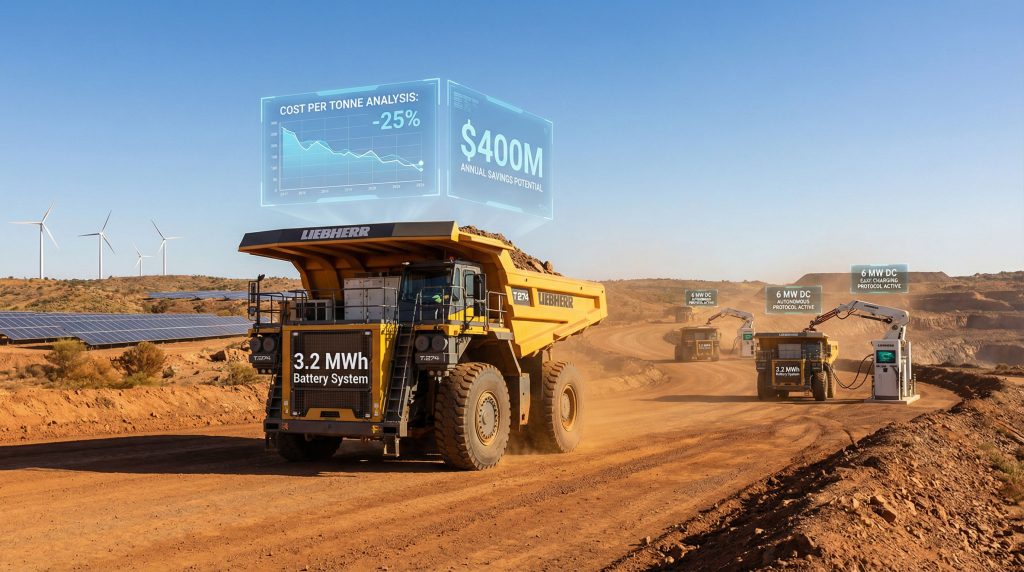
Industrial mining operations worldwide are experiencing a fundamental shift in energy paradigms, with battery electric powertrains emerging as the dominant force reshaping heavy equipment deployment strategies. Fortescue's battery electric haul truck exemplifies this technological revolution, demonstrating how advanced energy storage systems integrate with sophisticated fleet management protocols. The transformation represents a convergence of multiple technological developments that extend far beyond simple fuel substitution.
The industry evolution trends showcase how high-density lithium-ion battery systems support extreme industrial loads, whilst sophisticated thermal management architectures enable continuous operation cycles. Furthermore, intelligent charging infrastructure seamlessly integrates with existing mine power grids, creating comprehensive operational frameworks.
When big ASX news breaks, our subscribers know first
Battery Electric Powertrain Technology in Heavy Mining Applications
Modern battery electric haul trucks fundamentally restructure traditional mining equipment architecture through advanced energy storage integration. These systems utilise lithium iron phosphate (LFP) battery chemistry optimised for industrial applications, providing enhanced thermal stability and extended cycle life compared to conventional electric vehicle batteries.
The energy density requirements for heavy mining operations necessitate sophisticated battery pack configurations. Current mining-grade systems typically incorporate multiple battery modules arranged in series-parallel configurations, enabling both high voltage output and substantial energy capacity. Thermal management becomes critical in these applications, with liquid cooling systems maintaining optimal operating temperatures across extended duty cycles.
Energy Recovery and Regenerative Systems
Regenerative braking technology represents one of the most significant operational advantages in electric mining applications. During downhill hauling with loaded payloads, these systems convert kinetic energy back into electrical storage, substantially improving overall energy efficiency. The regenerative capacity can contribute 15-20% energy recovery during typical mining cycles.
Energy recovery extends beyond braking systems to include dynamic positioning recovery during loading operations and auxiliary system optimisation. Advanced data-driven operations continuously monitor energy flow patterns, optimising distribution between propulsion, hydraulic systems, and auxiliary equipment based on real-time operational requirements.
High-Power Charging Infrastructure Development
The deployment of megawatt-class charging systems represents a critical infrastructure component for large-scale mining electrification. Current industrial charging protocols support power levels exceeding 6 MW, enabling rapid energy replenishment during operational breaks or shift changes.
Charging station architecture must accommodate the unique operational requirements of mining environments, including dust mitigation, vibration resistance, and temperature extremes. However, automated charging systems utilise precision positioning technology to ensure reliable connection establishment, reducing manual intervention requirements in 24/7 operational environments.
Grid Integration and Energy Management
Mine power grid integration presents complex engineering challenges, particularly regarding load balancing during simultaneous charging operations. Advanced energy management systems implement predictive charging algorithms that distribute power demand across available grid capacity, preventing system overloads whilst maintaining operational continuity.
Energy storage integration at the mine level enables load shifting strategies, utilising renewable energy sources during peak generation periods and drawing from stored energy during high-demand operational cycles. This approach reduces both operational costs and grid dependency while supporting sustainability transformation objectives.
Fleet Deployment Strategies and Validation Protocols
Large-scale mining companies implement phased deployment approaches to validate electric fleet performance across diverse operational conditions. For instance, Fortescue's rapid evolution of battery electric trucks demonstrates how initial pilot programs focus on specific mining circuits or operational zones, enabling comprehensive performance evaluation before broader fleet integration.
Equipment validation protocols encompass multiple performance metrics:
- Productivity benchmarking: Tonnes moved per energy unit consumed
- Operational availability: Uptime percentages compared to diesel equivalents
- Energy efficiency: Total energy consumption per operational cycle
- Maintenance requirements: Scheduled and unscheduled service intervals
- Environmental performance: Emissions reduction and noise level improvements
Supply Chain Diversification and Technology Partnerships
Mining operators increasingly pursue multi-vendor strategies to reduce supply chain risks and access diverse technological capabilities. This approach involves evaluating equipment from multiple manufacturers, including established industry leaders and emerging technology providers.
Technology partnership agreements often include performance guarantees, maintenance support protocols, and technology transfer provisions. These arrangements enable mining companies to access cutting-edge developments whilst maintaining operational flexibility across different equipment platforms.
Autonomous System Integration and Fleet Optimisation
The convergence of electric vehicles in mining with autonomous haulage systems creates synergistic operational advantages. Electric vehicles provide more precise speed and torque control compared to diesel equivalents, enabling enhanced autonomous navigation accuracy and improved safety protocols.
Fleet optimisation algorithms leverage real-time energy consumption data to optimise route planning, load distribution, and charging schedules. Machine learning systems continuously refine operational parameters based on historical performance data, weather conditions, and production requirements.
Predictive Maintenance and Fleet Management
Electric mining vehicles generate extensive operational data through integrated sensor networks, enabling sophisticated predictive maintenance protocols. These systems monitor battery performance, motor efficiency, thermal characteristics, and mechanical component wear patterns to predict maintenance requirements before failures occur.
Advanced fleet management platforms integrate data from multiple vehicle systems, providing comprehensive insights into fleet utilisation patterns, energy consumption trends, and optimisation opportunities. Consequently, this data-driven approach enables mining operators to maximise equipment availability whilst minimising operational disruptions.
Economic Analysis and Total Cost of Ownership
The financial evaluation of electric mining fleets requires comprehensive total cost of ownership modelling that extends beyond initial capital expenditure. Key economic factors include energy cost differentials, maintenance cost reductions, and productivity improvements resulting from enhanced equipment availability.
Comparative Operating Cost Analysis:
| Cost Category | Battery Electric | Diesel Equivalent | Annual Difference |
|---|---|---|---|
| Fuel/Energy | $180,000 | $650,000 | -$470,000 |
| Maintenance | $120,000 | $200,000 | -$80,000 |
| Insurance | $45,000 | $55,000 | -$10,000 |
| Total Operating | $345,000 | $905,000 | -$560,000 |
Note: Figures represent estimated annual costs per vehicle based on 8,000 operational hours. Actual costs vary based on specific operational conditions, energy pricing, and maintenance protocols.
Capital Investment and Return Analysis
Electric mining fleet deployment requires substantial upfront capital investment encompassing vehicle acquisition, charging infrastructure development, and grid capacity enhancements. However, cost-matching performance already achieved demonstrates how operational cost reductions typically generate positive return on investment within 3-5 years, depending on operational intensity and energy cost structures.
Carbon credit opportunities provide additional economic incentives, particularly in jurisdictions with established emissions trading systems. Mining companies can monetise emissions reductions through carbon credit sales, further improving project economics.
The next major ASX story will hit our subscribers first
Environmental Impact and Sustainability Metrics
Electric mining fleets contribute to substantial emissions reductions across multiple operational categories. Direct emissions elimination removes diesel particulate matter, nitrogen oxides, and carbon dioxide from mining operations, significantly improving air quality in confined mining environments.
Noise reduction represents another significant environmental benefit, with electric powertrains operating at substantially lower decibel levels compared to diesel engines. This improvement enhances workplace safety whilst reducing environmental impact on surrounding communities.
Life Cycle Assessment Considerations
Comprehensive environmental evaluation requires life cycle assessment approaches that consider battery production, operational impacts, and end-of-life recycling protocols. Current studies indicate electric mining vehicles provide 60-70% emissions reductions compared to diesel equivalents across full life cycles, assuming grid electricity with moderate renewable content.
The battery recycling breakthrough continues advancing recycling technology, with new processes recovering 95%+ of critical materials including lithium, cobalt, and nickel. These developments reduce environmental impacts whilst supporting circular economy principles in mining operations.
Future Technology Development and Market Evolution
Next-generation battery technologies promise further performance improvements for mining applications. Solid-state battery development may enable higher energy densities and improved safety characteristics, whilst advanced lithium chemistries offer enhanced cycle life and thermal stability.
Wireless charging technology presents potential operational advantages, eliminating manual charging connections whilst enabling opportunity charging during brief operational stops. However, technical challenges remain regarding power transfer efficiency and system reliability in harsh mining environments.
Industry Standardisation and Best Practices
The mining industry increasingly recognises the need for standardised approaches to electric fleet deployment, maintenance protocols, and performance measurement. Industry associations and equipment manufacturers collaborate on developing common standards that facilitate technology adoption whilst ensuring operational safety and reliability.
Training and skill development requirements represent critical success factors for electric fleet deployment. Mining companies invest substantially in workforce development programmes that address electric vehicle maintenance, charging system operation, and fleet management protocols.
Strategic Implementation Roadmap
Successful electric fleet deployment requires systematic planning approaches that address infrastructure development, workforce preparation, and operational integration. Mining companies typically implement multi-phase strategies that begin with pilot programmes and gradually expand to full fleet electrification.
Recommended Implementation Phases:
-
Pilot Programme Development (6-12 months)
- Single circuit testing with 2-3 vehicles
- Infrastructure development and testing
- Performance validation and optimisation
-
Limited Deployment (12-24 months)
- Expansion to 10-15 vehicles across multiple circuits
- Workforce training and skill development
- Maintenance protocol establishment
-
Full Fleet Integration (24-60 months)
- Complete fleet replacement across operations
- Advanced optimisation and automation integration
- Performance monitoring and continuous improvement
Risk mitigation strategies should address technology obsolescence, supply chain disruptions, and operational integration challenges. Comprehensive insurance coverage, vendor support agreements, and backup operational protocols ensure business continuity during transition periods.
The transition to battery electric mining fleets represents a fundamental shift in mining operations technology. Fortescue's battery electric haul truck deployment offers substantial operational, economic, and environmental benefits whilst requiring careful planning and execution to maximise success potential. Furthermore, these technological advances demonstrate how systematic implementation approaches can achieve successful fleet transformation outcomes.
Disclaimer: This analysis is based on publicly available information and industry reports. Specific operational results may vary based on individual mining conditions, equipment specifications, and implementation approaches. Readers should conduct comprehensive feasibility studies before making investment decisions.
Looking to Capitalise on Mining's Electric Revolution?
Discovery Alert's proprietary Discovery IQ model delivers instant alerts on significant ASX mineral discoveries in the rapidly evolving mining technology sector, helping subscribers identify companies pioneering electric fleet transformations and advanced mining solutions. Start your 14-day free trial today to gain immediate access to actionable investment opportunities in this transformative industry.