June 24, 2026
Technip Energies' Strategic Position in Mozambique's Energy Sector
The Technip Energies Mozambique Coral Norte Gas Project represents a pivotal moment in Africa's liquefied natural gas development, showcasing how engineering excellence and international collaboration drive major offshore energy initiatives. Furthermore, this project demonstrates the evolution of floating LNG technology, where traditional approaches requiring extensive subsea pipeline infrastructure are being replaced by sophisticated floating vessels that process natural gas directly at extraction sites.
The complexity of modern offshore energy projects requires careful consideration of various factors, including oil price movements that can significantly impact project economics and investment decisions across the energy sector.
When big ASX news breaks, our subscribers know first
Engineering Excellence Drives Coral Norte Development
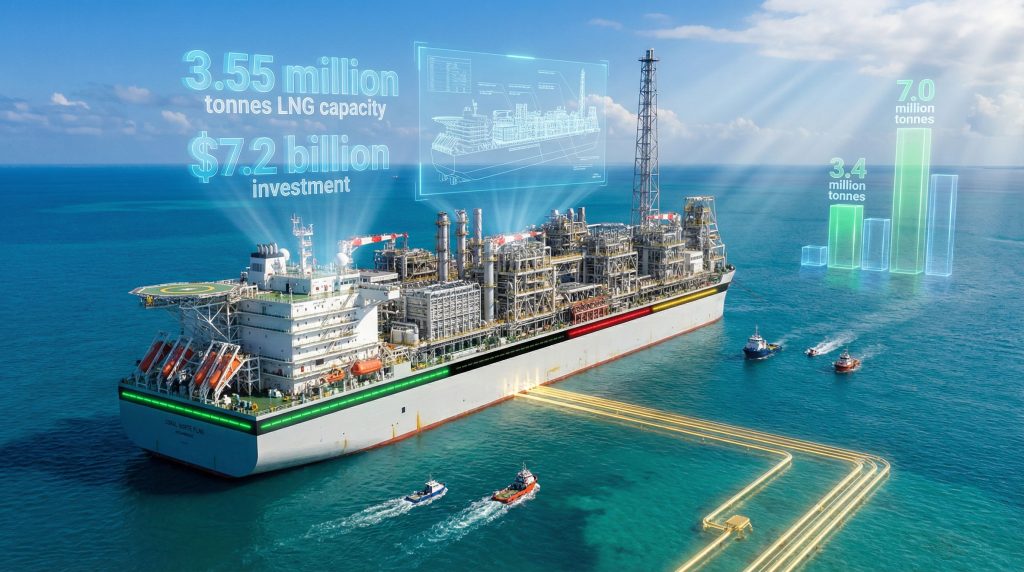
The Coral Norte FLNG project demonstrates sophisticated replication engineering, where proven technological frameworks are systematically optimised rather than redesigned from scratch. This $7.2 billion floating facility will produce 3.55 million tonnes of LNG annually, with commercial operations scheduled for Q2 2028.
The project's technical foundation builds upon operational insights gained from Coral Sul FLNG, which achieved production startup in 2022 within the same Rovuma Basin block. This sister-unit approach reduces design phase duration and minimises equipment procurement lead times compared to first-generation FLNG developments.
Key Technical Specifications:
- Annual liquefaction capacity: 3.55 million tonnes LNG
- Development timeline: 30 months from FID to commercial production
- Hull fabrication location: Samsung Heavy Industries, Geoje shipyard, South Korea
- Design methodology: Enhanced Coral Sul FLNG replica with operational refinements
The compressed 30-month development schedule requires precise coordination across multiple engineering phases. Hull launch completion occurred in January 2026, followed by topside module integration spanning Q2 2026 through Q1 2027.
Advanced Liquefaction Technology Integration
Coral Norte incorporates multi-stage refrigeration cycles optimised for deepwater African offshore environments. The facility's liquefaction train efficiency improvements likely include advanced heat exchanger geometries that reduce energy consumption per tonne of LNG produced.
Cascade refrigeration cycle refinements enhance compressor staging and intercooling mechanisms, reducing mechanical work requirements compared to earlier FLNG generations. However, the broader context of energy exports challenges facing resource-rich nations demonstrates the importance of technological innovation in maintaining competitive positions.
Waste heat recovery systems capture process thermal energy, minimising external power demands during liquefaction operations. These efficiency gains translate directly into operational cost reductions and enhanced project economics over the facility's 20-25 year operational lifecycle.
Technip Energies Secures Strategic Engineering Contract
The French engineering corporation's contract award reflects demonstrated expertise in complex offshore floating production systems and proven ability to coordinate multinational technical consortiums. Technip Energies leads a tri-national partnership comprising Japan's JGC Corporation and South Korea's Samsung Heavy Industries, creating integrated engineering capabilities across three countries.
Consortium Structure Analysis:
| Partner | Role | Technical Contribution |
|---|---|---|
| Technip Energies (France) | Lead Engineering Contractor | Project management, systems integration |
| JGC Corporation (Japan) | Process Design Specialist | Liquefaction system engineering |
| Samsung Heavy Industries (South Korea) | Fabrication & Installation | Hull construction, offshore logistics |
The contract encompasses three primary technical domains: engineering phase development, equipment procurement across international supply chains, and integration preparation protocols for topside module assembly. This distributed expertise model mitigates execution risk while leveraging specialised capabilities from each consortium member.
JGC Corporation contributes advanced process design expertise, particularly in liquefaction system thermodynamics and process optimisation. Samsung Heavy Industries has been awarded the contract for hull construction and offshore installation capabilities through their Geoje shipyard facility.
Risk Distribution Through International Partnership
The tri-national consortium structure distributes technical and financial risk across established engineering firms with complementary specialisations. This approach contrasts with single-contractor models that concentrate execution risk within one organisation.
Historical collaboration between these partners on similar offshore projects provides operational precedent for complex project coordination. The Mozambique Rovuma Venture joint venture awarded the contract, representing operator Eni alongside partners ExxonMobil and CNPC.
Production Capacity Transformation in African LNG Markets
Coral Norte's operational deployment will fundamentally restructure Mozambique's position within African and global LNG supply chains. The facility's 3.55 million tonnes annual capacity will combine with existing Coral Sul production to establish approximately 7.0 million tonnes of combined national LNG output.
Mozambique LNG Production Evolution:
| Metric | Current Capacity | Post-Coral Norte | Growth Multiple |
|---|---|---|---|
| Annual Production | 3.4 million tonnes | 7.0 million tonnes | 2.1x |
| African Regional Ranking | 5th | 3rd | +2 positions |
| Global Market Share | 0.9% | 1.8% | 2.0x increase |
This production expansion positions Mozambique as Africa's third-largest LNG producer, surpassing established suppliers like Equatorial Guinea and approaching Angola's current output levels. The country will trail only Nigeria and Angola in continental LNG production capacity following Coral Norte's commercial startup.
Strategic Market Positioning
The doubling of national LNG production capacity addresses global supply chain diversification objectives, particularly for Asian energy markets seeking alternatives to traditional suppliers. In addition, industry innovation trends demonstrate how technological advancement continues reshaping resource extraction and processing capabilities.
Mozambique's geographical position provides efficient shipping routes to both Asian and European LNG import terminals, enhancing the country's strategic value in global energy trade. Regional competition dynamics will shift as Mozambique's expanded capacity influences pricing mechanisms and supply contract negotiations.
Tanzania's Julius Nyerere FLNG development, scheduled for late-2020s deployment, represents potential additional regional supply that could further reshape African LNG market structures.
Technological Innovations in Deepwater FLNG Operations
The Technip Energies Mozambique Coral Norte Gas Project incorporates engineering refinements developed through analysis of Coral Sul FLNG's operational performance since 2022. These enhancements span three critical technical domains: thermodynamic efficiency optimisation, structural resilience enhancement, and process automation advancement.
What Weather Challenges Does Coral Norte Face?
The Rovuma Basin offshore environment presents specific meteorological challenges requiring specialised design solutions. Tropical cyclone systems generate wind speeds exceeding 150 km/h, while design wave heights reach 12-15 metres during extreme weather events.
Strong ocean currents affect mooring system stability and require robust anchoring solutions. Consequently, the project team has developed enhanced design elements to address these challenges.
Enhanced Design Elements:
- Optimised hull geometry for improved stability during extreme sea states
- Redundant mooring systems rated for elevated environmental loads
- Reinforced topside structural frames reducing vibration and movement
- Advanced ballasting systems for enhanced operational stability
These weather resistance capabilities ensure continuous production operations during challenging environmental conditions while maintaining safety standards for onboard personnel and equipment systems.
Process Automation Advancement
Modern FLNG facilities employ distributed control systems and supervisory control platforms enabling real-time production optimisation. Coral Norte's automation systems provide continuous monitoring of liquefaction process parameters, production rates, and equipment operational status.
Predictive maintenance networks utilise sensor technology to detect equipment degradation patterns before failure occurrence, reducing unplanned downtime and maintenance costs. For instance, autonomous load balancing systems automatically adjust liquefaction train throughput in response to sea state conditions and market demand variations.
Remote operations capabilities reduce onsite personnel requirements through advanced control system integration, enhancing operational safety while reducing operational expenses over the facility's lifecycle.
Rovuma Basin Geological Advantages
The Area 4 block within Mozambique's Rovuma Basin contains proven natural gas reserves exceeding 85 trillion cubic feet, providing substantial resource base justification for multiple FLNG facility deployments. The basin's offshore location offers optimal water depths between 1,200-2,000 metres, suitable for floating production unit operations.
Subsea Infrastructure Requirements
The geological profile supports efficient subsea well development through stable seabed conditions that minimise foundation complexity for wellhead equipment and subsea production systems. Gas reservoir characteristics enable high-rate production wells that maximise individual well productivity.
Strategic geographical positioning provides direct access to major international shipping routes, minimising transportation costs to key LNG import markets in Asia and Europe. The basin's location approximately 40 kilometres offshore ensures minimal environmental impact on coastal communities while maintaining operational efficiency.
Resource Base Analysis:
- Proven gas reserves: 85+ trillion cubic feet
- Optimal water depth: 1,200-2,000 metres
- Seabed stability: Suitable for subsea infrastructure
- Distance from shore: ~40 kilometres
- Production well potential: High-rate individual wells
The next major ASX story will hit our subscribers first
International Joint Venture Structure
The Mozambique Rovuma Venture represents sophisticated multinational collaboration between major energy corporations with complementary technical capabilities and market access. Italian operator Eni provides project leadership and operational management expertise, while American energy giant ExxonMobil contributes advanced LNG processing technologies.
China National Petroleum Corporation brings essential Asian market access through established LNG distribution networks and long-term supply contract relationships. This partnership structure enables efficient project financing, risk distribution, and market penetration across multiple geographical regions.
Operational Coordination Mechanisms
The joint venture structure requires sophisticated coordination mechanisms to align different corporate cultures, technical standards, and operational procedures. Regular consortium meetings establish technical decisions, budget allocations, and timeline coordination across multiple international jurisdictions.
Shared governance protocols ensure all partners maintain appropriate input into major project decisions while preserving operational efficiency under Eni's operator designation. This governance approach has proven effective on large-scale international energy projects requiring substantial capital investment and technical complexity.
Investment Scale and Regional Context
The $7.2 billion Coral Norte investment represents one of the largest single-phase energy projects in East Africa, reflecting the strategic importance of LNG supply chain diversification in global energy markets. This capital deployment exceeds the predecessor Coral Sul project's $4.7 billion investment, demonstrating scaled project economics.
Regional Investment Comparison:
| Project | Investment Value | Annual Capacity | Cost per Tonne |
|---|---|---|---|
| Coral Norte | $7.2 billion | 3.55 million tonnes | $2.03 billion |
| Coral Sul | $4.7 billion | 3.4 million tonnes | $1.38 billion |
| Angola LNG | $10+ billion | 5-6 million tonnes | $1.67-2.0 billion |
| Average African LNG | $3-5 billion | 2-3 million tonnes | $1.5-2.5 billion |
The total Rovuma Basin investment potential exceeds $50 billion across multiple development phases, establishing the region as a major global energy development zone. However, potential trade war impacts and broader concerns about a global market recession could influence future investment decisions.
Project Timeline Management and Critical Path Activities
The compressed 30-month development schedule from final investment decision to commercial production requires precise coordination of multiple parallel engineering activities. Critical path management focuses on equipment procurement lead times, fabrication scheduling constraints, and offshore installation weather windows.
Development Phase Timeline:
- Hull fabrication and launch: October 2025 – January 2026 ✓
- Topside module construction: Q2 2026 – Q1 2027
- Integration and testing: Q2 2027 – Q3 2027
- Offshore installation: Q4 2027
- Commissioning and startup: Q1 2028 – Q2 2028
Weather window constraints limit offshore installation activities to specific seasonal periods when sea state conditions enable safe heavy-lift operations. The Rovuma Basin's meteorological patterns provide optimal installation windows during Southern Hemisphere winter months, requiring precise scheduling coordination.
Supply Chain Risk Management
International equipment sourcing across multiple countries introduces supply chain complexity requiring sophisticated logistics coordination. Critical components include liquefaction compressors, heat exchangers, electrical systems, and specialised subsea equipment manufactured by different suppliers globally.
Buffer time allocation within the project schedule accounts for potential supply chain disruptions, equipment delivery delays, and integration complexity. The contract award for Mozambique's FLNG megaproject demonstrates the scale of coordination required.
Economic Multiplier Effects and Local Development
Beyond direct LNG production revenues, the Technip Energies Mozambique Coral Norte Gas Project generates substantial economic multiplier effects through local content requirements, skills transfer initiatives, and infrastructure development programmes. Government fiscal projections estimate $23 billion in tax revenues over the project's operational lifetime.
Economic Impact Projections:
- Total tax revenue: $23 billion over project lifetime
- Local contractor allocation: $3 billion in contracts
- Direct employment: 2,000+ construction positions
- Indirect employment: 8,000+ supply chain positions
- Annual operational jobs: 400+ permanent positions
Local content requirements mandate specific percentages of project value must be allocated to Mozambican contractors and suppliers, fostering domestic industry development and technical capability building.
Infrastructure Development Catalyst
The project catalyses broader regional infrastructure improvements including port facility upgrades, transportation network enhancements, and telecommunications system improvements. These infrastructure investments provide long-term economic benefits extending beyond the immediate project timeline.
Supply chain development initiatives establish local manufacturing capabilities for offshore energy equipment, creating sustainable economic activity that supports future energy projects across the region. This industrial development approach transforms Mozambique from a resource extraction economy toward value-added manufacturing and services.
Investment Considerations: This analysis is provided for informational purposes and does not constitute investment advice. Offshore energy projects involve substantial technical, financial, and regulatory risks that potential investors should carefully evaluate. Project timelines, cost estimates, and production forecasts are subject to change based on technical, environmental, and market conditions. Readers should consult qualified financial advisors and conduct independent research before making investment decisions related to energy sector opportunities.
Looking to Capitalise on Major Resource Discoveries?
Discovery Alert delivers instant notifications on significant ASX mineral discoveries using its proprietary Discovery IQ model, providing subscribers with rapid insights into actionable trading opportunities before the broader market responds. Begin your 14-day free trial today at Discovery Alert and gain the competitive edge needed to identify the next transformative resource discovery.