June 9, 2026
Understanding the Technology-Driven Transformation of Modern Mining
The convergence of digital innovation with traditional resource extraction represents one of the most significant industrial shifts of our time. How technology changing mines and minds extends beyond mere equipment upgrades to encompass a comprehensive reimagining of operational frameworks, safety protocols, and economic viability models becomes evident through advanced automation systems, predictive analytics, and integrated monitoring technologies.
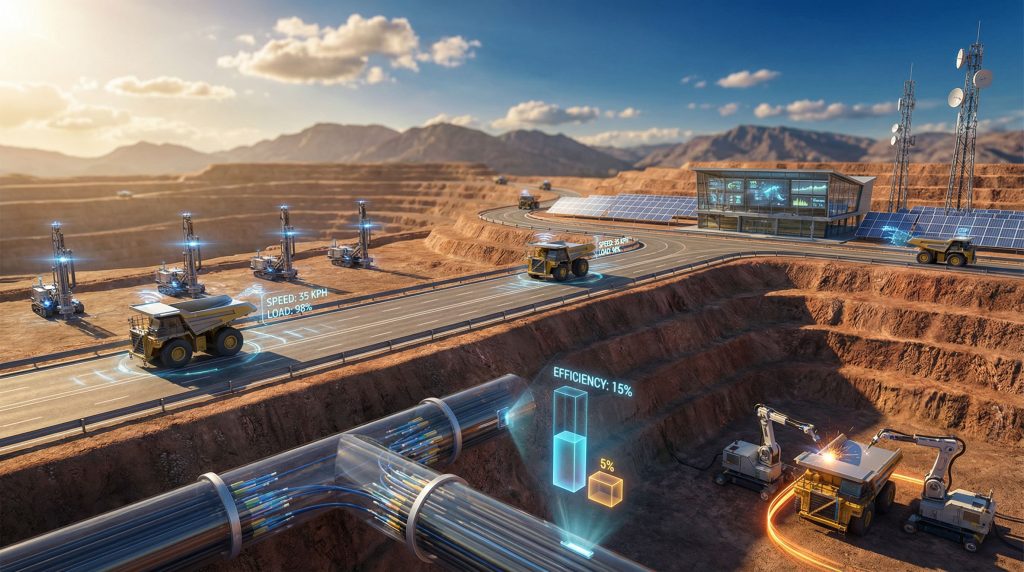
Mining enterprises worldwide are discovering that marginal ore deposits, previously considered economically unviable, can achieve profitability through strategic technology implementation. This paradigm shift enables operations to transform modest 5% returns into robust 15% profit margins through enhanced efficiency protocols. The implications extend far beyond individual mine sites, influencing regional employment patterns, educational frameworks, and long-term resource development strategies.
When big ASX news breaks, our subscribers know first
Technological Systems Revolutionising Extraction Operations
The modern mining landscape increasingly relies on sophisticated technological frameworks that optimise every aspect of resource extraction. Autonomous vehicle systems equipped with precision navigation capabilities are replacing traditional fleet management approaches, while real-time data-driven mining insights enable instantaneous operational adjustments based on geological conditions.
Furthermore, AI-driven drilling advances are revolutionising the precision and efficiency of extraction operations. These innovations demonstrate how technology changing mines and minds creates measurable improvements in both operational performance and cognitive requirements for mining professionals.
Autonomous Systems and Robotics Integration
Remote operation centres now control multiple mining sites simultaneously, reducing on-site personnel requirements while maintaining operational efficiency. These command centres utilise advanced collision avoidance systems that process thousands of data points per second, ensuring safe coordination between autonomous vehicles, stationary equipment, and human operators.
Fleet management algorithms analyse route optimisation continuously, adjusting pathways based on:
- Traffic density patterns within mine sites
- Equipment maintenance schedules
- Geological condition changes
- Weather impact assessments
- Production target adjustments
The integration of these systems requires substantial infrastructure investment, yet the operational cost reductions typically justify expenditures within two to three years of implementation. Mining operations report significant improvements in fuel efficiency, equipment utilisation rates, and overall productivity metrics following autonomous system deployment.
Predictive Analytics and Machine Learning Applications
Machine learning algorithms now predict equipment failures days or weeks before traditional maintenance schedules would identify potential issues. These systems analyse vibration patterns, temperature fluctuations, hydraulic pressure variations, and operational load data to determine optimal maintenance timing.
Fatigue detection systems monitor operator alertness through biometric sensors, eye-tracking technology, and behavioural pattern analysis. These safety mechanisms reduce workplace incidents by identifying cognitive impairment before it impacts operational performance. The technology particularly benefits shift workers operating heavy machinery in challenging environmental conditions.
Moreover, 3D geological modeling represents another critical application of predictive analytics. Real-time geological modelling adjusts extraction patterns based on mineral concentration analysis, maximising valuable material recovery while minimising waste rock processing. This approach significantly improves project economics, particularly for operations dealing with variable ore body characteristics.
Digital Twin Technology Implementation
Virtual mine modelling enables operational planning with unprecedented precision. Digital twin systems create comprehensive three-dimensional representations of mining operations, incorporating geological data, equipment specifications, environmental conditions, and production parameters. These models facilitate scenario testing without disrupting active operations.
Integration challenges persist between legacy mining software and modern digital twin platforms. Many operations maintain multiple software ecosystems for different operational aspects, requiring careful coordination to achieve seamless data flow. Successful implementations typically involve phased integration approaches that gradually replace older systems while maintaining operational continuity.
Safety Technology Revolution in Mining Operations
Traditional reactive safety management approaches are rapidly evolving toward proactive risk mitigation strategies enabled by advanced monitoring systems. This transformation represents more than technological upgrade; it signifies a fundamental cultural shift within mining organisations regarding safety investment priorities.
Proactive Safety Management Systems
| Traditional Safety Approach | Technology-Enhanced Safety |
|---|---|
| Post-incident investigation | Predictive risk modelling |
| Scheduled safety inspections | Continuous automated monitoring |
| Paper-based incident reporting | Real-time digital alert systems |
| Reactive equipment maintenance | Predictive failure prevention |
| Manual hazard identification | Automated environmental sensing |
Modern safety systems process environmental data continuously, identifying potential hazards before they impact operations. Gas detection networks monitor air quality in real-time, automatically triggering ventilation adjustments or evacuation protocols when necessary. Ground stability monitoring uses seismic sensors to detect structural changes that could indicate imminent rock falls or tunnel instability.
Cultural Transformation in Safety Perception
Mining companies increasingly recognise that enhanced safety protocols directly correlate with improved operational efficiency. This understanding has shifted safety technology from a regulatory compliance expense to a strategic operational investment. Workers experience reduced stress levels when supported by comprehensive safety monitoring, leading to improved decision-making and higher productivity.
Additionally, companies focusing on safety interview preparation demonstrate how technology changing mines and minds influences recruitment and workforce development strategies.
"Safety technology implementation creates a positive feedback loop where reduced incident rates improve operational continuity, justifying continued investment in advanced safety systems."
The integration of safety technology with operational efficiency metrics demonstrates measurable returns on investment. Operations utilising comprehensive safety monitoring report lower insurance costs, reduced regulatory scrutiny, and improved community relations, contributing to overall project viability.
Workforce Skills Evolution for Technology-Enhanced Operations
The transformation from traditional mining roles to technology-integrated positions requires comprehensive skill development across multiple domains. Modern mining professionals must combine technical competency with analytical thinking capabilities while maintaining situational awareness in increasingly automated environments.
Technical Competency Requirements
Data interpretation skills have become fundamental for mining professionals at all levels. Equipment operators must understand diagnostic information displayed through digital interfaces, while supervisors analyse production metrics to optimise operational parameters. This shift requires educational programmes that integrate data literacy with traditional mining knowledge.
Digital system operation demands familiarity with multiple technology platforms simultaneously. A single operator might interact with:
- Autonomous vehicle control systems
- Environmental monitoring dashboards
- Equipment maintenance scheduling platforms
- Production planning software
- Safety compliance tracking systems
Troubleshooting capabilities extend beyond mechanical systems to include software diagnostics and network connectivity issues. Modern mining professionals must understand how technological components interact within integrated systems, enabling rapid problem identification and resolution.
Cognitive Skill Development
Decision-making processes increasingly rely on algorithmic insights rather than exclusively experiential judgement. Mining professionals must learn to interpret data-driven recommendations while applying contextual knowledge to validate automated suggestions. This balance requires training programmes that emphasise critical thinking alongside technical instruction.
Understanding technology-human interface dynamics becomes crucial as operations integrate autonomous systems with human oversight. Workers must recognise when to trust automated systems and when human intervention improves outcomes. This judgement develops through experience with technology-assisted operations rather than traditional classroom instruction alone.
Regional Technology Adoption Patterns
Geographic variations in mining technology implementation reflect diverse regulatory environments, infrastructure capabilities, and investment priorities. Understanding these patterns provides insights into global mining industry evolution and identifies opportunities for technological advancement.
African Technology Integration Leadership
South Africa's early adoption of safety technology, driven by stringent Department of Mineral and Petroleum Resources regulations, positioned the region as a testing ground for mining innovation. This regulatory framework created market demand for advanced safety systems, encouraging technology providers to develop Africa-specific solutions.
Regional technology deployment now extends across multiple African countries, with operations in Ghana, Morocco, and developing markets in Saudi Arabia. These implementations demonstrate successful technology transfer from developed mining jurisdictions to emerging markets, creating employment opportunities while maintaining international safety standards.
Government support mechanisms vary significantly across African nations:
- Ghana: Focus on gold mining technology optimisation
- Morocco: Integration with phosphate processing automation
- South Africa: Comprehensive safety technology mandates
- Saudi Arabia: Digital transformation initiatives for diversification
Global Implementation Variations
Investment patterns in mining technology reflect regional priorities and economic conditions. Developed mining markets emphasise productivity enhancement and cost reduction, while emerging markets prioritise safety improvements and workforce development. These different focuses create diverse technology adoption pathways with varying implementation timelines.
Regulatory frameworks significantly influence technology deployment rates. Jurisdictions with prescriptive safety requirements accelerate safety technology adoption, while regions emphasising environmental protection drive innovations in monitoring and mitigation systems.
Economic Impact of Mining Technology Transformation
The financial implications of technology adoption extend beyond immediate operational improvements to influence long-term asset valuation and investment strategies. Understanding these economic dynamics helps stakeholders evaluate technology implementation priorities and expected returns.
Marginal Operations Becoming Profitable
Technology implementation enables previously uneconomical ore bodies to achieve commercial viability through enhanced extraction efficiency and reduced operational costs. This transformation particularly benefits brownfield operations where existing infrastructure reduces capital requirements for technology integration.
Economic modelling demonstrates that technology-enhanced operations can achieve 15% returns on investments that previously generated only 5% margins under traditional extraction methods. This improvement stems from:
- Reduced operating costs: Automated systems require fewer personnel while maintaining productivity
- Improved recovery rates: Precision extraction techniques maximise valuable mineral recovery
- Enhanced equipment utilisation: Predictive maintenance reduces downtime and extends asset life
- Optimised processing: Real-time ore grade analysis improves mill efficiency
Brownfield Expansion Opportunities
Existing mining operations benefit significantly from technology upgrades that enable expanded extraction from known ore bodies. Digital modelling identifies previously inaccessible or uneconomical mineral deposits within established mining concessions, extending operational life without additional exploration investment.
Near-field development opportunities emerge as technology reduces extraction costs below traditional economic thresholds. Operations can justify expanding into adjacent areas that were previously considered marginal, increasing overall project scale and improving economies of scale.
The next major ASX story will hit our subscribers first
Implementation Challenges and Solutions
Successful technology integration requires addressing complex technical, financial, and organisational obstacles. Understanding these challenges enables mining companies to develop realistic implementation strategies with appropriate risk mitigation measures.
Integration Complexity Management
Legacy system compatibility presents ongoing challenges for technology deployment. Many mining operations utilise specialised software developed over decades, creating integration obstacles when implementing modern systems. Successful implementations typically employ middleware solutions that translate data between old and new platforms while preserving operational continuity.
Training requirements extend beyond basic equipment operation to encompass systematic thinking about integrated technological systems. Workforce development programmes must address:
- Technical competency building through hands-on training with new equipment
- Analytical skills development for data interpretation and decision-making
- Change management support to address cultural resistance to technological adoption
- Continuous learning frameworks to accommodate ongoing technological evolution
Cultural change management represents perhaps the most significant implementation challenge. Traditional mining cultures emphasise experiential knowledge and proven methods, creating resistance to data-driven approaches. Successful transformations require demonstrated benefits and gradual implementation strategies that build confidence in technological solutions.
Financial and Infrastructure Barriers
Capital requirements for comprehensive technology implementation can exceed operational budgets for smaller mining companies. Financing solutions increasingly include technology leasing arrangements and performance-based payment structures that align costs with operational improvements.
Remote location connectivity challenges limit technology deployment in many mining regions. Advanced mining technology solutions address these limitations through satellite communication systems and edge computing solutions, though implementation costs remain significant.
Return on investment timelines vary significantly based on operational scale, technology complexity, and local economic conditions. Mining companies must balance immediate productivity improvements against long-term strategic advantages when evaluating technology investments.
Future Technology Trends in Mining Operations
Emerging technological developments will continue reshaping mining operations through enhanced automation, improved data analytics, and integration with broader industrial systems. Understanding these trends enables strategic planning for long-term operational optimisation.
Next-Generation Automation Systems
Artificial intelligence advancement promises more sophisticated decision-making capabilities for autonomous mining systems. Future implementations will process complex operational variables simultaneously, optimising extraction patterns in real-time based on geological conditions, equipment status, market prices, and environmental factors.
Sustainability technology integration will become increasingly important as environmental regulations tighten globally. Future mining operations will incorporate carbon footprint monitoring, water usage optimisation, and ecosystem impact assessment into standard operational protocols.
Workforce Evolution Projections
Job role transformations over the next decade will emphasise human-technology collaboration rather than simple automation replacement. Mining professionals will increasingly function as system supervisors, data analysts, and strategic planners while automated systems handle routine operational tasks.
Skills gap identification reveals growing demand for professionals who combine traditional mining knowledge with advanced technological competencies. Educational institutions are developing specialised curriculum to address these requirements, though industry-specific training programmes remain essential for practical skill development.
Human-technology collaboration models will define successful mining operations in the coming decade. The most effective implementations will optimise human expertise for complex problem-solving while leveraging technology for precision, consistency, and data processing capabilities.
Strategic Implementation Framework for Mining Companies
Developing comprehensive technology adoption strategies requires systematic approaches that address technical requirements, financial constraints, and organisational capabilities. Successful implementations follow structured methodologies that minimise risk while maximising operational improvements.
How Should Companies Approach Technology Adoption?
Gradual implementation strategies reduce disruption while building organisational confidence in technological solutions. Initial phases typically focus on safety systems and data collection, establishing foundation capabilities for more advanced automation systems.
Stakeholder engagement throughout implementation ensures buy-in from operational personnel, management teams, and external partners. Regular communication about benefits, challenges, and progress maintains support for technology initiatives even when implementation difficulties arise.
Performance measurement systems must track both traditional mining metrics and technology-specific indicators. Comprehensive assessment includes productivity improvements, safety enhancements, cost reductions, and workforce satisfaction measures.
Technology Integration Best Practices
Change management methodologies specifically designed for mining operations address industry-specific cultural and operational considerations. Successful programmes emphasise practical demonstrations of technology benefits rather than theoretical advantages.
Training and development programmes must accommodate diverse learning styles and experience levels within mining workforces. Effective approaches combine classroom instruction, hands-on practice, and mentorship programmes that pair technology-savvy personnel with experienced mining professionals.
Continuous improvement processes ensure technology systems evolve with operational requirements and technological advancement. Regular system updates, performance optimisation, and capability expansion maintain competitive advantages while addressing emerging challenges.
Furthermore, staying aligned with mining innovation trends ensures companies remain competitive in an increasingly technology-driven industry landscape.
This analysis demonstrates how technology changing mines and minds continues reshaping the mining industry through 2025 and beyond. Future technological advancement and market conditions will further influence implementation strategies and outcomes. Mining companies should conduct specific feasibility studies before making major technology investment decisions.
Ready to Invest in Technology-Enhanced Mining Discoveries?
Discovery Alert's proprietary Discovery IQ model delivers instant alerts on significant ASX mineral discoveries from technology-advanced mining operations, enabling subscribers to identify actionable opportunities ahead of the broader market. Visit Discovery Alert's discoveries page to understand how major mineral discoveries can generate substantial returns, then begin your 14-day free trial today to secure your competitive advantage in this rapidly evolving sector.