June 21, 2026
The Technology Revolution Reshaping Mineral Discovery Economics
Modern mineral exploration stands at the intersection of geological science and digital transformation, where traditional drilling methods are giving way to precision-guided technologies that fundamentally alter project economics. As mining companies face mounting pressure to discover new deposits while minimising environmental impact, Imdex exploration technology and similar advanced navigation systems are becoming essential tools for competitive advantage in an increasingly challenging resource landscape.
The shift toward technology-enabled exploration represents more than incremental improvement. Furthermore, it signals a fundamental restructuring of how companies approach resource discovery, moving from volume-based drilling strategies to precision-targeted methodologies that optimise both capital efficiency and geological understanding.
When big ASX news breaks, our subscribers know first
Precision Navigation Systems Transform Drilling Accuracy
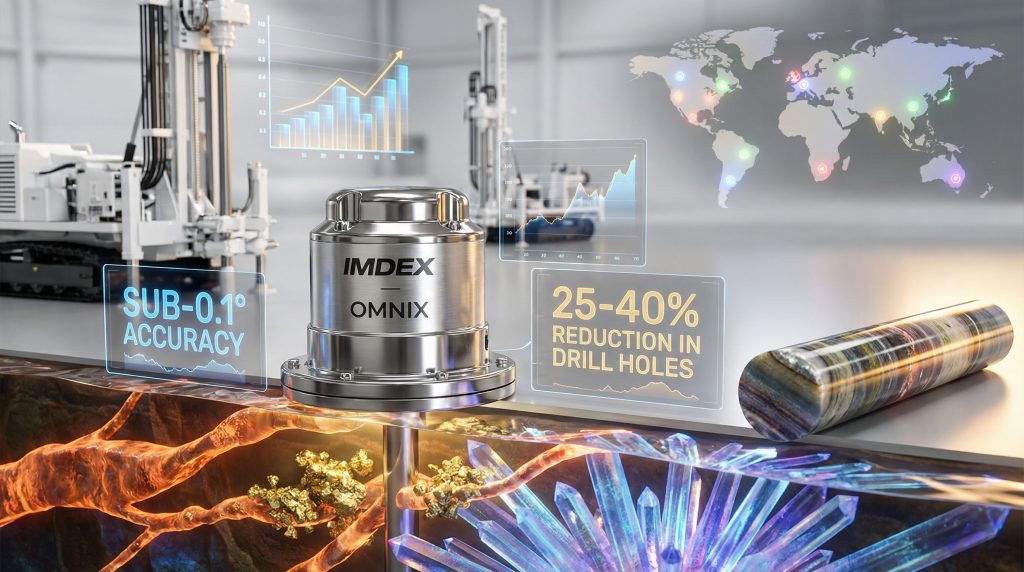
Modern exploration programs increasingly rely on sophisticated guidance technologies that deliver unprecedented accuracy in subsurface navigation. Advanced gyroscopic systems now provide directional measurements with sub-0.1 degree precision, enabling geologists to guide drill holes along predetermined paths with remarkable consistency. This level of accuracy allows exploration teams to intersect specific geological targets that might be missed using conventional drilling approaches.
In addition, ai transforming drilling operations through machine learning algorithms that continuously improve targeting accuracy based on real-time geological feedback.
The Economics of Precision Targeting
The financial implications of enhanced drilling accuracy extend far beyond immediate operational savings. When exploration teams can precisely target geological features, the number of required drill holes typically decreases by 25-40% compared to traditional grid-based approaches. This reduction translates directly into lower programme costs, faster project completion times, and reduced environmental disturbance.
| Exploration Method | Average Drill Holes | Programme Duration | Typical Cost Range |
|---|---|---|---|
| Traditional Grid Drilling | 15-20 per target | 6-8 weeks | $2.0-3.0 million |
| Precision-Guided Drilling | 8-12 per target | 3-5 weeks | $1.2-1.8 million |
| Efficiency Improvement | 35-40% reduction | 40-50% faster | 35-40% cost savings |
The technology's impact extends beyond simple cost reduction. Consequently, precise navigation capabilities enable exploration of previously inaccessible areas, including deep deposits beneath infrastructure or environmentally sensitive zones where surface drilling points are limited. This expanded reach opens new geological territories for mineral discovery while maintaining operational flexibility.
Real-Time Decision Making Through Digital Integration
Cloud-based analytics platforms are revolutionising how exploration teams process and interpret geological data. Instead of waiting weeks for laboratory results and manual data compilation, modern systems provide near-instantaneous feedback that enables critical decisions during active drilling operations. However, this real-time capability allows geologists to modify drill programmes based on emerging geological evidence, potentially discovering ore zones that might otherwise be missed.
The integration of artificial intelligence and machine learning algorithms into exploration workflows adds another dimension of analytical power. For instance, data-driven operations now utilise pattern recognition systems that can identify geological signatures associated with mineralisation, helping exploration teams focus their efforts on the most promising areas.
Advanced Sensor Technologies Enhance Geological Understanding
Modern exploration relies heavily on sophisticated measurement technologies that provide detailed information about rock properties, structural characteristics, and mineral content. Digital core orientation systems automatically record the spatial relationships of geological features, eliminating human error in critical structural measurements and providing accurate input for three-dimensional geological models.
Multi-Parameter Measurement Capabilities
Advanced sensor arrays can simultaneously measure multiple geological parameters during drilling operations. Gamma logging systems provide real-time information about rock chemistry and mineralogy, while structural measurement tools record fracture patterns, bedding orientations, and other geological features that influence ore body geometry.
Modern exploration sensors can collect and process geological data at rates exceeding 1,000 measurements per minute, providing unprecedented detail about subsurface conditions while drilling operations continue uninterrupted.
These measurement capabilities enable continuous geological assessment rather than relying solely on discrete sample points. Furthermore, the resulting data density provides exploration geologists with detailed information needed to understand complex ore body shapes and optimise resource estimation accuracy through drilling results interpretation.
Quality Assurance and Data Integrity
Automated quality control systems embedded within modern exploration technologies significantly reduce the risk of data collection errors that can compromise geological interpretations. Real-time validation algorithms check measurement consistency and flag potential problems before they affect downstream analysis. This systematic approach to data quality management helps ensure that critical exploration decisions are based on reliable information.
GPS-integrated positioning systems provide precise location data for all measurements, enabling accurate spatial correlation between different data types. In addition, this positional accuracy is essential for creating detailed geological models that accurately represent subsurface conditions and support reliable resource calculations.
Economic Impact Analysis for Modern Exploration Programs
The adoption of advanced exploration technologies creates measurable improvements in project economics through multiple mechanisms. Direct cost savings from reduced drilling requirements represent the most obvious benefit, but additional value creation occurs through faster project timelines, improved geological understanding, and enhanced resource definition accuracy.
Operational Efficiency Improvements
Technology-enhanced exploration programmes typically achieve significant improvements in operational efficiency metrics:
- Drilling productivity: Automated systems reduce non-productive time by 15-25%
- Data processing speed: Real-time analytics eliminate 60-70% of traditional processing delays
- Decision-making acceleration: Immediate data availability enables same-day programme modifications
- Quality control enhancement: Automated validation systems reduce data errors by 80-90%
Risk Mitigation Through Enhanced Information
Improved data quality and quantity from advanced exploration technologies help reduce geological uncertainty, which directly impacts project risk profiles. Better geological understanding enables more accurate resource estimates, reduces the likelihood of disappointing development outcomes, and supports more confident investment decisions.
The ability to modify exploration programmes in real-time based on emerging geological evidence also reduces the risk of missing significant mineralisation due to rigid pre-planned drilling patterns. However, this adaptive capability is particularly valuable in complex geological environments where initial geological models may require substantial revision as new information becomes available.
Critical Minerals Discovery in Complex Geological Settings
The global transition toward renewable energy technologies has created unprecedented demand for critical minerals including lithium, cobalt, rare earth elements, and other battery metals. Many of these commodities occur in geologically complex environments that challenge traditional exploration methods, making advanced navigation and measurement technologies essential for successful discovery programmes.
Consequently, companies like IMDEX are developing specialised solutions to address these challenges in critical mineral exploration.
Deep Deposit Exploration Capabilities
Modern exploration technologies excel in deep drilling applications where traditional methods face significant challenges. Precise navigation systems maintain directional control at depths exceeding 800 metres, enabling exploration of previously inaccessible deposits. This extended reach capability is particularly important for critical mineral exploration, as many significant deposits occur at depths that were technically or economically challenging to explore using conventional methods.
Advanced drilling fluid engineering systems optimise hole stability and drilling performance in challenging geological conditions. These systems incorporate real-time monitoring of drilling parameters and automatic adjustment of fluid properties to maintain optimal drilling conditions throughout extended drilling operations.
Multi-Commodity Targeting Strategies
Complex geological environments often contain multiple mineral commodities that require different exploration approaches and analytical techniques. Modern exploration technologies can simultaneously evaluate multiple commodity targets during single drilling programmes, improving exploration efficiency and reducing per-target exploration costs.
This multi-commodity approach is particularly relevant for critical mineral exploration, where deposits may contain several valuable elements that justify mining operations. For instance, comprehensive geological evaluation during initial exploration phases helps identify all potentially valuable commodities, supporting more accurate economic assessments and development planning.
Sustainable Exploration Practices Through Technology Innovation
Environmental stewardship has become an essential component of modern exploration programmes, driven by regulatory requirements, community expectations, and corporate sustainability commitments. Advanced exploration technologies support these objectives through multiple mechanisms that reduce environmental impact while maintaining exploration effectiveness.
Environmental Impact Reduction Strategies
Precision drilling technologies significantly reduce surface disturbance by minimising the number of required drill sites and enabling access to targets from consolidated drilling locations. This approach reduces road construction requirements, limits habitat fragmentation, and minimises the overall exploration footprint.
Water usage optimisation represents another important environmental benefit. Closed-loop drilling fluid systems reduce water consumption and eliminate discharge of contaminated fluids into the environment. Furthermore, these systems also enable exploration in water-scarce regions where traditional drilling methods would be environmentally or socially unacceptable.
Waste Minimisation Through Digital Analysis
Digital core analysis technologies reduce the volume of physical samples required for geological evaluation. Advanced imaging and measurement systems can extract detailed geological information from core samples without destroying them, preserving sample material for future analysis while reducing storage and disposal requirements.
Remote monitoring capabilities enable exploration teams to optimise drilling programmes without maintaining large field crews, reducing logistical requirements and associated environmental impacts. In addition, this approach is particularly valuable for exploration in remote or environmentally sensitive areas where minimising human presence is important for environmental protection.
The next major ASX story will hit our subscribers first
Global Mining Technology Ecosystem Integration
The adoption of advanced exploration technologies reflects broader industry evolution trends toward digitalisation and automation throughout the mining industry. Successful exploration technology providers must integrate their solutions with existing mining company workflows, enterprise resource planning systems, and broader technology ecosystems to deliver maximum value.
Market Position and Competitive Dynamics
The exploration technology market includes both specialised service providers and diversified mining service companies that offer technology solutions alongside traditional services. Leading companies in this sector typically maintain extensive patent portfolios protecting core technologies and establish global service networks to support international mining company operations.
Geographic diversification represents a critical success factor, as exploration activity levels vary significantly between different mining regions and commodity cycles. Consequently, companies with operations spanning multiple continents can maintain more stable revenue streams and leverage regional expertise to support technology development and deployment.
Innovation Pipeline Development
Continuous technology development remains essential for maintaining competitive advantage in the rapidly evolving exploration services sector. Current development priorities include enhanced artificial intelligence capabilities, improved sensor technologies, and integration with emerging technologies such as autonomous drilling systems and satellite-based geological analysis.
The convergence of exploration technologies with broader digital mining initiatives creates opportunities for integrated solutions that span the entire mining value chain. However, these integrated approaches can provide mining companies with seamless technology platforms that support everything from initial exploration through mine development and production operations.
Implementation Strategies for Mining Company Technology Adoption
Successful integration of advanced exploration technologies requires careful planning and change management to ensure that new capabilities enhance rather than disrupt existing exploration workflows. Mining companies must consider technical compatibility, staff training requirements, and organisational readiness when implementing new technology solutions.
Change Management and Training Considerations
Technology adoption success depends heavily on user acceptance and competency development among geological and drilling personnel. Comprehensive training programmes must address both technical operation of new systems and interpretation of enhanced data outputs that may differ significantly from traditional exploration information.
Major mining companies often implement technology adoption through pilot programmes that demonstrate value before company-wide deployment. For instance, these pilot projects provide opportunities to refine workflows, identify implementation challenges, and develop best practices that support broader technology deployment.
Performance Measurement and Value Quantification
Mining companies increasingly demand quantifiable performance improvements from technology investments, requiring exploration service providers to develop comprehensive metrics that demonstrate value creation. Key performance indicators typically include discovery success rates, resource definition accuracy, exploration cost efficiency, and project timeline improvements.
Regular performance reviews and technology optimisation ensure that exploration technologies continue delivering value throughout their operational lifecycle. Furthermore, these reviews also identify opportunities for technology upgrades and additional capability development that can enhance exploration effectiveness.
Future Technology Development Trajectories
The exploration technology sector continues evolving rapidly as new innovations emerge from research institutions, technology companies, and internal mining company development programmes. Current development trends suggest significant advances in automation, artificial intelligence applications, and integration with satellite-based earth observation systems.
Artificial Intelligence and Machine Learning Integration
Next-generation exploration systems will incorporate more sophisticated artificial intelligence algorithms that can recognise complex geological patterns and make recommendations for exploration programme optimisation. These systems will learn from successful exploration programmes and continuously improve their predictive capabilities.
Virtual and augmented reality technologies offer new possibilities for geological data visualisation and interpretation, enabling geologists to examine subsurface conditions in three-dimensional virtual environments. In addition, 3d geological modelling capabilities can improve geological understanding and support more effective exploration decision-making.
Automation and Autonomous System Development
The integration of exploration technologies with autonomous drilling systems represents a significant development opportunity that could further improve exploration efficiency and safety. Fully autonomous exploration programmes could operate continuously in remote locations with minimal human supervision, significantly reducing operational costs and safety risks.
Advanced automation may also enable exploration in previously inaccessible environments, including extreme weather conditions, politically unstable regions, or environmentally sensitive areas where human presence must be minimised. However, these developments require careful consideration of regulatory frameworks and safety protocols.
Strategic Investment Considerations for the Exploration Technology Sector
The exploration technology sector presents attractive investment opportunities driven by increasing global demand for mineral resources, technological advancement, and industry consolidation trends. However, investors must carefully evaluate market timing, competitive positioning, and technology differentiation when assessing investment opportunities.
Companies are increasingly focusing on critical mineral discovery acceleration to meet growing demand for battery materials and renewable energy infrastructure components.
Market Cycle Considerations
Exploration technology companies are leveraged to exploration spending cycles, which typically follow broader commodity price trends with some time delay. Current market conditions suggest improving exploration spending as mining companies seek to replace depleted reserves and develop new projects to meet growing mineral demand.
The critical minerals supply shortage creates additional demand for exploration technologies that can discover new deposits of battery metals, rare earth elements, and other materials essential for energy transition technologies. Consequently, this specialised demand may provide more stable revenue streams than traditional exploration services tied to cyclical commodity markets.
Technology Differentiation and Competitive Moats
Successful exploration technology companies typically maintain competitive advantages through patent protection, specialised expertise, and established customer relationships. The technical complexity of advanced exploration systems creates barriers to entry that protect market-leading companies from competitive pressure.
Global service networks and local expertise represent additional competitive moats that are difficult for new entrants to replicate quickly. Furthermore, these operational capabilities become particularly valuable as mining companies expand exploration activities into new geographical regions and challenging geological environments.
Imdex exploration technology continues to demonstrate the transformative potential of precision-guided exploration systems in improving discovery success rates while reducing environmental impact and operational costs across diverse geological settings worldwide.
Disclaimer: This analysis contains forward-looking statements and industry projections that involve inherent uncertainties and risks. Exploration technology performance, market conditions, and company-specific results may differ materially from projections presented. Potential investors should conduct independent research and consider consulting with qualified professionals before making investment decisions. Past performance does not guarantee future results, and all investments carry risk of loss.
Ready to Capitalise on the Next Major Mineral Discovery?
Discovery Alert's proprietary Discovery IQ model delivers instant alerts on significant ASX mineral discoveries, transforming complex geological data into actionable investment opportunities that keep subscribers ahead of market movements. Explore how historic discoveries have generated substantial returns for early investors and begin your 14-day free trial today to secure your competitive advantage in the rapidly evolving mineral exploration sector.