May 16, 2026
The Technology Revolution Behind Modern Lithium Recovery
Global commodity trading partnerships are fundamentally reshaping how critical mineral projects secure financing and market access in today's volatile energy transition landscape. The lithium sector exemplifies this transformation, where sophisticated financial engineering meets cutting-edge extraction technology to address supply chain vulnerabilities that threaten battery manufacturing across North America.
When Traxys backs US lithium DLE developer projects through billion-dollar offtake agreements, the strategic implications extend far beyond simple commodity purchasing arrangements. These partnerships represent integrated risk management frameworks that combine proprietary extraction technologies, global distribution networks, and supply chain financing capabilities to accelerate domestic mineral production timelines.
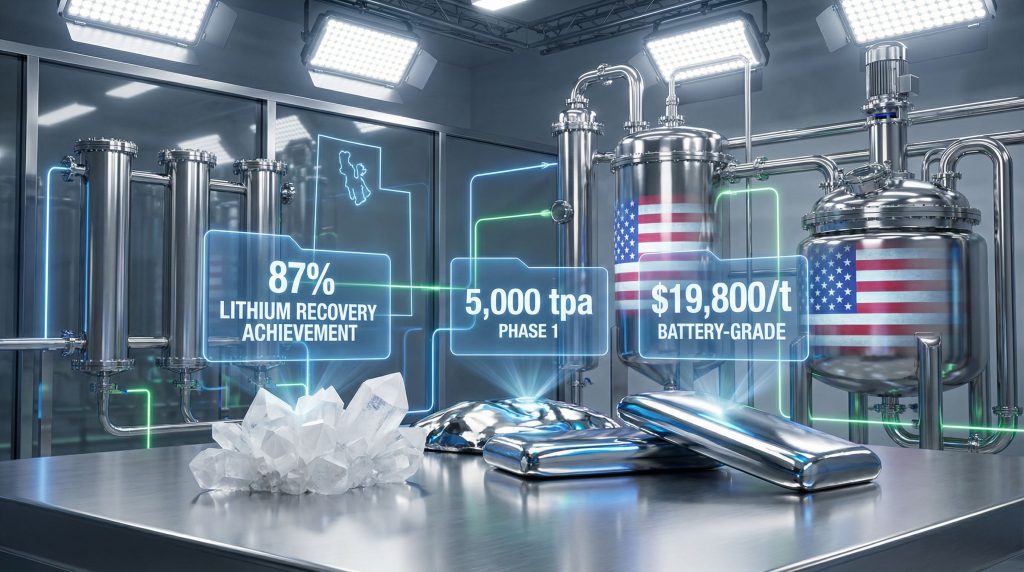
Ion exchange technology fundamentals have revolutionised lithium recovery efficiency metrics compared to traditional evaporation pond methods. Lilac Solutions achieved 87% lithium recovery during pilot plant operations in 2025 on low-grade brine containing just 69 mg/litre lithium concentration at Utah's Great Salt Lake facility. This recovery rate demonstrates how Gen 5 ion exchange systems can extract lithium from previously uneconomical brine resources.
The technological breakthrough centres on selective ion separation mechanisms that eliminate the need for massive evaporation pond infrastructure. Traditional lithium extraction methods require extensive land use and consume significant water resources over 12-24 month processing cycles. Furthermore, direct lithium extraction (DLE) technology compresses this timeline to hours while achieving higher purity levels.
Comparative Efficiency Analysis
| Extraction Method | Recovery Rate | Water Usage | Processing Time | Land Footprint |
|---|---|---|---|---|
| Traditional Evaporation | 30-50% | High consumption | 12-24 months | 1,000+ acres |
| Ion Exchange DLE | 87%+ | Minimal consumption | Hours to days | 10-50 acres |
| Selective Membrane | 70-85% | Moderate consumption | 1-7 days | 50-200 acres |
Environmental impact analysis reveals that DLE technology reduces water consumption by over 90% compared to conventional methods while eliminating evaporation pond requirements entirely. The non-consumptive process design enables high lithium recovery with minimal water use, providing sustainable alternatives for regions facing water scarcity constraints.
When big ASX news breaks, our subscribers know first
Why Utah's Great Salt Lake Represents Untapped Domestic Potential
Utah's Great Salt Lake basin contains extensive brine resources that have remained largely unexploited due to their relatively low lithium concentrations. However, advanced ion exchange technology has transformed the economic viability of these deposits by achieving commercial recovery rates from brines previously considered sub-economic.
The proposed 5,000 tonnes per annum (tpa) Phase 1 facility aims to nearly double current US lithium carbonate production capacity. Phase 2 expansion scenarios envision 20,000 tpa production levels, representing a four-fold capacity increase that would position the facility among North America's largest lithium carbonate producers.
Resource grade analysis indicates that Great Salt Lake brines average 69 mg/litre lithium concentration, classified as low-grade compared to premium South American salar deposits exceeding 500 mg/litre. Despite this grade differential, the 87% recovery achievement during pilot operations validates commercial feasibility using proprietary ion exchange technology.
Strategic location advantages for North American supply chains include:
- Proximity to battery manufacturing hubs in Nevada, California, and the Southeast US
- Established transportation infrastructure connecting to major interstate highway and rail networks
- Favourable regulatory environment with streamlined permitting processes for mining operations
- Skilled workforce availability from Utah's established mining and chemical processing industries
- Access to renewable energy sources for sustainable production operations
US Lithium Resource Distribution
| Region | Resource Type | Grade Range | Development Status |
|---|---|---|---|
| Nevada (Clayton Valley) | Brine | 200-400 mg/L | Production |
| Utah (Great Salt Lake) | Brine | 50-100 mg/L | Development |
| California (Salton Sea) | Brine | 150-300 mg/L | Development |
| Arkansas (Smackover) | Brine | 100-250 mg/L | Exploration |
The FEL-3 engineering completion status and progressing regulatory approvals position the Great Salt Lake project among the most advanced domestic lithium developments. This technical milestone indicates detailed engineering designs, equipment specifications, and construction planning have reached final investment decision readiness levels.
How Multi-Billion Dollar Offtake Agreements Structure Risk Distribution
Long-term commodity purchase contracts have evolved into sophisticated financial instruments that allocate development risks between producers, traders, and end-users across multi-year production cycles. The Traxys-Lilac Solutions agreement exemplifies how modern offtake structures provide project financing certainty while securing strategic mineral supplies.
The 10-year offtake agreement valued at approximately USD $1 billion covers 100% of planned Phase 1 output at current lithium carbonate prices of USD $19,800 per tonne. This pricing benchmark represents the strongest battery-grade lithium carbonate levels in more than two years, reflecting tight global supply conditions and robust demand from battery manufacturers.
Take-or-pay agreement structures typically include several risk allocation mechanisms:
- Volume commitment guarantees ensuring minimum annual purchase quantities
- Price mechanism frameworks linking payments to market benchmarks or fixed escalation schedules
- Force majeure provisions addressing operational disruptions beyond producer control
- Quality specification requirements defining acceptable lithium carbonate purity standards
- Delivery timing protocols establishing shipment schedules and penalty structures
Offtake Agreement Value Components
| Component | Phase 1 Volume | Current Pricing | Annual Value | 10-Year Total |
|---|---|---|---|---|
| Base Production | 5,000 tpa | $19,800/tonne | $99 million | $990 million |
| Quality Premiums | Variable | 2-5% premium | $2-5 million | $20-50 million |
| Logistics Adjustments | Included | Freight costs | Neutral | Neutral |
Price mechanism analysis reveals that volatile lithium markets require sophisticated hedging strategies to manage commodity price risk exposure. Current spot pricing at $19,800 per tonne compares to historical lows below $6,000 per tonne in 2020 and peaks exceeding $80,000 per tonne in 2022, demonstrating extreme price volatility that necessitates long-term contract protection.
Volume commitment strategies across project phases provide production ramp-up flexibility while ensuring minimum revenue guarantees. The 100% offtake commitment for Phase 1 production eliminates marketing risk during initial operations, allowing management to focus on operational optimisation and expansion planning. This approach reflects broader trading house strategies emerging across critical mineral markets.
What Role Do Global Trading Houses Play in Critical Mineral Development
Commodity trading giants like Traxys operate as financial and commercial intermediaries that bridge the gap between mineral producers and industrial end-users. With approximately USD $10 billion in annual revenue, Traxys represents one of the world's leading lithium traders with decades of experience in global lithium markets.
Market access and distribution network advantages include established relationships with battery manufacturers, chemical processors, and industrial consumers across multiple continents. These networks provide immediate market penetration capabilities that individual mining companies would require years to develop independently.
Supply chain financing capabilities enable trading houses to provide working capital, prepayment facilities, and project development funding that accelerates production timelines. This financial engineering combines traditional commodity trading with structured finance solutions tailored to mining project requirements.
Trading House Value Proposition
The combination of proprietary technology and global market reach creates integrated value delivery systems that transform mineral development economics. Trading houses provide not just market access, but comprehensive commercial solutions spanning financing, logistics, and risk management.
Risk management across geographic markets allows trading houses to diversify supply sources and customer bases, reducing concentration risk that could impact individual producers. This geographic diversification provides stability during regional market disruptions or geopolitical tensions affecting specific supply corridors.
The Traxys strategic partnership model integrates multiple value chain functions:
- Physical commodity marketing through established global distribution networks
- Supply chain financial services including working capital and project financing
- Market intelligence and price discovery leveraging decades of trading experience
- Quality assurance and logistics coordination ensuring delivery reliability
- Technology integration support combining extraction innovation with commercial expertise
Consequently, when Traxys backs US lithium DLE developer initiatives, it provides comprehensive commercial infrastructure that transforms project economics and reduces development timelines compared to traditional financing models. These partnerships furthermore enable commodity market analysis that identifies optimal market entry timing.
Why US Domestic Lithium Projects Are Critical for Battery Supply Security
Geopolitical risk assessment in lithium supply chains reveals concerning concentration levels among producing countries and processing facilities. China controls over 60% of global lithium chemical processing capacity, while Chile and Australia dominate raw material production, creating supply vulnerabilities for North American battery manufacturers.
Import dependency analysis shows that the United States imports over 95% of its lithium requirements, primarily from Argentina, Chile, and China. This dependency exposes domestic battery production to supply disruptions from trade disputes, export restrictions, or transportation bottlenecks affecting international supply chains.
Strategic mineral classification under the Critical Materials List designates lithium as essential for national security and economic prosperity. The Department of Defense and Department of Energy have identified domestic lithium production as a priority for reducing foreign supply dependencies in defence and energy applications.
US Lithium Production Outlook 2026-2030
| Facility | Location | Technology | Capacity (tpa) | Production Start |
|---|---|---|---|---|
| Silver Peak | Nevada | Evaporation | 5,000 | Operating |
| Great Salt Lake | Utah | DLE | 5,000 | 2027 |
| Salton Sea Projects | California | Geothermal DLE | 15,000+ | 2026-2028 |
| Smackover Formation | Arkansas | DLE | 10,000+ | 2028-2030 |
Supply chain resilience planning scenarios indicate that domestic production capacity of 35,000+ tpa by 2030 could reduce import dependency to approximately 70%, significantly improving supply security for critical applications. However, this capacity remains insufficient to meet projected US demand exceeding 100,000 tpa by 2030.
Production capacity impact analysis demonstrates that even modest domestic capacity additions provide strategic benefits beyond volume substitution. Domestic production serves as a supply buffer during international disruptions and provides price benchmarking alternatives to imported materials.
The expansion of Thacker Pass production alongside new Utah developments represents a coordinated approach to reducing import dependency while supporting battery manufacturing competitiveness across North American markets.
How Environmental Sustainability Drives DLE Technology Adoption
Comparative environmental footprint analysis positions DLE technology as a transformative approach to lithium extraction that addresses mounting sustainability concerns surrounding traditional mining methods. Conventional evaporation pond operations consume millions of gallons of water annually while occupying thousands of acres with industrial infrastructure.
Water consumption metrics reveal dramatic efficiency improvements with DLE systems requiring less than 10% of the water needed for traditional evaporation methods. This reduction proves particularly valuable in arid regions where water scarcity limits conventional lithium extraction feasibility.
Environmental Impact Comparison
| Impact Category | Traditional Evaporation | DLE Technology | Improvement Factor |
|---|---|---|---|
| Water Consumption | 500,000 L/tonne Li | 50,000 L/tonne Li | 10x reduction |
| Land Use | 1,000+ acres | 10-50 acres | 20x+ reduction |
| Processing Time | 12-24 months | Hours to days | 100x+ reduction |
| Chemical Additives | Extensive | Minimal | 5x+ reduction |
Land use requirements demonstrate similar sustainability advantages with DLE facilities occupying a fraction of the footprint required for evaporation pond complexes. This land efficiency reduces environmental impact while minimising community opposition and regulatory approval timelines.
Regulatory compliance advantages include streamlined environmental permitting processes due to reduced water usage, eliminated evaporation pond requirements, and minimal chemical additive consumption. These factors accelerate project development schedules while reducing regulatory approval risks.
Investor ESG considerations increasingly influence mining project financing decisions, with institutional investors applying stringent environmental performance benchmarks to capital allocation. DLE technology's sustainability profile attracts ESG-focused investment capital that might otherwise avoid traditional lithium extraction projects.
Geothermal brine extraction technologies offer similar sustainability advantages across global markets, demonstrating broad applicability of advanced extraction methods beyond North American operations.
The next major ASX story will hit our subscribers first
Strategic Investment Opportunities in Lithium Partnership Models
Market positioning analysis reveals multiple stakeholder categories benefiting from strategic lithium partnerships between technology developers and commodity trading houses. Equipment suppliers, engineering firms, financial institutions, and end-users each capture value from integrated development models.
Technology licensing and deployment scalability create recurring revenue opportunities for DLE technology developers beyond individual project ownership. Successful pilot plant operations at Great Salt Lake validate technology performance across diverse brine compositions, supporting licensing opportunities at other global brine resources.
Geographic expansion potential for DLE applications extends beyond North American markets to include lithium-rich brines in Argentina, Bolivia, and other regions where water scarcity or environmental regulations favour advanced extraction methods over traditional evaporation approaches. Lithium brine insights from South American markets indicate growing demand for sustainable extraction technologies.
Investment Risk Categories
| Risk Type | Impact Level | Mitigation Strategies | Timeline |
|---|---|---|---|
| Technology Performance | High | Pilot plant validation | 1-2 years |
| Market Price Volatility | Medium | Long-term offtake contracts | Ongoing |
| Regulatory Approval | Medium | Early stakeholder engagement | 2-3 years |
| Operational Scaling | Medium | Experienced management teams | 3-5 years |
Partnership replication strategies across brine resources suggest that successful Traxys-Lilac Solutions model could be applied to other domestic lithium projects, creating a template for accelerated critical mineral development. This approach combines proven technology with established commercial frameworks.
Risk-return profile assessment indicates that strategic partnerships reduce individual project risk while maintaining upside exposure to lithium market growth. Trading house involvement provides market access certainty that independent producers struggle to achieve during volatile market conditions.
Future Implications for Critical Mineral Development Strategies
Replication potential across other strategic minerals extends beyond lithium to include rare earth elements, copper, nickel, and other materials designated as critical for energy transition and national security applications. The financial engineering and risk allocation frameworks developed for lithium partnerships provide templates for broader critical mineral development.
Rare earth element extraction applications could benefit from similar technology-trading partnerships, particularly for unconventional deposits requiring advanced processing methods. The integration between technology developers and trading houses creates development models applicable across multiple critical mineral categories.
Strategic mineral security policy implications suggest that successful domestic lithium production could influence federal policy approaches to other critical materials. Demonstrated success in reducing import dependency through strategic partnerships may encourage policy support for similar initiatives across the critical minerals spectrum.
Long-Term Market Structure Evolution
The integration between technology developers and trading houses represents a fundamental shift in mining industry business models. Traditional vertical integration approaches are being supplemented by strategic partnerships that combine specialised technical capabilities with global commercial expertise.
Key structural trends include:
- Technology-trading house partnerships replacing traditional mining company integration
- Supply chain financing innovation providing alternatives to project finance models
- Risk-sharing frameworks distributing development risks across multiple stakeholders
- Market access optimisation through established global distribution networks
- Acceleration of project development timelines via commercial certainty and financing
Vertical supply chain consolidation trends indicate that battery manufacturers may increasingly seek direct partnerships with mineral producers to ensure supply security. These relationships could bypass traditional commodity trading channels, creating new competitive dynamics in critical mineral markets.
Innovation financing model development demonstrates how strategic partnerships enable higher-risk technology deployment by sharing development costs and market risks across multiple parties. This approach accelerates innovation adoption compared to traditional single-company development models.
Lithium industry innovations in Australia and other markets showcase similar partnership-driven development models that combine technological advancement with commercial expertise.
Frequently Asked Questions About Strategic Lithium Partnerships
What distinguishes DLE technology from conventional lithium extraction?
DLE technology uses ion exchange or selective membrane systems to extract lithium directly from brines within hours or days, compared to traditional evaporation methods requiring 12-24 months. DLE achieves higher recovery rates (80%+ vs. 30-50%) while using 90% less water and requiring dramatically smaller land footprints.
How do offtake agreements reduce project development risks?
Long-term offtake agreements eliminate marketing risk by guaranteeing sales channels and pricing mechanisms before production begins. They provide revenue certainty that enables project financing and reduce exposure to commodity price volatility during initial operations. The guaranteed purchase commitments support debt financing and attract equity investment.
Why is domestic lithium production strategically important for the US?
The United States currently imports over 95% of lithium requirements, creating supply vulnerabilities in defence and energy applications. Domestic production reduces dependency on potentially unstable supply chains while supporting battery manufacturing competitiveness. Strategic minerals designation recognises lithium's importance for national and economic security.
What environmental advantages does DLE technology offer?
DLE technology eliminates evaporation ponds, reduces water consumption by 90%, and minimises land use requirements compared to traditional methods. The technology produces higher-purity lithium products while reducing chemical processing requirements and environmental remediation liabilities.
Strategic Implications for North American Energy Transition
Strategic partnerships between lithium technology developers and global trading houses represent a fundamental evolution in critical mineral development that addresses multiple market failures simultaneously. These integrated models combine technical innovation with commercial expertise to accelerate domestic supply chain development while managing risks across multiple stakeholders.
Technology-trading partnerships serve as development accelerators by providing commercial certainty that enables faster project financing and construction timelines. The combination of proprietary extraction technology with established global distribution networks creates competitive advantages that individual companies struggle to achieve independently.
Domestic supply chain security considerations increasingly influence corporate and government strategy as geopolitical tensions highlight vulnerabilities in critical mineral imports. Strategic partnerships offer pathways to supply chain resilience that balance economic efficiency with security requirements.
Environmental sustainability competitive advantages position DLE technology partnerships as preferred development models for institutional investors applying ESG criteria to investment decisions. The reduced environmental footprint attracts capital that might otherwise avoid traditional mining investments.
Key takeaways for industry stakeholders include:
- Strategic partnerships accelerate critical mineral development by combining specialised capabilities across the value chain
- Technology innovation enables economic extraction from previously unviable domestic resources
- Risk distribution across multiple parties reduces individual project risks while maintaining upside potential
- Environmental benefits create competitive advantages in attracting ESG-focused investment capital
- Market access integration through trading house networks provides commercial certainty for project development
Investment model innovation in critical minerals suggests that when Traxys backs US lithium DLE developer projects, it creates frameworks that will likely be replicated across other strategic mineral partnerships, creating new templates for accelerated domestic resource development in support of North American energy transition objectives.
Disclaimer: This analysis is based on publicly available information and should not be considered investment advice. Mineral development projects involve significant risks including technology performance, market volatility, regulatory approval, and operational execution. Potential investors should conduct independent due diligence and consult with qualified professionals before making investment decisions.
Looking to Capitalise on Critical Mineral Discoveries?
Discovery Alert's proprietary Discovery IQ model delivers real-time alerts on significant lithium and critical mineral discoveries across the ASX, instantly empowering subscribers to identify actionable opportunities ahead of the broader market. Begin your 30-day free trial today and secure your market-leading advantage in the rapidly evolving critical minerals sector.