August 19, 2026
How Technology Transforms Critical Resource Recovery in the Digital Age
Modern industrial civilization rests upon a foundation of critical minerals that enable everything from smartphone batteries to renewable energy infrastructure. Yet traditional mining operations face mounting challenges from environmental constraints, geopolitical instability, and resource depletion. The convergence of artificial intelligence with advanced materials recovery represents a fundamental paradigm shift—transforming waste streams into strategic supply sources while reducing dependence on primary extraction.
This technological revolution addresses three interconnected vulnerabilities: supply chain concentration risks that expose economies to geopolitical leverage, environmental degradation from conventional mining operations, and the accelerating gap between global demand for critical materials and sustainable production capacity.
When big ASX news breaks, our subscribers know first
Strategic Applications of AI-Enhanced Material Recovery Systems
Advanced Recovery Targets and Methodologies:
| Material Category | Primary Sources | AI Enhancement | Strategic Importance |
|---|---|---|---|
| Battery Minerals | End-of-life EVs, electronics | Predictive chemistry optimization | Transportation electrification |
| Semiconductor Elements | IT hardware, defense equipment | Supply chain intelligence mapping | Technology infrastructure security |
| Energy Storage Components | Grid batteries, consumer devices | Process efficiency algorithms | Renewable energy scaling |
| Rare Earth Compounds | Industrial waste, electronic scraps | Chemical pathway modeling | Clean technology manufacturing |
AI-driven recycling for critical minerals leverages machine learning algorithms to optimize recovery processes across multiple material categories. Recent partnership initiatives between government research institutions and technology companies demonstrate how these systems can potentially reduce new mining requirements while strengthening domestic supply chains through innovative waste stream processing.
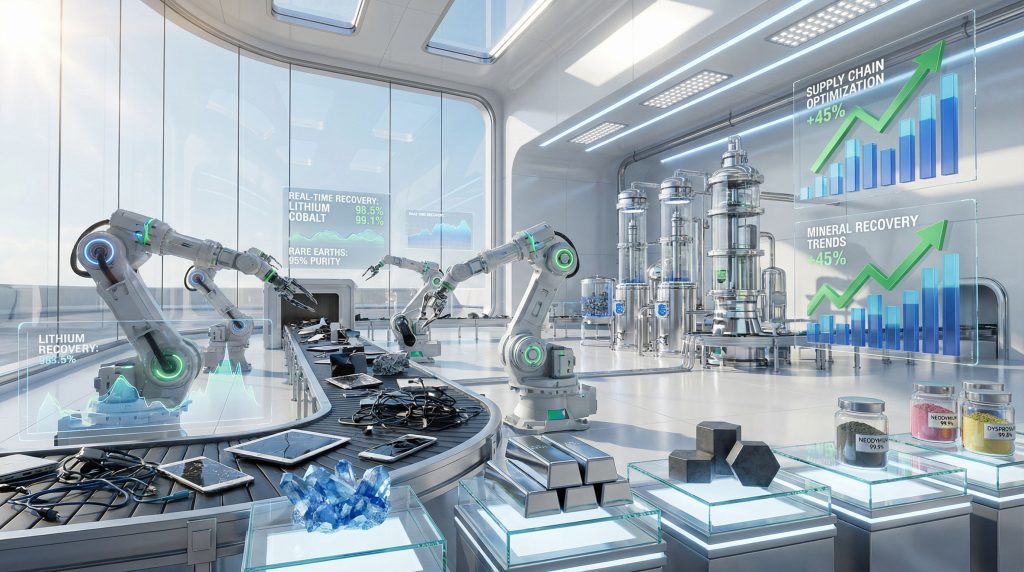
The technological approach combines chemistry-informed predictive models with automated sorting systems and supply chain intelligence platforms. These integrated solutions identify valuable components within complex waste matrices, optimize extraction parameters in real-time, and coordinate logistics to maximize recovery efficiency while minimising operational costs.
Material-Specific Recovery Challenges and Solutions
Lithium Recovery Technologies:
• Direct recycling methods preserving cathode material structure
• Hydrometallurgical processes achieving 95%+ lithium extraction rates
• Pyrometallurgical techniques handling mixed battery chemistries
• Mechanical preprocessing enabling efficient material separation
Companies are increasingly investing in direct lithium extraction technologies to complement traditional methods. Furthermore, battery recycling breakthrough approaches are revolutionising how the industry processes end-of-life components.
Cobalt Extraction Innovations:
• Selective leaching protocols targeting cobalt-specific compounds
• Electrochemical recovery systems producing battery-grade materials
• Bioleaching applications utilising microbial processing methods
• Solvent extraction optimisation maximising purity specifications
Graphite Recovery Mechanisms:
• Thermal treatment processes converting textile waste to battery-grade graphite
• Chemical purification methods achieving 99.95% carbon content
• Structural restoration techniques maintaining electrochemical performance
• Quality assessment protocols ensuring manufacturing specifications
Economic Framework for AI-Driven Recovery Operations
Investment Requirements and Return Projections
Capital Infrastructure Components:
• Processing facility construction: $200-800 million depending on throughput capacity
• AI system integration: $75-150 million for advanced analytics platforms
• Automation equipment: $100-300 million for robotic sorting and handling
• Environmental compliance systems: $50-100 million for air and water treatment
Operational Revenue Streams:
• Recovered material sales typically achieving 75-85% of primary market pricing
• Waste processing fees from electronics manufacturers and automotive companies
• Carbon credit generation through avoided mining emissions and energy consumption
• Strategic material contracts with government stockpile programs
Economic Analysis Note: Industry feasibility studies suggest most large-scale AI-enhanced recycling operations require 7-10 years to achieve full return on investment, with break-even typically occurring when annual processing exceeds 15,000 metric tons of mixed critical mineral waste.
Market Dynamics and Pricing Considerations
Primary Cost Factors:
-
Feedstock acquisition costs ranging from negative (waste disposal credits) to $500 per metric ton
-
Energy consumption representing 25-35% of total operational expenses
-
Labour and maintenance accounting for 15-20% of ongoing costs
-
Regulatory compliance varying significantly by geographic location
Revenue Optimisation Strategies:
-
Product quality premiums for ultra-high purity recovered materials
-
Supply chain integration reducing transportation and logistics expenses
-
Technology licensing generating additional income from AI algorithm deployment
-
Research partnerships accessing government funding and development grants
Industrial Demand Sectors for Recycled Critical Materials
Electric Vehicle Manufacturing Integration
Battery Production Requirements:
The automotive industry represents the fastest-growing market for recycled critical minerals, driven by accelerating EV adoption and supply chain resilience priorities. Battery manufacturers require lithium carbonate at 99.5% minimum purity for cathode production, while cobalt specifications demand 99.8% purity for high-performance applications.
Major automotive manufacturers increasingly incorporate recycled materials into non-premium vehicle segments, creating a tiered adoption model where cost-sensitive applications drive initial market penetration. This approach allows recycled material suppliers to scale operations while refining quality control processes.
Supply Chain Risk Mitigation:
• Domestic sourcing preferences reducing geopolitical supply vulnerabilities
• Long-term purchase agreements providing revenue stability for recycling operations
• Quality certification programs establishing industry standards for recycled materials
• Logistics optimisation minimising transportation costs and environmental impact
Renewable Energy Infrastructure Applications
Wind Power Technology:
Wind turbine manufacturing utilises significant quantities of rare earth permanent magnets, particularly neodymium and dysprosium. Recycled rare earth elements can substitute for virgin materials in many applications, though magnetic performance requirements necessitate careful quality control protocols.
Solar Panel Manufacturing:
Photovoltaic cell production incorporates silver, silicon, and various trace elements that can be effectively recovered from end-of-life panels. The solar industry's rapid growth creates substantial demand for recycled materials, particularly as first-generation installations reach end-of-life in the 2030s.
Grid-Scale Energy Storage:
Utility-scale battery installations represent a major growth market for recycled lithium, cobalt, and graphite. These applications often accept slightly lower purity specifications than automotive batteries, creating opportunities for recycled materials that may not meet automotive-grade standards.
Electronics and Telecommunications Sectors
Smartphone and Consumer Electronics:
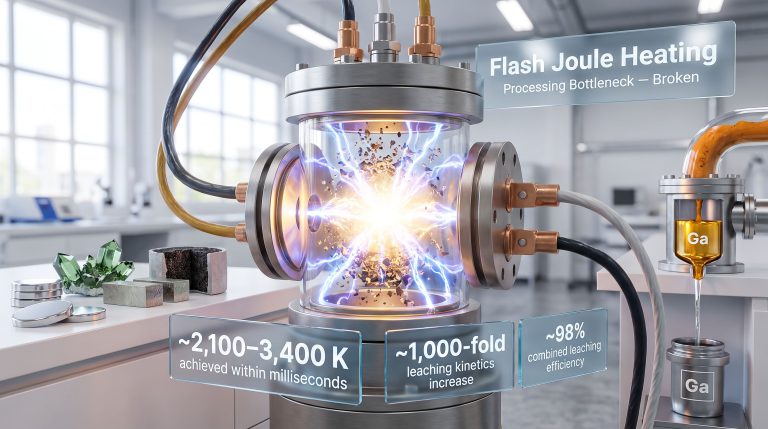
The electronics industry generates both feedstock for recycling operations and demand for recovered materials. In addition, gallium recovery from semiconductor waste supports production of new power electronics, while rare earth elements from speaker magnets enable circular material flows within the industry.
5G Infrastructure Deployment:
Telecommunications equipment manufacturing requires substantial quantities of copper, rare earth elements, and specialised semiconductors. Recycled materials can meet many of these requirements while supporting infrastructure deployment goals and supply chain resilience objectives.
Regulatory Environment and Policy Frameworks
Government Support Mechanisms
Federal Funding Initiatives:
U.S. government support for critical mineral recycling includes comprehensive funding programs targeting domestic supply chain development. The Department of Energy and Amazon partnership has allocated nearly $1 billion in 2025 specifically for strengthening critical mineral supply chains, with significant portions directed toward recycling technology development and deployment.
These investments reflect strategic recognition that recycled materials can reduce import dependence while supporting economic development in domestic manufacturing sectors. Furthermore, policy frameworks increasingly treat waste streams as strategic resources requiring systematic development and protection.
Strategic Stockpile Programs:
Government purchasing agreements provide market stability for recycled critical minerals through guaranteed minimum pricing and volume commitments. These programs reduce investment risks for recycling facility developers while ensuring domestic supply availability during international supply disruptions.
Environmental Compliance Requirements
Circular Economy Mandates:
• Extended producer responsibility creating funding mechanisms for recycling infrastructure
• Recycled content requirements mandating minimum recycled material percentages
• Waste reduction targets driving demand for effective recovery technologies
• Carbon pricing mechanisms improving recycled material cost competitiveness
The mining industry's sustainability transformation increasingly emphasises these circular economy principles. However, implementing comprehensive waste management solutions remains challenging for many operations.
Permitting and Regulatory Approval:
• Environmental impact assessments required for new processing facilities
• Air quality standards governing emissions from thermal processing operations
• Water treatment requirements addressing chemical processing wastewater
• Waste disposal protocols managing residual materials from recovery processes
International Trade Implications
Export Control Considerations:
Recent policy developments include restrictions on critical mineral waste exports, preventing resource leakage while supporting domestic recovery operations. These measures ensure that valuable waste streams remain available for domestic processing rather than being exported for foreign recovery.
Technology Transfer Agreements:
International cooperation frameworks facilitate sharing of recycling technologies and best practices while maintaining competitive advantages in advanced processing capabilities. These agreements balance technology development cooperation with strategic material security objectives.
Technical Limitations and Implementation Challenges
Processing Technology Constraints
Feedstock Quality Variability:
Mixed waste streams present significant technical challenges for AI-driven recycling for critical minerals systems. Contamination levels, material composition variations, and seasonal availability fluctuations impact processing efficiency and product quality. Advanced sorting technologies can address some variability, but economic thresholds limit the extent of contamination that facilities can profitably handle.
Scale-Up Technical Hurdles:
Laboratory-scale recovery processes often encounter unexpected challenges during commercial deployment. Heat transfer limitations, chemical reaction kinetics, and equipment wear rates may differ significantly between bench-scale and industrial operations. Consequently, most successful technologies require 3-5 years of pilot-scale testing before achieving commercial viability.
Economic Viability Thresholds
Minimum Processing Volumes:
Economic analysis indicates that AI-driven recycling for critical minerals facilities require sustained throughput of at least 8,000-12,000 metric tons annually of mixed critical mineral waste to achieve operational profitability. Below these volumes, fixed costs for AI systems, environmental compliance, and specialised equipment cannot be recovered through material sales revenue.
Competition with Primary Production:
Recycled material economics remain vulnerable to commodity price fluctuations that can make virgin material production cost-competitive. This vulnerability requires recycling operations to achieve consistent cost advantages through technological optimisation, government support, or premium pricing for supply security benefits.
Technology Integration Complexities
AI Model Accuracy Requirements:
Machine learning algorithms must maintain 95%+ accuracy rates in material identification and sorting to achieve commercial viability. False positive rates above 5% can contaminate high-value recovered materials, while false negative rates reduce overall recovery efficiency and facility profitability.
Modern facilities increasingly rely on AI-powered mining efficiency systems to address these accuracy requirements. However, integration with existing waste management systems requires substantial coordination and investment.
Infrastructure Compatibility:
Many facilities must upgrade handling equipment, modify facility layouts, and retrain personnel to accommodate AI-driven processing technologies.
The next major ASX story will hit our subscribers first
Global Development and Competitive Dynamics
Regional Innovation Leadership
North American Initiatives:
United States policy support combines research funding with public-private partnerships to accelerate recycling technology deployment. Canadian mining companies increasingly integrate AI technologies into tailings reprocessing operations, leveraging existing infrastructure while developing new revenue streams from previously discarded materials. Mexico's participation in cross-border waste processing agreements creates integrated North American recovery networks.
European Union Strategy:
EU circular economy action plans mandate specific recycling targets while funding research consortiums developing standardised AI recovery protocols. Battery passport systems track materials through their complete lifecycle, enabling optimised recovery and quality assurance for recycled components.
Asia-Pacific Competition:
Japan's urban mining programs focus on extracting precious metals and rare earth elements from electronic waste using advanced separation technologies. South Korea's semiconductor recycling initiatives target gallium and other specialty materials, while Australia integrates AI-enhanced processing into its broader critical minerals strategy.
Technological Innovation Trends
Emerging Processing Methods:
• Bioleaching applications using engineered microorganisms for selective material extraction
• Plasma processing techniques achieving ultra-high purity through controlled thermal environments
• Electrochemical recovery systems enabling direct metal production from complex waste streams
• Molecular recognition technologies providing unprecedented selectivity in material separation
Investment Landscape and Market Opportunities
Technology Development Investment Vectors
Software and Analytics Platforms:
AI software companies specialising in materials science applications represent high-growth investment opportunities as recycling operations scale globally. These platforms optimise processing parameters, predict equipment maintenance needs, and coordinate complex supply chain logistics across multiple facilities and feedstock sources.
Robotics and Automation Equipment:
Specialised sorting and processing equipment manufacturers benefit from growing demand for precision material handling in recycling applications. Advanced robotics systems capable of identifying and separating materials at industrial scale command premium pricing while enabling facility automation.
Infrastructure Development Projects
Facility Construction and Modernisation:
New recycling facility construction represents major infrastructure investment opportunities, particularly in regions with supportive policy frameworks and abundant waste streams. Furthermore, facility modernisation projects upgrading existing operations with AI capabilities offer shorter development timelines and reduced regulatory complexity.
Supply Chain Network Development:
Waste collection and logistics network expansion creates opportunities for specialised transportation, storage, and preprocessing services. These networks require significant capital investment but generate steady revenue streams through long-term service contracts with recycling facilities and waste generators.
Strategic Partnership Models
Public-Private Collaborations:
Joint ventures between technology companies and government research institutions leverage public research investments with private sector capital and operational expertise. These partnerships reduce development risks while accelerating technology transfer from laboratory to commercial deployment.
International Technology Transfer:
Collaboration agreements between companies and research institutions in different countries facilitate technology sharing while creating market access opportunities. These partnerships balance competitive advantages with collective advancement in recycling capabilities and market development.
Future Market Scenarios and Strategic Implications
Accelerated Adoption Pathway (2026-2030)
Market Penetration Projections:
Under favourable policy conditions and continued technology advancement, using AI to improve supply of critical minerals could supply 15-20% of critical mineral demand by 2030. This scenario assumes sustained government support, private sector investment, and successful resolution of technical scaling challenges.
Key enablers include streamlined permitting processes, expanded government purchasing agreements, and achievement of cost parity with primary production for most critical minerals. Supply chain resilience benefits drive adoption even when recycled materials command premium pricing.
Industry Transformation Effects:
Accelerated adoption fundamentally alters global supply chain dynamics, reducing price volatility through diversified supply sources and diminishing geopolitical leverage from supply concentration. Traditional mining companies adapt by integrating recycling operations while new market leaders emerge from technology sectors.
Gradual Integration Scenario (2026-2035)
Steady Technology Improvement:
More conservative scenarios project 8-12% market penetration through gradual technological improvements and incremental policy support. This pathway emphasises complementary roles for recycling alongside continued traditional mining rather than industry transformation.
Regional specialisation develops as different geographic areas focus on specific mineral recovery capabilities based on waste stream availability, technological expertise, and market access. International trade in recycled materials grows while maintaining existing supply chain relationships.
Technology Breakthrough Scenario (2026-2028)
Revolutionary Processing Advances:
Breakthrough scenarios involve rapid AI algorithm improvements achieving 90%+ recovery rates at industrial scale within 2-3 years. Such advances could trigger rapid industry transformation with significant disruption to traditional mining sector economics and global supply relationships.
New market leaders would likely emerge from technology companies rather than traditional resource extraction firms, fundamentally altering industry structure and competitive dynamics. Policy responses would need to address rapid transition effects on employment and regional economies dependent on traditional mining.
Strategic Resource Security Through Technological Innovation
The integration of artificial intelligence with critical mineral recovery represents a fundamental evolution in resource security strategy. By transforming waste streams into reliable supply sources, these systems create resilient alternatives to geographically concentrated primary production while addressing environmental sustainability imperatives that increasingly constrain traditional mining operations.
Success in this transformation depends upon sustained collaboration between government research institutions, private sector technology developers, and industrial end-users. The convergence of materials science expertise, advanced computing capabilities, and strategic policy support positions recycling as a cornerstone of future mineral supply chains that can reduce both environmental impact and geopolitical vulnerability.
Investment opportunities span the complete technology development spectrum, from fundamental AI algorithm research through industrial-scale facility construction and operation. Market dynamics favour early movers who can establish technological advantages and secure strategic partnerships with government agencies and major industrial consumers.
As global demand for critical minerals continues expanding across electric vehicles, renewable energy infrastructure, and advanced electronics, AI-enhanced recovery systems offer a pathway toward supply chain independence while creating new economic opportunities in domestic manufacturing and technology development sectors.
Disclaimer: This analysis incorporates forward-looking projections and market scenarios that involve inherent uncertainties. Investment decisions should consider technological development risks, regulatory changes, and commodity market volatility that could affect project economics and commercial viability.
Looking to Capitalise on Australia's Critical Mineral Opportunities?
Discovery Alert's proprietary Discovery IQ model delivers instant notifications when ASX-listed companies announce significant mineral discoveries, including critical minerals essential for emerging technologies. Stay ahead of market movements with real-time discovery alerts that transform complex geological data into actionable investment insights, helping you identify opportunities before they reach mainstream attention.