
July 23, 2026
When Copper Prices Rewrite Mining Economics: Understanding the Forces Behind Teck's Earnings Transformation
The relationship between copper market structure and mining company earnings has rarely been more visible than it is today. For decades, base metals producers navigated commodity cycles defined by boom-bust price swings, with earnings quality perpetually questioned by institutional investors wary of mean reversion. Teck Q2 profit growth, however, is now challenging that framework at its foundation. Supply deficits driven by years of underinvestment in new mines, accelerating demand from grid electrification and manufacturing reshoring, and declining ore grades at legacy operations are combining to create pricing conditions that reward producers with genuine operational scale and cost discipline.
Within this context, Teck Resources' second quarter 2026 financial results represent something more analytically significant than a strong earnings beat. They reflect what happens when a multi-year strategic repositioning intersects with a structural commodity inflection point at precisely the right moment.
When big ASX news breaks, our subscribers know first
The Numbers Behind Teck Q2 Profit Growth: A Financial Picture in Full
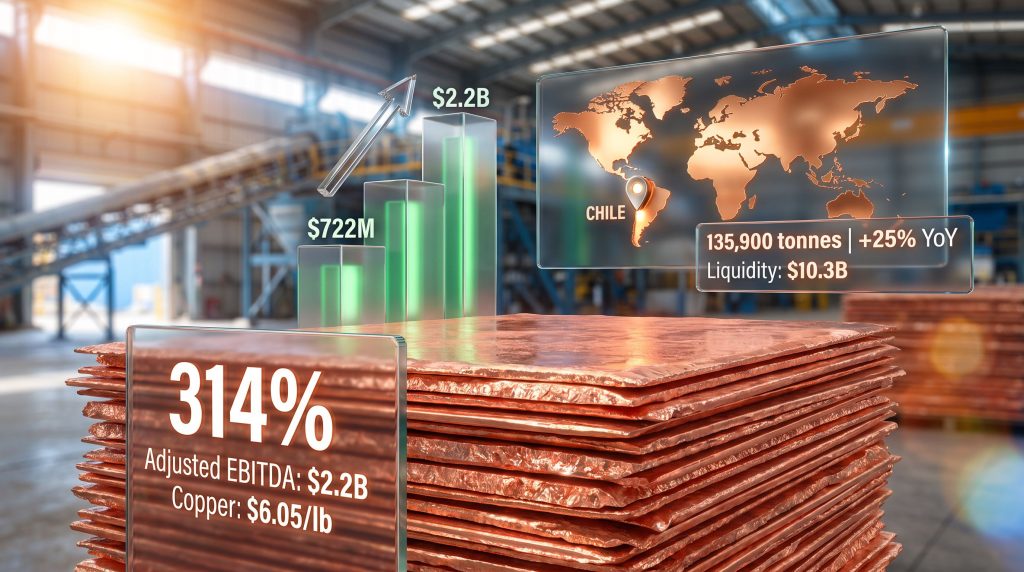
The headline figures from Teck's Q2 2026 results are striking in isolation, but they become even more meaningful when examined against the earnings baseline the company was building from. Attributable profit reached $854 million, or $1.74 per share, compared to $206 million in the same quarter of 2025. That 314% increase in year-on-year profit is not a product of a single favourable variable. It reflects the compounding of higher volumes, record pricing, and improved operational execution occurring simultaneously across multiple assets.
Adjusted EBITDA climbed to $2.2 billion, a 204% increase from the $722 million recorded in Q2 2025. Adjusted attributable profit to shareholders moved from $187 million ($0.38 per share) to $948 million ($1.93 per share), representing an effective per-share earnings expansion of more than 400% on an adjusted basis.
Cash flow from operations reached $1.7 billion during the quarter, strengthening Teck's net cash position by $756 million. Total liquidity at the end of June 2026 stood at $10.3 billion, including $6.1 billion in cash. For a capital-intensive miner operating large-scale development assets, this balance sheet configuration provides strategic optionality that few global peers can match.
Q2 2026 vs Q2 2025: The Year-on-Year Scorecard
| Metric | Q2 2025 | Q2 2026 | Change |
|---|---|---|---|
| Adjusted EBITDA | $722 million | $2.2 billion | +204% |
| Attributable Profit | $206 million | $854 million | +314% |
| Adjusted Attributable Profit | $187 million ($0.38/sh) | $948 million ($1.93/sh) | +407% per share |
| Copper Segment Gross Profit (pre-D&A) | $673 million | $1.8 billion | +167% |
| Zinc Segment Gross Profit (pre-D&A) | $159 million | $353 million | +122% |
| Cash Flow from Operations | N/A | $1.7 billion | N/A |
| Liquidity | N/A | $10.3 billion | N/A |
| Cash on Hand | N/A | $6.1 billion | N/A |
Why the Q2 2025 Baseline Matters for Context
Understanding the Q2 2026 result requires appreciating that Teck's earnings recovery was already underway before the most recent quarter. In Q2 2025, adjusted diluted earnings per share from continuing operations stood at $0.38, itself a 217% year-on-year gain, while diluted EPS from continuing operations reached $0.41, up 925% year-on-year from the post-divestment trough.
Revenue for Q2 2025 reached C$2.023 billion, a 12.3% year-on-year improvement, with profitability supported by improved performance at Trail Operations, lower smelter processing charges, and reduced corporate overhead. Even within that improving environment, headwinds persisted: softer copper and zinc prices relative to today, and elevated operating costs at QB and Highland Valley Copper constrained the full potential of the operational improvements being made.
The Q2 2026 result, then, is not a sudden event. It is the culmination of a recovery arc that had been building momentum for several quarters.
Record Copper Prices: Structural Shift or Cyclical Spike?
Copper prices averaged $6.05 per pound during Q2 2026, a level that is historically unprecedented in real terms. The critical analytical question this creates for investors is whether this represents a sustainable new pricing regime or a cyclically elevated peak that will normalise as supply responds. Understanding the underlying copper price drivers is therefore essential for investors evaluating the durability of Teck's earnings momentum.
The case for structural persistence rests on several converging dynamics:
-
Supply-side constraints: Global copper mine supply has been hampered by declining ore grades at established operations. The average grade of copper ore being processed globally has fallen materially over the past two decades, meaning more rock must be moved and processed to produce the same amount of metal. This is a geological reality that cannot be reversed through price incentives alone.
-
Long project development timelines: The lead time from discovery to first copper production at a greenfield mine typically spans 15 to 20 years, including exploration, feasibility studies, permitting, and construction. Even if capital investment in new supply accelerated today, meaningful new mine supply is unlikely to reach the market before the early 2030s at the earliest.
-
Demand acceleration: Grid infrastructure investment, electric vehicle adoption, defence manufacturing expansion, and data centre construction are all copper-intensive activities that are scaling simultaneously. Unlike prior commodity cycles that were primarily driven by Chinese construction activity, the current demand wave is geographically broader and structurally more diverse.
-
Geopolitical resource nationalism: Key copper-producing jurisdictions, including Chile, Peru, and the Democratic Republic of Congo, have experienced varying degrees of regulatory risk, royalty changes, and social licence challenges that have constrained the development of known copper deposits.
The convergence of grade decline, permitting friction, long development cycles, and structurally accelerating demand creates a supply-demand imbalance that is qualitatively different from prior copper price rallies driven primarily by speculative trading or short-term demand surges.
Copper Price Sensitivity: What Different Scenarios Mean for Teck
| Copper Price Scenario | Market Characterisation | Implication for Teck |
|---|---|---|
| $5.00/lb | Bear case, demand slowdown | Margin compression tests QB unit cost discipline |
| $5.50/lb | Base case, moderate growth | Strong free cash flow sustained across portfolio |
| $6.05/lb | Q2 2026 actual, tight market | Peak earnings, accelerated debt reduction |
| $6.50+/lb | Bull case, structural deficit | Enhanced M&A financing capacity, potential buybacks |
QB Mine: The Operational Pivot Point in Teck's Copper Story
One of the most consequential operational developments in Teck's recent history is the stabilisation of the QB mine in northern Chile. QB is a large-scale copper porphyry deposit that entered production in recent years after a prolonged and capital-intensive construction phase. Copper porphyry deposits are characterised by large tonnages of relatively lower-grade ore that require significant processing infrastructure to extract economic value.
The scale of QB's resource base gives it a long mine life potential, but also means that operational reliability is critical to financial performance given the fixed cost structure of its processing facilities. Furthermore, the copper supply crunch affecting the broader market makes assets of QB's scale increasingly strategically important on the global stage.
During its ramp-up phase, QB faced the reliability challenges that are common to large greenfield copper operations: equipment availability issues, process optimisation requirements, and the challenge of building a skilled workforce in a remote location at high altitude. Elevated unit costs during this period weighed on Teck's copper segment profitability even as prices improved.
The third consecutive quarter of stable operating performance at QB is therefore not simply a positive operational headline. It signals that the transition from a development-stage asset to a reliable, cash-generating operation is substantively complete. For investors monitoring Teck's earnings quality, QB's stabilisation removes a significant source of earnings volatility that had previously created uncertainty in quarterly forecasts.
Copper Production Growth: A Portfolio-Wide Achievement
Total copper production in Q2 2026 reached 135,900 tonnes, representing a 25% year-on-year increase. Importantly, production growth was recorded across all of Teck's copper operations, not solely at QB. This broad-based improvement encompasses:
-
Highland Valley Copper in British Columbia, one of Canada's largest open-pit copper mines
-
Antamina in Peru, a world-class copper-zinc skarn deposit in which Teck holds a significant interest
-
QB in Chile, contributing increasing volumes as operational stability is maintained
This portfolio-wide production growth matters analytically because it demonstrates that Teck's improved output is not dependent on any single asset performing above expectations. Diversified production growth is more durable and more highly valued by institutional investors than single-asset volume surges.
Full-year 2026 copper production guidance is set at 455,000 to 530,000 tonnes, a range that reflects the company's confidence in sustaining current operational performance levels through the second half of the year.
The Trail Operations Advantage: Zinc's Often-Overlooked Contribution
While copper dominates the narrative around Teck Q2 profit growth, the zinc segment's performance in Q2 2026 deserves closer examination. Gross profit before depreciation and amortisation from zinc operations reached $353 million, a 122% increase from $159 million in Q2 2025. Higher commodity prices were a primary driver, but the operational strategy deployed at Trail Operations adds a layer of earnings quality that is not always appreciated by analysts focused on copper.
Trail Operations, located in British Columbia, is one of the world's largest fully integrated zinc and lead smelting complexes. Unlike a conventional mining operation that extracts ore and ships concentrate, Trail processes incoming zinc concentrate from multiple sources into refined zinc metal and a range of by-products including lead, silver, germanium, and indium. This integrated model creates exposure to smelter treatment charges and refining margins in addition to zinc metal prices.
The optimised feed strategy at Trail involves dynamically adjusting the blend of concentrate inputs based on real-time commodity prices, concentrate availability, and processing economics. This approach allows Trail to maximise the economic value extracted from its processing capacity rather than simply running a fixed feed mix. The financial impact of this strategy has been consistently positive across multiple quarters, contributing to Teck's zinc segment profitability even during periods when zinc prices were less supportive.
Zinc Production Guidance for Full-Year 2026
-
Zinc in concentrate production guidance: 410,000 to 460,000 tonnes
-
Refined zinc output guidance: 190,000 to 230,000 tonnes
The gap between zinc-in-concentrate and refined zinc volumes reflects the portion of concentrate processed at Trail versus that sold directly to third-party smelters. The proportion processed at Trail carries higher value-capture potential due to the integrated refining margin.
The Anglo American Merger: Strategic Logic and Financial Firepower
Teck's leadership has described the planned merger with Anglo American as a step toward building a globally significant critical minerals company with the financial strength and operational scale to generate durable shareholder value across commodity cycles. The strategic logic centres on the complementary nature of the two companies' asset portfolios, which together would encompass copper, zinc, and other critical minerals operations across multiple jurisdictions.
The financial capacity to support this transaction is unambiguous. A liquidity position of $10.3 billion, including $6.1 billion in cash, places Teck in an exceptionally strong position relative to most mining company peers when contemplating large-scale M&A. This balance sheet strength is itself a product of the operational and financial discipline that has characterised Teck's post-divestment strategy. In addition, thoughtful copper investment strategies at this scale require precisely the kind of financial firepower Teck has assembled.
A combined entity would theoretically possess the scale required to compete with the world's largest diversified miners on capital allocation, project development, and critical minerals supply commitments. Whether that scale translates into premium valuation depends on execution quality during what could be an extended integration process.
Investors should note that large-scale mining mergers carry material execution risk. Regulatory approval timelines across multiple jurisdictions, the complexity of integrating different operational cultures and systems, and the challenge of realising projected synergies while maintaining operational momentum at existing assets are all factors that can affect returns from M&A activity in the mining sector.
The next major ASX story will hit our subscribers first
Key Risks That Could Alter Teck's Earnings Trajectory
Despite the strength of the Q2 2026 result, investors evaluating Teck's forward earnings profile should weigh several factors that could affect outcomes:
-
Copper price mean reversion: If global manufacturing activity decelerates materially, or if energy transition infrastructure spending is delayed, copper prices could correct from current record levels. Teck's earnings leverage to copper prices works symmetrically in both directions.
-
QB concentration risk: Despite portfolio diversification, QB's scale means operational disruptions at the Chilean asset would have an outsized impact on quarterly production and reported earnings. Ongoing monitoring of reliability metrics remains important.
-
Merger execution complexity: The Anglo American transaction, if completed, would represent one of the largest combinations in the critical minerals mining sector. Integration risk, regulatory timelines, and the challenge of managing two large organisations through a transaction process could create near-term earnings uncertainty.
-
Geopolitical and jurisdictional risk: Operations in Chile and Peru are subject to evolving regulatory environments, including potential changes to mining royalties, water use regulations, and environmental permitting requirements that could affect production costs and capital expenditure.
-
Input cost inflation: Energy, labour, and materials costs in the mining sector have risen substantially in recent years. Sustained cost inflation could compress margins even if copper prices remain at elevated levels.
Frequently Asked Questions: Teck Q2 Profit Growth
What caused Teck's 314% profit growth in Q2 2026?
Teck's 314% increase in attributable profit was driven by record average copper prices of $6.05/lb, a 25% year-on-year increase in copper production volumes to 135,900 tonnes, and improved operational performance across all copper and zinc assets. The zinc segment also contributed through higher commodity prices and the optimised feed strategy at Trail Operations.
How does Teck's Q2 2026 EBITDA compare to previous quarters?
Adjusted EBITDA of $2.2 billion in Q2 2026 represents a 204% increase from $722 million in Q2 2025. The Q2 2025 figure was itself a modest 3% improvement year-on-year, confirming that the dramatic acceleration visible in Q2 2026 reflects both operational progress and a step-change in commodity pricing conditions.
What is Teck's full-year production guidance for 2026?
Teck has guided for copper production of 455,000 to 530,000 tonnes and zinc production of 410,000 to 460,000 tonnes for the full year 2026, with refined zinc output expected to reach 190,000 to 230,000 tonnes.
What is Teck's current liquidity position?
As of the end of June 2026, Teck held total liquidity of $10.3 billion, including $6.1 billion in cash, following a $756 million net cash position increase during Q2 2026 generated by $1.7 billion in operating cash flow.
Why does the QB mine's operational stability matter so much?
QB is one of the most significant new copper operations globally. Its stabilisation after a challenging ramp-up phase removes a major source of earnings volatility for Teck and transforms the asset from a capital consumer into a reliable cash generator, meaningfully improving the quality and predictability of Teck's copper segment earnings.
What makes Trail Operations strategically valuable beyond zinc production volumes?
Trail is one of the world's largest fully integrated zinc and lead smelting complexes, processing concentrate into refined metal and a range of by-products. Its optimised feed strategy creates earnings resilience that pure mining operations cannot replicate, as it allows management to adjust processing inputs dynamically in response to commodity price signals.
What Teck's Results Signal for the Broader Critical Minerals Sector
The financial outcomes Teck has delivered during Q2 2026 serve as a real-world demonstration of the returns available to copper-focused miners that have invested in operational scale and balance sheet discipline during a period of structural supply deficit. The combination of 314% attributable profit growth, $2.2 billion in adjusted EBITDA, and $10.3 billion in liquidity illustrates what commodity leverage looks like when it intersects with genuine operational improvement rather than price alone.
For the broader critical minerals investment landscape, these results carry implications that extend well beyond a single quarterly report. They validate the investment thesis that has drawn institutional capital into copper-focused miners: that the structural demand characteristics of the energy transition era, combined with the geological and regulatory constraints on new supply, create an earnings environment fundamentally different from the commodity cycles of prior decades. Consequently, Reuters reporting on Teck's ability to beat profit estimates further reinforces the credibility of this structural shift narrative among global financial analysts.
Furthermore, the discovery of a major copper system in Argentina illustrates how exploration activity is responding to the same structural signals that have driven Teck's earnings transformation, potentially shaping the next generation of copper supply.
This article is intended for informational purposes only and does not constitute financial advice. Mining sector investments carry significant risks, including commodity price volatility, operational risk, and geopolitical uncertainty. Past earnings performance does not guarantee future results. Readers should conduct independent research and seek professional financial advice before making investment decisions.
Want to Capitalise on the Next Major Copper Discovery Before the Market Does?
Discovery Alert's proprietary Discovery IQ model delivers real-time alerts on significant ASX mineral discoveries, instantly translating complex mineral data into actionable opportunities — so investors can position themselves ahead of the broader market. Explore historic examples of major mineral discoveries and their returns, then start your 14-day free trial at Discovery Alert to gain a market-leading edge in the critical minerals sector.