May 21, 2026
Tailings storage facilities represent one of mining's most complex engineering challenges, particularly in high-altitude desert environments where extreme conditions test infrastructure limits. The Teck Quebrada Blanca dam issues have highlighted critical vulnerabilities in modern copper mining operations, fundamentally altering how the industry approaches risk assessment and structural monitoring protocols. Furthermore, these challenges underscore the importance of copper & uranium investments in today's volatile mining sector.
What Makes Quebrada Blanca's TSF Challenges Unique
The Atacama Desert's unique geological and climatic conditions create distinct operational challenges for tailings management systems. Ultra-fine particle behavior in this environment differs significantly from standard mining operations, where traditional drainage methodologies may prove inadequate for long-term stability maintenance.
Key operational factors specific to this environment include:
• Altitude-related structural stress: High-elevation operations experience different atmospheric pressure conditions affecting material behavior
• Desert climate impacts: Extreme temperature variations cause expansion and contraction cycles in containment infrastructure
• Seismic considerations: The Chilean Andes region requires enhanced structural resilience for earthquake resistance
The tailings composition at operations like Quebrada Blanca often contains higher concentrations of clay-fraction particles. These create drainage bottlenecks and increase hydrostatic pressure within containment walls. When sand wedge development becomes inhibited, the entire facility's structural integrity can be compromised, leading to the formation of preferential seepage pathways.
When big ASX news breaks, our subscribers know first
Technical Root Causes Behind the Infrastructure Problems
Material composition analysis reveals that ultra-fine particles create unique challenges for traditional tailings management approaches. These particles, typically measuring less than 2 micrometers, exhibit significantly different drainage characteristics compared to coarser tailings materials commonly encountered in other mining operations.
The engineering design limitations often stem from initial assessments that may not fully account for:
• Long-term particle segregation: Fine materials can migrate over time, creating concentrated zones of low permeability
• Seasonal water table fluctuations: Desert environments experience irregular precipitation patterns affecting subsurface hydrology
• Chemical weathering processes: Mineral oxidation can alter particle surface chemistry, affecting cohesion properties
Geotechnical factors specific to the Atacama Desert include soil conditions with extremely low moisture content. These can create unexpected consolidation behavior when water is introduced through tailings deposition or seepage events.
How Do Tailings Dam Structural Issues Impact Copper Production?
Production bottlenecks resulting from tailings storage facility constraints create cascading effects throughout entire mining operations. When concentrator facilities must halt processing due to tailings capacity limitations, the economic impact extends far beyond immediate operational costs. Consequently, this affects supply chain commitments and market positioning strategies while potentially disrupting record copper prices.
Production Bottleneck Analysis at QB2
The September 2025 operational disruption exemplifies how infrastructure challenges translate directly into production losses. During this 20-day concentrator shutdown, Quebrada Blanca's entire processing chain experienced interruption. This demonstrated the critical interdependence between waste management systems and primary production capabilities.
Production Impact Analysis:
| Metric | Original Target | Revised Target | Variance |
|---|---|---|---|
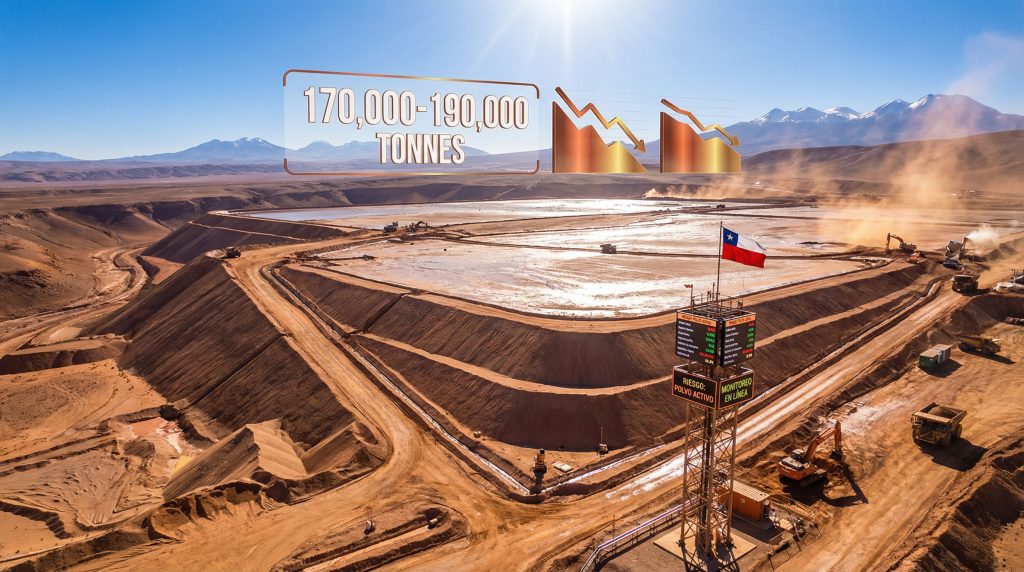
| Annual Production | 210,000-230,000 tonnes | 170,000-190,000 tonnes | -40,000 tonnes |
| Production Reduction | N/A | 19% at midpoint | Significant impact |
| Revenue Exposure | Based on $5.33/lb copper | ~$470M potential loss | Material risk |
The frequency of operational interruptions has created a pattern of reduced utilization rates across processing facilities. Teck's commitment of $420 million for facility improvements in 2025 represents a substantial capital reallocation. This highlights the long-term nature of these technical challenges, moving funds from expansion activities to remediation efforts.
Cascade Effects on Global Copper Supply Chains
The Teck Quebrada Blanca dam issues occur within a broader context of global copper supply tightness. When major producers experience operational disruptions, the effects ripple through industrial supply chains that depend on consistent copper availability for manufacturing processes.
The revised production guidance reduction of approximately 20,000-60,000 tonnes represents a meaningful supply gap in regional copper markets. This shortfall affects:
• Smelter feed scheduling: Regional processing facilities must adjust intake planning
• Contract fulfillment: Long-term supply agreements face potential delivery constraints
• Pricing dynamics: Reduced supply availability can influence regional copper premiums
Industrial consumers, particularly in electronics and renewable energy sectors, monitor production disruptions closely. Major copper system outlook in neighbouring regions becomes increasingly important during such supply constraints.
What Are the Regulatory Compliance Challenges at Quebrada Blanca?
Chilean mining regulatory framework operates under some of the world's most stringent tailings facility oversight protocols. This follows international incidents that highlighted the catastrophic potential of tailings dam failures. The regulatory environment requires proactive compliance management and transparent communication with oversight agencies.
Chilean Mining Regulatory Framework Requirements
Sernageomin's classification system designates certain facilities as "Extreme" consequence operations, triggering enhanced monitoring requirements and mandatory reporting protocols. This classification reflects the potential downstream impact should structural failure occur, encompassing both environmental and human safety considerations.
Regulatory Requirements Include:
• Immediate incident notification: Any structural anomaly must be reported without delay
• Weekly monitoring submissions: Ongoing structural integrity assessments required
• Independent technical review: Third-party validation of remediation strategies
• Community notification: Stakeholder communication protocols for safety incidents
The August 2025 inspection timeline demonstrates the regulatory response framework in action. Following worker complaints filed between July 28 and August 8, 2025, Sernageomin conducted comprehensive facility assessments. Furthermore, inspections on August 1 and 2 identified structural issues requiring immediate attention.
Worker Safety Concerns and Regulatory Response
Worker safety incidents at mining facilities receive particular scrutiny from Chilean regulatory authorities. This reflects the country's commitment to preventing workplace hazards in high-risk industrial environments. The pattern of worker complaints leading to regulatory intervention illustrates the effectiveness of safety reporting mechanisms.
However, recent reports revealed that documented worker concerns emphasised both immediate safety risks and broader communication deficiencies. Multiple complaints highlighted inadequate information flow regarding potential hazards. These reports triggered regulatory inspection protocols that identified structural issues requiring immediate remediation efforts.
Five formal complaints were filed with Sernageomin between late July and early August 2025, covering:
• Structural integrity concerns: Workers observed visible cracking and seepage patterns
• Personal protective equipment: Inadequate safety equipment provision reports
• Communication deficiencies: Limited information regarding potential hazards
• Production pressure: Concerns about operational continuation despite safety risks
The regulatory response included formal criticism of reporting delays. Sernageomin emphasized the critical importance of immediate incident notification for extreme consequence facilities.
Technical Solutions for Tailings Storage Facility Rehabilitation
Advanced rehabilitation approaches for tailings storage facilities require comprehensive understanding of both immediate structural concerns and long-term operational sustainability. The technical solutions implemented at facilities experiencing Teck Quebrada Blanca dam issues often serve as precedents for industry-wide best practices development.
Mechanical Construction Approaches
Rock bench installation represents a fundamental structural enhancement methodology designed to provide additional stability for containment walls experiencing stress concentration. This approach involves strategic placement of engineered rock structures to redistribute loads and create redundant support systems.
Technical Implementation Components:
• Rock bench construction: Strategic placement of engineered stone barriers for load distribution
• Sand placement refinement: Optimised particle size gradation for improved drainage characteristics
• Water management integration: Coordinated drainage systems to reduce hydrostatic pressure
Sand placement technique refinements focus on achieving optimal compaction densities while maintaining adequate permeability for long-term drainage performance. The engineering challenge involves balancing structural stability requirements with hydraulic conductivity needs for sustained operation.
Water drainage system optimisation requires sophisticated understanding of groundwater flow patterns and seasonal variations in subsurface hydrology. Effective drainage design must account for both normal operational conditions and extreme weather events that could overwhelm standard capacity.
Advanced Monitoring and Management Systems
Real-time structural integrity assessment technologies have revolutionised tailings facility management. These provide continuous monitoring capabilities that enable proactive intervention before critical failures occur. These systems integrate multiple sensor technologies to create comprehensive facility health monitoring.
The monitoring regime established since early August 2025 includes weekly reporting protocols submitted to Sernageomin, documenting:
• Crack progression measurements: Dimensional changes in existing structural discontinuities
• Seepage rate quantification: Volumetric water discharge measurements at monitoring points
• Piezometric level tracking: Groundwater pressure variations within the facility structure
• Settlement monitoring: Vertical and horizontal movement detection across critical areas
Predictive maintenance protocols utilise historical performance data and real-time monitoring inputs to identify potential failure modes. This approach enables scheduled maintenance interventions rather than emergency response situations before they reach critical thresholds.
Why Are Tailings Dam Issues Critical for Mining Investment Decisions?
Investment decision-making in modern mining operations increasingly incorporates comprehensive risk assessment of tailings facility management. This reflects both regulatory evolution and investor awareness of potential liability exposure. The financial implications of tailings-related operational disruptions extend well beyond immediate production losses, particularly affecting copper acquisition deal considerations.
Financial Impact Assessment for Teck Resources
The $420 million investment commitment for 2025 improvements represents substantial capital reallocation from growth initiatives to operational stabilisation efforts. This expenditure level demonstrates the significant financial resources required for comprehensive tailings facility rehabilitation.
Financial Impact Breakdown:
| Category | Impact | Duration | Total Exposure |
|---|---|---|---|
| Capital Investment | $420 million | 2025 | Direct cost |
| Production Loss | 40,000 tonnes (midpoint) | Annual | ~$470 million |
| Timeline Extension | Through 2027 | 3 years | Ongoing impact |
Production timeline delays affect revenue projections significantly, particularly in commodity markets where pricing volatility can amplify or mitigate the impact of volume reductions. With copper trading at $5.334/lb as of December 9, 2025, each tonne of production loss represents approximately $11,700 in revenue exposure.
The Anglo American merger consideration of $53 billion incorporates risk assessments of Quebrada Blanca's operational challenges. Analysts note that failure to resolve issues within 2-3 years could materially impact the combined entity's valuation trajectory.
Industry-Wide Risk Management Implications
Tailings facility incidents create industry-wide implications for risk assessment methodologies and insurance coverage requirements. The 2019 Brumadinho tailings dam collapse in Brazil, which killed 270 people, fundamentally altered global mining industry approaches to tailings safety management.
Comparative Industry Analysis:
| Incident Type | Frequency | Typical Cost | Long-term Impact |
|---|---|---|---|
| Structural Cracking | Moderate | $50-500M | Operational delays |
| Minor Seepage | Common | $10-100M | Monitoring costs |
| Major Failure | Rare | $1B+ | Regulatory overhaul |
Insurance and liability considerations have evolved substantially, with coverage providers requiring enhanced due diligence documentation. Mining companies now face increased premium costs and more restrictive coverage terms for operations with elevated tailings risk profiles.
Investor due diligence requirements increasingly incorporate tailings facility assessments as standard components of mining investment evaluation. Environmental, social, and governance (ESG) investment frameworks specifically address tailings management as a critical risk factor affecting long-term operational sustainability.
The next major ASX story will hit our subscribers first
What Lessons Can the Industry Learn from Quebrada Blanca's Challenges?
Industry-wide learning from tailings facility challenges requires systematic analysis of both technical and management factors contributing to operational disruptions. The lessons emerging from complex cases provide valuable insights for enhancing industry standards and regulatory frameworks, particularly important for gold and copper exploration projects.
Engineering Design Best Practices
Pre-construction geotechnical analysis requirements have evolved to incorporate more comprehensive assessment of long-term material behaviour under varying operational conditions. Traditional design approaches may not adequately account for the complex interactions between tailings chemistry, local geology, and climatic factors over facility lifespans measured in decades.
Enhanced Design Considerations:
• Advanced material characterisation: Comprehensive testing of tailings behaviour under various moisture and chemical conditions
• Climate-specific design parameters: Incorporation of local environmental stressors into structural specifications
• Long-term degradation modelling: Predictive analysis of facility performance over extended operational periods
• Redundant safety systems: Multiple independent containment and monitoring systems
Material handling system specifications for ultra-fine particles require specialised engineering approaches. These differ significantly from conventional tailings management and exhibit unique consolidation, drainage, and stability characteristics. These must be incorporated into facility design from initial planning stages.
Desert operations face particular challenges related to extreme temperature variations, low humidity conditions, and irregular precipitation patterns. Design specifications must account for these environmental factors to ensure long-term structural integrity and operational reliability.
Regulatory Compliance and Stakeholder Communication
Proactive reporting protocols for operational anomalies represent critical components of effective tailings facility management. The regulatory response to delayed incident notification demonstrates the importance of transparent communication with oversight agencies and stakeholder communities.
Effective stakeholder engagement strategies must address multiple constituencies, including regulatory agencies, local communities, environmental organisations, and investor groups. Each stakeholder category requires tailored communication approaches that address specific concerns and information needs.
Communication Framework Elements:
• Immediate notification systems: Automated alerts for critical threshold breaches
• Regular status reporting: Scheduled updates on facility performance and improvement progress
• Community engagement programmes: Public meetings and information sessions for local stakeholders
• Technical transparency: Publication of monitoring data and engineering assessments
Worker safety communication frameworks must ensure that facility operators have access to current information regarding potential hazards and appropriate protective measures. The pattern of worker complaints leading to regulatory intervention highlights the importance of internal safety reporting systems and responsive management protocols.
Future Outlook for Quebrada Blanca Operations
Long-term operational success for complex mining operations requires comprehensive integration of technical remediation efforts with strategic business planning. The timeline for achieving steady-state production depends on successful implementation of infrastructure improvements and regulatory compliance maintenance.
Timeline for Achieving Steady-State Production
The expected resolution pathway extends through 2027, reflecting the complex nature of tailings facility rehabilitation and the time required for comprehensive structural improvements. This timeline incorporates both immediate remediation efforts and long-term monitoring validation of system performance.
Milestone-Based Recovery Timeline:
| Phase | Duration | Key Objectives | Success Metrics |
|---|---|---|---|
| Emergency Stabilisation | 2025 | Structural safety | Crack stabilisation |
| Infrastructure Enhancement | 2025-2026 | System upgrades | Capacity restoration |
| Performance Validation | 2026-2027 | Operational proof | Target production |
Production ramp-up projections indicate gradual capacity restoration as infrastructure improvements demonstrate sustained performance. The integration of enhanced monitoring systems will enable more precise operational control and early warning capabilities for potential issues.
Integration opportunities with neighbouring Collahuasi operations provide strategic advantages for operational efficiency and risk management. Shared infrastructure and technical expertise can reduce individual facility risk profiles while improving overall operational resilience.
Strategic Implications for Teck's Growth Portfolio
The substantial capital commitment required for Quebrada Blanca remediation affects resource allocation priorities across Teck's entire portfolio of development projects. The $420 million improvement investment represents capital that might otherwise support expansion initiatives or new project development.
Portfolio Impact Analysis:
• Project timeline delays: Reduced capital availability for growth initiatives
• Risk management focus: Enhanced due diligence requirements for new developments
• Operational excellence priority: Emphasis on existing facility optimisation over expansion
• Technical capability development: Investment in tailings management expertise and technology
Long-term competitive positioning in global copper markets will depend on successful resolution of operational challenges while maintaining cost competitiveness with alternative supply sources. The mining industry's increasing focus on operational sustainability creates both challenges and opportunities for companies demonstrating effective facility management.
Resource allocation priorities must balance immediate remediation needs with long-term growth objectives. This ensures that current operational challenges do not compromise future development opportunities in an evolving copper market characterised by increasing demand and supply constraints.
Frequently Asked Questions About Mining Tailings Dam Safety
How Common Are Tailings Storage Facility Issues in Copper Mining?
Tailings storage facility challenges occur with sufficient frequency to warrant industry-wide attention, though major catastrophic failures remain relatively rare events. Most facilities experience minor structural issues throughout their operational lifespans, requiring ongoing maintenance and monitoring to prevent escalation into serious problems.
Statistics indicate that approximately 10-15% of operating tailings facilities worldwide experience some form of structural concern annually. These range from minor seepage to more significant stability issues requiring intervention. The majority of these incidents are resolved through standard maintenance procedures without operational disruption.
What Warning Signs Indicate Potential TSF Problems?
Early warning indicators for tailings facility problems typically include visible structural changes, altered drainage patterns, and unusual seepage behaviour. The most common warning signs encompass:
• Crack development: Linear discontinuities in containment walls or crest areas
• Seepage changes: Increased water discharge or altered flow patterns
• Settlement patterns: Unusual vertical or horizontal movement in facility structures
• Vegetation stress: Plant die-off or discoloration in areas adjacent to facility perimeters
Advanced monitoring systems can detect subtle changes in facility behaviour before visible symptoms become apparent. This enables proactive intervention and preventing progression to more serious conditions.
How Do Regulatory Agencies Monitor Mining Infrastructure Safety?
Mining regulatory agencies employ comprehensive oversight frameworks incorporating regular inspections, mandatory reporting requirements, and independent technical assessments. In Chile, Sernageomin maintains continuous oversight of extreme consequence facilities through multiple monitoring mechanisms.
Regulatory monitoring approaches typically include:
• Scheduled inspections: Regular facility assessments by qualified technical personnel
• Incident reporting systems: Mandatory notification protocols for structural anomalies
• Third-party assessments: Independent technical reviews of facility design and performance
• Community reporting mechanisms: Public access to safety concern reporting systems
The effectiveness of regulatory oversight depends on cooperation between mining operators, government agencies, and community stakeholders. This ensures comprehensive monitoring and rapid response to potential safety issues.
What Are the Environmental Consequences of Tailings Dam Failures?
Environmental consequences of tailings dam failures can be severe and long-lasting, affecting water resources, soil systems, and ecosystem health across broad geographic areas. The 2019 Brumadinho disaster demonstrated the catastrophic potential of major tailings facility failures, with environmental impacts extending far beyond the immediate failure zone.
Potential environmental consequences include:
• Water contamination: Heavy metals and processing chemicals released into groundwater and surface water systems
• Soil degradation: Tailings material deposition affecting agricultural land and natural ecosystems
• Habitat destruction: Long-term ecosystem damage requiring extensive restoration efforts
• Air quality impacts: Dust generation from exposed tailings materials
Prevention of environmental damage through proactive facility management and comprehensive monitoring represents the most effective approach. This minimises ecological risks associated with tailings storage operations.
This analysis is based on publicly available information and industry reports. Mining operations involve inherent risks, and operational challenges can significantly impact production timelines and financial performance. Investors should conduct independent research and consider professional advice before making investment decisions related to mining companies or commodities.
Looking for Opportunities in Major Mining Discoveries?
Discovery Alert's proprietary Discovery IQ model delivers real-time alerts on significant ASX mineral discoveries, instantly empowering subscribers to identify actionable opportunities ahead of the broader market. Understand why historic discoveries can generate substantial returns by visiting Discovery Alert's dedicated discoveries page, and begin your 30-day free trial today to position yourself ahead of the market.