May 21, 2026
What Makes Texas the New Frontier for Direct Lithium Extraction Technology?
Advanced lithium processing technologies are fundamentally reshaping how critical minerals reach global markets, with specialized extraction methods now delivering battery-grade materials in timeframes that traditional mining approaches cannot match. The convergence of chemical engineering innovations, strategic geographic positioning, and emerging supply chain demands has created a unique opportunity for domestic mineral production facilities to establish competitive advantages over conventional international sources. The direct lithium extraction plant in Texas represents a pivotal development in North America's critical mineral independence strategy.
Geographic Advantages of the Smackover Formation
The Smackover Formation represents a geological asset spanning multiple states in the southern United States, containing subsurface brine deposits with measurable lithium concentrations. This underground reservoir system extends across Arkansas, Louisiana, and Texas, offering access to lithium-bearing brines that can be processed using modern extraction technologies without the extensive land disturbance associated with traditional hard rock mining operations.
The formation's strategic value extends beyond its mineral content to include proximity to established industrial infrastructure. Existing pipeline networks, originally developed for oil and gas operations, provide potential pathways for brine transport and processing integration. Furthermore, the Texarkana region, positioned at the Arkansas-Texas border, sits approximately 200 miles from Houston's petrochemical corridor, offering access to established transportation networks and industrial support systems.
Regional processing advantages include access to skilled labor pools familiar with chemical processing operations, competitive utility costs through Texas's deregulated energy markets, and proximity to emerging domestic battery manufacturing facilities. The Electric Reliability Council of Texas (ERCOT) manages one of the largest renewable energy grids in North America, potentially providing cost-effective power sources for energy-intensive extraction processes.
Infrastructure connectivity presents significant operational benefits compared to remote mining locations. The region's existing industrial base includes chemical processing expertise, equipment suppliers, and maintenance capabilities that can support sophisticated extraction operations without requiring entirely new support ecosystems.
Regulatory Environment Supporting DLE Innovation
The regulatory landscape for direct lithium extraction plant development involves multiple jurisdictional layers, from federal critical mineral initiatives to state-specific environmental permitting requirements. The U.S. Department of Energy has established funding mechanisms through the Bipartisan Infrastructure Law to support domestic critical mineral processing capabilities, including demonstration projects and commercial-scale development initiatives.
Federal support programmes focus on reducing import dependence for critical minerals whilst maintaining environmental compliance standards. The DOE's Office of Fossil Energy and Carbon Management has allocated significant resources toward domestic lithium production technologies, recognising the strategic importance of supply chain security for battery manufacturing and national energy storage capabilities.
State-level regulatory frameworks in Texas emphasise industrial development through established business incentive programmes and streamlined permitting processes for qualified projects. The Texas Commission on Environmental Quality (TCEQ) oversees environmental compliance through existing regulatory structures that govern chemical processing and underground injection activities.
Environmental permitting advantages for closed-loop extraction systems include reduced surface water discharge requirements and minimised land disturbance compared to traditional mining operations. DLE facilities typically require smaller surface footprints and can integrate with existing industrial infrastructure, potentially accelerating permitting timelines relative to greenfield mining projects.
When big ASX news breaks, our subscribers know first
How Do Modern DLE Plants Process Lithium-Rich Brines?
Adsorption Technology Fundamentals
Direct lithium extraction relies on advanced chemical separation processes that selectively capture lithium ions from complex brine solutions containing multiple dissolved minerals. Ion-selective sorbent materials, designed at the molecular level, create preferential binding sites for lithium whilst rejecting competing ions such as sodium, magnesium, and calcium.
Processing efficiency represents a fundamental advantage over traditional evaporation-based methods. Where conventional salt lake operations require 12-24 months for brine concentration and lithium precipitation, modern DLE systems can complete extraction and initial purification cycles within hours or days. This dramatic reduction in processing time enables continuous production capabilities and responsive supply chain management.
Key DLE Processing Advantages:
• Rapid processing cycles: 2-6 hours versus 12-24 months for evaporation ponds
• Higher lithium recovery rates: Advanced sorbents can achieve 80-95% extraction efficiency
• Reduced water consumption: Closed-loop systems minimise fresh water requirements
• Consistent product quality: Controlled processing environments ensure standardised output specifications
• Scalable operations: Modular design allows capacity adjustments based on demand fluctuations
Energy optimisation strategies include waste heat recovery systems that capture thermal energy from processing operations for reuse in subsequent extraction cycles. Advanced process control systems monitor extraction efficiency in real-time, automatically adjusting operating parameters to maximise lithium recovery whilst minimising energy consumption.
Demonstration facilities, such as EnergyX's Project Lonestar near Texarkana, are designed to validate commercial-scale processing capabilities. These pilot operations test sorbent material performance under continuous operating conditions, refine process optimisation protocols, and demonstrate production economics at industrially relevant scales.
Solvent Extraction Integration Systems
Multi-stage purification processes transform raw lithium-bearing solutions into battery-grade chemical compounds meeting strict purity specifications required by lithium-ion battery manufacturers. Each purification stage targets specific contaminants whilst concentrating lithium content to achieve final product specifications exceeding 99.5% purity for lithium carbonate equivalent.
Sequential extraction stages address different classes of impurities through specialised chemical processes:
Stage 1: Primary Ion Exchange
- Removes major competing cations (sodium, potassium, magnesium)
- Concentrates lithium content by 5-10x initial brine concentrations
- Prepares solution for secondary purification steps
Stage 2: Selective Precipitation
- Eliminates calcium, iron, and heavy metal contaminants
- Adjusts pH and ionic strength for optimal downstream processing
- Recovers valuable co-products where economically viable
Stage 3: Final Purification
- Achieves battery-grade purity specifications
- Converts lithium to carbonate or hydroxide forms
- Implements quality control testing and certification protocols
Automated process control systems utilise real-time monitoring sensors to track chemical composition, flow rates, and processing parameters throughout each purification stage. Advanced data analytics identify optimisation opportunities and predict equipment maintenance requirements to ensure consistent production quality.
Contamination management protocols address the challenge of co-extracted minerals that can interfere with battery performance if present in final lithium products. Sophisticated analytical equipment continuously monitors trace element concentrations, automatically triggering process adjustments when contamination levels approach specification limits.
What Are the Economics Behind Texas DLE Plant Development?
Capital Investment Requirements and Funding Sources
Direct lithium extraction plant development requires substantial capital investments across multiple project phases, from initial demonstration facilities through full commercial-scale operations. Investment requirements vary significantly based on processing capacity, technology selection, and site-specific infrastructure needs.
| Project Phase | Investment Range | Primary Funding Sources | Development Timeline |
|---|---|---|---|
| Demonstration Plants | $25-50 million | DOE grants + private equity | 2-3 years |
| Commercial Phase 1 | $200-500 million | Strategic partnerships + debt | 4-6 years |
| Full-Scale Operations | $800 million-1.5 billion | Public markets + project finance | 6-10 years |
Federal funding support through Department of Energy programmes provides crucial early-stage capital for technology validation and demonstration projects. These grants typically cover 30-50% of demonstration facility costs, with private investors providing matching funds to advance projects through proof-of-concept stages.
Commercial-scale development requires more diverse funding sources, including strategic partnerships with battery manufacturers, automotive companies, or chemical processing corporations seeking secure lithium supply chains. Moreover, project finance structures may involve long-term offtake agreements that provide revenue certainty to support debt financing for major capital expenditures.
Technology risk and development timelines significantly influence funding availability and investment terms. Investors evaluate track records of management teams, technology proven at pilot scale, and regulatory approval pathways when assessing project viability for large-scale capital commitments.
Production Cost Analysis
Operating cost structures for DLE plants differ substantially from traditional lithium production methods, with chemical processing expenses replacing the large-scale earthmoving and concentration activities required for hard rock mining operations. Key cost components include sorbent material replacement, energy consumption, labour, and consumable chemicals.
Primary Operating Cost Categories:
• Sorbent materials: Specialised ion-exchange media requiring periodic replacement or regeneration
• Energy costs: Electricity for pumping, heating, and chemical processing operations
• Labour expenses: Skilled operators for continuous chemical processing operations
• Chemical reagents: Acids, bases, and speciality chemicals for purification processes
• Maintenance: Equipment servicing, replacement parts, and facility upkeep
Regional labour cost advantages in Texas include competitive wages for chemical processing technicians compared to traditional mining regions in Nevada or South America. The state's existing petrochemical industry provides a trained workforce familiar with continuous processing operations and safety protocols required for chemical extraction facilities.
Utility cost benefits through Texas's competitive electricity markets and abundant renewable energy resources can significantly impact operating economics for energy-intensive DLE operations. Solar and wind power integration potentially reduces long-term energy costs whilst supporting sustainability objectives increasingly important to battery manufacturers and automotive customers.
Transportation cost advantages include proximity to emerging domestic battery manufacturing facilities and reduced logistics expenses compared to international lithium sources. Domestic production eliminates ocean freight, import duties, and supply chain risks associated with geopolitical tensions affecting traditional lithium-producing regions.
Which Companies Are Leading Texas DLE Implementation?
Demonstration Plant Operators and Their Technologies
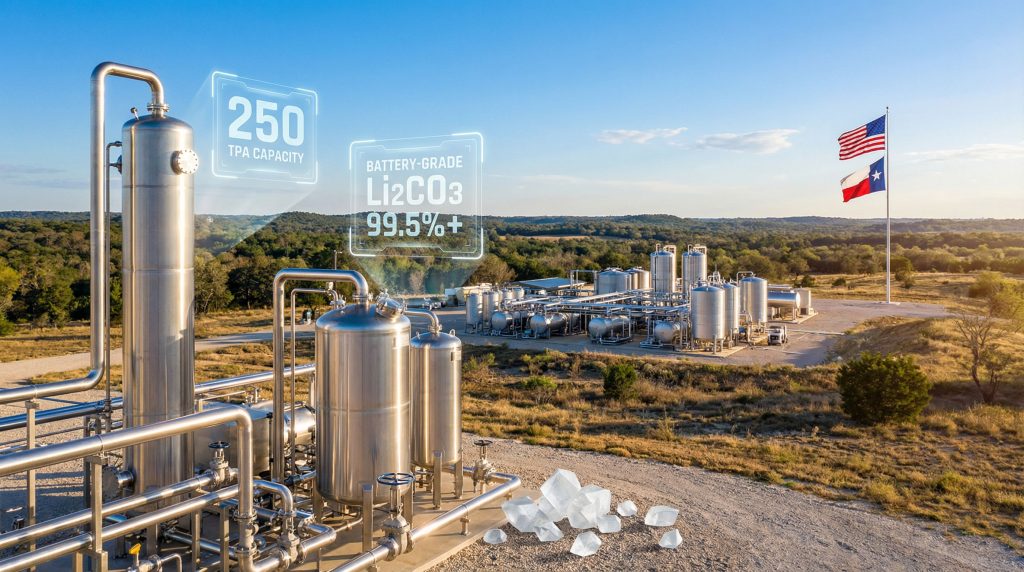
EnergyX has emerged as a prominent developer of direct lithium extraction technology in Texas through its Project Lonestar facility near Texarkana. The demonstration plant features 250 tonnes per annum production capacity, representing one of the first commercial-scale DLE operations processing Smackover Formation brines.
The facility utilises proprietary adsorption technology designed to selectively extract lithium from produced brines whilst minimising environmental impact through closed-loop processing systems. Project Lonestar serves as a technology validation platform, demonstrating commercial viability of DLE processes under continuous operating conditions with real-world brine compositions.
Select Water Solutions approaches DLE implementation through its established expertise in produced water treatment for oil and gas operations. The company leverages existing infrastructure relationships and brine access agreements to develop integrated lithium extraction capabilities that complement traditional water treatment services.
Technology Differentiation Approaches:
• Adsorption systems: Use specialised sorbent materials with high lithium selectivity
• Membrane technologies: Employ selective permeation barriers for lithium concentration
• Hybrid approaches: Combine multiple separation techniques for optimised performance
• Process integration: Link DLE operations with existing oil and gas infrastructure
Intellectual property development focuses on sorbent material chemistry, process optimisation algorithms, and equipment design innovations that improve extraction efficiency whilst reducing operating costs. Companies are actively filing patents covering lithium-selective materials, processing methodologies, and equipment configurations that provide competitive advantages in emerging DLE markets.
Strategic Partnerships and Supply Chain Integration
Strategic partnerships between DLE operators and established industries create synergistic relationships that accelerate project development whilst reducing capital requirements. Oil and gas companies provide brine access, infrastructure utilisation, and operational expertise, while DLE developers contribute specialised extraction technologies and market access to battery manufacturing supply chains.
Collaboration models include joint venture structures where traditional energy companies contribute infrastructure and brine access rights whilst technology developers provide extraction capabilities and downstream marketing relationships. These partnerships leverage existing assets and expertise to reduce development risks and accelerate commercialisation timelines.
Downstream integration opportunities include direct supply agreements with battery manufacturers seeking stable, domestic lithium sources for automotive and energy storage applications. Long-term offtake agreements provide revenue certainty that supports project financing whilst ensuring supply chain security for battery production operations.
Regional workforce development initiatives partner with community colleges and technical training institutions to develop specialised skills required for DLE operations. Training programmes focus on chemical processing, process control systems, and safety protocols specific to lithium extraction facilities.
Equipment suppliers and specialised service providers are establishing regional capabilities to support growing DLE operations. This includes analytical laboratories, equipment maintenance services, and speciality chemical suppliers that provide critical support infrastructure for advanced chemical processing operations.
How Do Texas DLE Plants Address Environmental Concerns?
Closed-Loop Processing Systems
Modern direct lithium extraction facilities prioritise environmental protection through closed-loop processing designs that minimise waste generation and environmental discharge. These systems recirculate process solutions, capturing and reusing chemicals whilst preventing contamination of surrounding groundwater or surface water resources.
Brine reinjection protocols follow established practices from oil and gas operations, utilising deep injection wells regulated under Underground Injection Control programmes administered by the Texas Railroad Commission. These wells return processed brines to appropriate geological formations, maintaining subsurface pressure and preventing surface contamination.
Environmental Protection Measures:
• Zero liquid discharge targets: Eliminate wastewater streams through complete solution recycling
• Air emissions control: Install scrubbing systems for process gases and chemical vapours
• Groundwater monitoring: Implement comprehensive well monitoring networks
• Spill prevention: Deploy containment systems and emergency response protocols
• Noise mitigation: Use sound barriers and equipment selection to minimise community impact
Water conservation strategies include rainwater collection systems, process water recycling, and minimal fresh water consumption compared to traditional evaporation pond operations. Closed-loop designs typically reduce water requirements by 90-95% compared to conventional lithium production methods.
Land use efficiency represents a significant environmental advantage, with DLE facilities requiring substantially smaller surface footprints than evaporation pond operations or hard rock mining projects. In addition, typical DLE plants occupy 10-50 acres compared to thousands of acres required for traditional lithium production facilities.
Sustainability Metrics and Monitoring
Comprehensive environmental monitoring programmes track air quality, water resources, and ecosystem impacts through continuous data collection and third-party verification. Monitoring networks include ambient air quality sensors, groundwater observation wells, and biological assessments of surrounding ecosystems.
Carbon footprint analysis encompasses scope 1, 2, and 3 emissions across the entire production lifecycle, from brine extraction through final product delivery. DLE operations typically demonstrate lower carbon intensity compared to traditional lithium production due to reduced energy requirements and elimination of extensive earthmoving activities.
Sustainability Performance Indicators:
• Energy intensity: kWh per tonne of lithium carbonate equivalent produced
• Water consumption: Gallons per tonne of final product
• Waste generation: Volume and composition of solid waste streams
• Recovery efficiency: Percentage of lithium extracted from input brines
• Ecosystem impact: Biodiversity assessments and habitat monitoring
Community engagement protocols establish regular communication with local stakeholders, including public meetings, environmental updates, and benefit-sharing programmes that provide economic opportunities for surrounding communities. These programmes often include local hiring preferences, supplier development, and community investment initiatives.
Third-party environmental auditing through independent certification organisations provides verification of environmental performance claims and compliance with sustainability standards. These audits may include ISO 14001 environmental management certification, life cycle assessment validation, and carbon footprint verification.
What Production Milestones Can We Expect from Texas DLE Plants?
Near-Term Capacity Ramp-Up (2026-2028)
Demonstration plant validation represents the critical first milestone for Texas DLE development, with facilities like Project Lonestar providing proof-of-concept for commercial-scale operations. These initial plants focus on technology optimisation, process refinement, and production quality validation rather than maximum output volumes.
Production targets for demonstration facilities typically range from 250-1,000 tonnes per annum of lithium carbonate equivalent, sufficient to supply initial customer qualification programmes and establish market presence for battery-grade lithium products. These volumes support pilot production runs for battery manufacturers whilst generating operational data for commercial-scale expansion.
2026-2028 Development Milestones:
• Q2 2026: Project Lonestar achieves sustained production rates
• Q4 2026: Initial battery-grade refinery lithium product certifications completed
• Q2 2027: Second demonstration facility begins operations
• Q4 2027: First commercial expansion projects announced
• Q2 2028: Regional processing hub development initiated
Quality certification processes involve extensive testing and validation by potential customers to ensure lithium products meet strict specifications for battery manufacturing applications. This qualification period typically requires 6-18 months of consistent production before customers approve products for commercial use.
Workforce scaling from pilot operations to commercial production requires significant recruitment and training initiatives. Early-stage facilities employ 25-50 personnel, whilst commercial-scale operations may require 200-400 workers across operations, maintenance, and administrative functions.
Long-Term Industry Transformation (2029-2035)
Commercial-scale production expansion during this period could establish Texas as a significant contributor to domestic lithium supply, with multiple facilities potentially producing 10,000-50,000 tonnes per annum of battery-grade lithium compounds. This production capacity would represent meaningful progress toward U.S. lithium supply independence goals.
Integration with domestic battery manufacturing supply chains becomes increasingly important as automotive and energy storage demand accelerates. Texas DLE facilities are strategically positioned to serve emerging battery manufacturing clusters in the southeastern United States, providing just-in-time delivery capabilities that improve supply chain efficiency.
2029-2035 Industry Development Projections:
• Economic impact: $2-5 billion in regional economic activity
• Employment creation: 2,000-5,000 direct and indirect jobs
• Production capacity: 50,000-100,000 tonnes per annum lithium carbonate equivalent
• Supply chain integration: Direct connections to 5-10 major battery manufacturing facilities
• Technology export: Licensing opportunities for international DLE markets
Technology export potential emerges as Texas DLE operators develop proven commercial technologies suitable for deployment in other global lithium brine resources. Successful operations could generate licensing revenue and engineering services opportunities in international markets seeking DLE capabilities.
Economic impact projections include substantial multiplier effects beyond direct DLE operations, encompassing supporting industries, equipment suppliers, and service providers that develop regional expertise in lithium processing technologies. These economic benefits may be particularly significant in rural East Texas communities where DLE facilities provide high-value industrial employment opportunities.
The next major ASX story will hit our subscribers first
How Do Texas DLE Plants Compare to Global Lithium Production Methods?
Competitive Analysis Against Traditional Sources
Production method comparisons reveal significant differences in processing timelines, environmental impact, and cost structures between Texas DLE operations and established lithium production approaches. These differences create distinct competitive advantages and challenges for each production method.
| Production Method | Processing Duration | Water Requirements | Environmental Footprint | Estimated Cost Range |
|---|---|---|---|---|
| Hard Rock Mining | 12-18 months | High (processing) | Significant land disturbance | $8,000-12,000/tonne |
| Salt Lake Evaporation | 18-24 months | Very high (evaporation) | Large pond areas | $6,000-9,000/tonne |
| Texas DLE | 2-6 hours | Low (closed-loop) | Minimal surface impact | $7,000-10,000/tonne |
Processing timeline advantages for DLE systems enable rapid response to market demand fluctuations and reduced inventory requirements compared to traditional production methods. This responsiveness provides strategic value for battery manufacturers seeking flexible supply arrangements and just-in-time delivery capabilities.
Environmental impact differences are particularly significant in water consumption and land use requirements. Traditional evaporation pond operations require thousands of acres and consume substantial water resources, whilst DLE facilities operate on compact industrial sites with minimal fresh water requirements. For instance, lithium brine operations in South America demonstrate these environmental contrasts.
Cost competitiveness depends on multiple factors including energy costs, labour expenses, and capital amortisation schedules. Whilst Texas DLE operations may achieve competitive operating costs, higher initial capital requirements for advanced processing equipment may impact overall production economics compared to established facilities with depreciated assets.
Strategic Advantages for North American Supply Security
Domestic lithium production through Texas DLE facilities directly addresses supply chain vulnerabilities associated with import dependence on South American and Chinese sources. Geopolitical tensions, trade disputes, and transportation disruptions can significantly impact international lithium supply chains, making domestic production strategically valuable.
Supply chain resilience benefits include:
• Reduced shipping distances: Lower transportation costs and shorter delivery times
• Currency stability: Elimination of foreign exchange rate risks
• Regulatory alignment: Consistent environmental and safety standards
• Political stability: Reduced exposure to international policy changes
• Quality assurance: Direct oversight and control of production processes
Just-in-time delivery capabilities support lean manufacturing approaches increasingly adopted by battery manufacturers. Domestic production enables flexible delivery schedules and reduced inventory holding costs compared to international suppliers requiring longer lead times and buffer stock management.
Quality consistency and traceability provide competitive advantages for premium battery applications where product reliability and performance consistency are critical. Domestic production facilities offer direct customer relationships, technical support, and customised product specifications that may be difficult to achieve with distant international suppliers.
What Technical Challenges Must Texas DLE Plants Overcome?
Process Optimisation and Scaling Issues
Scaling direct lithium extraction processes from laboratory demonstrations to commercial production volumes presents significant technical challenges that require systematic engineering solutions. Pilot plant performance does not always translate directly to full-scale operations due to heat transfer limitations, mixing inefficiencies, and equipment performance variations.
Sorbent material performance optimisation represents a critical technical challenge, as ion-selective materials must maintain efficiency and selectivity through hundreds or thousands of regeneration cycles. Material degradation, fouling, and selectivity loss can significantly impact production economics and require ongoing research and development efforts.
Key Scaling Challenges:
• Heat transfer efficiency: Maintaining optimal temperatures in large-scale equipment
• Mixing uniformity: Ensuring consistent chemical contact in scaled reactors
• Material handling: Managing sorbent replacement and regeneration logistics
• Process control: Implementing responsive control systems for complex chemical processes
• Equipment reliability: Minimising downtime and maintenance requirements
Integration challenges with existing oil and gas infrastructure require custom engineering solutions to accommodate different operating pressures, temperatures, and chemical compositions than originally designed parameters. Existing pipelines and processing equipment may require modifications or replacement to handle lithium-bearing brines safely and efficiently.
Automation system development becomes increasingly important as operations scale to commercial volumes requiring 24/7 continuous operation. Advanced process control systems must automatically adjust operating parameters, detect equipment malfunctions, and maintain product quality without constant human intervention.
Quality Control and Product Specification Management
Battery-grade lithium purity requirements demand stringent quality control protocols throughout the extraction and purification process. Specifications typically require lithium carbonate purity exceeding 99.5% with strict limits on trace elements including sodium, potassium, magnesium, calcium, iron, and heavy metals.
Trace element removal technologies must address the complex chemistry of Smackover Formation brines, which contain varying concentrations of competing ions that can interfere with lithium extraction or contaminate final products. Analytical monitoring systems provide real-time feedback on product composition, enabling immediate process adjustments when specifications drift outside acceptable ranges.
Critical Quality Parameters:
• Lithium content: Minimum 99.5% Li2CO3 equivalent
• Sodium content: Typically <0.1% maximum
• Magnesium content: Usually <0.05% maximum
• Iron content: Generally <0.001% maximum
• Heavy metals: Strict limits on mercury, lead, cadmium, and other toxic elements
Customer specification compliance requires extensive documentation and certification processes that demonstrate consistent product quality over extended production periods. Battery manufacturers typically require 6-18 months of consistent production data before approving new lithium suppliers for commercial use.
Continuous improvement protocols utilise statistical process control and data analytics to identify optimisation opportunities and prevent quality deviations. These systems track key performance indicators, predict equipment maintenance needs, and optimise processing parameters for maximum yield and quality.
How Will Texas DLE Plants Impact Regional Economic Development?
Direct Employment and Skills Development
Direct lithium extraction facilities create high-value employment opportunities in rural East Texas communities that have historically relied on traditional agricultural and energy sector jobs. DLE operations require skilled technicians, engineers, and operators capable of managing sophisticated chemical processing equipment and automated control systems.
Job creation spans multiple phases of project development, from construction and commissioning through long-term operations and maintenance. Construction phases may employ 200-500 workers for 2-3 years, whilst ongoing operations typically require 100-300 permanent employees depending on facility scale and automation levels.
Employment Categories and Requirements:
• Process operators: Chemical processing experience, technical certification
• Maintenance technicians: Mechanical, electrical, and instrumentation skills
• Quality control specialists: Analytical chemistry and laboratory experience
• Engineers: Chemical, mechanical, and process engineering backgrounds
• Support staff: Administration, logistics, and environmental compliance roles
Technical training partnerships with regional community colleges and technical institutions develop specialised curricula for DLE operations. Programmes focus on chemical processing, process control systems, safety protocols, and environmental management specific to lithium extraction facilities.
Salary benchmarks for DLE plant positions typically exceed regional averages due to specialised skill requirements and competitive demand for qualified personnel. Process operators and technicians may earn 20-40% premium wages compared to traditional manufacturing roles, whilst engineering positions command salaries competitive with major metropolitan markets.
Broader Economic Multiplier Effects
Supporting service industries benefit from DLE facility operations through increased demand for specialised equipment, analytical services, transportation, and professional services. These multiplier effects often generate 2-3 indirect jobs for each direct position created at DLE facilities.
Tax revenue generation provides substantial benefits for local municipalities, school districts, and county governments through property taxes on high-value industrial facilities and equipment. Annual property tax contributions from major DLE facilities may reach $5-15 million, representing significant revenue for rural communities.
Infrastructure improvements necessary for DLE operations often benefit broader regional development through upgraded electrical systems, transportation networks, and telecommunications capabilities. These improvements attract additional industrial development and support economic diversification beyond lithium processing.
Economic Development Benefits:
• Property values: Increased demand for housing and commercial real estate
• Small business growth: Opportunities for local suppliers and service providers
• Educational investment: Enhanced technical training and educational facilities
• Population growth: Attraction of skilled workers and their families
• Quality of life: Improved community amenities and services
Real estate and housing market impacts include increased demand for workforce housing, commercial development, and industrial support facilities. Rural communities may experience significant population growth as skilled workers relocate to support DLE operations, requiring expanded housing, retail, and service capabilities.
Long-term economic diversification benefits position East Texas communities to participate in the broader energy transition economy through lithium processing expertise, specialised workforce development, and industrial infrastructure capable of supporting additional critical mineral processing operations. This transformation mirrors developments in other lithium-rich regions globally, as demonstrated by lithium brine insights from Argentina's emerging market.
Consequently, the regional economic transformation extends beyond direct DLE operations to encompass geothermal lithium extraction technologies and other innovative processing methods. Furthermore, these developments complement broader trends in US lithium mine production across multiple states, creating a comprehensive domestic supply network.
Investment Disclaimer: Direct lithium extraction technologies represent emerging industrial processes with inherent technical, economic, and regulatory risks. Production timelines, cost projections, and capacity estimates discussed in this analysis are subject to significant uncertainty and may differ substantially from actual outcomes. Potential investors should conduct independent due diligence and consider consulting qualified financial advisors before making investment decisions related to lithium extraction projects or companies.
Ready to Capitalise on the Next Mining Discovery?
Discovery Alert's proprietary Discovery IQ model instantly identifies significant ASX mineral discoveries as they're announced, providing crucial market intelligence for both trading opportunities and long-term investment positioning. Explore how major historical discoveries have generated exceptional returns and begin your 14-day free trial today to secure your competitive advantage in Australia's dynamic mining sector.