June 13, 2026
Understanding Thermal Enhanced Oil Recovery Methods
Traditional oil extraction methods face significant limitations when dealing with unconventional reservoirs containing high-viscosity crude oil. These challenging formations require specialised approaches that can overcome the natural barriers preventing economic hydrocarbon recovery. Thermal enhanced oil recovery represents a sophisticated solution for accessing previously untappable resources, particularly in formations where conventional pressure-driven extraction proves economically unviable.
The fundamental challenge lies in the extreme viscosity characteristics of heavy crude oil deposits, which can exceed 10,000 centipoise under reservoir conditions. This viscosity prevents natural flow mechanisms from functioning effectively, requiring external energy input to reduce fluid resistance and enable commercial production rates.
When big ASX news breaks, our subscribers know first
Cyclic Steam Stimulation Technology in Jaisalmer: A Technical Overview
Cyclic Steam Stimulation technology in Jaisalmer represents a breakthrough thermal recovery methodology specifically engineered for extracting high-viscosity crude oil from challenging geological formations. This process operates through a precisely controlled three-phase operational cycle designed to maximise reservoir thermal energy distribution while maintaining economic viability.
The technology functions by injecting superheated steam at temperatures ranging from 250-320°C directly into reservoir formations through specialised equipment designed for extreme thermal conditions. This thermal energy dramatically reduces oil viscosity from extremely high levels to manageable flow characteristics, transforming previously inaccessible reserves into economically viable production targets.
Phase 1: Steam Injection (3-4 days)
High-pressure steam penetrates the reservoir formation through vacuum insulated tubing systems, creating thermal zones that extend radially from the wellbore. The injection process requires careful pressure and temperature management to ensure optimal steam distribution without compromising formation integrity.
Phase 2: Soaking Period (Variable Duration)
Wells are shut-in to allow steam condensation and heat redistribution throughout the formation. This passive phase maximises viscosity reduction across the drainage area through thermodynamic equilibration, with duration varying based on specific reservoir characteristics and thermal properties.
Phase 3: Production Extraction
Heated, lower-viscosity oil flows to the wellbore under natural drive mechanisms supplemented by artificial lift systems. Production continues until economic limits are reached, typically determined by declining flow rates and increasing operational costs relative to market prices.
The Science Behind Steam-Based Viscosity Reduction
The thermal transformation process involves fundamental changes in molecular behaviour when heavy crude oil encounters elevated temperatures. High-viscosity petroleum consists of complex hydrocarbon chains with strong intermolecular attractions that restrict fluid movement under normal reservoir conditions.
Steam injection introduces thermal energy that breaks these molecular bonds temporarily, reducing viscosity by several orders of magnitude. This transformation enables previously immobilised oil to flow toward production wells at commercially viable rates. Furthermore, the cyclic steam stimulation approach has proven effective in maximising recovery from similar heavy oil formations worldwide.
Key Technical Parameters:
• Steam temperature: 250-320°C
• Pressure requirements: Variable based on formation depth
• Viscosity reduction: From 10,000-13,000 centipoise to manageable levels
• Thermal penetration radius: Depends on formation permeability and steam injection duration
• Recovery enhancement: Potential factors ranging from 18% to 55% over five-year periods
Geological Advantages of Jaisalmer's Jodhpur Sandstone Formation
The Jodhpur Sandstone formation in Rajasthan's Thar Desert presents unique geological characteristics that make it particularly suitable for thermal enhanced oil recovery implementation. This ancient sedimentary rock formation represents one of India's oldest geological structures, containing substantial heavy oil deposits within naturally fractured reservoir systems.
Formation Characteristics Supporting CSS Technology:
| Parameter | Specification | Impact on CSS Effectiveness |
|---|---|---|
| Field Area | 200.26 square kilometres | Large-scale thermal EOR deployment potential |
| Formation Age | Ancient sedimentary rock | Structural stability for thermal cycling |
| Reservoir Type | Fractured Jodhpur Sandstone | Enhanced steam penetration pathways |
| Oil Viscosity | 10,000-13,000 centipoise | Optimal target for thermal viscosity reduction |
| Discovery Timeline | 1991 | 30+ years of geological understanding |
| Commercial Production | Started 2017 | Proven reservoir viability |
The fractured nature of this formation creates natural pathways for steam penetration and thermal energy distribution. These geological fractures function as conduits for injected steam, enabling more efficient heat transfer throughout the reservoir compared to tight formations requiring hydraulic fracturing.
The Baghewala oil field within this formation represents one of India's few onshore heavy crude oil-producing fields, positioned strategically in the Bikaner-Nagaur sub-basin of the Rajasthan Basin. This geological setting provides optimal conditions for thermal EOR implementation due to formation depth, rock properties, and hydrocarbon characteristics.
Production Performance and Technological Implementation Results
The successful deployment of Cyclic Steam Stimulation technology in Jaisalmer has generated measurable production improvements that demonstrate the effectiveness of thermal enhanced oil recovery in challenging reservoir conditions. Current production achievements represent significant advancement over conventional extraction attempts in this formation.
Production Performance Metrics:
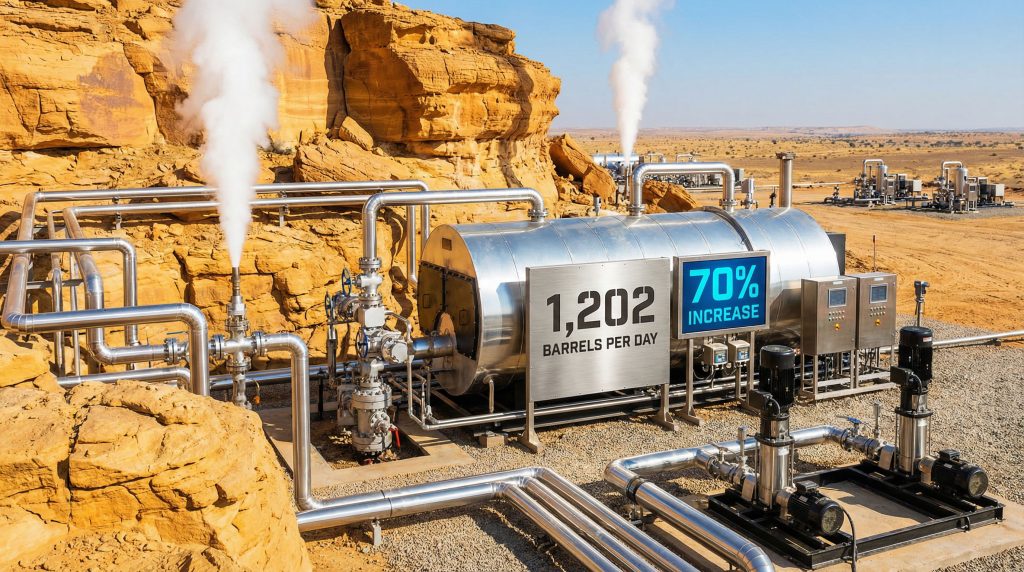
• Daily Production Record: 1,202 barrels per day (current achievement)
• Year-over-Year Growth: 70% increase from 705 barrels per day
• Annual Output FY 2025-26: 43,773 metric tonnes
• Previous Year Output: 32,787 metric tonnes
• Production Increase: 11,000 metric tonnes (33.5% annual growth)
The implementation timeline demonstrates successful technology maturation from pilot testing to commercial-scale operations. The CSS pilot test completed in November 2018 using the BGW-08 well marked India's first successful implementation of thermal enhanced oil recovery in heavy oil reservoirs, establishing technical benchmarks for subsequent development. Additionally, understanding oil price rally insights helps optimise the economic timing of such technological investments.
Well Development Acceleration:
• CSS wells with active implementation: 19 wells (72% increase)
• New wells drilled in FY 2025-26: 13 wells (44% increase from 9 wells)
• Total wells at field: 52 wells
• Currently producing wells: 33 wells
• Time from discovery to CSS implementation: Approximately 27 years
Advanced Equipment Systems for Thermal Enhanced Oil Recovery
The successful implementation of Cyclic Steam Stimulation technology in Jaisalmer requires sophisticated supporting equipment specifically designed for extreme thermal conditions and high-viscosity fluid handling. These integrated systems work together to maximise thermal energy efficiency whilst maintaining operational safety in harsh desert environments.
Primary CSS Equipment Portfolio:
Steam Generation and Delivery Systems
• Mobile boilers specifically designed for CSS operations
• Vacuum insulated tubing (VIT) systems for heat retention during transit
• High-pressure steam distribution networks
• Thermal monitoring and control systems
Downhole Thermal Management
• Electric downhole heaters for continuous thermal management
• High-temperature thermal wellheads rated for extreme conditions
• Downhole heating cables (experimental technology showing promising results)
• Temperature and pressure monitoring instrumentation
Production Enhancement Equipment
• Hydraulic sucker rod pumps (HSRP) optimised for high-viscosity fluid handling
• Artificial lift systems designed for thermal cycling conditions
• Flow measurement and monitoring equipment
• Surface production facilities adapted for heavy crude processing
The next major ASX story will hit our subscribers first
Innovative Drilling and Completion Methodologies
The unique challenges of heavy oil extraction in fractured formations require specialised drilling and completion techniques that maximise reservoir contact whilst accommodating thermal cycling conditions. These advanced methodologies represent first-time implementations in India's heavy oil reservoirs.
Fishbone Drilling Technology
This advanced drilling technique creates multiple lateral extensions from the primary wellbore, dramatically increasing reservoir contact area within the fractured Jodhpur Sandstone formation. The fishbone pattern enables more efficient steam distribution and enhanced drainage of heated oil from multiple reservoir compartments. In addition, innovations like Oil India's enhanced extraction methods demonstrate the continued advancement of thermal recovery techniques.
Barefoot Completion Implementation
This completion method eliminates casing in production zones, allowing direct contact between the wellbore and formation. This approach enhances heat transfer efficiency during steam injection phases whilst simplifying thermal cycling operations in high-temperature environments.
Technical Advantages of Advanced Completion Methods:
• Maximised reservoir contact in fractured formations
• Enhanced heat transfer efficiency
• Reduced thermal stress on completion equipment
• Improved drainage patterns for heated oil recovery
• Simplified thermal cycling operations
CSS Cycle Optimisation for Maximum Recovery Efficiency
The effectiveness of Cyclic Steam Stimulation technology in Jaisalmer depends heavily on precise optimisation of cycle timing, steam parameters, and production management. Each phase requires careful coordination to maximise thermal energy utilisation whilst maintaining economic viability.
Cycle Duration Management:
• Full cycle duration: Typically 1-3 months per complete cycle
• Steam injection phase: 3-4 days of continuous high-temperature steam delivery
• Soaking period: Variable duration based on formation thermal response
• Production phase: Continues until economic limits reached
Recovery Factor Optimisation Parameters:
The wide range of potential recovery factors (18% to 55% over five-year operational periods) reflects the importance of cycle optimisation for specific reservoir conditions. Factors influencing recovery efficiency include:
• Formation thermal conductivity and heat capacity
• Fracture network connectivity and permeability
• Oil saturation distribution and mobility characteristics
• Steam injection pressure and temperature optimisation
• Soaking period duration based on thermal modelling
• Production rate management to maximise cycle economics
However, external factors such as oil price trade dynamics can significantly influence the economic viability of these recovery operations.
Economic Impact on India's Energy Security Strategy
The successful implementation of thermal enhanced oil recovery technology in Jaisalmer contributes significantly to India's broader energy security objectives by unlocking previously uneconomical hydrocarbon resources. This achievement demonstrates technological capabilities that can be applied to similar formations across the country.
Strategic Energy Security Contributions:
• Domestic Resource Development: Converting previously uneconomical reserves into producing assets
• Import Dependency Reduction: Increasing indigenous crude oil production capacity
• Technology Self-Reliance: Developing indigenous thermal EOR capabilities
• Infrastructure Integration: Establishing thermal recovery supply chains and expertise
Value Chain Integration:
The produced heavy crude oil integrates into existing petroleum infrastructure through established transportation and refining networks. Current operations transport crude oil via tanker trucks to processing facilities, with pipeline transportation to downstream refineries for final processing into petroleum products. Furthermore, understanding OPEC production impact helps contextualise India's strategic positioning in global energy markets.
Environmental Considerations in Desert Thermal EOR Operations
Operating thermal enhanced oil recovery systems in arid desert environments presents unique environmental challenges that require specialised management approaches. Water resources, energy consumption, and surface disturbance must be carefully managed to ensure sustainable operations.
Water Management Strategies:
• Steam generation water sourcing and conservation
• Produced water recycling and treatment systems
• Water injection protocols for reservoir pressure maintenance
• Groundwater protection measures during operations
Energy Efficiency Optimisation:
• Steam generation efficiency improvements
• Waste heat recovery from production operations
• Renewable energy integration potential for steam generation
• Operational energy consumption monitoring and reduction
Surface Environmental Management:
• Air quality monitoring during steam generation and production
• Surface disturbance minimisation through optimised well spacing
• Desert ecosystem protection measures
• Rehabilitation planning for end-of-life operations
Future Technology Development and Expansion Opportunities
The success of CSS technology in Jaisalmer establishes a foundation for advanced thermal EOR applications across India's heavy oil resources. Emerging technologies and optimisation opportunities could further enhance recovery efficiency and economic viability.
Next-Generation Enhancement Technologies
Advanced Reservoir Modelling
• Machine learning-driven thermal simulation
• Real-time reservoir monitoring and cycle optimisation
• Predictive analytics for production forecasting
• Integrated geological and thermal modelling systems
Enhanced Steam Generation Systems
• Solar thermal steam generation for desert operations
• Improved steam generation efficiency technologies
• Waste heat recovery and utilisation systems
• Advanced steam quality control and monitoring
Intelligent Production Optimisation
• Artificial intelligence-driven cycle management
• Automated production optimisation systems
• Integrated sensor networks for real-time monitoring
• Predictive maintenance for thermal EOR equipment
Expansion Potential Across Indian Heavy Oil Basins
The proven effectiveness of CSS technology in Jaisalmer creates opportunities for similar implementations across India's other heavy oil-bearing formations. This expansion potential could significantly increase domestic heavy oil production capacity, particularly considering the tariff impact on investments in energy infrastructure projects.
Target Formations for CSS Deployment:
• Similar Rajasthan Basin formations: Additional heavy oil deposits within the broader Rajasthan geological province
• Gujarat heavy oil prospects: Onshore formations with comparable geological characteristics
• Assam Basin opportunities: Heavy oil deposits requiring thermal recovery methods
• Offshore heavy oil resources: Potential application to offshore heavy oil discoveries
Technology Transfer Requirements:
• Geological characterisation and thermal modelling for new formations
• Equipment adaptation for different reservoir conditions
• Operational protocol development for varying geographical conditions
• Environmental impact assessment and management for different ecosystems
• Economic feasibility analysis for different market conditions
Consequently, operators must remain vigilant about market volatility and prepare for potential oil price crash analysis scenarios when planning long-term CSS investments.
Frequently Asked Questions About CSS Technology Implementation
How does CSS technology differ from conventional oil extraction methods?
CSS specifically targets high-viscosity crude oil that cannot flow naturally under reservoir conditions. Unlike conventional extraction that relies on natural reservoir pressure, CSS uses thermal energy to temporarily reduce oil viscosity through cyclical steam injection, enabling production from previously uneconomical reserves.
What makes Jaisalmer's geological formation suitable for thermal EOR?
The Jodhpur Sandstone formation offers ideal conditions including natural fracture networks for steam penetration, stable rock structure for thermal cycling, appropriate formation depth and pressure characteristics, and high-viscosity oil deposits that respond effectively to thermal treatment.
How long does each complete CSS cycle require?
A typical CSS cycle ranges from 1-3 months, consisting of 3-4 days of steam injection, a variable soaking period depending on reservoir thermal response, and a production phase that continues until economic limits are reached based on declining production rates and operational costs.
What are the main operational challenges in desert thermal EOR?
Primary challenges include water availability for steam generation, equipment maintenance under extreme temperature conditions, logistics support in remote desert locations, energy requirements for continuous steam generation, and environmental management in sensitive desert ecosystems.
How does CSS implementation impact regional economic development?
CSS operations create direct employment opportunities in technical and operational roles, generate demand for specialised equipment and services, contribute to local infrastructure development, and establish technology expertise that can be applied to other regional energy projects.
What potential exists for expanding CSS technology to other Indian formations?
Significant expansion potential exists across India's heavy oil resources, including similar formations within the Rajasthan Basin, heavy oil deposits in Gujarat and Assam, and potential offshore applications. Success in Jaisalmer provides technical benchmarks and operational experience for future implementations.
Disclaimer: This article contains analysis and forward-looking statements regarding thermal enhanced oil recovery technology and production forecasts. Actual results may vary based on geological conditions, technological developments, market factors, and operational challenges. Readers should consider multiple sources and professional analysis when evaluating energy sector investments and technological assessments.
Looking to Capitalise on Energy Sector Discoveries?
Discovery Alert's proprietary Discovery IQ model delivers real-time alerts on significant ASX mineral and energy discoveries, instantly empowering subscribers to identify actionable opportunities ahead of the broader market. Begin your 14-day free trial today and secure your market-leading advantage whilst staying ahead of emerging opportunities in Australia's dynamic resource sector.