
July 9, 2026
The Hidden Cost of Ambition: When Mining M&A Goes Wrong
In commodity markets, the most instructive stories are rarely those of triumphant acquisitions. They are the quieter, more uncomfortable narratives that unfold when a well-regarded operator steps outside its circle of competence, pays a premium for growth, and then spends the following years rebuilding the credibility that the deal eroded. This is the lens through which Thungela Resources' current strategic posture deserves to be examined.
The Thungela M&A halt and market confidence debate is not simply a story about one paused acquisition strategy. It is a case study in how capital allocation decisions made during periods of commodity optimism can create lasting structural liabilities, and why the recovery of investor trust in mining often demands something far more unglamorous than dealmaking: consistent operational delivery.
When big ASX news breaks, our subscribers know first
From Acquisition Ambition to Operational Repair
Thungela's trajectory over the past two years illustrates a pattern familiar to students of the mining cycle. A company exits a period of strong commodity prices with a healthy balance sheet, identifies diversification as its next logical step, makes a significant cross-border acquisition, and then watches the rationale unravel as execution challenges surface. Broader trends in mining industry consolidation demonstrate that this pattern is far from unique to Thungela.
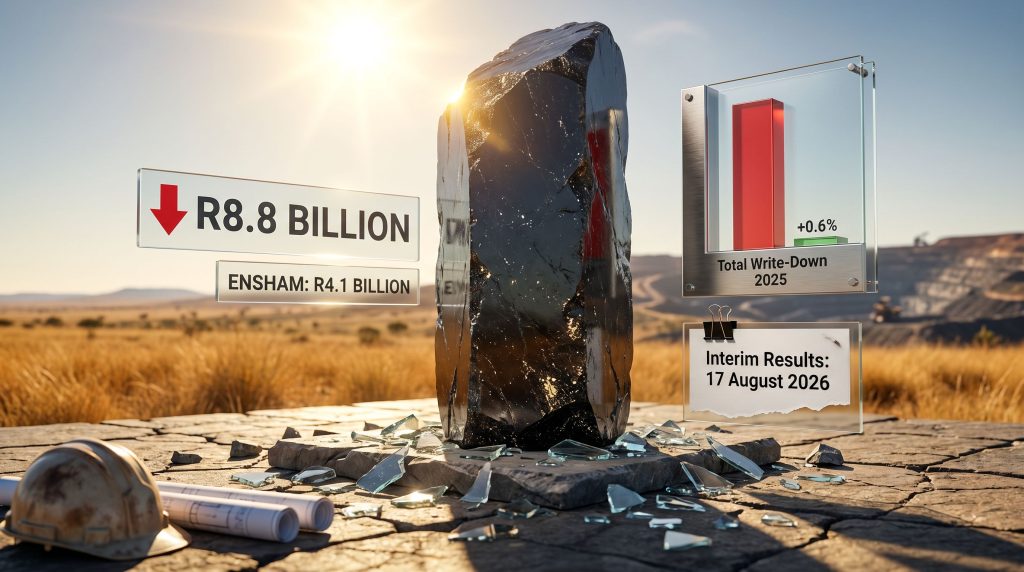
The purchase of Ensham, a thermal coal mine in Queensland, Australia, for R4.1 billion was positioned as a meaningful step toward geographic and portfolio diversification. Australia's coal mining infrastructure, export positioning, and relatively stable regulatory environment made it an attractive destination on paper. However, the asset subsequently underperformed expectations, contributing to a total write-down of R8.8 billion in Thungela's 2025 full-year financial results.
That impairment figure deserves context. For a company of Thungela's scale, an R8.8 billion write-down is not merely an accounting adjustment. It represents the destruction of value that shareholders had previously attributed to management's deal-selection and integration capabilities. The reputational damage is often more corrosive than the financial charge itself.
In capital-intensive commodity businesses, the sequence of credibility matters deeply. Operators must first demonstrate they can reliably deliver on existing production commitments before the market will reward growth ambitions with a valuation premium.
In response, Thungela's CFO Deon Smith communicated clearly to analysts and investors that the board's primary mandate had shifted. Rather than debating acquisitions, management's focus was now concentrated on extracting safe, cost-effective production from existing assets and demonstrating to the market that guidance targets could be met or exceeded, according to reporting by MiningMX in July 2026.
The Numbers Behind the Narrative
Understanding the scale of Thungela's current situation requires examining the key financial and operational metrics that define its position.
| Metric | Detail |
|---|---|
| Total Asset Write-Down (2025 Full Year) | R8.8 billion |
| Ensham Acquisition Cost (Australia) | R4.1 billion |
| Ensham Write-Down Contribution | Key driver |
| Thungela Share Price Response | +0.6% (broadly flat) |
| Interim Results Release Date | 17 August 2026 |
The share price reaction to the strategic update is particularly instructive. A movement of just +0.6% following a major directional announcement suggests one of two dynamics: either investors had already anticipated the M&A retreat and priced the disappointment into their positions, or they were adopting a cautious holding stance pending the interim results due in August 2026. Neither interpretation reflects renewed enthusiasm. Both reflect a market in watchful waiting mode.
This is a psychological posture well known to mining sector observers. When institutional investors lose confidence in a management team's capital allocation judgment, they do not always sell immediately. Instead, they reduce position sizing, tighten their expected return thresholds, and demand a sustained run of operational proof points before reassigning a growth premium to the stock. Furthermore, the relationship between commodity prices and mining performance adds another layer of complexity to this confidence equation.
Structural Decline: The Problem That Cannot Be Paused
While Thungela can choose to pause its M&A activity, it cannot pause the geological reality confronting its South African asset base. UBS analyst Stephen Friedman highlighted in a note following Thungela's July 2026 update that the investment case for the company was undergoing a meaningful evolution, shifting away from a thesis anchored in thermal coal price leverage and logistics recovery, toward questions of business quality and long-term capital discipline, as reported by MiningMX.
At the heart of this concern are two maturing assets: Greenside and Khwezela. Both mines are progressing along the natural depletion curve that all finite underground resources inevitably follow. As these operations age, their cost profiles rise, their reserve grades thin, and their contribution to group production diminishes. This is not a crisis unique to Thungela but it is a structural challenge that strategic reinvention, including through acquisitions, is typically designed to address.
| Operational Risk Factor | Impact on Thungela |
|---|---|
| Greenside Mine Maturity | Declining production contribution |
| Khwezela Mine Maturity | Structural output reduction over time |
| Transnet Freight Rail Underperformance | Constrained export volumes to seaborne markets |
| Ensham (Australia) Underperformance | Reduced international diversification benefit |
Transnet Freight Rail deserves particular attention. South African coal producers depend heavily on the rail corridor connecting the Witbank coalfields to the Richards Bay Coal Terminal. Chronic underperformance by Transnet, the state-owned logistics operator, has consistently capped the volume of coal that companies like Thungela can export into premium seaborne markets.
However, Friedman noted that improving rail performance could enhance export optionality, though he was explicit that logistics recovery alone cannot fully compensate for the structural production declines underway at Thungela's core South African mines. These ongoing coal supply challenges further constrain the company's strategic options in the near term.
Coal Market Dynamics: A Complex Global Picture in 2026
Thungela's strategic challenge is unfolding against a global coal market that is simultaneously supported and capped by competing forces.
What Is Driving Supply-Side Volatility?
On the supply side, geopolitical disruptions linked to Middle East tensions have introduced volatility into shipping routes and energy trade flows, providing intermittent price support for thermal coal exporters. Regional competitors such as Exxaro Resources have reportedly benefited from export price surges connected to these disruptions, according to MiningMX.
However, on the demand side, softness across key Asian import markets, particularly India, has created a ceiling on how much of this price support can be realised by exporters. The result is a market where headline benchmark prices look robust but individual producers are achieving realised prices that diverge meaningfully from those benchmarks, depending on their customer mix, contract structures, and the specific quality grades of coal they produce.
This quality dimension matters more than is commonly understood. Thermal coal is not a homogeneous commodity. Calorific value, ash content, sulphur levels, and moisture content all affect the price a tonne of coal realises in the seaborne market. For a more detailed view, the latest metallurgical coal price update provides useful context on how grade differentials are playing out across global markets. Ensham's coal quality profile and its positioning relative to Asian buyer specifications were among the operational factors that influenced the asset's revenue performance relative to initial acquisition assumptions.
The Metallurgical Coal Window: A Strategic Door Still Ajar
One of the more intriguing dimensions of the Thungela story involves metallurgical coal, the higher-grade coal used in steelmaking blast furnaces. Unlike thermal coal, which faces a long-term secular demand headwind as energy grids decarbonise, metallurgical coal retains structural demand from steel production processes that currently lack commercially scalable alternatives.
Former CEO July Ndlovu had publicly identified metallurgical coal as a natural adjacency to Thungela's existing thermal coal operations, citing shared market knowledge and comparable operational expertise. That strategic enthusiasm appears to have moderated under the leadership of incoming CEO Moses Madondo, at least for now.
Yet the external environment has, if anything, made the met coal opportunity more compelling. A fatal accident at a Shanxi province mine in China in May 2026, which claimed 82 lives and injured more than 120 workers, has triggered a significant supply disruption across the Chinese domestic metallurgical coal market.
| Met Coal Supply Disruption (China, May 2026) | Estimated Volume Impact |
|---|---|
| Direct Production Loss from Shanxi Accident | 15 to 20 million tonnes |
| Additional Loss from Safety Review Shutdowns | 50 to 55 million tonnes |
| Total Estimated Market Removal | 65 to 75 million tonnes |
| Fatalities Reported | 82 |
| Injuries Reported | 120+ |
Goldman Sachs analyst Matt Greene noted that restart risk and lower mine utilisation rates across affected Chinese operations could shift the country's domestic cost curve upward, creating a pricing environment more favourable to international exporters, according to MiningMX. For any coal producer with aspirations in the metallurgical coal space, including one keeping its antenna active for opportunistic acquisitions, this supply shock represents a meaningful structural shift in market conditions.
The next major ASX story will hit our subscribers first
Selective Opportunism vs. Strategic Growth: A Critical Distinction
CFO Deon Smith was careful not to declare a permanent retreat from acquisitions. His framing, as reported by MiningMX, described a posture of watchful readiness: the company would look at opportunities as they emerged, in the way a homeowner notices when a neighbouring property comes onto the market. This metaphor is strategically important because it defines the difference between reactive opportunism and proactive diversification.
Proactive diversification involves allocating dedicated management bandwidth, building deal pipelines, conducting ongoing screening of target assets, and potentially pre-positioning capital through reduced shareholder distributions. Reactive opportunism requires none of these upfront investments. It is a far lower-commitment posture that allows management to remain focused on day-to-day operations while technically keeping the door open.
The distinction matters for investors because:
- Proactive diversification signals a management team prepared to prioritise growth over near-term returns
- Reactive opportunism signals a management team whose primary obligation is operational credibility
- The market tends to reward each posture differently, depending on the commodity cycle and the company's current trust balance with investors
- Thungela's current positioning firmly occupies the reactive end of this spectrum
JSE Coal Sector: How Peers Are Navigating the Same Environment
Thungela does not exist in isolation. Understanding its positioning requires comparing it against other JSE-listed energy and coal producers operating in the same macro environment.
| Company | M&A Posture (2026) | Key Strategic Focus |
|---|---|---|
| Thungela Resources | Paused / Selectively Opportunistic | Operational credibility and guidance delivery |
| Exxaro Resources | Active export optimisation | Benefiting from Middle East disruption pricing |
| South32 | Portfolio review mode | Evaluating asset options including Mozal stake |
Exxaro's ability to capture export price upside from Middle East-driven disruptions highlights the asymmetric position that different companies occupy within the same broad sector. Consequently, companies with strong logistics access and quality product positioning can monetise price spikes that peers with infrastructure constraints cannot.
What Investors Should Monitor in the Months Ahead
For investors tracking Thungela's recovery trajectory, the following factors will determine whether the Thungela M&A halt and market confidence story resolves positively or continues to weigh on the valuation:
-
Interim results delivery on 17 August 2026: Whether production volumes and unit costs land within or above the guidance range will either rebuild or further erode the operational credibility narrative.
-
Transnet Freight Rail throughput data: Improvements in the rail corridor connecting Witbank to Richards Bay would directly expand Thungela's export volumes and realised revenue.
-
Metallurgical coal market evolution: Continued tightness in global met coal supply following the Shanxi disruptions may eventually create acquisition windows compelling enough to justify renewed dealmaking, even under a more conservative leadership posture.
-
Shareholder return signals: The previously shelved buyback plan is a barometer of management's confidence in near-term cash generation. Its reinstatement would signal improving financial health.
-
Leadership tone under CEO Moses Madondo: The change at the top creates a natural reset point. How the new CEO articulates long-term capital allocation strategy will shape institutional investor positioning over the next twelve months.
The Thungela situation reflects a broader truth in resource sector capital allocation. Acquisitions made during periods of commodity optimism can rapidly become liabilities when operational execution falters, and the cost of rebuilding investor trust is measured not in months but in years of consistent delivery.
Frequently Asked Questions
Why Did Thungela Pause Its M&A Strategy?
Thungela suspended active acquisition activity following an R8.8 billion asset impairment in its 2025 full-year results, partly linked to the underperformance of its Australian Ensham thermal coal mine. Management has prioritised rebuilding operational credibility and consistently meeting production guidance before deploying capital into new acquisitions. Watching for management red flags of this nature can be an important indicator for investors assessing risk.
What Is the Ensham Mine and Why Did It Underperform?
Ensham is a thermal coal mine located in Queensland, Australia, acquired by Thungela for R4.1 billion. The asset subsequently required a significant write-down as part of Thungela's 2025 annual results. Factors including coal quality specifications, market positioning, and operational execution against acquisition assumptions contributed to the underperformance.
Will Thungela Return to Dealmaking?
The company has not ruled out future acquisitions. The CFO's communicated posture is one of selective opportunism rather than active pursuit. UBS analyst Stephen Friedman has noted that structural production declines at Greenside and Khwezela may eventually make a return to dealmaking unavoidable.
What Is the Significance of the Shanxi Mine Disaster for Thungela?
The May 2026 accident removed an estimated 15 to 20 million tonnes of metallurgical coal from the market directly, with safety-related shutdowns at other operations removing a further 50 to 55 million tonnes. This tightening of global met coal supply is strategically relevant given Thungela's previously stated interest in metallurgical coal as a diversification avenue.
How Has Thungela's Share Price Responded?
The share price rose approximately 0.6% following the strategic update, remaining broadly flat. Moody's early warning analysis has also highlighted the credit risk dimensions of such muted investor reactions. This suggests investors had largely anticipated the shift or are adopting a cautious holding posture ahead of the interim results due on 17 August 2026, reinforcing the broader Thungela M&A halt and market confidence narrative that has defined the company's recent positioning.
Disclaimer: This article is intended for informational purposes only and does not constitute financial advice. Forward-looking statements, analyst projections, and market forecasts involve inherent uncertainty and should not be relied upon as the basis for investment decisions. Past performance of any security or commodity is not indicative of future results. Readers should conduct their own due diligence and consult qualified financial advisers before making investment decisions.
Want to Stay Ahead of the Next Major ASX Mineral Discovery?
While Thungela's experience illustrates the capital destruction that can follow poorly timed acquisitions, Discovery Alert's proprietary Discovery IQ model takes a different approach — scanning ASX announcements in real time to deliver instant alerts on significant mineral discoveries, turning complex data across more than 30 commodities into clear, actionable insights. Explore historic discoveries and their returns to understand why timing matters, then begin your 14-day free trial to position yourself ahead of the broader market.