
May 16, 2026
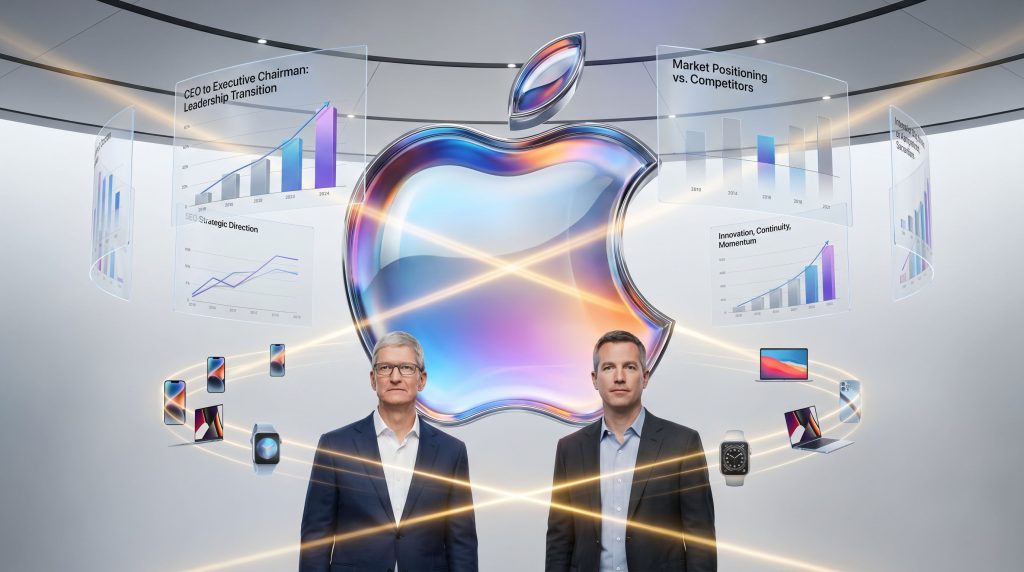
Tim Cook's transition to become Executive Chairman of Apple while John Ternus assumes the CEO role represents a significant shift in corporate governance for one of the world's most valuable technology companies. This leadership restructuring comes at a critical time when the technology sector faces unprecedented challenges from artificial intelligence competition, regulatory scrutiny, and evolving market dynamics.
Understanding Executive Chairman Structures in Technology Leadership
The transition of Tim Cook to become Executive Chairman of Apple while John Ternus assumes the CEO role represents a sophisticated governance model increasingly adopted across major technology corporations. This dual-leadership structure creates distinct operational boundaries where strategic oversight remains separated from day-to-day execution responsibilities.
Defining Executive Chairman Responsibilities in Modern Corporations
Executive Chairman roles typically encompass long-term strategic planning, board governance oversight, and external stakeholder relationship management. Unlike traditional board chairs who meet quarterly, Executive Chairmen maintain ongoing involvement in company operations while delegating operational decision-making authority to the CEO.
Key responsibilities include:
• Strategic vision development and long-term planning initiatives
• Government relations and regulatory compliance oversight
• Major partnership negotiations and international market development
• Board communication and investor relations management
• Crisis management and public communications leadership
Operational Boundaries Between CEO and Executive Chairman Roles
The delineation of authority becomes critical for organisational effectiveness during leadership transitions. CEOs retain control over product development, operational execution, financial management, and team leadership, while Executive Chairmen focus on external relationships and strategic direction.
Research from Spencer Stuart's 2024 CEO Succession Report indicates that approximately 23% of S&P 500 companies utilise executive chairman structures, with technology companies representing the highest adoption rates within this governance model.
Implementation Timeline for Apple's Leadership Restructuring
Apple's announcement creates immediate questions regarding transition timing and knowledge transfer protocols. Historical analysis of technology industry leadership changes suggests optimal transition periods typically span 6-12 months to ensure continuity of strategic initiatives and operational stability.
When big ASX news breaks, our subscribers know first
John Ternus: Hardware Engineering Leadership and Strategic Vision
The selection of John Ternus as CEO signals Apple's continued emphasis on hardware innovation and product development excellence. His background in engineering leadership provides insights into potential strategic directions under new management.
Engineering Background and Product Development Track Record
Ternus has overseen significant hardware initiatives during his tenure at Apple, including contributions to iPhone development, iPad engineering, and various consumer electronics innovations. His engineering-focused approach contrasts with Cook's operational and supply chain expertise.
Technical leadership experience includes:
• Hardware engineering team management across multiple product lines
• Cross-functional collaboration between design, engineering, and manufacturing teams
• Supply chain integration and manufacturing process optimisation
• Quality assurance and product testing protocol development
Strategic Product Portfolio Direction Under New Leadership
An engineering-focused CEO potentially shifts Apple's strategic emphasis toward hardware innovation acceleration and emerging technology integration. This approach may prioritise research and development investments over services revenue expansion.
Potential strategic focus areas include:
• Advanced semiconductor development and chip architecture innovation
• Augmented reality and virtual reality product category expansion
• Health technology integration and medical device development
• Autonomous vehicle technology and transportation sector entry
• Artificial intelligence hardware optimisation and edge computing
Board Composition and Governance Structure Changes
Apple's board structure accommodates both Cook's Executive Chairman role and Ternus's CEO responsibilities whilst maintaining independent oversight. Arthur Levinson continues as independent Board Chair, creating a three-tier leadership hierarchy.
This governance model provides:
• Independent board oversight through Levinson's continued chairmanship
• Strategic continuity through Cook's institutional knowledge retention
• Operational innovation through Ternus's product development focus
• Stakeholder confidence through gradual leadership transition
Market Impact Analysis and Competitive Positioning Assessment
Leadership transitions in major technology companies create immediate market reactions whilst establishing long-term competitive positioning changes. Historical analysis provides frameworks for evaluating potential outcomes.
Historical Technology CEO Transition Performance Analysis
Previous technology industry leadership changes offer instructive comparisons for market impact assessment:
Microsoft's leadership transition (2014):
• Satya Nadella's appointment resulted in approximately 60% stock appreciation within the first year
• Strategic pivot toward cloud computing and enterprise services
• Market capitalisation growth from $300 billion to over $1 trillion during tenure
Google's restructuring (2015-2019):
• Sundar Pichai's elevation to CEO coincided with Alphabet's creation
• Stock performance showed consistent upward trajectory following governance clarification
• Focus shift toward artificial intelligence and autonomous vehicle development
Investor Sentiment and Market Psychology Considerations
Market psychology during CEO transitions reflects investor confidence in leadership continuity, strategic vision alignment, and execution capabilities. Technology investors particularly scrutinise innovation pipeline stability and competitive positioning maintenance, particularly when evaluating management red flags that could indicate potential investment trouble.
Critical evaluation factors include:
• Previous leadership's performance benchmarks and achievement sustainability
• New CEO's technical expertise and strategic vision articulation
• Market timing relative to product launch cycles and competitive pressures
• Institutional investor confidence and analyst recommendation changes
Competitive Landscape Analysis Against Technology Peers
Apple's leadership transition occurs within an increasingly competitive technology landscape where Microsoft, Google, Amazon, and emerging players compete across multiple product categories.
| Competitive Factor | Microsoft | Amazon | Apple | |
|---|---|---|---|---|
| CEO Tenure Stability | High (Nadella: 10+ years) | High (Pichai: 7+ years) | Medium (Jassy: 3+ years) | Transitioning |
| AI Investment Focus | Enterprise/Cloud | Consumer/Search | Infrastructure | Device Integration |
| Hardware Innovation | Surface/Xbox | Pixel/Nest | Alexa/Echo | iPhone/Mac/Vision |
| Services Revenue | 65%+ of total | 85%+ of total | 70%+ of total | 25%+ of total |
Strategic Challenges During Executive Transition Period
Technology companies face heightened vulnerability during leadership changes as competitive pressures, regulatory scrutiny, and innovation demands require consistent strategic attention.
Artificial Intelligence Competition and Technology Integration
The artificial intelligence landscape has transformed dramatically since 2022, with ChatGPT achieving over 100 million users within months of launch and enterprise AI spending growing at double-digit annual rates according to Gartner research.
Apple's AI strategy requires:
• Integration of large language models into existing product ecosystems
• Competitive response to Microsoft's OpenAI partnership and Google's Bard development
• Privacy-focused AI implementation maintaining Apple's data protection standards
• Hardware optimisation for AI processing and edge computing capabilities
Global Supply Chain Complexity and Geopolitical Risk Management
Technology supply chains face ongoing geopolitical tensions, particularly regarding semiconductor manufacturing concentration in Taiwan and rare earth mineral dependencies.
Supply chain risk factors include:
• Taiwan semiconductor manufacturing vulnerability and geographic concentration
• China manufacturing relationships amid evolving trade policies
• Rare earth mineral sourcing and material cost inflation pressures
• Labour market constraints and skilled worker availability
Regulatory Environment and Antitrust Enforcement Landscape
Apple faces intensifying regulatory scrutiny across multiple jurisdictions, with the European Union's Digital Markets Act classifying Apple as a "gatekeeper" subject to enhanced compliance requirements.
Current regulatory challenges encompass:
• EU Digital Markets Act compliance requiring app store policy modifications
• US Federal Trade Commission investigations into app store practices and market dominance
• China data localisation requirements affecting services operation and user privacy
• Global privacy regulations including GDPR and state-level privacy laws
Tim Cook's Continued Strategic Influence and Policy Leadership
Cook's transition to Executive Chairman maintains his involvement in critical areas where his expertise and relationships provide ongoing value to Apple's strategic positioning.
International Relations and Government Affairs Portfolio
Cook has established significant relationships with government officials across key markets, particularly in China, European Union, and United States regulatory environments. His continued involvement ensures continuity in complex policy negotiations.
Government relations priorities include:
• China market access and regulatory compliance maintenance
• European Union policy advocacy regarding privacy rights and market competition
• US Congressional testimony and antitrust defence coordination
• International trade policy navigation and tariff impact mitigation
Privacy Advocacy and Data Protection Leadership Continuity
Apple's privacy-focused marketing positioning has become central to brand differentiation under Cook's leadership. His continued involvement maintains consistency in policy advocacy and public messaging.
Privacy leadership includes:
• Public advocacy for consumer data protection rights
• Industry coalition participation on privacy standards development
• Regulatory testimony on encryption and law enforcement access issues
• International privacy framework development and implementation
Environmental Sustainability and Climate Change Initiatives
Apple's commitment to carbon neutrality by 2030 requires sustained leadership attention and stakeholder coordination. Cook's environmental advocacy provides continuity for long-term sustainability goals.
Environmental initiatives encompass:
• Carbon neutral supply chain development across global manufacturing partners
• Renewable energy procurement and clean energy infrastructure investment
• Recycling programme expansion and circular economy implementation
• Environmental reporting and sustainability metrics disclosure
Innovation Pipeline Implications Under New Leadership
Ternus's engineering background potentially accelerates hardware innovation whilst maintaining Apple's integrated product development approach.
Hardware Engineering Focus and Product Development Acceleration
An engineering-focused CEO may prioritise research and development investments, particularly in emerging technology categories where Apple seeks competitive advantages.
Innovation focus areas include:
• Advanced chip architecture development building on Apple Silicon success
• Augmented reality hardware and Vision Pro ecosystem expansion
• Health monitoring technology integration across product portfolio
• Automotive technology development and transportation sector evaluation
Services Revenue Strategy and Ecosystem Expansion
Apple's services segment represents approximately 25% of total revenue and provides higher profit margins compared to hardware sales. New leadership must balance hardware innovation with services growth sustainability, considering how these changes align with broader investment strategy components.
Services expansion opportunities:
• Financial services including credit, insurance, and investment products
• Healthcare services leveraging device data and health monitoring capabilities
• Enterprise software and productivity applications development
• Content creation tools and professional application enhancement
Research and Development Investment Priorities
Technology industry R&D spending as a percentage of revenue varies significantly across competitors, with Apple historically investing 6-7% of revenue compared to Microsoft's 13-15% and Google's 15-20%.
| R&D Investment Area | Priority Level | Expected Timeline | Competitive Impact |
|---|---|---|---|
| AI/Machine Learning | High | 1-2 years | Critical |
| AR/VR Technology | High | 2-3 years | Moderate |
| Health Technology | Medium | 3-5 years | High |
| Autonomous Vehicles | Low | 5+ years | Uncertain |
The next major ASX story will hit our subscribers first
Corporate Governance Best Practices and Succession Planning Analysis
Apple's leadership transition reflects sophisticated succession planning that balances continuity with renewal across multiple organisational levels.
Knowledge Transfer Protocols and Institutional Memory Preservation
Effective CEO transitions require structured knowledge transfer spanning strategic relationships, operational procedures, and cultural preservation mechanisms.
Knowledge transfer components include:
• Strategic partner relationship documentation and personal introduction protocols
• Board governance procedure training and decision-making framework orientation
• Crisis management protocol review and emergency response preparation
• Cultural value preservation and leadership philosophy communication
Stakeholder Communication and Change Management Strategy
Technology company stakeholders require transparent communication regarding leadership changes, strategic direction continuity, and operational stability assurance.
Stakeholder communication priorities:
• Investor relations messaging emphasising strategic continuity and growth prospects
• Employee communication addressing cultural preservation and career development
• Customer assurance regarding product quality and service level maintenance
• Partner coordination ensuring relationship stability and collaborative project continuity
Succession Planning Effectiveness Across Technology Industry
Academic research from Harvard Law School Forum on Corporate Governance suggests optimal CEO succession includes 12-18 month transition periods with overlapping responsibilities and gradual authority transfer.
Successful technology transitions demonstrate:
• Clear role definition between outgoing and incoming leadership
• Board oversight enhancement during transition periods
• Performance metric establishment for new leadership evaluation
• Cultural continuity planning preserving organisational values and mission
Market Opportunity Assessment Under New Leadership Structure
Leadership transitions create strategic flexibility for market expansion, partnership development, and product category exploration previously constrained by established approaches.
Geographic Market Expansion and Emerging Economy Penetration
Apple's market penetration in emerging economies remains limited compared to Android devices, creating significant growth opportunities under new leadership approaches. Moreover, this expansion requires careful consideration of diversification strategies to manage risks and optimise returns across different markets.
Expansion opportunities include:
• India smartphone market where Apple holds approximately 5% market share despite 15%+ annual growth rates
• Southeast Asia technology adoption including Indonesia, Thailand, and Vietnam markets
• African continent infrastructure development and mobile technology leapfrogging
• Latin American services expansion building on existing device adoption
Strategic Partnership Development and Acquisition Potential
New leadership may pursue partnerships or acquisitions in technology areas where Apple lacks competitive positioning or seeks accelerated development.
Partnership categories include:
• Artificial intelligence research collaborations with academic institutions and technology companies
• Healthcare technology partnerships with medical device manufacturers and research organisations
• Automotive industry relationships for autonomous vehicle development and integration
• Financial services partnerships for expanded payment and credit services
Emerging Technology Investment and Market Creation
Technology leadership transitions often coincide with strategic pivots toward emerging markets where competitive advantages remain undefined.
Investment focus areas:
• Spatial computing and augmented reality application development
• Quantum computing research and practical application exploration
• Biotechnology integration with consumer health monitoring and medical devices
• Sustainable technology including renewable energy and environmental monitoring
Leadership Transition Risk Assessment and Mitigation Strategies
CEO transitions inherently create organisational vulnerability requiring comprehensive risk management and mitigation planning.
Operational Continuity During Leadership Change
Technology companies face particular risks during leadership transitions as product development cycles, competitive positioning, and investor confidence require consistent strategic attention. Furthermore, changes in tech sector leadership can correlate with broader market movements, as evidenced in North American market trends across various industries.
Risk mitigation includes:
• Product launch schedule protection ensuring minimal disruption to planned releases
• Key personnel retention through compensation and equity adjustments
• Customer relationship stability via dedicated account management and service continuity
• Supplier relationship maintenance protecting critical component sourcing and manufacturing
Competitive Advantage Preservation and Strategic Momentum
Leadership changes may create opportunities for competitors to gain market share or strategic positioning during periods of internal focus on transition management.
Competitive protection strategies:
• Innovation pipeline acceleration demonstrating continued product development leadership
• Market communication enhancement reinforcing brand strength and strategic vision
• Partnership expansion strengthening ecosystem relationships and collaborative advantages
• Talent acquisition attracting industry expertise and competitive intelligence
Additionally, investors should consider how these leadership changes might affect broader market relationships, including the gold stock market guide for understanding secular cycles during periods of corporate transition.
Investment Disclaimer: This analysis contains forward-looking statements regarding corporate leadership transitions, market opportunities, and strategic implications. Past performance of CEO transitions does not guarantee future results. Investment decisions should consider multiple factors including market conditions, competitive dynamics, and individual risk tolerance. Readers should consult qualified financial advisors before making investment decisions based on leadership transition analysis.
Frequently Asked Questions About Apple's Executive Leadership Restructuring
When Will the Leadership Transition Officially Take Effect?
Apple has announced major leadership restructuring with Tim Cook's transition to Executive Chairman and John Ternus becoming CEO, though specific effective dates require confirmation through official company communications and Securities and Exchange Commission filings.
How Will This Change Affect Apple's Product Development Timeline?
Leadership transitions typically maintain existing product development schedules through established engineering teams and project management systems. Ternus's hardware engineering background suggests continued emphasis on innovation pipeline stability.
What Role Will Tim Cook Play in Daily Operations?
Executive Chairman roles generally focus on strategic oversight, board governance, and external stakeholder relationships rather than operational management. Cook's specific responsibilities require clarification through official company documentation.
How Does This Transition Compare to Historical Apple Leadership Changes?
Apple's current transition differs significantly from the 2011 change when Steve Jobs stepped down due to health concerns. The planned nature of Cook's Executive Chairman role provides greater continuity compared to emergency succession scenarios.
This leadership restructuring represents a sophisticated governance approach designed to balance institutional knowledge preservation with strategic innovation under new executive leadership, positioning Apple for continued market leadership across evolving technology landscapes.
Ready to Position Yourself for the Next Major Market Opportunity?
Technology leadership transitions like Apple's often create ripple effects across investment markets, highlighting the importance of staying ahead of significant developments. Discovery Alert's proprietary Discovery IQ model delivers real-time alerts on significant ASX mineral discoveries, helping investors identify actionable opportunities that could benefit from technological innovation and changing market dynamics. Begin your 14-day free trial today to ensure you're positioned ahead of the market when the next major discovery creates substantial returns.