June 25, 2026
What Makes Tomago Aluminium Critical to Australia's Industrial Base?
Australia's aluminium industry stands at a crossroads, with technological transformation and energy transition challenges reshaping the competitive landscape for energy-intensive manufacturing. The future of Tomago Aluminium represents a critical juncture that extends far beyond operational considerations, encompassing national industrial sovereignty, supply chain resilience, and technological leadership in sustainable metal production.
Production Scale and Economic Footprint
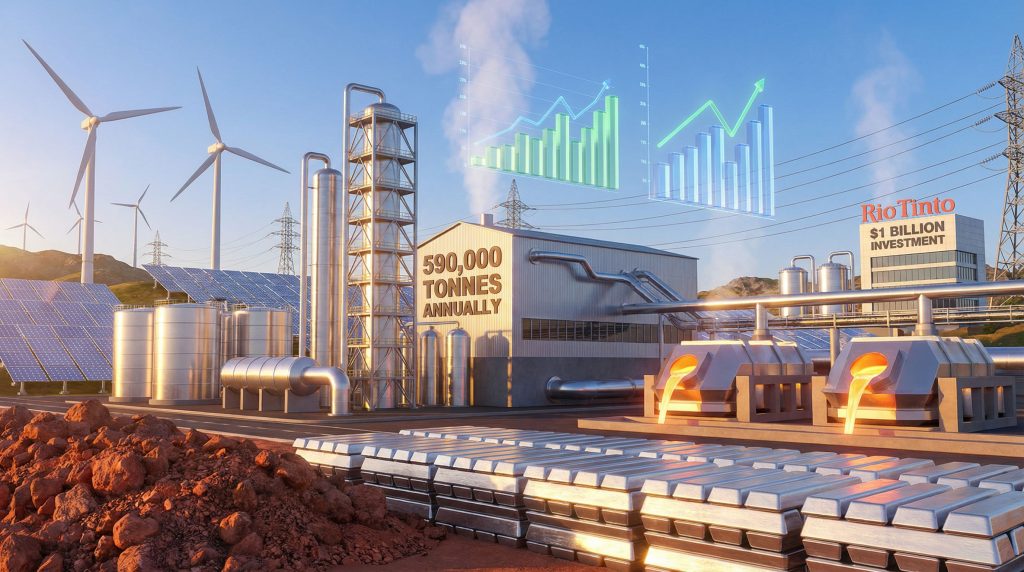
Tomago Aluminium represents the cornerstone of Australia's aluminium manufacturing sector, with its 590,000 tonnes annual production capacity contributing 40% of national aluminium output. Since its establishment in 1982, the facility has evolved into the Southern Hemisphere's largest aluminium smelter, positioning Australia as a significant player in Pacific Rim industrial metal markets.
The economic multiplier effects extend across multiple dimensions:
• Direct industrial employment supporting thousands of specialist positions in the Hunter Valley region
• Supply chain dependencies spanning raw material procurement, equipment maintenance, and logistics networks
• Export revenue generation contributing to Australia's trade balance through high-value manufactured products
• Technology transfer and industrial knowledge development in advanced metallurgical processes
Strategic Asset Classification Within Global Markets
The facility's strategic classification reflects its role in maintaining Australia's position within global aluminium supply chains. As renewable energy transitions reshape international competitiveness, Tomago's location and scale provide unique advantages for developing sustainable production models that could influence industry evolution trends across the Pacific region.
International benchmarking reveals Australia's competitive position in regions where renewable energy integration has successfully supported energy-intensive manufacturing. Norway's hydroelectric-powered aluminium sector and Iceland's geothermal energy applications provide frameworks for understanding how renewable energy can sustain large-scale smelting operations while maintaining cost competitiveness.
When big ASX news breaks, our subscribers know first
How Do Energy Economics Drive Smelter Viability Models?
Energy cost structures fundamentally determine the viability of aluminium smelting operations, with electricity representing the primary variable affecting profitability margins and long-term sustainability. Furthermore, the transition from conventional energy contracts to renewable energy solutions requires sophisticated financial modelling to balance cost certainty with technological innovation.
Power Cost Structure Analysis
The economic framework for aluminium smelting reveals energy's dominant role in operational viability:
| Cost Component | Current Impact | Post-2028 Projections |
|---|---|---|
| Electricity (% of operating costs) | >40% | Variable based on renewable supply model |
| Grid connection charges | Fixed infrastructure costs | Potentially restructured for renewable integration |
| Renewable energy certificates | Market-dependent pricing | Government-subsidised potential |
| Backup power systems | Emergency provision | Expanded role for grid stability |
The criticality of energy cost competitiveness cannot be overstated. According to Australian Aluminium Council leadership, "Competitive energy is the critical foundation that enables Australian businesses to succeed in global markets. For aluminium smelters, it is not optional — it is existential."
Competitive Benchmarking Against Global Operations
International comparison reveals the strategic importance of achieving cost parity with global competitors operating under different energy frameworks. Successful renewable energy transitions in comparable economies provide templates for understanding technical and commercial requirements:
• Norway: Hydroelectric power generation supporting multiple large-scale smelters with long-term cost stability
• Iceland: Geothermal energy integration providing baseload power for industrial operations
• Canada: Provincial renewable energy programmes supporting aluminium sector transitions
• European Union: Industrial decarbonisation frameworks combining government support with private investment
What Are the Government Intervention Scenarios?
Government intervention frameworks represent coordinated responses to maintaining strategic industrial capability while advancing renewable energy transition objectives. In addition, the collaborative approach between federal and state authorities reflects recognition of Tomago's importance to Australia's manufacturing competitiveness and regional economic stability.
Federal-State Collaborative Framework Design
The joint Commonwealth-NSW working group establishment marks a significant policy development in government support for energy-intensive industries. This collaborative framework addresses multiple dimensions of the transition challenge:
• Renewable energy infrastructure development: Government underwriting for large-scale generation projects
• Power purchase agreement structuring: Long-term pricing mechanisms providing cost certainty
• Grid integration coordination: Transmission infrastructure upgrades supporting industrial load requirements
• Regulatory streamlining: Accelerated assessment processes for renewable energy projects
Public Investment Models Under Consideration
Four primary scenario frameworks guide government planning for securing Tomago's energy supply beyond 2028:
Scenario Analysis Framework:
• Scenario A – Direct Government Generation: Public sector development of renewable generation assets specifically allocated for industrial supply
• Scenario B – Private-Public Partnerships: Collaborative investment models combining government support with private sector expertise
• Scenario C – Snowy Hydro Integration: Capacity allocation mechanisms utilising existing pumped hydro infrastructure
• Scenario D – Hybrid Supply Model: Combined approach integrating multiple renewable technologies with grid-scale storage
Regional Economic Impact Mitigation Strategies
The Hunter Valley economic diversification strategy recognises the interconnected nature of industrial operations and regional employment. Consequently, workforce transition planning addresses both immediate continuity requirements and long-term skills development for renewable energy sector growth. Infrastructure investment programmes create multiplier effects through construction, maintenance, and operational activities supporting broader economic development.
How Will Rio Tinto's $1 Billion Investment Reshape Operations?
Rio Tinto's commitment of at least $1 billion in capital and major maintenance investment over the next decade represents a transformational approach to industrial modernisation conditional on securing viable renewable energy solutions. This investment framework addresses multiple operational dimensions while positioning Tomago for enhanced competitiveness in evolving global markets.
Capital Allocation Priorities Over Next Decade
The strategic investment programme encompasses comprehensive modernisation across operational systems:
• Smelting technology advancement: Implementation of next-generation cell designs reducing energy intensity per tonne of production
• Decarbonisation infrastructure: Integration systems enabling renewable energy utilisation with grid stability maintenance
• Maintenance and efficiency programmes: Equipment upgrades reducing operational downtime and improving productivity
• Potential capacity expansion: Marginal output increases conditional on renewable energy economics supporting enhanced utilisation
Rio Tinto Chief Executive Simon Trott characterised the investment as recognition of collaborative progress, stating that the development "reflects years of collaborative work between Tomago and its joint venture partners including Rio Tinto, in addressing one of the most complex energy challenges facing Australian industry."
Ownership Structure and Decision-Making Dynamics
The joint venture ownership structure combining Rio Tinto's majority position with partners Gove Aluminium Finance and Norsk Hydro creates governance frameworks balancing corporate strategic objectives with operational continuity requirements. However, decision-making processes require alignment across partners while maintaining Rio Tinto's primary authority over capital allocation and strategic direction.
What Renewable Energy Solutions Could Secure Tomago's Future?
Technical requirements for supplying continuous 950MW+ baseload power to aluminium smelting operations demand sophisticated renewable energy solutions combining multiple technologies with grid-scale storage systems. For instance, the challenge extends beyond generation capacity to encompass reliability, frequency control, and voltage stability necessary for industrial processes.
Technical Requirements for Smelter Power Supply
Aluminium smelting operations impose stringent technical specifications on power supply systems:
• Baseload demand profile: 24/7/365 continuous operation requiring minimal interruptions
• Frequency regulation: Maintaining 50Hz Australian grid frequency within narrow tolerances
• Reactive power management: Voltage stability across high-voltage transmission networks
• Load factor requirements: Consistent output delivery regardless of weather variability
Renewable Generation Options Assessment
Large-Scale Solar with Battery Storage:
Solar generation combined with grid-scale battery systems offers scalable renewable energy provision, though requires significant land allocation and substantial storage capacity for continuous power delivery. Declining technology costs improve economic viability while proven deployment experience reduces implementation risks.
Offshore Wind Development:
NSW coastal wind resources present opportunities for high-capacity factor generation systems. Offshore wind installations typically achieve 35-45% capacity factors compared to onshore alternatives, though require higher capital investment and extended development timelines for maritime infrastructure.
Pumped Hydro Storage Integration:
Existing pumped hydro infrastructure, including Snowy Hydro systems, provides dispatchable power generation aligned with industrial demand profiles. Geographic distance from Hunter Valley operations and shared resource allocation with other grid users present coordination challenges requiring sophisticated management protocols.
Green Hydrogen Production Pathways:
Hydrogen production for industrial processes or power generation represents emerging technology applications with potential long-term integration benefits. Current development status suggests this pathway may supplement rather than replace immediate 2028 transition requirements.
Transmission Infrastructure Development Needs
Grid integration requirements encompass multiple technical and commercial considerations:
• High-voltage transmission upgrades: Enhanced connection capacity supporting renewable generation integration
• Regional grid strengthening: Network reinforcement managing bidirectional power flows
• Smart grid implementation: Advanced control systems optimising demand management and supply coordination
• Redundancy systems: Backup infrastructure preventing unplanned industrial shutdowns
What Are the Broader Industry Implications?
The future of Tomago Aluminium extends beyond individual facility operations to influence Australia's approach to energy-intensive manufacturing, renewable energy integration, and strategic industrial capability retention. Moreover, successful transition models established at Tomago could provide frameworks for other sectors facing similar energy exports challenges.
Australian Aluminium Sector Transformation
Tomago's renewable energy transition sets precedents affecting the entire Australian aluminium industry. Supply chain resilience for downstream manufacturing depends on maintaining domestic production capability, while international competitiveness requires achieving cost parity with global operations utilising different energy frameworks.
The facility's role in supporting 40% of Australia's total annual aluminium production means transition outcomes directly impact:
• Downstream manufacturing: Automotive, construction, and packaging industries dependent on domestic supply
• Export market positioning: Australia's role in Pacific Rim aluminium trade relationships
• Critical minerals processing: Aluminium's classification within strategic resource frameworks
• Technology leadership: Renewable aluminium production innovation and knowledge transfer
Global Aluminium Market Dynamics
International market implications encompass pricing structures, trade relationships, and sustainable production standards. Renewable aluminium production commands premium pricing in markets prioritising environmental performance, creating opportunities for differentiated product positioning and enhanced export value.
Pacific Rim trading relationships may evolve as renewable energy integration becomes a competitive differentiator. Countries successfully implementing sustainable industrial production gain advantages in markets where environmental standards influence procurement decisions.
The next major ASX story will hit our subscribers first
Which Risk Factors Could Derail Continuity Plans?
Multiple risk categories could impact the successful transition of Tomago's operations beyond 2028, requiring comprehensive risk management frameworks addressing technical, commercial, and regulatory uncertainties. Understanding these risk factors enables stakeholders to develop mitigation strategies preserving operational continuity.
Commercial Viability Thresholds
Economic viability depends on achieving electricity pricing that maintains competitive positioning relative to global aluminium production costs. Key risk factors include:
• Electricity price ceilings: Maximum viable power costs for profitable operations
• Aluminium market volatility: Global pricing fluctuations affecting revenue projections
• Currency exchange impacts: Australian dollar strength affecting export competitiveness
• Capital investment returns: Rio Tinto's profitability expectations from modernisation programmes
Regulatory and Policy Uncertainties
Government policy consistency across electoral cycles presents ongoing challenges for long-term investment planning. Regulatory uncertainties encompass:
• Federal energy policy stability: Maintaining government support frameworks through political transitions
• State planning processes: NSW approval timelines for renewable energy infrastructure
• Environmental assessments: Regulatory requirements for large-scale renewable projects
• Grid integration standards: Technical requirements for industrial-scale renewable energy connections
Technical Implementation Challenges
Technology deployment risks affect both timeline adherence and performance guarantees:
• Grid integration complexity: Managing renewable energy variability with industrial load requirements
• Construction timeline adherence: Infrastructure development schedules meeting 2028 transition deadline
• Performance guarantee achievement: Technology systems delivering specified reliability and availability
• Supply chain coordination: Equipment procurement and installation across multiple technology platforms
What Timeline Milestones Will Determine Success?
Critical decision points through 2028 establish the framework for successful operational transition, with specific milestones requiring coordinated action across government, corporate, and technical stakeholders. Timeline adherence determines whether renewable energy solutions can be operational before existing contract expiration.
Critical Decision Points Through 2028
Key Implementation Milestones:
• Q1 2025: Employee consultation completion and Rio Tinto board approval for investment commitment
• Mid-2025: Government power purchase agreement framework finalisation with pricing mechanisms
• 2025-2026: Renewable energy project procurement, environmental approvals, and construction commencement
• 2026-2027: Infrastructure construction completion and grid integration testing
• Late 2027: Comprehensive system commissioning and operational readiness verification
• 2028: Contract transition execution and continuous operational capability confirmation
Success Metrics and Performance Indicators
Measurable outcomes define successful transition achievement:
• Fixed-price electricity agreement: Long-term cost certainty enabling operational planning
• Renewable energy percentage targets: Environmental performance standards for sustainable production
• Employment level maintenance: Workforce continuity through transition period
• Production capacity utilisation: Output levels supporting economic viability
How Does This Compare to International Smelter Transitions?
Global experience with renewable energy transitions in energy-intensive industries provides valuable insights for understanding technical possibilities, commercial frameworks, and implementation strategies. International case studies reveal both successful approaches and potential challenges affecting transition planning.
Global Case Studies in Renewable Smelting
Norway's Hydroelectric Integration:
Norwegian aluminium operations demonstrate long-term viability of renewable energy-powered smelting through hydroelectric generation. Multiple facilities operate competitively while meeting environmental standards, providing templates for understanding technical requirements and commercial structures.
Iceland's Geothermal Applications:
Geothermal energy integration in Iceland supports large-scale aluminium production with minimal carbon emissions. The technical approach combines baseload geothermal generation with grid stability systems, offering insights for other renewable energy applications.
European Decarbonisation Programmes:
European Union industrial decarbonisation initiatives combine regulatory frameworks with financial support mechanisms. Government-industry partnerships facilitate technology deployment while maintaining industrial competitiveness through transition periods.
Competitive Positioning for Green Aluminium Markets
Renewable aluminium production creates opportunities for premium market positioning as environmental standards become increasingly important in international trade. Certification systems and traceability mechanisms enable product differentiation supporting enhanced export value and customer relationship development.
Sustainability credentials influence procurement decisions across automotive, construction, and packaging sectors. Companies prioritising environmental performance create demand for renewable-produced metals, supporting price premiums that improve project economics for sustainable production facilities.
What Investment Opportunities Emerge from This Transition?
The transformation of Tomago's energy supply creates multiple investment opportunities across renewable energy generation, grid infrastructure modernisation, and specialised services supporting industrial decarbonisation. These opportunities extend beyond immediate project requirements to encompass broader market development in sustainable industrial systems.
Infrastructure Development Prospects
Capital investment opportunities encompass multiple technology and service categories:
• Renewable generation projects: Large-scale solar, wind, and storage system development
• Grid modernisation infrastructure: Transmission upgrades and smart grid technology implementation
• Industrial equipment suppliers: Specialised technology for renewable energy integration with smelting operations
• Energy storage systems: Battery and pumped hydro storage supporting grid stability requirements
Supply Chain and Services Sector Growth
Supporting service industries experience growth opportunities through industrial energy transition requirements, particularly in areas of green production sustainability:
• Maintenance and technical services: Specialised expertise for renewable energy systems maintenance
• Local content development: Government requirements creating opportunities for Australian suppliers
• Skills development programmes: Training and certification systems for renewable energy technologies
• Environmental monitoring services: Compliance and reporting systems for sustainable production certification
The future of Tomago Aluminium represents a critical test case for Australia's ability to maintain energy-intensive manufacturing while transitioning to renewable energy systems. Success requires unprecedented coordination between government policy frameworks, corporate investment commitments, and technological innovation. The outcomes will influence not only regional economic development in the Hunter Valley but Australia's broader approach to industrial decarbonisation and sustainable manufacturing competitiveness in global markets.
This analysis is based on publicly available information and government announcements as of December 2025. Investment decisions should be made with consideration of additional research and professional advice regarding specific risk factors and commercial opportunities.
Looking for Your Next Industrial Investment Opportunity?
Discovery Alert's proprietary Discovery IQ model delivers instant notifications on significant ASX mineral discoveries and industrial developments, empowering subscribers to identify actionable trading opportunities ahead of the broader market. Explore how major industrial transitions and mineral discoveries can generate substantial returns by understanding the patterns that drive successful investments in Australia's evolving resources sector.