August 8, 2026
The Hidden Cost of Concentration: How One Waterway Became the Oil Industry's Greatest Liability
Every commodity market carries embedded geographic risk, but few examples in modern energy history are as stark as the structural dependence that international oil companies have built around a single 39-kilometre-wide maritime passage. The Strait of Hormuz, connecting the Persian Gulf to the Gulf of Oman, has long been treated by the industry as a permanent and reliable export artery. That assumption is now being dismantled in real time, and the consequences are forcing at least one major Western oil company to rethink the very architecture of how it moves hydrocarbons from wellhead to market.
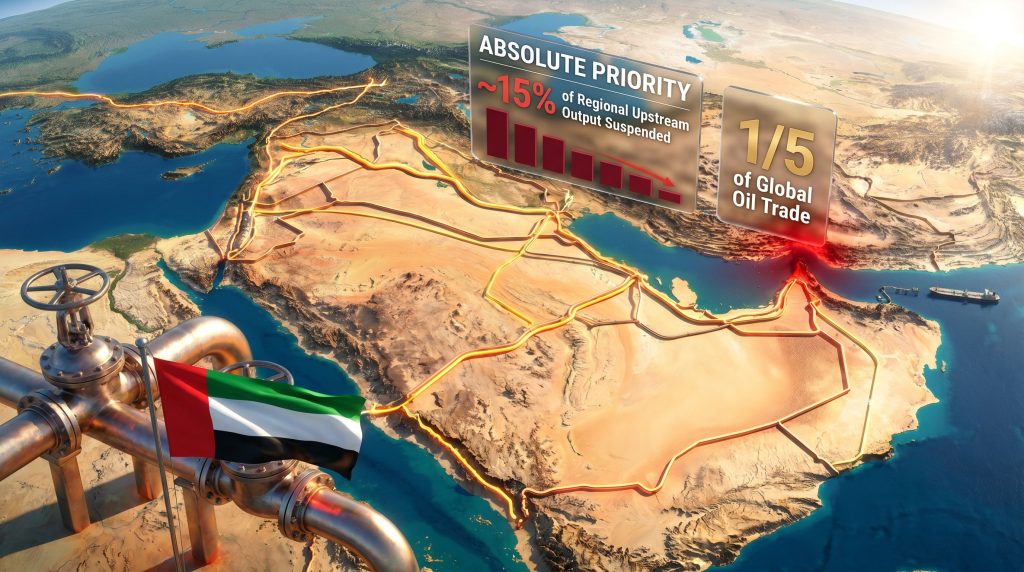
TotalEnergies, the French integrated energy giant widely regarded as the Western oil major most deeply embedded in Middle Eastern upstream operations, has reached a threshold. With approximately 15% of its regional oil and gas production currently suspended due to instability linked to the Iran crisis, CEO Patrick Pouyanne has publicly declared that investing in TotalEnergies pipelines to bypass the Strait of Hormuz is no longer a strategic option but an absolute operational priority.
When big ASX news breaks, our subscribers know first
The Mathematics of Hormuz Dependency
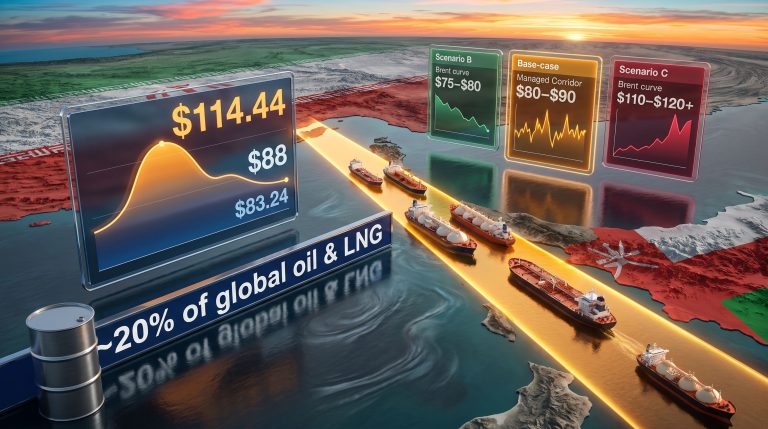
The scale of the problem begins with a single statistic: roughly one-fifth of all internationally traded oil passes through the Strait of Hormuz annually. To put that in practical terms, approximately 17 to 21 million barrels of crude oil and petroleum products transit this corridor every day during periods of normal operations. No other maritime chokepoint in the world concentrates this much energy flow in such a confined geographic space.
What makes this particularly consequential from a risk management perspective is that the strait cannot be easily substituted through rerouting. Unlike the Suez Canal, where ships can travel around the Cape of Good Hope with significantly longer voyage times, the landlocked geography of the Persian Gulf means that most Gulf producers have no maritime alternative whatsoever. Their only options are:
- Accept the risk of maritime disruption and continue routing through Hormuz
- Develop overland pipeline infrastructure to reach alternative coastal export terminals
- Curtail production entirely until conditions stabilise
For TotalEnergies, the third option is currently the operating reality for a meaningful portion of its Gulf portfolio. That is precisely what makes the CEO's public declaration so significant. Furthermore, this is not a company discussing pipeline investment as a medium-term strategic aspiration. It is a company that is already absorbing the financial cost of Hormuz paralysis and is now treating overland infrastructure as the mechanism for eliminating that risk entirely.
Why TotalEnergies Carries Disproportionate Middle East Exposure
Among the European oil majors, TotalEnergies occupies an unusually concentrated position in Gulf producing regions. Its upstream portfolio spans several jurisdictions across the Arabian Peninsula and Iraq, giving it production exposure that exceeds most peers on a proportional basis. This concentration was, for many years, a competitive advantage. The company gained privileged access to some of the world's lowest-cost barrels, with production economics that would be difficult to replicate elsewhere.
The Iran crisis, however, has inverted that calculus. Low-cost production is only economically valuable if it can be transported and sold. When the export pathway is compromised, the production economics become irrelevant. What was a concentration advantage has consequently become a concentration liability. These commodity price impacts ripple well beyond a single company's balance sheet, affecting broader market dynamics.
| Metric | Detail |
|---|---|
| Middle East production suspended | ~15% of regional upstream output |
| Root cause | Maritime instability through the Strait of Hormuz |
| Primary strategic response | Pipeline bypass investment declared a top priority |
| Historical precedent referenced | Iraq-Syria pipeline, built by Total's predecessors, completed in six years from 1928 |
Mapping the Bypass Corridors: Routes, Risks, and Realism
TotalEnergies has not articulated a single pipeline solution. Instead, Pouyanne has outlined a multi-corridor approach that reflects both the geographic complexity of the problem and the political reality that no single overland route is without complications. The corridors under consideration span several distinct geographies, each carrying its own set of technical and diplomatic variables.
Abu Dhabi and the Gulf of Oman Model
The most technically mature bypass option in the broader Gulf region already exists and is operational: the UAE's Habshan-Fujairah pipeline, operated by ADNOC, which routes crude from onshore Abu Dhabi fields directly to a non-Hormuz coastal terminal on the Gulf of Oman. This pipeline carries a nameplate capacity of 1.8 million barrels per day and has demonstrated that large-scale bypass infrastructure is not merely theoretical.
A second ADNOC bypass pipeline is currently under construction and approximately 50% complete, with commissioning expected around 2027. For TotalEnergies, the Abu Dhabi corridor offers the most politically stable expansion pathway, given existing operational relationships between the company and ADNOC.
The Iraq Routing Options: South and West
Iraq presents a more complex set of alternatives, primarily because the country's landlocked northern and central producing regions require transit through third-party sovereign territory to reach any coast. Two broad southern corridors have been identified:
- Iraq to Kuwait and Saudi Arabia: Routing production southward through GCC territory toward Red Sea terminals or the Saudi East-West pipeline system. Saudi Arabia's existing East-West pipeline carries estimated spare capacity of 3 to 5 million barrels per day, suggesting meaningful absorption capacity if bilateral agreements could be structured.
- Iraq to Syria and Turkey: The western overland option, which would connect Iraqi fields to Mediterranean or Turkish coastal terminals. This is the corridor with the greatest historical precedent but also the most acute current political complexity.
Comparing the Viability of Each Route
| Route | Key Advantage | Primary Challenge |
|---|---|---|
| Abu Dhabi bypass expansion | Existing infrastructure and operational trust | Capacity expansion required for IOC volumes |
| Iraq to Kuwait and Saudi Arabia | GCC political alignment, proven Saudi infrastructure | Multi-sovereign bilateral coordination |
| Iraq to Syria to Mediterranean | Historical precedent, Mediterranean market proximity | Syrian political instability |
| Iraq to Turkey (direct) | EU-adjacent terminus, significant refining market access | Kurdish regional governance complexity |
The 1928 Precedent: What History Actually Proves
One of the more analytically underappreciated aspects of TotalEnergies' strategic argument is the historical reference point its CEO has chosen. In 1928, Total's predecessor company was among the partners in the Turkish Petroleum Company consortium that discovered oil in Kirkuk, Iraq. What followed was a genuine feat of early industrial logistics: an overland pipeline was engineered and constructed from the Iraqi interior to the Syrian coast, with the entire project completed within six years.
The crude that arrived at the Syrian terminal was then loaded onto tankers and shipped across the Mediterranean to a refinery in southern France. The entire supply chain, from Iraqi wellhead to French refinery, was operational within a timeframe that many modern infrastructure projects would struggle to match even with contemporary engineering and project management capabilities.
The argument embedded in this historical reference is not merely nostalgic. It is a pointed challenge to the infrastructure industry's contemporary assumptions about project complexity and timeline. If the engineering, financing, and political negotiation required to build a cross-regional pipeline across multiple sovereign territories was achievable in six years during the interwar period, the question becomes why the same objective would require longer under modern conditions.
The honest answer is that it might not. Modern horizontal directional drilling, satellite-assisted surveying, modular pipeline construction techniques, and advanced cathodic protection systems have dramatically reduced both the timeline and cost per kilometre of major pipeline projects compared to early 20th-century methods. The genuine constraints are political and diplomatic, not technical. As TotalEnergies' CEO has stressed publicly, the urgency of this infrastructure investment cannot be overstated.
The Broader Industry Signal: This Is Not Just About TotalEnergies
It would be a mistake to read TotalEnergies' announcement as a company-specific supply chain problem looking for a company-specific solution. The Hormuz chokepoint is a shared vulnerability across every producer and trader with Gulf exposure. The willingness of a major Western oil company to publicly declare overland infrastructure investment an operational necessity carries significant implications for how the broader industry will approach export route risk.
Several dynamics are worth tracking:
- Other majors with Gulf upstream exposure are almost certainly conducting internal assessments of their own Hormuz vulnerability profiles. TotalEnergies' public declaration may accelerate those evaluations.
- Consortium financing structures become more attractive when multiple companies share the same infrastructure problem. A co-funded bypass pipeline shared between two or three international oil companies and one or two national oil companies could distribute capital requirements while accelerating delivery timelines.
- Geopolitical risk premium compression is the long-term market implication. Analysts and traders currently factor a Hormuz disruption premium into Gulf crude pricing. Material expansion of bypass capacity would structurally reduce that premium over time, creating downward pressure on the spread between Gulf crudes and benchmarks from less geopolitically exposed basins.
Understanding the broader geopolitical risk landscape is therefore essential for any investor tracking energy infrastructure developments across the Middle East and beyond.
The next major ASX story will hit our subscribers first
Timeline Realism: What Investors and Analysts Should Expect
The gap between strategic ambition and operational infrastructure is always wider than initial announcements suggest. For TotalEnergies pipelines to bypass the Strait of Hormuz to become operational reality, the company must navigate a sequence of milestones that each carry their own timeline uncertainty.
Scenario A: Accelerated Bilateral Track (3 to 5 Years)
If host government agreements, environmental clearances, and financing can be concluded within 12 to 18 months, initial pipeline capacity on the most straightforward corridor could potentially become operational by 2029 or 2030. This scenario assumes political stability across transit territories and successful consortium assembly.
Scenario B: Extended Development Track (7 to 10 Years)
More realistic for routes requiring Syrian or Turkish transit, given the governance complexity involved. Under this scenario, TotalEnergies continues to absorb partial production curtailments and relies on sovereign-operated bypass infrastructure in the interim period.
Scenario C: Shared Infrastructure Model
TotalEnergies partners with regional national oil companies and potentially other international majors to co-develop shared bypass infrastructure. This model reduces individual capital exposure while potentially unlocking faster regulatory clearance through the involvement of sovereign partners with existing bilateral relationships.
In addition, crude oil price trends will play a significant role in determining how quickly these scenarios are funded and executed, as sustained price levels directly influence capital allocation decisions across the sector.
Disclaimer: The scenario projections above represent analytical frameworks based on publicly available information and historical infrastructure development timelines. They do not constitute financial advice or investment recommendations. Actual outcomes will depend on geopolitical developments, regulatory processes, and capital market conditions that are inherently uncertain.
Pipelines as Geopolitical Instruments
A dimension of this story that receives insufficient attention in energy market coverage is the explicitly political character of pipeline infrastructure. Pipelines are not neutral physical assets. They create durable economic dependencies between the countries they connect, influence trade flow patterns for decades, and carry significant diplomatic weight in bilateral relationships.
A TotalEnergies-backed pipeline corridor through Iraq and Turkey, for example, would not merely solve a logistics problem. It would embed French commercial interests into a strategic energy corridor connecting Middle Eastern production to European markets. This carries meaningful implications for France's geopolitical positioning across both regions. Similarly, a corridor through Syria, should political conditions ever allow it, would give Western commercial partners a structural stake in Syrian infrastructure reconstruction.
These geopolitical dimensions are part of why bypass pipeline development in the Gulf has historically been driven by state-owned enterprises rather than private international oil companies. The fact that TotalEnergies is now considering direct investment in this category of infrastructure represents a meaningful evolution in how Western majors are thinking about the boundary between commercial risk management and strategic infrastructure statecraft. How OPEC and oil markets respond to this shift will be closely watched by analysts and policymakers alike.
Key Figures at a Glance
| Data Point | Figure |
|---|---|
| Daily oil volume through Hormuz | ~17 to 21 million barrels |
| Share of global oil trade transiting Hormuz | ~20% |
| TotalEnergies Middle East production suspended | ~15% of regional output |
| UAE Habshan-Fujairah pipeline capacity | 1.8 million barrels per day |
| Saudi East-West pipeline spare capacity | ~3 to 5 million barrels per day |
| UAE second bypass pipeline completion estimate | ~2027 (approx. 50% complete) |
| Historical Iraq-Syria pipeline build time | 6 years (from 1928) |
The numbers make clear that the physical infrastructure to redirect Gulf crude away from Hormuz already exists in significant volume across sovereign-operated systems. The missing piece is private-sector investment in dedicated bypass capacity for internationally operated upstream portfolios. OPEC demand forecasts further underscore the long-term importance of securing reliable export routes, as sustained demand growth from Asia in particular makes Gulf production indispensable to global supply balances.
TotalEnergies' decision to treat that investment as a top operational priority may well mark the point at which the industry's posture on this question began to shift. Furthermore, according to Reuters reporting on Gulf pipeline investment, the CEO's comments signal a broader recalibration of how international oil companies are weighing infrastructure statecraft against traditional upstream risk models.
For ongoing coverage of Middle Eastern energy infrastructure developments and GCC oil and gas sector dynamics, Zawya's Energy section at zawya.com provides detailed regional tracking across upstream, midstream, and downstream activity.
Want to Stay Ahead of Major Resource Discoveries Before the Broader Market Reacts?
While geopolitical disruptions reshape global energy infrastructure and commodity flows, Discovery Alert's proprietary Discovery IQ model instantly identifies significant ASX mineral discoveries — translating complex data across 30+ commodities into clear, actionable insights for traders and investors at every level. Explore historic discoveries and their extraordinary returns, then begin your 14-day free trial at Discovery Alert to position yourself ahead of the market.