
August 20, 2026
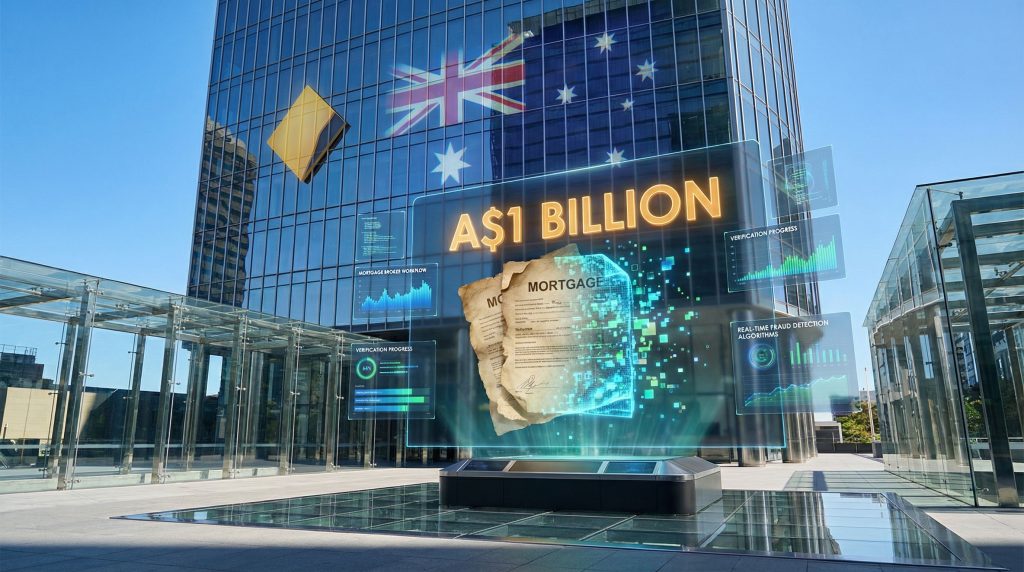
Traditional Banking Verification Systems Face Unprecedented Technological Challenge
The Australian financial services sector confronts an evolving fraud landscape where artificial intelligence transforms document forgery from crude manipulation to sophisticated synthetic creation. This technological arms race between detection and deception has emerged as banks discover the limitations of conventional verification processes originally designed for paper-based authentication, particularly affecting US economy trends and their subsequent regulatory responses.
Modern mortgage lending relies on documentation verification protocols established decades before generative AI capabilities existed. Traditional optical character recognition systems and manual review processes struggle to identify synthetic documents that replicate genuine formatting with mathematical precision. This technological gap has created systemic vulnerabilities across institutional lending channels.
CBA Mortgage Probe Exposes Systemic Detection Weaknesses
Commonwealth Bank's investigation into potential mortgage fraud reveals broader institutional challenges in identifying sophisticated document manipulation schemes. The probe encompasses suspected fraudulent activity involving artificial intelligence-generated documentation targeting traditional verification checkpoints. Furthermore, this CBA mortgage probe demonstrates how modern financial institutions must evolve their detection capabilities.
Investigation Parameters Under Review:
- Whistleblower-triggered detection protocols activating internal audit systems
- Self-reporting obligations to regulatory authorities and law enforcement
- Comprehensive broker channel assessment following industry-wide patterns
- Enhanced scrutiny of overseas funding sources and verification processes
The investigation methodology reflects institutional commitment to regulatory compliance under Australian anti-money laundering frameworks. Banks face mandatory disclosure requirements when internal systems identify potential breach scenarios, triggering coordinated responses across multiple regulatory bodies. Additionally, the Commonwealth Bank's $1 billion suspected fraud investigation highlights the scale of modern financial crime.
Why Australian Financial Institutions Are Discovering Large-Scale Fraud Networks
The emergence of billion-dollar fraud investigations across major banks reflects systematic improvements in detection capabilities rather than sudden fraud proliferation. Enhanced monitoring systems and cross-institutional information sharing have revealed previously undetected manipulation networks operating through broker channels.
Technology-Driven Detection Evolution:
Machine learning algorithms now analyse submission patterns across multiple data points, identifying statistical anomalies that human reviewers might overlook. These systems examine metadata, timing patterns, and document characteristics to flag potential synthetic content. Moreover, AI-driven innovation in detection systems represents a critical advancement in financial security.
Simultaneously, fraudulent actors deploy increasingly sophisticated tools to generate convincing documentation. This creates an escalating competition between institutional detection capabilities and criminal technological advancement.
Industry-Wide Audit Initiatives:
Following detection of significant fraud schemes, major Australian banks have implemented comprehensive broker channel reviews. These systematic assessments examine historical submission patterns and identify common vulnerabilities across lending networks. Consequently, the investment market impact of enhanced verification protocols affects broader financial stability.
| Detection Method | Traditional Approach | Enhanced Technology |
|---|---|---|
| Document Review | Manual visual inspection | AI-powered authenticity analysis |
| Pattern Recognition | Quarterly compliance audits | Real-time anomaly detection |
| Cross-Reference Checking | Institution-specific databases | Industry-wide fraud sharing platforms |
| Verification Speed | Multi-day processing | Instantaneous authentication |
Regulatory Framework Transformation Following CBA Investigation
The investigation extends beyond isolated mortgage fraud into broader anti-money laundering compliance frameworks. Overseas funding channels and property acquisition methods under scrutiny may trigger comprehensive regulatory review processes affecting industry-wide lending standards.
AUSTRAC Monitoring Requirements:
Australian financial institutions operate under stringent reporting obligations for transactions involving international fund transfers. Property purchases represent recognised high-risk vectors for money laundering activities, requiring enhanced due diligence protocols. In addition, this CBA mortgage probe emphasises the importance of international compliance coordination.
Current vs. Proposed Broker Oversight:
The mortgage broking industry faces potential restructuring through enhanced licensing requirements, mandatory technology upgrades, and stricter oversight protocols.
Comparative Regulatory Framework Analysis:
| Current Standards | Proposed Enhancements | Implementation Timeline |
|---|---|---|
| Basic ASIC licensing | Enhanced due diligence requirements | 12-18 months |
| Standard documentation | AI-powered authentication | 6-12 months |
| Annual compliance reviews | Real-time monitoring systems | 18-24 months |
| Limited data sharing | Industry-wide fraud database | 24-36 months |
AI-Generated Document Fraud Challenges Traditional Security Architecture
Synthetic document generation capabilities have evolved beyond simple template manipulation to sophisticated recreation of official financial documentation. Modern AI tools produce payslips, tax returns, and bank statements that replicate authentic formatting, typography, and data structures.
Document Forgery Technological Capabilities:
Contemporary generative systems create synthetic documentation by analysing thousands of genuine examples, learning institutional formatting standards, and producing mathematically precise replications. These synthetic documents often include:
- Authentic-appearing logos and letterheads
- Correct institutional formatting and typography
- Realistic financial data within expected parameters
- Proper metadata characteristics matching genuine documents
Traditional Detection Limitations:
Conventional verification processes rely on visual inspection and basic optical character recognition technology. These methods prove insufficient when confronting AI-generated content that mimics authentic documentation characteristics. Furthermore, industry innovation trends demonstrate how technological advancement consistently outpaces traditional security measures.
Emerging Verification Technologies:
Financial institutions explore blockchain-based authentication systems requiring cryptographic verification from document-issuing authorities. Direct employer income confirmation protocols bypass traditional documentation entirely, connecting lenders with payroll systems for real-time verification.
Financial and Reputational Risk Assessment for Major Banks
Commonwealth Bank's historical regulatory penalty record provides context for potential investigation outcomes. The institution faced A$700 million in civil penalties during 2019 for anti-money laundering compliance breaches, establishing precedent for significant financial consequences.
Risk Exposure Categories:
- Regulatory Penalties: Based on historical enforcement patterns and compliance failure severity
- Market Confidence Impact: Investor sentiment regarding institutional risk management capabilities
- Operational Disruption: Enhanced verification requirements affecting loan processing efficiency
- Competitive Position: Technology investment requirements for fraud detection advancement
Historical Penalty Precedents:
| Institution | Violation Type | Penalty Amount | Year | Regulator |
|---|---|---|---|---|
| Commonwealth Bank | AML/CTF Breaches | A$700 million | 2019 | ASIC |
| Commonwealth Bank | Investor Compensation | A$149.5 million | 2021 | Federal Court |
Mortgage Lending Industry Transformation Implications
Enhanced verification requirements will fundamentally alter Australian mortgage lending processes. Technology integration mandates, stricter broker oversight, and real-time monitoring systems represent significant operational changes across the financial services sector. Moreover, research on how AI-driven fraud affects banking and business practices suggests comprehensive industry transformation.
Broker Channel Restructuring:
The mortgage broking industry confronts potential licensing enhancement requirements, technology upgrade mandates, and expanded compliance obligations. These changes may consolidate the industry around larger aggregators capable of investing in advanced verification systems.
Technology Investment Acceleration:
Banks will likely accelerate deployment of advanced authentication technologies, including:
- Blockchain verification systems for document authenticity confirmation
- Direct employer integration for income verification bypassing documentation
- Real-time compliance monitoring for continuous fraud detection
- Cross-institutional data sharing for comprehensive risk assessment
Australian Property Market Impact Analysis
Enhanced lending verification processes may influence property market dynamics through altered approval timelines and stricter qualification requirements. Legitimate borrowers may experience longer processing periods as institutions implement comprehensive authentication systems.
Foreign Investment Scrutiny Enhancement:
Increased focus on overseas funding sources could affect international property investment flows. Enhanced due diligence requirements for foreign-sourced deposits may create additional barriers for legitimate international buyers. However, the global trade impact of enhanced financial security measures may prove beneficial for long-term market stability.
Market Liquidity Considerations:
- Slower loan approval processes affecting settlement timelines
- Reduced approval rates during verification system transition periods
- Potential temporary cooling effect on property transaction volumes
- Regional market variation based on broker channel dependency
Big Four Banking Sector Response Coordination
Following Commonwealth Bank's investigation disclosure, Australia's major banks are implementing similar broker channel reviews. ANZ, Westpac, and National Australia Bank are conducting comprehensive audits to identify potential fraud exposure within their lending portfolios.
Collaborative Detection System Development:
Banks explore shared fraud database creation and cross-institutional alert mechanisms. These cooperative systems would prevent fraudulent actors from exploiting multiple institutions simultaneously while maintaining competitive separation in legitimate business activities.
Industry Standards Harmonisation:
Coordinated technology adoption across major banks may establish uniform verification standards, creating consistency in fraud detection capabilities while reducing system arbitrage opportunities for criminal networks. Consequently, this CBA mortgage probe may catalyse industry-wide technological advancement.
Long-Term Australian Banking Evolution Trajectory
The CBA mortgage probe represents an inflection point toward technology-intensive fraud prevention across Australian financial services. Regulatory framework evolution, mandatory AI-powered detection systems, and enhanced broker oversight protocols will reshape industry operational standards.
Regulatory Framework Development:
APRA may introduce mandatory fraud detection technology requirements for all authorised deposit-taking institutions. Enhanced broker oversight protocols and cross-agency coordination mechanisms could become standard regulatory expectations.
Technology Investment Imperatives:
Financial institutions face accelerated investment requirements in:
- Advanced authentication platforms and blockchain verification
- Real-time compliance monitoring and automated alert systems
- Cross-institutional data sharing and fraud prevention networks
- Staff training and system integration for enhanced verification protocols
Critical Monitoring Indicators for Industry Transformation:
- ASIC enforcement action outcomes and penalty determinations
- Technology adoption timelines across major banking institutions
- Broker licensing reform proposals and implementation schedules
- Cross-bank collaboration framework development progress
Disclaimer: This analysis is based on publicly available information and industry trends. Readers should consult current regulatory guidance and seek professional financial advice before making investment or lending decisions. The investigation details referenced are subject to ongoing regulatory and law enforcement processes.
Ready to Invest in the Next Major Financial Discovery?
Significant regulatory and technological shifts in Australian banking create substantial opportunities for investors who identify emerging trends early. Discovery Alert's proprietary Discovery IQ model delivers instant notifications on ASX mineral discoveries, helping subscribers position themselves ahead of market movements with actionable insights and comprehensive analysis.