June 4, 2026
The geological evolution of eastern Canada's mineral systems has been shaped by technological advancements that revolutionised how we understand and exploit base metal deposits. The Treasure Hunt Bathurst mining district stands as a testament to this transformation, representing one of North America's most significant base metal camps. Furthermore, this remarkable story of industry evolution demonstrates how systematic exploration and cutting-edge extraction techniques can unlock previously hidden geological treasures.
Understanding Volcanic-Hosted Massive Sulfide Systems in Atlantic Canada
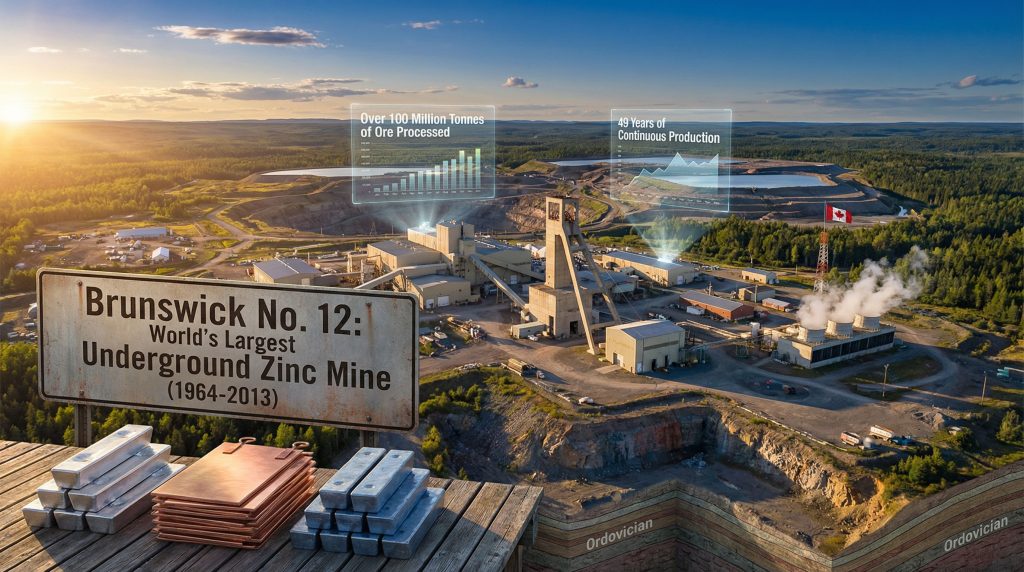
The geological architecture underlying eastern Canada's mineral wealth stems from ancient oceanic processes that occurred during the Ordovician period, approximately 450 million years ago. These submarine volcanic environments created conditions conducive to the formation of what geologists classify as volcanic-hosted massive sulfide (VHMS) deposits. Consequently, these systems represent some of the most economically important mineral formations in the global mining industry.
Formation Mechanisms and Geological Controls
VHMS deposits develop through a complex interplay of submarine volcanic activity and hydrothermal circulation systems operating on ancient ocean floors. The process begins when seawater penetrates fractured volcanic rocks, becomes heated by underlying magmatic systems, and leaches metals from the surrounding rock matrix. Moreover, this metal-rich fluid eventually discharges onto the seafloor, where rapid cooling and chemical precipitation create concentrated accumulations of sulfide minerals.
The Bathurst Mining Camp exemplifies this geological model, where Ordovician-age submarine volcanism created the foundational architecture for subsequent metal concentration. The district's mineral systems formed within what geologists term the Bathurst Supergroup, a sequence of volcanic and sedimentary rocks that preserve evidence of an ancient oceanic environment.
Key geological characteristics include:
- Bimodal volcanic sequences featuring both felsic and mafic compositions
- Syn-volcanic sedimentary horizons that provided chemical and physical traps
- Structural controls related to syn-volcanic faulting and fracturing
- Hydrothermal alteration zones extending hundreds of meters from ore bodies
Comparative Global Context
The Bathurst district shares fundamental characteristics with other world-class VHMS systems, including the Kuroko deposits of Japan, the Cyprus-type deposits of the Mediterranean, and the Noranda district of Quebec. These systems demonstrate that submarine volcanic environments consistently produce large-scale base metal accumulations when specific geological conditions align.
What distinguishes the Bathurst system is its exceptional preservation state and the presence of multiple discrete ore-forming centers distributed across a 50-kilometre strike length. This spatial distribution suggests a long-lived hydrothermal system with multiple episodes of metal concentration, rather than a single depositional event.
When big ASX news breaks, our subscribers know first
Revolutionary Exploration Techniques That Transformed Regional Geology
The systematic exploration of the Bathurst district between 1952 and 1975 represents a watershed moment in Canadian mineral exploration. This period demonstrated how integrated geological approaches could unlock previously unknown mineral wealth. Additionally, this era witnessed the application of emerging exploration technologies and geological concepts that would later become standard industry practice, highlighting the critical exploration importance in mineral discovery.
Strategic Geological Mapping and Target Generation
The initial breakthrough in the Bathurst district resulted from recognising the economic significance of gossanous surface expressions – the oxidised, iron-stained outcrops that indicate buried sulfide mineralisation. Early exploration teams developed systematic approaches to identifying and following these surface indicators. Furthermore, they created the first comprehensive geological maps of the region.
Exploration methodology included:
- Detailed lithological mapping at scales of 1:5,000 to 1:10,000
- Structural analysis to identify syn-volcanic fault systems
- Geochemical sampling of stream sediments and soils
- Systematic grid-based prospecting programmes
The discovery sequence began with the identification of Brunswick No. 6 in 1952, followed by the larger Brunswick No. 12 deposit in 1953. These early discoveries validated the geological model and triggered expanded exploration programmes across the broader district.
Drilling Strategies and Subsurface Validation
The confirmation of significant mineralisation required sophisticated drilling programmes designed to test geological hypotheses about ore body geometry and continuity. Early drilling campaigns utilised diamond drilling technology that was advanced for its time, allowing for continuous core recovery and detailed geological logging.
Critical drilling insights included:
- Recognition of stacked ore lenses within individual deposits
- Understanding of structural controls on ore body orientation
- Identification of alteration zones extending beyond economic mineralisation
- Development of grade continuity models for resource estimation
Integration of Geophysical Methods
While the initial discoveries relied primarily on geological and geochemical methods, subsequent exploration incorporated emerging geophysical technologies. These included ground electromagnetic surveys and induced polarisation methods. These techniques proved particularly effective for detecting massive sulfide bodies beneath areas of glacial cover or structural complexity.
The integration of multiple exploration disciplines created a comprehensive understanding of the district's mineral potential. This led to the discovery of additional deposits including Caribou, Halfmile Lake, and Restigouche during the 1960s and 1970s.
Base Metal Applications Driving Industrial Infrastructure Development
The economic significance of the Bathurst Mining Camp extends far beyond its impressive production statistics. It represents a crucial link in global supply chains that support modern industrial infrastructure. Understanding the end-use applications of zinc, lead, copper, and silver reveals why these base metals have maintained consistent demand despite cyclical price fluctuations.
Zinc: The Unsung Hero of Corrosion Protection
Zinc's primary industrial application lies in galvanising processes that provide corrosion protection for steel infrastructure. This electrochemical protection mechanism operates through zinc's position in the galvanic series, where it preferentially corrodes to protect the underlying steel substrate. The global galvanising industry consumes approximately 50% of annual zinc production, making it the largest single market for this metal.
Industrial applications include:
- Transportation infrastructure (bridges, guardrails, transmission towers)
- Building construction (roofing, structural steel, fasteners)
- Automotive components (body panels, chassis components, hardware)
- Agricultural equipment (fencing, storage facilities, irrigation systems)
The die-casting industry represents zinc's second-largest market, utilising the metal's excellent casting properties and dimensional stability for precision components in automotive, electronics, and hardware applications.
Lead: Critical for Energy Storage and Specialised Applications
Despite environmental concerns that have eliminated lead from many traditional applications, the metal remains essential for specific industrial uses where no adequate substitutes exist. Lead-acid battery technology continues to dominate stationary energy storage applications, automotive starting systems, and backup power installations.
Specialised applications include:
- Radiation shielding for medical and nuclear facilities
- Cable sheathing for telecommunications infrastructure
- Ammunition and sporting goods manufacturing
- Chemical processing equipment for corrosive environments
The global transition toward renewable energy has actually increased demand for lead-acid batteries in grid-scale energy storage applications. In these applications, their proven reliability and recyclability provide advantages over newer battery technologies.
Copper: The Foundation of Electrical Infrastructure
Copper's superior electrical conductivity makes it irreplaceable in power generation, transmission, and distribution systems. With global electricity demand projected to increase substantially over the coming decades, copper consumption is expected to grow correspondingly.
Critical infrastructure applications:
- Power generation facilities (transformers, generators, switchgear)
- Transmission and distribution networks (cables, busbars, connections)
- Renewable energy systems (wind turbines, solar installations, grid connections)
- Electric vehicle charging infrastructure and battery systems
The electrification trend across multiple industries has created new demand sources for copper. These include electric vehicle manufacturing, data centre construction, and smart grid development.
Silver: High-Technology Applications and Industrial Uses
While often associated with precious metals markets, silver's unique properties make it essential for numerous industrial applications. The metal's superior electrical and thermal conductivity, combined with its antimicrobial properties, creates consistent industrial demand.
Technology sector applications:
- Photovoltaic solar panel manufacturing
- Electronic component production (contacts, circuit boards, conductive inks)
- Medical device manufacturing and healthcare applications
- Automotive electronic systems and sensors
Engineering Excellence in Deep Underground Mining Operations
The operational achievements at Brunswick No. 12 established new benchmarks for large-scale underground mining. This was particularly evident in the extraction of massive sulfide ore bodies at significant depths. The mine's 49-year operational lifespan (1964-2013) demonstrates sustained engineering excellence across multiple generations of mining technology and management systems.
Underground Development and Extraction Methods
Brunswick No. 12 utilised sublevel stoping methods optimised for the geometry and grade distribution of massive sulfide ore bodies. This approach involved developing multiple horizontal access levels connected by raises and ore passes. Consequently, this allowed for efficient extraction of ore while maintaining ground stability.
Technical specifications included:
- Primary stope dimensions of 15-20 metres wide by 30-40 metres long
- Sublevel intervals typically spaced at 15-metre vertical increments
- Ore pass systems designed for 1,000+ tonne capacity
- Secondary breaking through controlled blasting in confined spaces
The mine eventually reached depths exceeding 2,000 feet (610 metres), requiring sophisticated ground support systems and ventilation networks to maintain safe working conditions.
Ventilation Engineering and Environmental Controls
Deep underground operations demand comprehensive ventilation systems to provide fresh air, remove heat and humidity, and control airborne particulates. Brunswick No. 12 developed primary and secondary ventilation circuits that could deliver over 500,000 cubic feet per minute of fresh air to active work areas.
System components included:
- Primary intake shafts equipped with heating systems for winter operations
- Exhaust shafts with industrial fans capable of moving large air volumes
- Underground air distribution networks with automated damper controls
- Dust collection systems at crushing and transfer points
Processing Circuit Design and Metallurgical Recovery
The Brunswick No. 12 processing facility represented state-of-the-art flotation technology for the selective separation of zinc, lead, copper, and silver concentrates. Furthermore, it efficiently processed complex massive sulfide ores, with the circuit design evolving continuously throughout the mine's operational life to optimise recovery rates and product quality.
Metallurgical achievements included:
- Zinc concentrate grades consistently exceeding 55% Zn content
- Lead concentrate grades typically above 65% Pb content
- Copper concentrate production with significant silver byproduct recovery
- Overall metal recovery rates exceeding 90% for primary metals
Daily processing capacity reached 8,000 tonnes per day during peak production periods, making it one of the largest base metal processing facilities in North America.
Advanced Exploration Technologies Revealing Hidden Potential
Modern exploration of the Bathurst district benefits from technological capabilities that were unavailable during the original discovery period. These advanced methods are providing new insights into the three-dimensional architecture of the mineral system. Moreover, they are identifying previously unrecognised exploration targets, with 3D geological modeling becoming increasingly sophisticated.
High-Resolution Geophysical Surveys
Contemporary airborne electromagnetic (AEM) systems can detect subtle conductivity variations associated with buried massive sulfide mineralisation. They can do this even beneath significant glacial overburden. These surveys provide comprehensive coverage of large areas while generating detailed subsurface images that guide follow-up exploration programmes.
Technological capabilities include:
- Multi-frequency electromagnetic measurements with enhanced depth penetration
- High-precision magnetic gradient surveys for structural mapping
- Radiometric surveys for lithological discrimination
- LiDAR topographic mapping for accurate geological interpretation
Three-Dimensional Geological Modelling
Advanced computer modelling software allows geologists to integrate multiple data types into comprehensive three-dimensional representations of the mineral system. These models incorporate geological mapping, geophysical surveys, geochemical data, and drilling results. Consequently, they create predictive frameworks for exploration targeting.
Modelling applications include:
- Structural analysis to identify favourable ore-controlling features
- Stratigraphic correlation to predict favourable horizon locations
- Hydrothermal alteration mapping to vector toward mineralisation
- Grade distribution analysis for resource estimation and mine planning
Geochemical Innovation and Deep Sampling
Modern geochemical techniques can detect metal signatures through substantial overburden thickness. They utilise both traditional sampling methods and innovative approaches including biogeochemistry and deep penetrating sampling technologies.
Advanced geochemical methods:
- Multi-element analysis using inductively coupled plasma mass spectrometry
- Isotopic studies to understand fluid sources and metal transport mechanisms
- Selective extraction techniques to identify metal sources and transport pathways
- Portable X-ray fluorescence analysers for real-time field analysis
Economic Impact and Regional Development Legacy
The Bathurst Mining Camp generated substantial economic benefits that extended far beyond direct mining employment. It created a legacy of infrastructure development, skills training, and technological innovation that continues to influence the region's economic structure. For instance, this demonstrates the importance of strategic approaches in Canadian mining exploration, as evidenced by the camp's enduring impact.
Direct Economic Contributions and Employment Generation
During peak production periods, the Bathurst district employed over 3,000 people directly in mining operations. Additionally, thousands more worked in supporting industries and services. The economic multiplier effect meant that each direct mining job supported approximately 2-3 additional positions in the broader regional economy.
Economic impact included:
- Annual payroll exceeding $150 million during peak operational periods
- Provincial tax revenues from mining operations, property assessments, and personal income
- Federal corporate income tax contributions from profitable mining operations
- Royalty payments to provincial government mineral revenue funds
Infrastructure Development and Community Growth
Mining development necessitated significant infrastructure investments that benefited the broader region beyond the operational lifetime of individual mines. These improvements included transportation networks, power generation facilities, telecommunications systems, and municipal infrastructure upgrades.
Regional infrastructure improvements:
- Highway construction and improvement connecting mining areas to ports and population centres
- Railway spur development for concentrate transport to smelting facilities
- Power grid expansion to support industrial electrical loads
- Deep-water port facilities at Belledune for concentrate shipping
Skills Development and Technology Transfer
The concentration of mining expertise in the Bathurst district created a skilled workforce capable of supporting mining operations globally. Many individuals trained in Bathurst mining operations subsequently worked in other Canadian mining districts and international projects. As a result, they transferred knowledge and best practices across the industry.
Knowledge transfer included:
- Underground mining techniques and safety protocols
- Metallurgical processing expertise and troubleshooting capabilities
- Mine engineering and geological evaluation skills
- Environmental management and reclamation practices
The next major ASX story will hit our subscribers first
Investment Analysis Framework for Future Bathurst Opportunities
Understanding the geological and economic characteristics of the Bathurst Mining Camp provides a framework for evaluating contemporary exploration and development opportunities. The combination of proven geological potential, existing infrastructure, and regulatory familiarity creates advantages for new projects compared to greenfield exploration in remote locations. This understanding is crucial for developing effective investment strategies in the mining sector.
Geological Risk Assessment and Deposit Potential
The extensive database of geological information from five decades of exploration and production provides unprecedented insight into the district's mineral systems. This knowledge base significantly reduces geological risk for new exploration programmes. Furthermore, it highlights specific target areas with the highest probability of discovery success.
Risk mitigation factors:
- Well-understood geological controls on ore body formation and distribution
- Comprehensive geophysical and geochemical databases covering the entire district
- Detailed structural analysis from underground mapping and surface exploration
- Metallurgical test work databases for processing optimisation
Infrastructure Advantages and Capital Cost Reduction
The Bathurst district benefits from existing infrastructure that can significantly reduce the capital requirements for new mining projects. Transportation networks, power supply systems, skilled labour availability, and proximity to processing facilities provide substantial economic advantages.
Infrastructure assets include:
- Established road and rail connections to major population centres and ports
- Industrial electrical power supply with adequate capacity for mining operations
- Available industrial sites with existing permits and environmental approvals
- Skilled workforce with mining experience available in the regional labour market
Market Fundamentals and Demand Outlook
Global demand trends for base metals support continued investment in Bathurst-style deposits. The transition to renewable energy systems, electric vehicle adoption, and infrastructure modernisation programmes create sustained demand for zinc, copper, lead, and silver. Moreover, data-driven operations are becoming increasingly important in optimising mining efficiency and profitability.
Demand drivers include:
- Infrastructure renewal programmes in developed countries requiring galvanised steel
- Electric vehicle adoption increasing copper and silver consumption
- Renewable energy deployment driving demand for multiple base metals
- Energy storage system expansion requiring lead and other battery materials
Strategic Investment Considerations
Investors evaluating Bathurst opportunities should consider both the technical merits of individual projects and the broader strategic advantages of operating within an established mining district. The combination of geological potential, infrastructure advantages, and market fundamentals suggests continued relevance for Bathurst-type mineralisation in the evolving global minerals landscape.
Investment evaluation criteria:
- Management team experience with VHMS exploration and development
- Quality and extent of geological data supporting resource estimates
- Access to infrastructure and potential for operational synergies
- Regulatory pathway clarity and community relationship status
- Financial capacity to advance projects through development stages
What Does the Future Hold for Treasure Hunt Bathurst Mining?
The Treasure Hunt Bathurst mining legacy continues to evolve with modern exploration technologies revealing new possibilities within this historically productive district. Recent developments in exploration methodology and processing technology have renewed interest in the region's untapped potential. For comprehensive coverage of ongoing developments, The Northern Miner's treasure hunt series provides detailed insights into current exploration activities.
While the methods may have evolved, the fundamental geological processes that created this world-class mineral system remain unchanged. The district's proven track record of discovery and production, combined with advanced exploration techniques and established infrastructure, positions it as a compelling opportunity for future mineral development. The Treasure Hunt Bathurst mining story demonstrates how systematic exploration, technological innovation, and sustained investment can unlock extraordinary mineral wealth from seemingly ordinary geological terrains.
The treasure hunt for base metals in the Bathurst Mining Camp continues, waiting for the next generation of explorers to unlock their hidden potential. However, success in this endeavour requires not only geological understanding but also strategic vision, technological capability, and the financial resources necessary to advance discoveries through to production.
Looking to Capitalise on the Next Major Base Metal Discovery?
Discovery Alert's proprietary Discovery IQ model delivers real-time alerts on significant ASX mineral discoveries, instantly empowering subscribers to identify actionable opportunities ahead of the broader market. Understand why historic discoveries can generate substantial returns by exploring proven examples of exceptional outcomes, then begin your 14-day free trial today to position yourself ahead of the market.