June 22, 2026
What Triggers Comprehensive Safety Overhauls in Major Mining Operations?
Modern mining operations face unprecedented scrutiny when fatal incidents occur, creating immediate pressures that extend far beyond individual worksites. The February 2026 fatality at Newmont's Tanami operation illustrates how a tragic death prompts Newmont safety review protocols that activate complex organisational and regulatory mechanisms designed to prevent future tragedies. Understanding these trigger systems reveals the sophisticated safety infrastructure underlying Australia's mining sector, particularly as industry evolution trends continue to reshape operational approaches.
The Catalyst Framework for Safety Protocol Reviews
Mining companies operate under carefully structured response protocols that automatically engage following serious incidents. When a fatality occurs 540 kilometres from the nearest major population centre, the isolation itself becomes a contributing factor in how investigations unfold. Remote operations like Tanami must maintain enhanced self-sufficiency in emergency response capabilities, creating unique challenges for incident management.
The immediate suspension of operations in affected areas demonstrates how companies balance investigative requirements with operational continuity. Rather than shutting down entire facilities, modern mining operations typically implement targeted suspensions that preserve evidence whilst maintaining production in unaffected zones. This approach reflects decades of experience in managing the delicate balance between safety imperatives and economic pressures.
Furthermore, companies are increasingly focusing on boosting safety measures across all operational areas, not just those directly affected by incidents. This comprehensive approach ensures that lessons learned from one area benefit the entire operation.
Key activation triggers that prompt comprehensive safety reviews include:
- Immediate scene preservation requirements following any workplace fatality
- Regulatory notification obligations within specified timeframes
- Internal investigation protocols that engage company safety teams
- Stakeholder communication procedures for employees, families, and investors
Operational Suspension Decision-Making Process
The decision to suspend operations involves sophisticated risk assessment matrices that consider multiple variables beyond the immediate incident. Mining companies must evaluate ongoing hazard potential, investigation requirements, workforce safety, and operational dependencies when determining suspension scope.
For fly-in, fly-out operations, suspension decisions create complex workforce management challenges. Crews scheduled to rotate face uncertain deployment timelines, whilst on-site personnel may experience extended stays pending investigation completion. These logistical considerations influence how companies structure their response protocols.
The cost-benefit analysis of temporary shutdowns encompasses direct production losses, investigation costs, regulatory compliance expenses, and potential liability implications. Companies like Newmont, producing hundreds of thousands of ounces annually, face substantial daily revenue impacts from operational suspensions, creating pressure for rapid but thorough investigations.
When big ASX news breaks, our subscribers know first
How Do Underground Mining Fatalities Impact Regulatory Oversight?
Mining fatalities trigger regulatory responses that extend far beyond individual incident investigations. The February 4 incident at Tanami represents the first reported mining fatality in Australia for 2026, potentially intensifying regulatory attention due to its early occurrence in the reporting year. This timing factor influences how regulators allocate resources and prioritise investigation activities.
WorkSafe NT Investigation Methodology
Northern Territory regulatory authorities follow standardised investigation protocols designed to identify contributing factors across multiple dimensions. The investigation process encompasses scene examination, witness interviews, equipment analysis, and operational record review. These comprehensive approaches aim to reconstruct incident sequences whilst identifying systemic issues that may extend beyond individual sites.
Emergency services coordination presents unique challenges in remote locations. The 540-kilometre distance from Alice Springs necessitates specialised response capabilities and creates time pressures that influence investigation outcomes. Despite immediate response efforts from onsite personnel and emergency responders, geographical isolation remains a persistent risk factor in remote mining operations.
The multi-agency coordination between WorkSafe NT, company safety teams, and supporting organisations demonstrates the complexity of modern mining incident investigations. This collaborative approach ensures comprehensive evidence collection whilst maintaining investigation independence and regulatory authority.
Compliance Framework Evolution Post-Incident
Regulatory frameworks continuously evolve based on incident findings and industry developments. Fatal incidents often catalyse specific regulatory modifications that address newly identified risk factors or emerging operational challenges. The investigation findings from the Tanami incident will likely inform regulatory recommendations and potential industry-wide safety standard modifications.
Enhanced monitoring requirements typically follow serious incidents, creating ongoing compliance obligations that extend well beyond investigation completion. These requirements may include increased inspection frequencies, specialised reporting obligations, and mandatory safety system modifications.
The regulatory response patterns following workplace fatalities demonstrate how individual incidents influence broader industry safety standards. This evolutionary process ensures continuous improvement in mining safety practices whilst maintaining operational viability.
What Are the Financial and Operational Implications of Mining Safety Reviews?
Mining safety incidents generate substantial financial implications that extend across multiple operational dimensions. The temporary suspension of operations in affected areas creates immediate revenue impacts, whilst investigation processes generate additional costs for specialised personnel, equipment analysis, and regulatory compliance activities.
Production Impact Assessment During Safety Suspensions
| Impact Category | Immediate Effects | Extended Timeline Effects |
|---|---|---|
| Production Volume | Complete cessation in affected areas | Gradual ramp-up with enhanced protocols |
| Revenue Loss | Daily production value calculations | Market confidence restoration costs |
| Workforce Management | FIFO crew rotation disruptions | Retraining and certification requirements |
| Equipment Utilisation | Idle machinery in suspended zones | Maintenance scheduling modifications |
| Supply Chain Coordination | Contractor service interruptions | Long-term service agreement adjustments |
The Tanami operation's scale, producing hundreds of thousands of ounces of gold annually, suggests substantial daily production values at risk during suspension periods. Current gold market prices amplify these financial implications, creating pressure for efficient investigation processes that minimise operational disruptions whilst maintaining investigation thoroughness.
FIFO workforce models compound operational complexity during incident investigations. Crew rotation schedules face disruption, accommodation arrangements require modification, and specialised personnel may need extended deployment for investigation support. These logistical challenges generate additional costs whilst complicating workforce management procedures.
Insurance and Liability Considerations
Workers' compensation claim processing follows established procedures that vary by jurisdiction and incident circumstances. Fatal incidents typically trigger comprehensive claim investigations that examine workplace conditions, safety protocol compliance, and contributory factors. These processes can extend for months or years, creating ongoing financial uncertainty for mining operators.
Corporate liability exposure during investigation periods encompasses multiple risk categories including regulatory penalties, civil litigation potential, and reputational impacts. Companies must carefully manage public communications whilst cooperating with investigators to minimise these exposure risks.
Insurance premium adjustments following safety incidents reflect insurers' assessment of ongoing risk factors. Fatal incidents often prompt insurance policy reviews, coverage modifications, and premium increases that compound the financial implications of safety failures.
How Do Remote Mining Operations Manage Emergency Response Challenges?
Geographic isolation fundamentally shapes emergency response capabilities and challenges in remote mining environments. The Tanami mine's location 540 kilometres northwest of Alice Springs exemplifies the response time limitations that characterise remote operations throughout Australia's resource sector.
Geographic Isolation Risk Factors
Remote mining locations face inherent emergency response limitations that influence both incident outcomes and operational planning. Despite immediate response efforts from onsite personnel and emergency responders at Tanami, the tragic death prompts Newmont safety review and highlights the critical importance of prevention-focused safety strategies in isolated environments.
Communication infrastructure dependencies become critical during emergency situations. Underground operations require redundant communication systems that maintain connectivity during equipment failures, power outages, or structural disruptions. These systems must integrate seamlessly with external emergency services whilst providing reliable internal coordination capabilities.
On-site medical capabilities represent a crucial component of remote mining emergency preparedness. Operations must maintain qualified medical personnel, appropriate equipment, and stabilisation capabilities that can manage serious injuries until external medical evacuation becomes available.
FIFO Workforce Safety Management
Fly-in, fly-out workforce models create unique safety management challenges that extend beyond traditional workplace safety considerations. Regular crew rotations between the Northern Territory and other states introduce transition periods where worker familiarity with specific site conditions may be compromised.
Fatigue management protocols become critical in FIFO operations where workers face irregular sleep schedules, extended work periods, and adjustment challenges associated with location changes. These factors can influence decision-making capabilities, reaction times, and overall safety awareness.
In addition, implementing effective mental health safety strategies requires specialised approaches in remote mining communities where traditional support networks may be unavailable. The isolation, work pressures, and separation from family support systems create mental health challenges that can indirectly influence workplace safety outcomes.
What Safety Technologies Are Transforming Underground Mining Risk Management?
Modern mining operations increasingly rely on sophisticated technology systems to monitor, prevent, and respond to safety hazards. The integration of these technologies represents a fundamental shift from reactive safety management toward predictive risk mitigation strategies.
Equipment Monitoring and Predictive Maintenance Systems
Real-time equipment health monitoring capabilities enable operators to identify potential failures before they create safety hazards. These systems continuously analyse vibration patterns, temperature variations, pressure fluctuations, and performance metrics to detect anomalies that may indicate impending equipment problems.
Predictive maintenance programmes utilise historical data, performance analytics, and machine learning algorithms to optimise maintenance scheduling whilst preventing unexpected equipment failures. This approach reduces both safety risks and operational disruptions by addressing potential problems during planned maintenance windows.
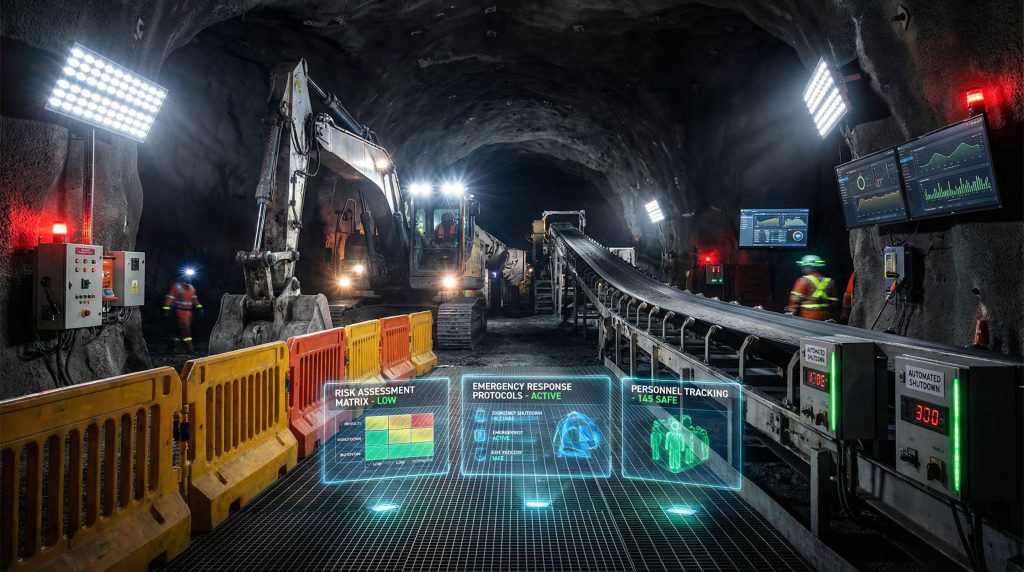
Furthermore, AI drilling advancements are revolutionising how equipment monitoring integrates with operational planning. Automated safety shutdown protocols activate when monitoring systems detect conditions that exceed predetermined safety parameters.
Personnel Tracking and Emergency Response Technologies
Underground worker location monitoring systems provide real-time visibility into personnel positioning throughout mine operations. These systems enable rapid emergency response by pinpointing exact locations of workers during incidents, reducing evacuation times and improving rescue coordination.
Emergency communication networks maintain connectivity even during power failures or structural disruptions. Modern systems integrate multiple communication modes including voice, text, and emergency beacon capabilities that function independently of primary infrastructure systems.
Wearable safety devices monitor individual worker health indicators, environmental conditions, and proximity to hazardous areas. These devices can detect falls, gas exposures, or other emergency conditions whilst automatically alerting supervisory personnel and emergency response teams.
How Do Mining Companies Balance Production Targets with Safety Imperatives?
The tension between production objectives and safety requirements represents one of the most complex challenges facing modern mining operations. Companies must navigate shareholder expectations, operational efficiency demands, and regulatory compliance requirements whilst maintaining unwavering commitment to worker safety.
Safety Performance Metrics and Incentive Structures
Leading safety indicators focus on proactive measures including training completion rates, near-miss reporting frequency, safety observation submissions, and hazard identification activities. These metrics provide early warning signals about safety culture effectiveness and potential risk areas requiring attention.
Lagging safety indicators encompass incident rates, injury severity measures, and regulatory compliance scores. Whilst these metrics provide important historical perspective, they represent outcomes rather than predictive indicators of future safety performance.
Executive compensation linkage to safety performance outcomes creates organisational alignment between leadership incentives and safety culture development. Many mining companies now incorporate safety metrics into executive performance evaluations and compensation structures, reinforcing the importance of safety leadership throughout organisational hierarchies.
Continuous Improvement Frameworks
Incident investigation methodologies have evolved beyond simple cause identification toward comprehensive root cause analysis that examines organisational, technical, and human factors contributing to safety events. These investigations seek to identify systemic issues that may create risks across multiple locations or operational contexts.
Cross-site safety knowledge sharing protocols enable companies to disseminate lessons learned from incidents, near-misses, and safety innovations across their operational portfolios. This approach accelerates safety improvements whilst preventing similar incidents at other locations.
Additionally, integrating data-driven operations with safety management systems provides companies with enhanced analytical capabilities for identifying patterns and predicting potential safety risks. Third-party safety audit integration provides independent assessment of safety management systems, compliance effectiveness, and cultural development.
The next major ASX story will hit our subscribers first
What Industry-Wide Safety Trends Are Emerging from Recent Mining Incidents?
Mining industry safety trends reflect evolving regulatory expectations, technological capabilities, and cultural shifts toward comprehensive risk management approaches. Recent incidents continue to drive innovation in safety systems whilst reinforcing the importance of fundamental safety management principles.
Regulatory Modernisation Initiatives
Technology-enhanced safety regulations increasingly incorporate requirements for monitoring systems, automated safety controls, and data-driven decision making processes. Regulators recognise that traditional compliance approaches may not adequately address the complexity of modern mining operations.
International best practice adoption accelerates as mining companies operate across multiple jurisdictions with varying regulatory frameworks. Companies increasingly adopt the most stringent safety standards across all operations, regardless of local regulatory minimums.
The mining industry's tragic incident at Tanami serves as a catalyst for collaborative industry safety standard development involving mining companies, equipment manufacturers, regulatory authorities, and worker representatives in establishing comprehensive safety frameworks that address emerging technologies and operational methods.
Corporate Safety Culture Transformation
Leadership accountability frameworks increasingly emphasise personal responsibility for safety outcomes at all organisational levels. This approach moves beyond traditional hierarchy-based safety management toward distributed accountability systems that empower workers at every level to influence safety outcomes.
Worker empowerment in safety decision-making processes provides frontline personnel with authority to stop work, modify procedures, or escalate concerns without fear of retaliation. This cultural shift recognises that workers closest to operational hazards often have the best perspective on risk management strategies.
Transparent safety communication strategies ensure that safety information, incident learnings, and improvement initiatives are shared openly throughout organisations and across industry networks. This transparency builds trust whilst accelerating collective safety knowledge development.
How Can Mining Operations Prevent Future Workplace Fatalities?
Prevention-focused safety strategies require comprehensive approaches that address technical, organisational, and cultural factors contributing to workplace risks. The tragic death prompts Newmont safety review and underscores the continuing need for innovative prevention strategies that go beyond traditional safety management approaches.
Proactive Risk Identification Systems
Enhanced hazard recognition training programmes utilise virtual reality simulations, scenario-based learning, and immersive training environments to improve worker ability to identify and respond to potential hazards. These programmes provide realistic training experiences without exposing workers to actual risks.
Near-miss reporting and analysis systems create opportunities to learn from incidents that could have resulted in injuries or fatalities. Effective programmes encourage reporting through non-punitive approaches whilst providing systematic analysis that identifies trend patterns and prevention opportunities.
Behavioural safety observation programmes engage workers in systematic monitoring of workplace behaviours that influence safety outcomes. These programmes develop safety awareness whilst creating peer-to-peer accountability for safe work practices.
Emergency Preparedness Optimisation
Multi-scenario emergency drill requirements ensure that workers and supervisors maintain proficiency in responding to various emergency situations including equipment failures, structural collapses, medical emergencies, and evacuation procedures.
Key emergency response elements include:
- Cross-functional emergency response team training that integrates multiple specialised capabilities
- Equipment redundancy for critical safety systems ensuring backup capabilities during primary system failures
- External emergency services coordination protocols that optimise response from off-site medical and rescue services
- Communication system reliability testing that verifies emergency communication capabilities under adverse conditions
Regular emergency preparedness assessments evaluate response capability effectiveness whilst identifying improvement opportunities. These assessments incorporate lessons learned from actual incidents, industry best practices, and evolving emergency response technologies.
What Long-Term Changes Result from Major Mining Safety Incidents?
Mining safety incidents create ripple effects that extend throughout the industry, influencing regulatory frameworks, technology adoption, and operational practices for years following specific events. The long-term implications of the Tanami incident will likely contribute to ongoing evolution in Australian mining safety standards.
Industry Safety Standard Evolution
Regulatory framework strengthening typically follows comprehensive incident investigations that identify gaps in existing safety requirements. These regulatory modifications may address specific technical issues, procedural requirements, or organisational accountability measures that incident investigations reveal as contributing factors.
Technology adoption acceleration occurs when incidents demonstrate the potential benefits of available safety technologies. Companies may accelerate implementation of monitoring systems, automated controls, or emergency response technologies that could have prevented or mitigated incident outcomes.
Cross-industry safety knowledge transfer initiatives enable mining companies to learn from safety innovations and incident prevention strategies developed in other high-risk industries including aviation, petrochemicals, and construction.
Corporate Governance and Safety Integration
Board-level safety oversight enhancement reflects growing recognition that workplace safety represents a fundamental business risk requiring senior leadership attention. Mining company boards increasingly incorporate safety expertise whilst dedicating significant time to safety performance monitoring and strategic safety planning.
Safety-focused capital allocation frameworks prioritise investments in safety systems, training programmes, and risk mitigation technologies. These frameworks recognise that safety investments generate long-term value through reduced incident costs, improved regulatory compliance, and enhanced operational reliability.
Stakeholder transparency expectations continue to evolve, with investors, regulators, and communities demanding comprehensive disclosure of safety performance, incident investigations, and improvement initiatives. This transparency creates additional accountability whilst building stakeholder confidence in safety management effectiveness.
The mining industry's commitment to preventing workplace fatalities requires continuous innovation in safety management approaches, technology integration, and cultural development. Each incident provides opportunities for learning and improvement that can benefit the entire industry.
The tragic death prompts Newmont safety review and serves as a sobering reminder that despite significant advances in mining safety technology and management systems, the fundamental challenge of protecting workers in complex, high-risk environments continues to require vigilant attention and continuous improvement. The industry's response to this incident will likely influence safety practices and regulatory approaches for years to come, contributing to the ongoing evolution of mining safety standards across Australia and internationally.
Ready to Stay Ahead of Major Mining Discoveries?
Discovery Alert's proprietary Discovery IQ model delivers instant notifications on significant ASX mineral discoveries, transforming complex mining data into actionable investment insights for both short-term traders and long-term investors. Explore how major mineral discoveries generate substantial returns and begin your 14-day free trial today to position yourself ahead of market movements.