May 16, 2026
The Structural Shift Rewriting Global Mineral Supply Chains
For decades, the architecture of global critical mineral supply was built around a single assumption: that cost efficiency outweighed supply concentration risk. That assumption is now being systematically dismantled. Western governments, defence procurement agencies, and industrial manufacturers are confronting the consequences of allowing one nation to control the majority of supply for metals that sit at the intersection of national security and technological infrastructure. Tungsten, tin, and tantalum are no longer viewed as purely commercial commodities. They are geopolitical assets, and the scramble to diversify their sourcing is reshaping investment flows across the entire mining sector.
When big ASX news breaks, our subscribers know first
Why China's Dominance Over Tungsten Has Become a Western Security Problem
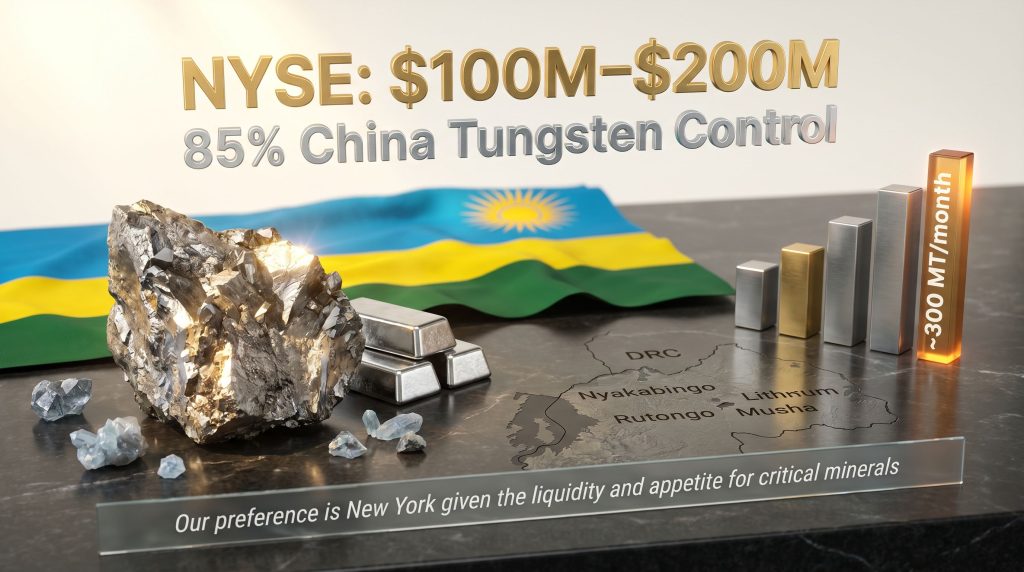
China controls approximately 85% of global tungsten supply, a concentration that would be considered unacceptable in any other strategic resource category. When Beijing imposed export restrictions on tungsten, the immediate market response was a structural tightening of supply and a meaningful repricing of the metal in Western markets. This was not a temporary disruption. It was the activation of a long-known vulnerability that policymakers had repeatedly deferred addressing.
Tungsten's strategic importance is difficult to overstate. It possesses the highest melting point of any metal, making it irreplaceable in cutting tools, armour-piercing ammunition, aerospace components, and high-temperature industrial applications. There is no commercially viable substitute for many of its defence-critical uses. When the U.S. formally designated tungsten as a critical mineral, it was not a bureaucratic classification exercise. It was an acknowledgement that reliable, non-Chinese tungsten sourcing had become a matter of national security infrastructure.
The same concentration dynamic, though less acute, applies to tin and tantalum. The so-called 3T mineral group (tin, tungsten, and tantalum) shares a common challenge: supply chains historically routed through or dominated by non-allied nations, with traceability and conflict-mineral compliance adding a further layer of complexity. U.S. and EU procurement frameworks now increasingly require auditable, conflict-free sourcing as a baseline condition, not a premium differentiator. Furthermore, critical mineral shortages across these categories are already influencing defence procurement timelines and industrial planning horizons.
Rwanda's Mining Sector: Why Geography and Governance Both Matter
Rwanda's position within the Great Lakes region of Africa places it in close proximity to some of the continent's most mineral-rich geology. The country's 3T mining belt, running near the border with the Democratic Republic of Congo, sits atop significant deposits of tungsten, tin, and tantalum. Historically, however, these assets were underleveraged, fragmented across artisanal operators, and largely invisible to institutional capital markets.
What distinguishes Rwanda from neighbouring DRC is not solely geology. It is the regulatory and institutional environment surrounding extraction. Rwanda has developed a mining sector reputation built on independent tracking systems, third-party auditing protocols, and formal compliance frameworks that satisfy the increasingly stringent requirements of U.S. and European conflict-mineral legislation. For procurement officers facing legal liability under Dodd-Frank Section 1502 and the EU Conflict Minerals Regulation, auditable provenance is not a marketing advantage. It is a precondition for doing business.
This combination of geological endowment and governance maturity has positioned Rwanda as an increasingly credible alternative supply node for Western industrial and defence supply chains, particularly as scrutiny of DRC-origin minerals intensifies. Consequently, energy security concerns are driving Western governments to actively support the development of such alternative sourcing corridors.
Trinity Metals: From Artisanal Fragmentation to Industrial Consolidation
The story of Trinity Metals is fundamentally a consolidation narrative. In 2022, three historically undercapitalised Rwandan mining assets were brought together under a single operational structure. Each asset contributes a distinct commodity profile to the overall portfolio:
- Nyakabingo: Recognised as Africa's largest tungsten operation, this underground mine forms the cornerstone of the company's tungsten production strategy.
- Rutongo: The primary tin production facility, currently undergoing mechanisation and expansion to increase throughput capacity.
- Musha: A combined tin, tantalum, and associated mineral licence that broadens the company's commodity exposure and provides tantalum production alongside tin.
Prior to consolidation, these sites functioned largely at artisanal scale, with minimal mechanisation, limited processing infrastructure, and no meaningful access to institutional capital markets. Since bringing them under unified management, production has quadrupled, driven by underground development programs, mechanical processing upgrades, and the application of systematic mine planning disciplines that were largely absent at the artisanal stage.
The quadrupling of output from a standing start is not simply a production metric. It reflects what happens when institutional capital, professional management, and industrial-scale engineering are applied to assets that were previously constrained by the informal sector's structural limitations.
The NYSE Listing Strategy and Capital Deployment Plan
Rwanda's Trinity Metals US listing has moved from concept to active planning, with the company targeting a New York Stock Exchange listing within 12 to 18 months from mid-2025. The decision to prioritise NYSE over alternative exchanges including ASX, TSX, or AIM reflects a deliberate calculation about where the deepest pools of critical minerals demand-focused capital currently reside. The targeted capital raise sits in the range of $100 million to $200 million.
The proceeds from the listing are earmarked for a structured, multi-asset capital expenditure program with clear project milestones:
- A $50 million tungsten processing plant at Nyakabingo, targeting commissioning by end-2027, designed to enable local value-addition in Rwanda rather than exporting raw concentrate.
- Approximately $60 million in additional tungsten concentrate processing capacity to expand throughput and deepen Rwanda's role in the upstream processing chain.
- Broader mechanisation and underground development across Rutongo and Musha to support production scaling toward the stated targets.
The total capital expenditure envelope across the three-year investment horizon is approximately $150 million, aligning closely with the midpoint of the targeted listing raise. This suggests the listing is specifically engineered to fund the expansion program rather than provide excess capital for speculative activity.
Production Targets: The Tripling Ambition in Context
| Metric | Current Status | 3 to 5 Year Target |
|---|---|---|
| Tin Production | Post-quadrupling baseline | ~300 metric tons per month |
| Tungsten Production | Post-quadrupling baseline | ~300 metric tons per month |
| Lithium Deposit Estimate | 70 to 100 million tons identified | Drilling confirmation pending |
| Lithium Grade | Estimated above 1% | Verification in progress |
Tripling production from an already-quadrupled baseline is an ambitious target. Achieving it will require sustained capital deployment, skilled workforce development, and logistics infrastructure capable of handling significantly higher throughput volumes from landlocked Rwandan operations.
An Already-Operational U.S. Supply Chain: The First-Mover Advantage
One of the more underappreciated dimensions of Trinity Metals' strategic positioning is that the U.S. supply chain is not a future aspiration. It is already functioning. The company has executed commercial supply agreements directing its production exclusively toward U.S., European, and Thai buyers, with a deliberate policy of not supplying Chinese purchasers.
The tungsten supply chain flows through Global Tungsten & Powders (GTP) and commodity trader Traxys, representing what is described as the first consistent tungsten supply flow from the Great Lakes region of Africa into the American market. For Western buyers seeking auditable non-Chinese tungsten, this is structurally significant. Supply diversity from this geography has historically been extremely limited.
The tin supply chain carries its own strategic dimension. Trinity Metals has partnered with Nathan Trotter, a U.S.-based tin supplier that received U.S. Department of Defense support to restart primary tin smelting operations within the United States. The revival of domestic U.S. tin smelting capacity, after decades of offshoring, creates a defence-adjacent supply chain architecture in which Trinity's Rwandan tin output serves as a critical feedstock. This elevates the commercial relationship beyond standard commodity offtake into something closer to a strategic mineral supply chains partnership.
The Institutional and Strategic Backing Behind Trinity
| Backer or Partner | Nature of Involvement |
|---|---|
| U.S. International Development Finance Corporation (DFC) | Development financing and strategic capital validation |
| TechMet | Equity backing and critical minerals portfolio integration |
| Global Tungsten & Powders (GTP) | Offtake partner for U.S.-bound tungsten concentrate |
| Traxys | Trading intermediary and supply chain logistics partner |
| Nathan Trotter | U.S. tin supply chain development and DoD-adjacent partnership |
The presence of the DFC and TechMet on Trinity's register is not incidental. TechMet in particular operates as a specialist critical minerals investment vehicle with connections to Western strategic capital networks. These institutional relationships signal that Trinity is being positioned as a supply chain infrastructure asset, not simply as a mining company seeking equity capital markets exposure.
The next major ASX story will hit our subscribers first
Traceability as a Structural Competitive Moat
In the 3T mining sector, the ability to demonstrate auditable mineral provenance has evolved from a compliance checkbox into a genuine commercial differentiator. The combination of U.S. Dodd-Frank requirements, EU conflict mineral regulations, and defence procurement mandates has created a market environment where unverifiable sourcing is effectively a disqualification from significant buyer categories.
Trinity's embedded traceability framework, involving independent tracking systems and third-party audits across its supply chain, positions the company to access procurement relationships that remain structurally inaccessible to operators without equivalent verification infrastructure. This is particularly relevant as the U.S. Department of Defense continues modernising its mineral sourcing requirements.
Traceability infrastructure in the 3T sector is increasingly functioning as a market access barrier, segmenting the supplier universe into those who can demonstrate verifiable conflict-free provenance and those who cannot. Trinity's architecture sits firmly in the first category.
The Lithium Discovery: A Second-Order Valuation Catalyst
Beyond the 3T production profile, Trinity is advancing exploration of a lithium deposit estimated at 70 to 100 million tons at grades exceeding 1%. If subsequent drilling confirms this resource estimate, the deposit would potentially rank among the world's top 10 lithium resources globally, a classification that would fundamentally alter the company's investor positioning.
The strategic significance of this cannot be understated. A grade above 1% lithium is considered high-quality for hard-rock lithium deposits, where the global average for producing operations tends to cluster below this threshold. Spodumene deposits of comparable scale at equivalent or lower grades have underpinned multi-billion dollar valuations in other jurisdictions.
The dual-commodity profile this creates is genuinely unusual. On one side, tungsten, tin, and tantalum provide near-term cash flow, defence-sector demand exposure, and strategic supply chain value. On the other, a confirmed top-10 lithium resource would introduce exposure to battery supply chain capital, energy transition investment mandates, and sovereign wealth fund interest in a way that pure 3T producers cannot access.
If lithium resource estimates are confirmed at the upper range of the 70 to 100 million ton estimate at grades above 1%, the valuation case for Trinity would extend well beyond its current production profile. This scenario would likely attract a materially different class of institutional capital, including battery materials strategists and energy transition-focused funds. This remains contingent on drilling confirmation and should be treated as a prospective scenario rather than an established outcome.
Risk Factors: What Investors Should Independently Assess
Rwanda's Trinity Metals US listing represents a compelling confluence of active production, strategic institutional backing, and commodity tailwinds. However, any serious evaluation must account for the risks that accompany frontier market mining investment:
- Sovereign and political risk: Rwanda maintains strong political stability by regional standards, but investors accustomed to developed-market mining jurisdictions should independently assess the regulatory and sovereign risk profile before making investment decisions.
- Execution risk: Tripling production within three to five years from an already-expanded base requires flawless capital deployment, workforce scaling, and logistics execution across multiple concurrent projects.
- Commodity price cycles: While tungsten prices have strengthened materially following China's export restrictions, commodity markets remain cyclical. Price assumptions embedded in expansion economics may not hold across the full investment horizon.
- Regulatory evolution: As Rwanda scales its value-addition ambitions, processing and export regulations may be modified in ways that affect the economics of on-site processing investments.
- DRC conflict proximity: While Trinity has confirmed its operations have not been materially affected by fighting in eastern DRC, the geographic proximity of regional instability represents an ongoing factor to monitor.
Furthermore, the company's planned $100m investment in Rwanda's mineral operations underscores the scale of capital commitment required to realise the expansion ambitions outlined above.
How Trinity Compares to the Broader Critical Minerals Investment Universe
| Dimension | Trinity Metals (Rwanda) | Typical Junior Critical Minerals Explorer |
|---|---|---|
| Production Status | Active, producing, post-consolidation | Exploration or pre-development stage |
| U.S. Institutional Linkage | DFC-backed, DoD supply chain adjacent | Typically absent |
| Offtake Agreements | Long-term Western contracts in place | Usually not yet secured |
| Target Exchange | NYSE within 12 to 18 months | ASX, TSX, or AIM typically |
| Commodity Diversification | Tungsten, tin, tantalum plus lithium optionality | Usually single-commodity focus |
| Supply Chain Traceability | Embedded, third-party audited | Variable or absent |
The table above illustrates why Rwanda's Trinity Metals US listing is attracting attention beyond the standard critical minerals investor community. The combination of active production, institutional strategic backing, confirmed Western offtake, and a credible near-term NYSE pathway is uncommon among companies operating in this asset class.
Frequently Asked Questions
What is the target timeline for Rwanda's Trinity Metals US listing?
Trinity Metals is targeting a NYSE listing within 12 to 18 months from mid-2025, placing the anticipated window between late 2026 and early 2027.
How much capital is Trinity Metals seeking to raise?
The company is targeting a capital raise in the range of $100 million to $200 million to fund processing plant construction, production expansion, and ongoing lithium exploration across its three Rwandan operations.
What metals does Trinity Metals currently produce?
Trinity produces tungsten at Nyakabingo (Africa's largest tungsten operation), tin at Rutongo, and tin and tantalum at Musha. Lithium exploration at a deposit estimated at 70 to 100 million tons is also advancing.
Is Trinity Metals already supplying U.S. buyers?
Yes. Active supply agreements are in place directing tungsten concentrate to U.S. buyers through Global Tungsten & Powders and Traxys, representing the first consistent tungsten supply flow from the Great Lakes region into the American market. A partnership with Nathan Trotter supports a dedicated U.S.-Rwanda tin supply chain.
Why does China's tungsten policy matter for Trinity?
China controls approximately 85% of global tungsten supply. Its export restrictions have tightened global markets and structurally elevated prices for non-Chinese producers operating under long-term Western offtake contracts, directly benefiting Trinity's commercial position.
This article is provided for informational purposes only and does not constitute financial advice or a solicitation to invest. All forward-looking statements, production targets, resource estimates, and financial projections involve material uncertainty and should not be relied upon as guarantees of future performance. Readers should conduct their own independent research and seek professional financial advice before making any investment decisions.
Want to Track the Next Major Critical Mineral Discovery Before the Market Moves?
Discovery Alert's proprietary Discovery IQ model scans ASX announcements in real time, instantly identifying significant mineral discoveries across tungsten, tin, tantalum, lithium, and more than 30 other commodities — turning complex data into clear, actionable insights for both short-term traders and long-term investors. Explore how historic mineral discoveries have generated substantial returns and begin your 14-day free trial today to position yourself ahead of the broader market.