June 12, 2026
The Strait of Hormuz Has Always Been the World's Most Dangerous Energy Chokepoint
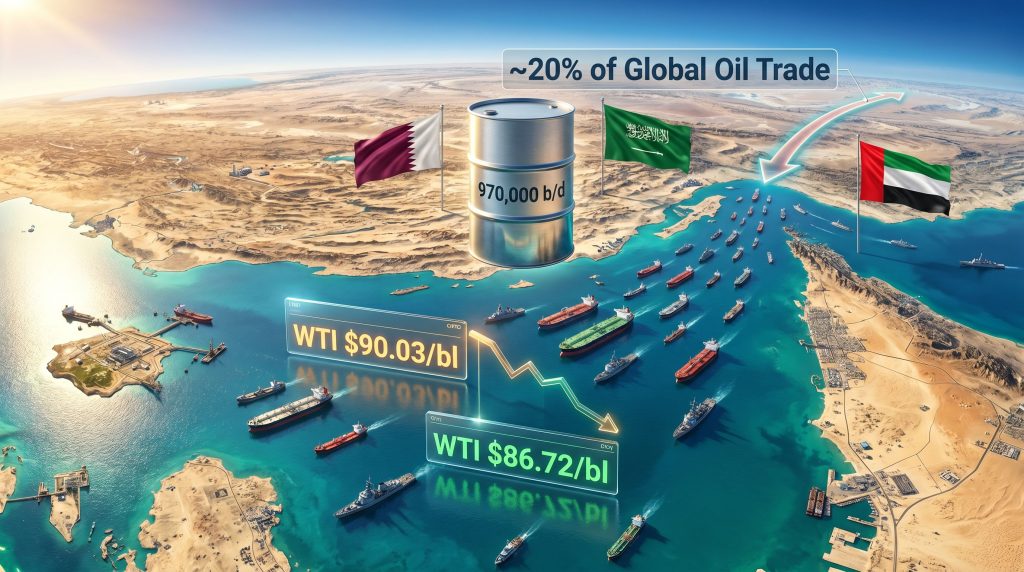
No single waterway on earth concentrates more economic risk per square kilometre than the Strait of Hormuz. Stretching just 33 kilometres at its narrowest point between Iran and Oman, this channel handles roughly 20% of the world's traded oil and a significant share of global liquefied natural gas exports. For decades, energy analysts and military strategists alike have treated a sustained Hormuz closure as one of the few genuine tail risks capable of triggering a systemic global supply shock. In June 2026, that hypothetical came uncomfortably close to reality.
Understanding the sequence of events that brought the United States and Iran to the brink of full-scale confrontation, and what the subsequent stand-down actually means for energy markets and geopolitical stability, requires more than reading the headlines. It demands a close look at the mechanics of the conflict, the fragility of the emerging deal, and the very real possibility that this week's reprieve is temporary. Consequently, the crude oil price trends feeding into these events deserve careful scrutiny.
When big ASX news breaks, our subscribers know first
How the June 10-11 Confrontation Unfolded
The hostilities that dominated global energy markets on June 10-11, 2026 did not emerge from nowhere. They represented an intensification of a conflict that had been running for more than 100 days, having originated in a high-intensity phase of U.S.-Iran exchanges in March and April 2026. A ceasefire reached on April 8 was extended indefinitely later that month, but low-intensity skirmishes resumed from late May onward.
The June flare-up followed a pattern familiar to anyone tracking the conflict:
- U.S. Central Command launched fresh "self-defence" strikes against Iranian targets at 5:15pm ET on June 10, targeting defensive infrastructure near the Strait of Hormuz.
- Iran responded with attacks on U.S. military bases in Jordan, Kuwait, and Bahrain.
- Both navies conducted offensive operations against commercial shipping in the Gulf of Oman and the Strait of Hormuz.
- Tehran declared the strait "closed to all navigation" in the hours following the overnight strikes.
The catalyst for the June exchanges was fundamentally a dispute over who controls navigation through Hormuz. The U.S. military claimed to be running a covert operation facilitating the transit of tankers, with President Trump stating that more than 100 million barrels of oil and hundreds of vessels were moving through the strait under American military protection. Iran disputed this framing, simultaneously claiming to be managing limited traffic on its own terms.
A downed U.S. helicopter, struck by Iranian fire while patrolling the strait, provided the political justification Washington used to escalate its military response. Trump explicitly cited the helicopter incident as grounds for authorising fresh attacks.
The Kharg Island Threat and What It Represented
Before calling off the planned strike, Trump made an extraordinary territorial threat: publicly announcing that U.S. forces would seize Kharg Island, Iran's primary crude oil export terminal, along with other oil infrastructure assets. The island processes approximately 90% of Iran's crude oil exports, making it the single most economically vital piece of infrastructure in Iran's energy system.
Trump drew a direct comparison to Venezuela, referencing the approach taken toward Venezuelan oil infrastructure as a precedent. Whether that threat was militarily executable or primarily designed as negotiating leverage remains a matter of significant debate among analysts.
| Asset Threatened | Strategic Significance | Comparable Precedent |
|---|---|---|
| Kharg Island | Processes ~90% of Iran's crude exports | Venezuela oil infrastructure cited by Trump |
| Strait of Hormuz | ~20% of global oil trade transits here | No modern sustained closure on record |
| Iranian power plants and bridges | Civilian and dual-use infrastructure | Legally contested under international law |
Trump Calls Off Attack on Iran: What the Stand-Down Actually Means
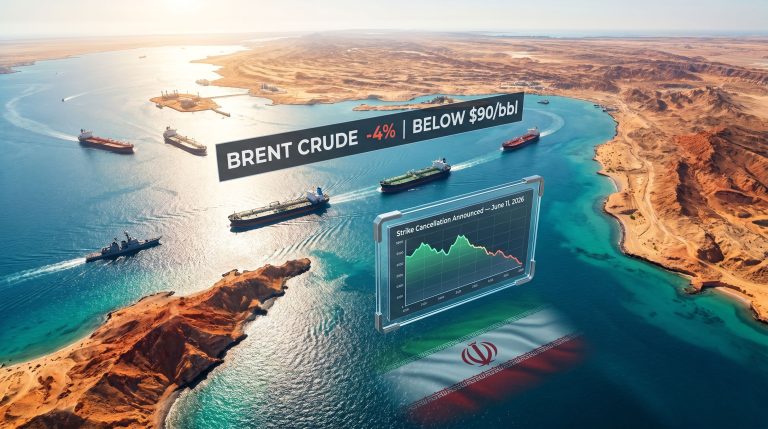
Shortly after 1:28pm ET on June 11, Trump calls off attack on Iran via social media, citing the elevation of diplomatic discussions to Iran's supreme leadership and the apparent approval of a settlement framework. Nymex WTI crude futures fell to $86.72 per barrel at 1:52pm ET, down sharply from levels above $90 per barrel that had prevailed immediately before the announcement.
The market reaction was swift and substantial:
| Event | WTI Price | Brent Price |
|---|---|---|
| June 10 escalation (new U.S. strikes) | Rose $1.83/bl to $90.03/bl | Rose $1.65/bl to $93.10/bl |
| Trump cancels strikes (1:52pm ET, June 11) | Fell to $86.72/bl | Declined from $90+ levels |
However, the cancellation of the strike and a genuine, durable resolution of the conflict are two very different things. Trump's own characterisation of the deal was notable for its ambiguity: he described it as a detailed memorandum of understanding that remained somewhat conceptual in nature and was subject to finalisation of documents over the coming days.
He indicated a potential signing could occur in Europe as early as the weekend, while also stating that the U.S. naval blockade against Iran would remain fully in force until the formal signing took place. Furthermore, the oil market volatility triggered by these events has underscored how rapidly sentiment can shift on geopolitical signals.
Critical Caveat: Trump previously overstated the progress of Iran talks in April 2026, claiming Tehran had agreed to fully reopen the Strait of Hormuz during a ceasefire period. Iran did not confirm that claim at the time. The same pattern of premature optimism must be considered when evaluating the current deal framework, particularly given that Iran had not publicly confirmed its support for the agreement as of the latest available reporting. (Source: Argus Media)
The Role of Gulf State Intermediaries
Qatar, Saudi Arabia, and the UAE were reported to have played a direct role in persuading Washington to hold off on the planned strikes, acting as intermediaries to preserve the diplomatic momentum. This dynamic is consistent with the broader pattern of Gulf state engagement in the conflict: regional powers with enormous economic exposure to any sustained Hormuz disruption have strong incentives to de-escalate.
The Gulf state factor represents an often-underappreciated stabilising mechanism. These nations are not passive observers. Their leverage with Washington derives from defence partnerships and strategic alignment, while their relationships with Tehran reflect decades of complex regional diplomacy. In addition, understanding the wider geopolitical risk landscape helps contextualise why these intermediaries acted with such urgency at this particular juncture.
The "Escalate to Negotiate" Doctrine: Understanding the Pattern
For market participants trying to price U.S.-Iran risk, one of the most analytically useful frameworks is the recognition that the Trump administration has repeatedly employed a cycle of maximum pressure escalation followed by rapid diplomatic pivots. This pattern has precedent across multiple geopolitical flashpoints and creates a distinctive challenge for commodity traders.
The core dynamic works as follows:
- Escalation phase: Public threats of overwhelming military force are made, often through social media, accompanied by specific targets and timelines.
- Market reaction: Energy prices spike on supply-risk premiums.
- Negotiating leverage: The credible threat of violence is used to extract diplomatic concessions.
- Stand-down announcement: Once concessions are signalled, the attack is cancelled, and prices partially retreat.
- Uncertainty phase: The durability of the concessions is tested over days or weeks, creating sustained volatility.
The challenge for traders is that this pattern does not guarantee a peaceful outcome on every iteration. The risk of miscalculation or uncontrolled escalation remains real, meaning that pricing in a "negotiate away from the brink" scenario is never without downside exposure.
Three Scenarios for How This Resolves
Given the structural uncertainty in the current situation, energy analysts and investors should be stress-testing their positions against multiple outcome pathways rather than anchoring to the most optimistic interpretation of Trump's announcement.
Scenario 1: Deal Signed This Weekend (Near-Term Base Case)
- Formal agreement reached in Europe over the June 14-15 weekend.
- Strait of Hormuz reopens under negotiated terms following signing.
- Naval blockade is lifted promptly.
- Crude prices retreat toward pre-conflict levels in the $82-$86 range.
Scenario 2: Talks Stall, Low-Intensity Conflict Resumes
- Document finalisation encounters obstacles; Iran's supreme leadership does not issue a public confirmation.
- Hormuz remains partially contested and operationally unpredictable.
- Oil prices stabilise in a range of approximately $88-$95 per barrel on sustained risk premium.
- Shipping insurance premiums remain elevated; tanker operators continue to demand war-risk surcharges.
Scenario 3: Full Military Escalation Resumes
- Diplomatic breakdown triggers renewed U.S. strikes; Iran responds with comprehensive Hormuz closure.
- Global supply shock scenario activated; Brent crude tests $100+ per barrel levels.
- OPEC demand forecasts revised further downward; global refining margins under severe pressure.
- Shipping markets face systemic disruption; LNG spot prices surge in Europe and Asia.
What OPEC's Demand Revisions Tell Us About Market Confidence
OPEC's June 2026 Monthly Oil Market Report delivered a telling signal about how the broader commodity market is processing the Iran conflict. The group cut its 2026 global oil demand growth forecast for the second consecutive month, revising the figure down from 1.17 million barrels per day to 970,000 b/d. While OPEC did not explicitly attribute the reduction to the Iran war, the data contained within the report was revealing.
Specifically, OPEC estimated that Middle East oil demand in March 2026, the first full month of the Iran conflict, came in approximately 500,000 barrels per day lower than the same period a year earlier. A 60,000 b/d reduction in projected Indian demand growth also featured among the contributing factors. OPEC's market influence over global pricing signals remains considerable, even amid the geopolitical turbulence surrounding the Hormuz situation.
The report flagged downside risk to regional demand tied to the ongoing situation in the oil market, with the outcome dependent on the duration and severity of the disruption. Importantly, OPEC still projected a demand recovery in 2027, forecasting growth of 1.73 million b/d next year compared to 1.54 million b/d in the prior month's estimate, supported by optimism around China and India's medium-term consumption trajectories.
OPEC+ crude output, including Mexico, fell by 185,000 b/d month-on-month to 33.13 million b/d in May 2026, according to secondary source estimates published in the same report.
The consecutive demand downgrades represent a form of structural uncertainty being formally priced into official forecasts — a signal that even the most conservative institutional voices in the oil complex are no longer treating the Iran disruption as a short-term aberration.
The next major ASX story will hit our subscribers first
Freight, LNG, and the Broader Energy Market Exposure
The Hormuz situation carries consequences well beyond crude oil. The strait is a critical transit point for LNG shipments from Qatar, the world's largest single LNG export nation. The LNG supply outlook for both European and Asian markets is acutely sensitive to any sustained operational disruption, given the infrastructure constraints of the global LNG network.
On the freight side, war-risk premiums on tanker voyages through the Gulf of Oman and the Strait of Hormuz have risen sharply since the conflict intensified. Ship operators face a complex triage of risk calculations:
- Whether to transit the strait at all versus taking the significantly longer route around the Cape of Good Hope.
- How to price the additional insurance and security costs into freight rates.
- How to manage crew welfare and contractual obligations under force majeure clauses.
The effective closure of the strait, even partially, functions as a de facto tax on global energy trade, with costs ultimately absorbed across the supply chain from producer to consumer.
FAQ: Trump Calls Off Attack on Iran
Why Did Trump Call Off the Attack on Iran?
Trump cited advancement in diplomatic negotiations, stating that discussions had reached Iran's highest level of leadership and that a broad settlement framework had been agreed upon, pending formal document finalisation. Gulf allies were also reported to have directly requested a delay to the planned military action, further influencing Washington's decision to stand down.
Has Iran Confirmed the Deal?
As of the latest available reporting, Iran had not issued a public confirmation of the agreement, which introduces significant uncertainty about the framework's durability.
What Was Trump Threatening Before the Stand-Down?
A large-scale military strike on Tehran, including threatened seizure of Kharg Island and other Iranian oil infrastructure assets, was publicly announced and subsequently cancelled within a five-hour window.
Is the Strait of Hormuz Currently Open?
The operational status of the strait is genuinely contested. Iran declared it closed following overnight U.S. strikes on June 11. The U.S. simultaneously claimed to be facilitating transit under military escort. Navigation conditions remain highly uncertain.
What Happens to the U.S. Naval Blockade?
Trump stated explicitly that the naval blockade will remain in place until a formal agreement is signed.
What Role Did Gulf States Play in the Stand-Down?
Qatar, Saudi Arabia, and the UAE were reported to have requested that the U.S. delay its planned strikes, serving as diplomatic intermediaries at a critical juncture in the negotiations.
Key Takeaways for Investors and Energy Market Participants
The decision to call off the attack on Iran represents a tactical pause in a conflict that remains structurally unresolved. For anyone with exposure to energy commodities, freight markets, or geopolitically sensitive equities, the following points define the current risk landscape:
- The stand-down is a negotiating development, not a confirmed peace settlement. The absence of Iranian public confirmation is a material risk factor.
- The Strait of Hormuz remains the primary signal variable. Its operational status over the coming days will reveal whether diplomacy is genuinely progressing or merely buying time.
- Oil markets remain highly reactive to any shift in posture from either side. The $3+ per barrel intraday swing on June 11 illustrates how sensitive prices are to developments in real time.
- OPEC's consecutive demand downgrades confirm that medium-term supply uncertainty is being formally institutionalised in official market forecasts.
- The weekend signing window represents the next major binary catalyst. A deal signed in Europe would likely push crude prices sharply lower; a failure to sign would extend the risk premium indefinitely.
- Investors should be stress-testing positions against all three scenario pathways, not anchoring to the most optimistic outcome.
Disclaimer: This article is intended for informational purposes only and does not constitute financial or investment advice. All price levels, scenario projections, and market forecasts involve inherent uncertainty. Past patterns of geopolitical behaviour do not guarantee future outcomes. Readers should conduct independent research and seek professional advice before making investment decisions based on geopolitical developments.
Want To Stay Ahead of Market-Moving Commodity Discoveries While Geopolitical Risk Reshapes Energy Markets?
When crude oil swings $3+ per barrel intraday on a single announcement, the difference between acting early and reacting late is everything — Discovery Alert's proprietary Discovery IQ model delivers real-time ASX mineral discovery alerts, turning complex commodity data into actionable insights so subscribers can identify opportunities the moment they emerge. Explore how historic mineral discoveries have generated substantial market returns and begin a 14-day free trial at Discovery Alert to position yourself ahead of the market.