July 8, 2026
When Bilateral Agreements Meet Strategic Doctrine: Why the Hormuz Framework Was Always Fragile
Every major oil market disruption of the past five decades has shared a common thread: the world repeatedly discovers that its most critical energy infrastructure is secured by diplomacy that is far thinner than the volume of trade flowing through it. The Strait of Hormuz, a narrow ribbon of water between Iran and Oman, handles roughly 20 to 21 percent of all globally traded oil and an outsized share of LNG exports. When the geopolitical architecture around it fractures, the consequences ripple instantly across every crude benchmark, every shipping lane, and every energy-dependent economy on the planet.
That architecture fractured decisively in early July 2026. With Trump declaring the Trump Iran deal over after fresh military escalation, energy markets were forced to reprice not just immediate supply risk, but the deeper question of whether any durable framework for Hormuz stability is achievable at all.
When big ASX news breaks, our subscribers know first
The Islamabad Understanding: A Ceasefire Built on Quicksand
To understand why the June MOU collapsed so quickly, it is necessary to examine its structural design rather than simply its political failure. The Islamabad Understanding, signed on June 18, was a 60-day bilateral memorandum between Washington and Tehran intended to stabilise commercial navigation through the Strait of Hormuz while providing Iran with limited economic relief in return for compliance with agreed maritime protocols.
Key provisions of the agreement included:
- A sanctions waiver permitting limited Iranian crude oil exports and select financial transactions, scheduled to remain active until August 21
- Confidence-building measures tied to verifiable Iranian behaviour in the strait
- A US-administered shipping corridor near Oman through which commercial vessels were expected to transit
- Implicit recognition that the waiver was entirely performance-dependent, not a permanent concession
The routing dispute proved to be the agreement's central fault line. Washington insisted commercial ships use the US-protected corridor near Oman. Tehran maintained that it held primary responsibility for managing Hormuz navigation in consultation with Oman, and consistently pushed for a northern routing under Iranian jurisdiction. This was not merely a logistical disagreement. It reflected an irreconcilable conflict between Iran's strategic doctrine of using Hormuz as leverage and the international principle of freedom of navigation upheld by the US, NATO, and international maritime law.
Furthermore, the geopolitical oil price factors at play here extend well beyond a single bilateral disagreement, touching on decades of unresolved tension between Iranian sovereign doctrine and international maritime norms.
Unlike the 2015 JCPOA, which operated through a multilateral verification architecture involving five major powers and IAEA oversight, the Islamabad Understanding relied almost entirely on unilateral US interpretation of Iranian compliance. This structural asymmetry made escalation a near-certainty, not a possibility.
The Sequence of Escalation: What Actually Triggered the Collapse?
The immediate catalyst for the MOU's breakdown was a series of attacks on commercial vessels transiting the Strait of Hormuz. US Central Command attributed these strikes to Iranian forces and characterised them as a direct violation of the ceasefire framework. According to reporting on the first day of US talks, the breakdown had been building for several weeks before the final escalation.
| Incident | Detail |
|---|---|
| Vessels targeted | Three commercial ships transiting the Strait of Hormuz |
| Notable vessel | Qatari LNG tanker Al Rekayyat, struck near engine room by drone |
| US military response | Fresh strikes on targets in southern Iran, including Qeshm Island, Sirik, and near Bandar Abbas |
| Iranian counter-response | Strikes on US military installations in Bahrain and Kuwait |
| Kuwait intercepts | Two ballistic missiles and 13 drones intercepted by Kuwaiti air defences |
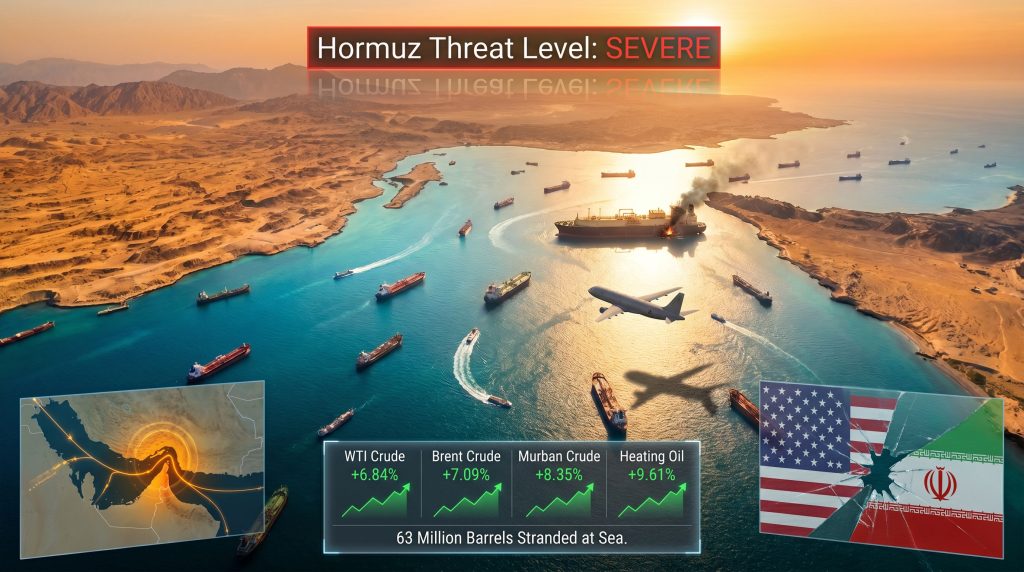
| Hormuz threat level | Raised to Severe by the Joint Maritime Information Center |
Iran's Foreign Ministry rejected Washington's framing entirely, accusing the United States of committing both minor and major violations of the agreement over the preceding three weeks and specifically citing Paragraph 10 of the Islamabad Understanding as the basis for its position. Tehran also defended proposals to charge vessels transit fees for maritime security services, a position that Western governments and international shipping interests rejected as functionally coercive.
The attack on the Al Rekayyat carried particular strategic weight. Qatar is the world's largest LNG exporter, and any demonstrated willingness by Iran to target Qatari LNG infrastructure sends a direct signal to European and Asian energy buyers about the security of supply chains they had previously treated as reliable. Qatar formally condemned the strike as a serious and explicit violation of international law, holding Tehran legally responsible.
Trump's Declaration and the Strategic Paradox It Created
Speaking at the NATO summit in Ankara, Turkey, Trump declared the Iran agreement effectively finished, describing Iranian leadership in terms that left little diplomatic ambiguity. He characterised the deal as a waste of time and stated his preference for ending engagement entirely. Simultaneously, however, he announced the cancellation of planned follow-on US strikes and described an emerging settlement framework involving the US, Israel, Saudi Arabia, and other regional parties as a new agreement that was, in his words, still somewhat conceptual.
This created an unusual diplomatic contradiction that markets struggled to interpret:
- Trump declared the existing deal dead
- Trump simultaneously announced a replacement framework was under negotiation
- Iran's Foreign Ministry acknowledged the new text was mostly finalised but issued no official endorsement
- The proposed new framework explicitly deferred Iran's nuclear program to future talks, leaving the most destabilising variable unresolved
Consequently, the oil market trade war impact of simultaneous diplomatic and supply shocks compounded the uncertainty, making it exceptionally difficult for traders to establish reliable price anchors during this period.
The declaration that the deal was over while simultaneously announcing a new deal signals a tactical reset rather than a permanent rupture. For energy markets, the critical question is not whether Trump said the deal is over, but whether any successor agreement is structurally more durable or equally vulnerable to the same compliance disputes.
Crude Oil Price Reaction: Reading the Benchmark Moves
The market response to the escalation was immediate and significant across all major benchmarks.
| Benchmark | Price (USD) | Change | % Move |
|---|---|---|---|
| WTI Crude | $75.26 | +$4.82 | +6.84% |
| Brent Crude | $79.42 | +$5.26 | +7.09% |
| Murban Crude | $74.73 | +$5.76 | +8.35% |
| Heating Oil | $3.619 | +$0.317 | +9.61% |
| Gasoline | $3.100 | +$0.146 | +4.95% |
The Murban and Heating Oil moves are particularly instructive. Murban, the UAE's flagship crude grade and a key price reference for Asian buyers, surged 8.35%, reflecting acute concern about Gulf export disruption beyond just Iranian supply. Heating Oil's near 10% move signals that refined product markets are pricing in more severe downstream consequences than raw crude figures alone suggest.
The 63 Million Barrel Problem
The US revocation of the Iranian oil sanctions waiver created an immediate secondary crisis: an estimated 63 million barrels of Iranian-origin crude are now stranded at sea with no clear compliant destination. Tankers carrying this cargo face direct secondary sanctions exposure from US Treasury enforcement. Reports confirmed that oil and LNG tankers were making U-turns in the strait following the fresh escalation, while Saudi Arabia was simultaneously attempting to move approximately 34 million barrels of its own crude through Hormuz despite thin tanker traffic.
Tehran had reportedly been accelerating export volumes in the weeks preceding the MOU collapse, a pattern consistent with anticipating potential sanctions restoration. Those exports are now subject to seizure risk, and the buyers who had been evaluating a return to Iranian crude, particularly India, have seen that pathway close abruptly.
Three Scenarios for What Comes Next
Scenario 1: Rapid Re-Engagement (Low Probability, Near-Term)
Iran formally endorses a replacement MOU framework within two to three weeks. Hormuz reopens to full commercial traffic under a revised routing agreement, and the sanctions waiver is reinstated. Under this pathway, WTI would likely retrace toward the $68 to $70 range as the conflict risk premium deflates.
Scenario 2: Prolonged Diplomatic Limbo (Base Case)
Negotiations continue without producing a binding agreement within 30 to 60 days. Hormuz traffic remains partially disrupted, shipping insurance premiums stay elevated, and the 63 million barrels of stranded crude creates persistent pricing anomalies in secondary markets. WTI consolidates in the $74 to $80 range with high volatility and frequent headline-driven spikes.
Scenario 3: Full Escalation and Hormuz Closure (Tail Risk, High Impact)
Iran formally withdraws from negotiations and activates its Hormuz closure threat. US naval assets expand in the region, Gulf states face direct security exposure, and the global LNG supply outlook faces severe disruption to both spot and contract markets. Under this scenario, WTI could spike toward $95 to $110, with LNG spot prices surging to multi-year highs. Shipping insurance could become effectively prohibitive for some operators.
Risk Calibration: The tail risk scenario carries market impact that is asymmetrically large relative to its probability. Traders and portfolio managers should model asymmetric downside exposure to supply disruption, not just base-case pricing assumptions.
The next major ASX story will hit our subscribers first
Why No Alternative Fully Replaces Hormuz
The scale of Hormuz dependency is frequently underestimated in coverage that focuses on diplomatic events rather than physical infrastructure constraints. Several structural realities define the chokepoint's irreplaceability:
- Saudi Arabia's East-West Petroline pipeline can bypass Hormuz for Saudi crude, but its capacity cannot absorb the full volume of Gulf exports
- Kuwait, Bahrain, Qatar, and the UAE depend on Hormuz for the overwhelming majority of their export capacity
- The proposed Red Sea pipeline expansion Saudi Arabia is exploring represents a medium-term infrastructure solution, not an immediate alternative
- Qatar's LNG export infrastructure has no viable bypass; Qatari LNG must transit the strait to reach both European and Asian markets
This last point is underappreciated in much energy market commentary. The Middle East conflict has already been described as clouding the global LNG supply outlook even as global LNG trade hit a record high. The strike on the Al Rekayyat demonstrated that Iran is prepared to target LNG infrastructure with direct European supply implications, a meaningful escalation beyond attacking oil tankers.
How Major Economies Are Repositioning
| Actor | Position | Strategic Interest |
|---|---|---|
| China | Lifting fuel export curbs; ramping refinery output | Securing alternative supply chains; reducing import exposure |
| India | Resuming Iraqi imports; crude stocks near one-year high | Diversifying away from Iranian crude while managing cost pressures |
| Germany | Building $1.7 billion strategic natural gas reserve | Reducing vulnerability to Middle East LNG disruption |
| Japan | Planning post-Hormuz supply architecture | Accelerating LNG diversification away from Gulf dependency |
Japan's top refiner publicly exploring a post-Hormuz future is one of the more significant structural signals to emerge from this crisis. It suggests that at least one major Asian consumer is treating Hormuz disruption not as a temporary geopolitical event but as a permanent architectural risk requiring long-term supply chain redesign.
The Three Unresolved Fault Lines That No MOU Has Fixed
Regardless of whether a new agreement is eventually signed, three fundamental disagreements ensure the conflict's underlying drivers remain fully intact.
1. Nuclear Ambitions
The proposed replacement MOU explicitly defers Iran's nuclear program to future negotiation. This is the same issue that has derailed every prior diplomatic framework, including the 2015 JCPOA. Without a credible, independent verification mechanism, any deal remains vulnerable to the same compliance disputes that collapsed the June arrangement.
2. Sanctions Architecture
Iran consistently demands permanent and unconditional sanctions relief as a precondition for full compliance. The US position insists on performance-based, reversible relief. These are structurally incompatible positions that create recurring crisis points regardless of which administration negotiates. In addition, the OPEC market influence over production decisions adds another layer of complexity to any sanctions-linked supply calculation.
3. Hormuz Sovereignty
Iran's insistence on managing Hormuz navigation, including the potential imposition of transit fees, directly contradicts the principle of freedom of navigation that underpins international maritime law and US naval doctrine. This is not a negotiating position that can be bridged with clever drafting. It reflects Iran's core strategic doctrine of using the strait as coercive leverage.
Frequently Asked Questions
What Was the Islamabad Understanding?
The Islamabad Understanding was a 60-day memorandum of understanding signed on June 18, 2026, between the US and Iran. It was designed to stabilise commercial shipping through the Strait of Hormuz and provide limited sanctions relief to Iran in exchange for adherence to agreed maritime protocols.
Why Did the Ceasefire Collapse?
The proximate trigger was Iran's alleged attack on three commercial vessels transiting the strait, including a Qatari LNG tanker. The US responded with military strikes and revoked the sanctions waiver. Iran characterised the sanctions revocation itself as a breach of the MOU's terms, citing specific provisions of the agreement. Analysis of whether a US-Iran deal remains within reach identifies six key structural issues that have shaped every ceasefire attempt, most of which remain unresolved.
How Much Iranian Crude Is Stranded at Sea?
Approximately 63 million barrels of crude are reported to be stranded at sea following the US revocation of the Iranian oil sanctions waiver, with tankers facing immediate compliance risk.
Could a New Deal Still Be Reached?
Iran's Foreign Ministry indicated the text of a replacement framework was mostly finalised, but no official Iranian endorsement had been issued. The proposed framework does not resolve core disputes over nuclear ambitions, sanctions architecture, or Hormuz sovereignty, meaning any successor agreement faces the same structural vulnerabilities as the one that just collapsed.
What Does the Oil Price Surge Tell Us?
The 6 to 8 percent move across crude benchmarks reflects immediate supply risk pricing. The deeper signal, however, is the erosion of market confidence in any durable diplomatic framework for Hormuz stability. Furthermore, the safe-haven market response across gold and broader risk assets reinforced this reading, with investors rapidly rotating away from exposure to Gulf-linked supply chains. Until a verifiable, multilateral agreement simultaneously addresses Iran's nuclear program and sanctions architecture, energy markets will continue to assign a structural risk premium to Gulf supply. The Trump Iran deal over narrative has, for now, become the dominant frame through which traders are interpreting every subsequent diplomatic signal.
Disclaimer: This article is for informational purposes only and does not constitute financial or investment advice. Energy market forecasts and scenario projections involve significant uncertainty. Readers should conduct independent research before making any investment decisions.
Want to Stay Ahead of the Next Major Resource Discovery Triggered by Geopolitical Shifts?
When energy market disruptions of this magnitude reshape commodity prices overnight, being positioned early in ASX-listed resource discoveries can make all the difference — Discovery Alert's proprietary Discovery IQ model delivers real-time alerts on significant mineral discoveries the moment they hit the ASX, turning complex market signals into actionable opportunities for both traders and long-term investors. Explore historic discoveries and the returns they generated to understand what early positioning can mean, then begin your 14-day free trial to secure a market-leading edge.